
The low daily rate splashed across the side of a rental truck is rarely the price you’ll actually pay. It is a marketing starting point that often leads to sticker shock once mileage, fuel, and environmental fees hit your final bill. If you want to accurately compare moving truck rental prices, you have to look at the total cost of ownership rather than just the base quote. You need a way to cut through the noise and find a price that stays consistent from booking to drop-off.
Moving is stressful enough without the headache of inconsistent pricing across different brands. You want a clear, honest look at what your DIY relocation will cost before you ever pick up the keys. We’ll help you master the art of comparing rental rates so you can uncover the most affordable moving trucks for your 2026 move. No more manual searches on a dozen different websites or worrying about hidden mileage charges that blow your budget.
This guide provides a reliable way to evaluate all major providers in one place. We’ll break down the latest 2026 pricing models and show you exactly how to secure the best value for your trip. You’ll gain the confidence that you’ve found the most affordable option available for your specific route.
Key Takeaways
- Calculate the total cost of ownership to find true affordability beyond the advertised daily rate.
- Identify whether an unlimited mileage model or a daily plus mileage model fits your specific moving distance.
- Learn to compare moving truck rental prices while accounting for hidden environmental fees and credit card holds.
- Use a step-by-step checklist to inventory your belongings and determine the exact truck size required.
- Save time by using a comparison engine that aggregates real-time rates from all major national brands.
Defining Affordable Moving Trucks: More Than Just a Daily Rate
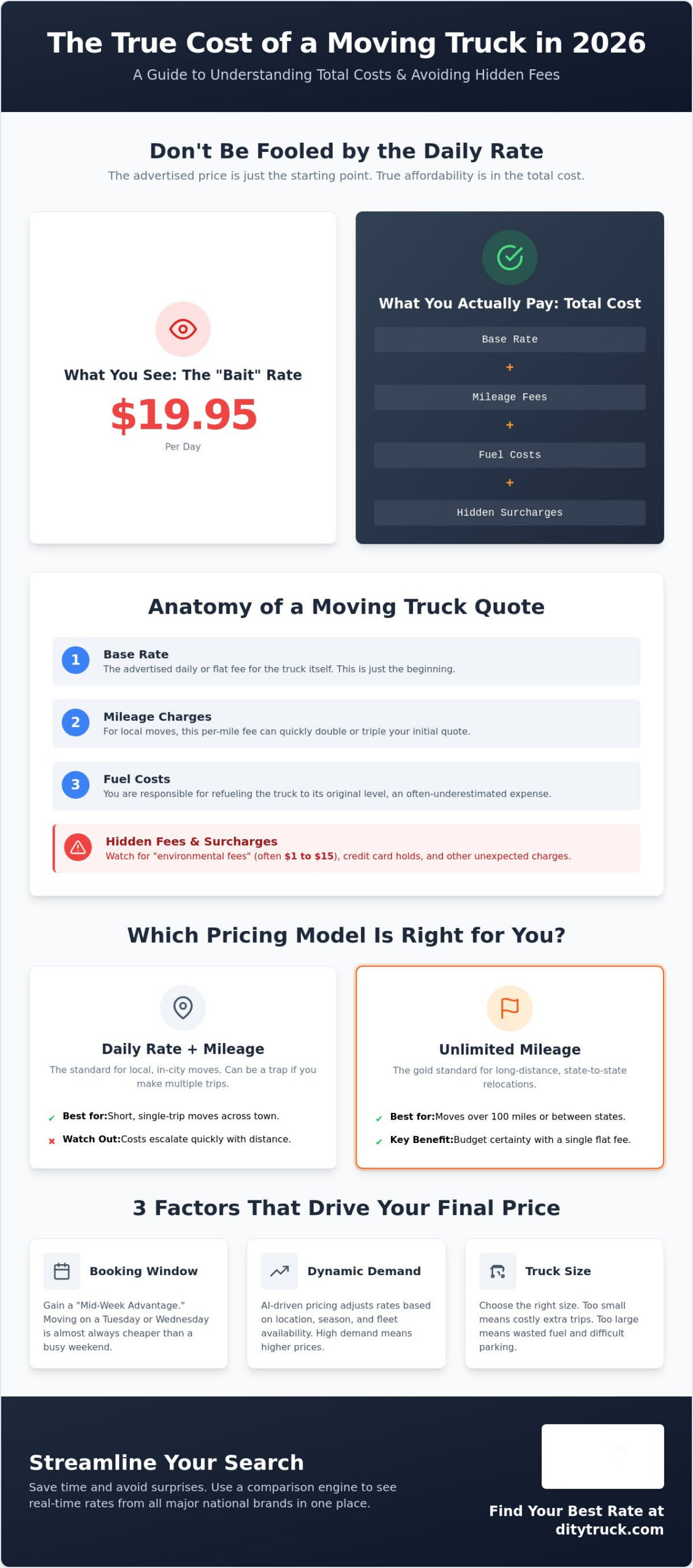
True affordability isn’t found on a billboard. It’s found in the fine print. Many people start their search by looking for the lowest daily number. They see a $19.95 sticker and assume they’ve found a bargain. But when you compare moving truck rental prices, you’ll see that the base rate is only one piece of the puzzle. A low daily rate often masks high per-mile charges. For local moves, these mileage fees can quickly double your expected cost. You need to look at the total cost of ownership. This includes the rental fee, mileage, fuel, and mandatory surcharges. It’s a calculation, not just a quote.
In 2026, pricing models favor the prepared. Booking early or staying flexible with your dates can lead to significant savings. The size of the truck also plays a massive role in efficiency. A truck that’s too small requires multiple trips, which doubles your mileage costs. A truck that’s too large wastes fuel and is harder to park. Finding the “Goldilocks” size is the first step toward a truly affordable move. It ensures you only pay for the space you actually use.
The Anatomy of a Moving Truck Quote
A moving quote has several layers. The base rate covers the truck itself for a set period. Then come the variable costs. Local moves usually follow a “daily plus mileage” structure. One-way moves often use a flat rate that includes a specific mileage allowance. Be wary of “loss leader” pricing. This is a tactic where a company advertises an impossibly low rate to get you in the door. Once you’re there, they add on environmental fees, which can range from $1 to $15. Understanding what to know about moving companies helps you spot these tactics before you sign a contract. Always look for the “estimated total” rather than the starting price to avoid surprise costs at the rental counter.
Why National Availability Affects Your Price
Prices fluctuate based on where the trucks are located. If everyone is moving out of a city, the cost to rent a truck there will skyrocket. If you’re moving into that same city, you might find a massive discount. The company needs their equipment returned to high-demand areas. Fleet distribution is the invisible hand behind your quote. 2026 pricing models rely heavily on dynamic pricing. This means rates change in real-time based on supply and demand; to learn more about how this technology manages rate automation, visit RateHighway. Booking a truck in a high-demand window, like a holiday weekend, will always increase your quote. National comparison tools help you compare moving truck rental prices across different regions to bypass local price spikes. They let you see the big picture so you can choose the most logical path for your budget.
How to Compare Moving Truck Rental Prices Across Major Models
Choosing the right pricing model is the fastest way to slash your moving expenses. Most providers offer two distinct structures. The “Unlimited Mileage” model is the gold standard for long-distance, state-to-state moves. You pay a flat fee that covers the truck and the distance, which simplifies your budget. On the other hand, the “Daily + Mileage” model remains the standard for local, same-city relocations. It’s often cheaper for a quick trip across town, but those per-mile fees can become a trap if you’re making multiple runs. To truly compare moving truck rental prices, you must project your total distance accurately before committing to a model.
Local vs. Long-Distance Pricing Structures
The “break-even” point is where a flat-rate one-way quote becomes cheaper than paying by the mile. If your move exceeds 100 miles, the mileage-based model usually loses its appeal. It’s also vital to realize that moving truck rental prices fluctuate based on your specific drop-off location. If you are moving to a city with a truck shortage, your rate will be higher. Checking one-way availability even for shorter regional moves can sometimes unlock lower rates because companies want to rebalance their fleets. Always verify your provider’s credentials through official channels to protect yourself from moving fraud and ensure you are dealing with a legitimate operation.
Dynamic Pricing in 2026: When to Book
In 2026, AI-driven pricing engines adjust rental rates by the hour. These systems track demand, weather, and fleet availability to maximize profits during peak moving season. To beat the algorithm, aim for the “Mid-Week Advantage.” Moving on a Tuesday or Wednesday is almost always more affordable than a Friday or Saturday. Last-minute bookings are the biggest threat to your moving budget. Waiting until the final week can result in a 30% price hike or, worse, no truck at all. If you want to see how these variables impact your specific trip, you can compare real-time rates across multiple providers instantly. Don’t forget to ask about specialized discounts for AAA members, military personnel, or students, as these can often be stacked on top of existing promotions.
Exposing the Hidden Fees: What “Cheap” Quotes Often Hide
A “cheap” quote is often just the beginning. When you compare moving truck rental prices, the initial number rarely accounts for the mandatory extras that appear at checkout. Environmental fees are standard across most brands. These cover hazardous waste disposal and emissions compliance. They typically range from $1 to $15 per rental. State-mandated taxes also vary. A quote in one state might look better than another simply because of local tax laws. You must look past the banner ads to find the real price. It is the only way to avoid a surprise bill on moving day.
Financial transparency is key. You should also watch out for credit card holds. Even an “affordable” rental can temporarily tie up hundreds of dollars. This isn’t a final charge; it just limits your available cash during a move. Fuel surcharge traps are another common pitfall. If you don’t return the tank to the agreed-upon level, companies often charge a premium per gallon. This rate is usually double the local pump price. They might also charge a “refueling fee” just for the labor of driving the truck to a station. When you compare moving truck rental prices, always ask about the grace period for returns. Being just one hour late can trigger a full extra day of rental fees. Some brands don’t offer a grace period at all. This turns a small delay into a major expense.
Insurance and Protection Plans
Your personal auto insurance might not cover a large commercial vehicle. Most policies exclude trucks over a certain weight. This makes supplemental protection a common necessity. You can compare top moving truck rental companies to see which ones offer the best balance of coverage and cost. Skipping this protection to lower your moving truck rental cost is a high-risk gamble. A single scratch on a 26-foot box truck can cost more than the rental itself. Damage waivers protect your wallet from these sudden expenses. They provide peace of mind during a high-stakes drive.
Equipment and Accessory Rental Costs
Convenience has a price. Dollies, ramps, and furniture pads are rarely included in the base rate. Renting these items can add a notable amount to your bill. It is often cheaper to buy your own supplies if you plan to move again. Specialized equipment like car trailers or tow dollies also impacts your total rate. These additions change the weight and fuel efficiency of your vehicle. They also require specific hitch setups that might cost extra. Always factor these accessories into your final budget before you finalize your booking. This ensures you have a complete picture of the total cost.
Your 2026 Resource Checklist for Finding Affordable Moving Trucks
Preparation is the only way to beat the algorithm. Most renters wait until the last minute and pay a premium for whatever inventory is left on the lot. To find a truly budget-friendly solution, you must follow a systematic process. This checklist ensures you don’t miss the small details that turn a “cheap” rental into an expensive ordeal. Use this framework to compare moving truck rental prices with total clarity and confidence.
- Step 1: Inventory your move. Walk through every room. Count the large furniture pieces and estimate the number of boxes. Don’t guess. Accurate volume data is the foundation of a good quote.
- Step 2: Use a comparison engine. Don’t visit ten different websites. Use a tool that pulls real-time rates from major brands into one view. This highlights the price gaps between providers instantly.
- Step 3: Factor in the “hidden” variables. Look at fuel economy ratings for different models. Check the cost of supplemental insurance. These daily expenses often outweigh a small difference in the base rental rate.
- Step 4: Verify logistics. Check the exact pickup and drop-off locations. Some “affordable” quotes are only cheap because the lot is 30 miles out of your way. That extra driving adds mileage and fuel costs.
- Step 5: Secure your rate. Once you find a price that works, book it. In the 2026 market, rates can climb overnight as fleet availability drops.
Choosing the Right Size to Save Money
Renting a truck that is too small is the most expensive mistake you can make. If you can’t fit everything in one trip, you are forced to drive double the miles. This doubles your fuel consumption and mileage fees. For three-bedroom homes or larger, understanding the cost to rent a 26 foot moving truck is essential. These larger vehicles allow for a single trip, which is almost always more efficient than making two runs in a smaller 16-foot truck. “Oversizing” slightly gives you a safety margin for oddly shaped items and prevents the stress of a packed-to-the-ceiling load.
Verification Checklist Before You Sign
The final contract is where the real costs are settled. Always check for “hidden” mileage caps on one-way rentals. Some companies offer a low flat rate but charge heavily if you deviate from the most direct route. You should also verify the fuel type. Diesel trucks often get better mileage for heavy loads, but diesel fuel can be more expensive at the pump. Finally, confirm the cancellation policy. Moving dates often shift. Having the flexibility to change your reservation without a massive penalty protects your budget from the unexpected. You can compare moving truck rental prices and book your equipment with full transparency today.
Streamline Your Search: Compare and Book with DityTruck
Manual price hunting is a relic of the past. You don’t have time to sit with ten browser tabs open while cross-referencing mileage rates and base quotes. DityTruck acts as your personal logistics assistant. We do the heavy lifting behind the scenes. Our platform aggregates real-time data from the top national providers. This gives you an immediate, side-by-side view of the entire market. When you compare moving truck rental prices through our interface, you’re seeing the most current rates available in 2026. No delays. No guesswork. You get the facts you need to make a decision right now.
Simplicity is our priority. We’ve stripped away the complexity of traditional booking. Instead of navigating confusing corporate websites, you get a clean and functional dashboard. This “Smart Assistant” approach ensures you find the most logical path between your current home and your next one. You can move from comparison to confirmation in minutes. It’s about saving your time and your peace of mind. Seeing the full market in one place gives you the confidence that you haven’t missed a better deal elsewhere. You avoid the friction of manual searches. You gain the clarity of a professional tool.
Our technology monitors fleet availability across the country. This means the prices you see are accurate to the minute. You don’t have to worry about a quote disappearing while you’re trying to find a phone number. Everything is centralized. Everything is fast. The process follows a clear action-result progression. You search. You compare. You book. This speed mirrors the physical act of moving. It keeps you in motion and prevents the stagnation that comes with over-analyzing fragmented data from multiple sources. You stay in control of your timeline and your budget.
The DityTruck Comparison Advantage
Transparency is the core of our service. Most sites hide fees until the final checkout screen. We don’t. Our displays include the environmental fees and surcharges that others bury in the fine print. This makes finding the least expensive moving truck rental options straightforward and honest. We cover the entire United States. Whether you’re moving three blocks or three states away, our national network has you covered. You get the same efficient experience regardless of your destination. It’s the shortest route to a stress-free relocation budget. You see the total cost upfront. You avoid the sticker shock that ruins moving day.
Ready to Move? Your Next Steps
Starting your search is easy. Just enter your zip codes and moving dates into our tool. The system instantly scans available inventory across all major brands. You’ll see a ranked list of options based on total cost. This includes the base rate and estimated mileage. Once you find the right fit, you can finalize your reservation immediately. This locks in your 2026 rates before dynamic pricing causes them to spike. Don’t let your moving budget be a victim of demand fluctuations. Take control of your logistics right now. We provide the most direct path to an affordable DIY move. Find your affordable moving truck on DityTruck today!
Take Control of Your 2026 Relocation Budget
Finding a budget-friendly truck requires looking past the sticker price. You now understand how to spot hidden environmental fees and fuel traps before they impact your bank account. You also know that selecting the correct truck size prevents expensive second trips. The most efficient way to compare moving truck rental prices is to use a tool that aggregates the entire market into one transparent view. This eliminates the need for manual searches. It ensures you find the best value for your specific route without the typical logistics headache.
DityTruck provides real-time rates from all major US providers through a no-nonsense interface. You get transparent pricing with no hidden surprises. This design allows for rapid decision-making so you can focus on the move itself rather than the paperwork. Our smart assistant approach does the heavy lifting for you. You deserve a move that is simple, honest, and affordable.
Compare Real-Time Moving Truck Rates Now
Your DIY move doesn’t have to be a financial mystery. Take the first step toward a friction-free relocation today and move with confidence.
If your relocation involves flying into or out of the Twin Cities, arranging a professional MSP Chauffeur Service ensures that your airport transportation is as seamless as your truck rental.
Frequently Asked Questions
How do I truly compare moving truck rental prices between different companies?
You must calculate the total cost of ownership to effectively compare moving truck rental prices across different brands. A low base rate often hides high per-mile charges. Use a centralized platform to view all fees, mileage estimates, and insurance costs in one dashboard. This approach prevents you from visiting multiple websites and manually calculating the final bill yourself. It provides the clarity needed for a fast decision.
What is considered an affordable moving truck rate for a local move in 2026?
A median cost of $113 is a standard benchmark for an affordable local move in 2026. This price usually covers a medium-sized truck with a base rate between $19.95 and $39.95 per day. You should also account for mileage fees, which typically range from $0.59 to $1.39 per mile. Prices vary based on your specific location and the truck size you select for your trip.
Are there hidden fees I should look for when renting a moving truck?
Environmental fees and fuel surcharges are the most frequent additions to your final bill. Most companies charge an environmental fee between $1 and $15 for hazardous waste disposal and emissions compliance. You should also watch for refueling penalties. If you don’t return the tank to the agreed level, you’ll pay a premium per gallon that is often double the local pump price.
Is it cheaper to rent a truck one-way or return it to the same location?
Round-trip rentals are more cost-effective for same-city moves where you return the truck to the starting point. For long-distance relocations, one-way rentals are the logical choice. Some providers offer unlimited mileage on many one-way routes. This eliminates the fear of going over a set distance limit and receiving a surprise charge at the end of your trip. It simplifies your moving budget.
Which moving truck company has the best gas mileage?
Modern diesel trucks typically provide the best fuel efficiency for heavy, long-distance hauls. While gas trucks are common for local moves, they often consume more fuel when fully loaded. You can improve your mileage by maintaining a steady speed and avoiding rapid acceleration. Always check the fuel type before you leave the lot so you can budget for current pump prices and avoid refueling errors.
Can I get a lower price by booking my moving truck on a specific day of the week?
Booking your rental for a Tuesday or Wednesday is the most reliable way to secure a lower price. Demand for trucks peaks on weekends and during the last few days of the month. Rental companies use dynamic pricing to raise rates when inventory is low. Scheduling your move during the middle of the week helps you bypass these predictable price hikes and ensures better equipment availability.
Does my personal car insurance cover a rental moving truck?
Personal auto insurance rarely covers large rental trucks due to their weight and commercial classification. Most standard policies only apply to passenger vehicles like sedans or SUVs. You should contact your insurance agent to confirm your specific limits before your move. If your policy doesn’t cover the truck, purchasing supplemental insurance between $14 and $50 per day is a necessary step for your protection.
Leave a Reply