Choosing the cheapest advertised base rate for your box truck rental is often the most expensive mistake you can make. You’ve likely spent hours toggling between browser tabs, trying to guess if a 12-foot truck actually fits your furniture or if hidden mileage fees will eventually double your budget. It’s a high-stakes task that shouldn’t feel like a gamble. We understand that you want clarity, not a surprise bill on moving day.
This 2026 guide simplifies your logistics by providing a transparent look at real-time rates and truck sizing across all major national providers. You’ll find exactly what you need to move with confidence. We’ll compare the top fleets, break down the latest 2026 mileage and insurance costs, and show you how to secure a fast reservation without checking five different websites. Get ready for a friction-free move where the only thing you have to worry about is which box to unpack first.
Key Takeaways
- Understand why a box truck rental is the gold standard for secure, weather-protected transportation compared to other moving options.
- Avoid the stress of running out of space by applying the “Golden Rule” of vehicle sizing for your inventory.
- Identify which national providers offer the best value for your specific distance, whether you need long-distance reliability or local savings.
- Learn to spot hidden mileage fees and insurance costs before they inflate your final moving bill.
- Streamline your reservation process using smart filters to find and book the right truck in minutes.
Understanding the Box Truck Rental Market in 2026
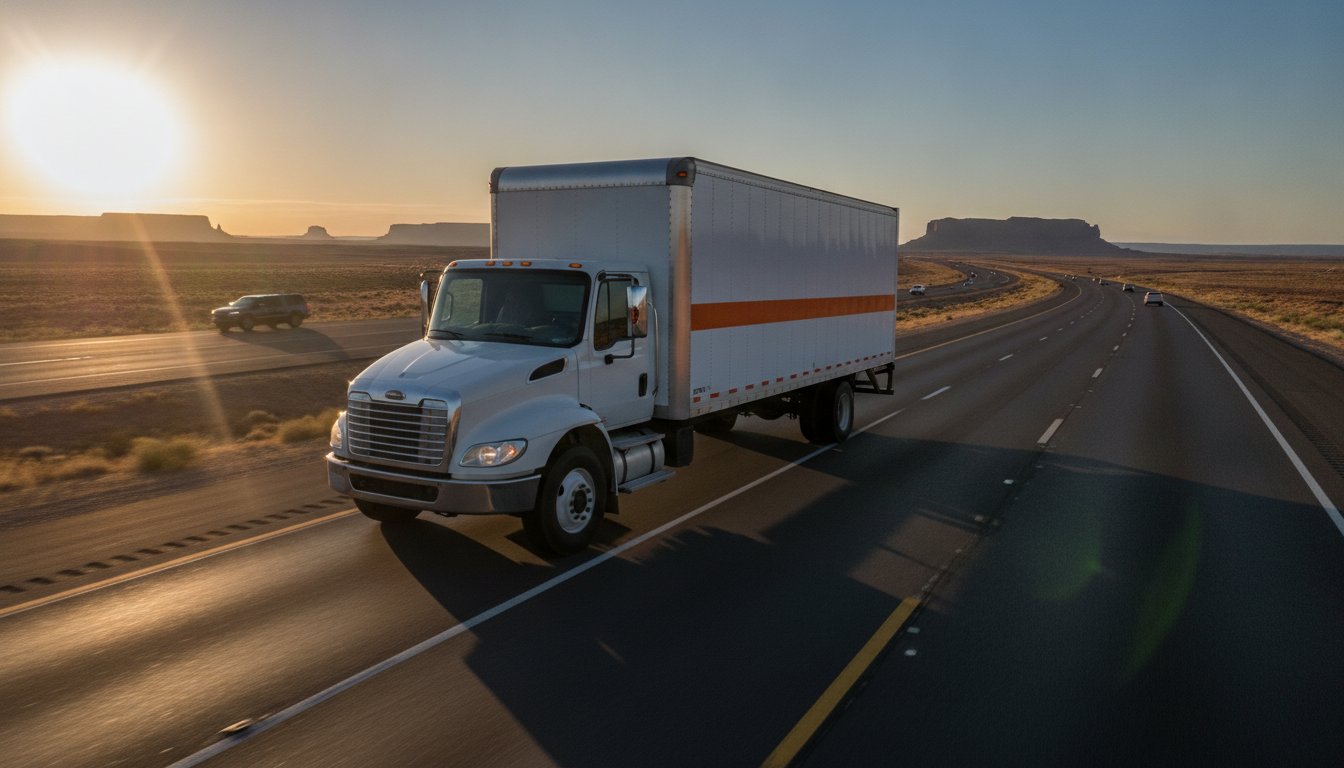
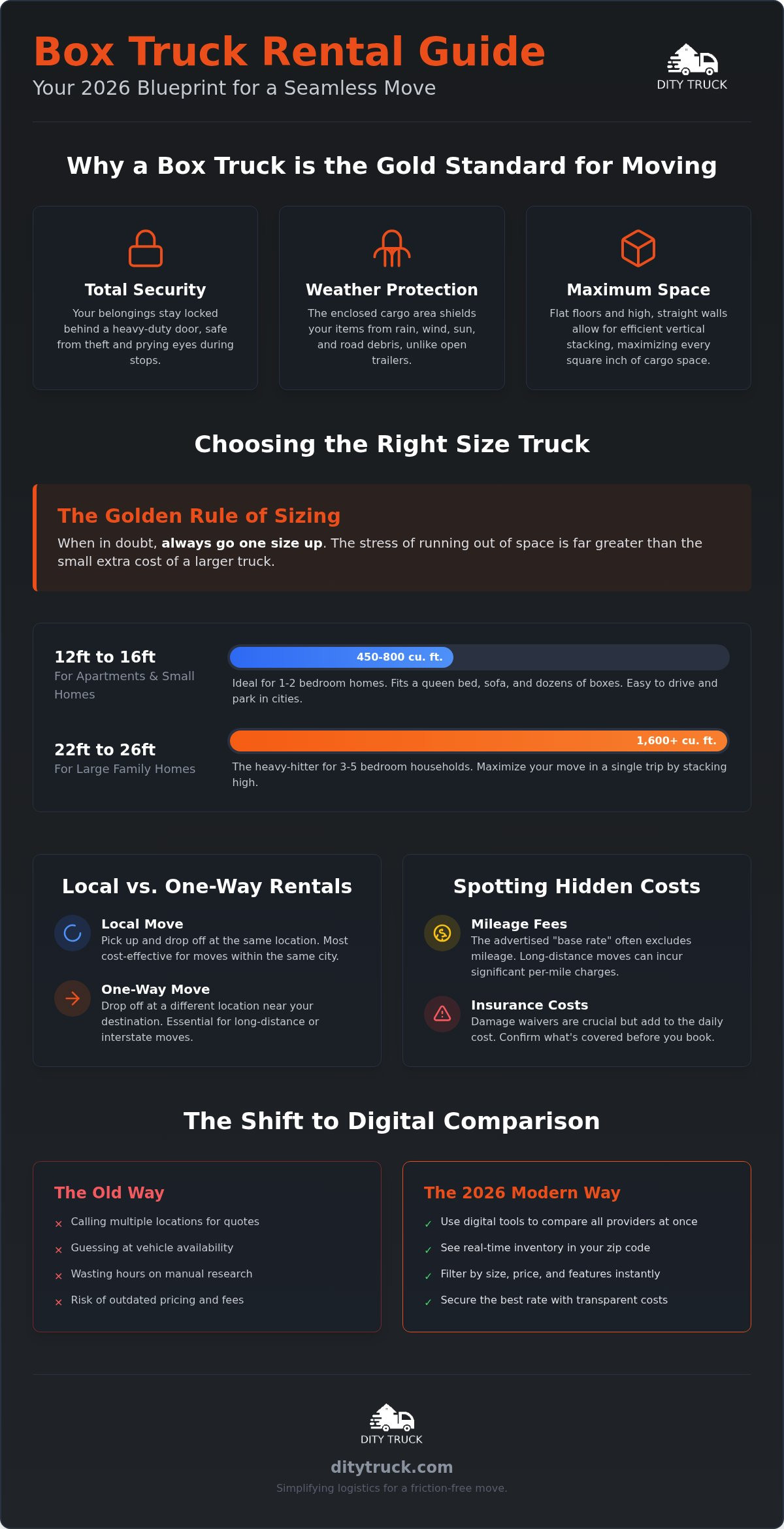
A box truck rental is more than just a large vehicle. It is a purpose-built tool for logistics. Technically, a box truck consists of a cab-chassis design with a separate, enclosed cuboid cargo area. This unique structure allows for a flat floor and high walls, which are essential for vertical stacking. When you explore box truck sizes and classifications, you’ll see that these vehicles are designed to maximize every square inch of space. They provide a level of security and weather protection that open trailers simply can’t match. Your belongings stay locked behind a heavy-duty door, safe from rain, road debris, and prying eyes.
The 2026 landscape has introduced significant improvements to rental fleets. Modern trucks now feature much better fuel efficiency than models from just a few years ago. This helps keep your total move cost down despite fluctuating gas prices. Newer vehicles also come equipped with advanced driver-assist features. Lane-keep assist and collision warnings are now standard in many fleets, making these large trucks much easier for a non-professional to drive with confidence. Efficiency isn’t just about the engine; it’s about making the entire experience less intimidating.
Your destination is the primary factor that dictates your rental strategy. Local rentals involve picking up and dropping off the truck at the same location. This is usually the most cost-effective path for moves within the same city. One-way rentals allow you to drop the truck off at a different branch near your new home. While the base rate for one-way moves is often higher, it saves you the massive headache of driving a heavy truck back across state lines. Choosing the right strategy early prevents expensive surprises later.
Box Truck vs. Cargo Van: Which do you need?
Many people struggle to decide between a cargo van and a box truck. Cargo vans are excellent for studio apartments or delivering a single large appliance. However, once you move into a two-bedroom home, a box truck rental becomes essential. It isn’t just about cubic feet; it’s about payload limits. Box trucks are engineered to carry the weight of heavy oak dressers and multiple appliances without straining the suspension. If you try to cram a whole house into a van, you risk exceeding weight limits, which makes the vehicle dangerous to handle.
The Shift to Digital Comparison Tools
The old way of renting involved calling three different local lots and hoping someone would answer the phone. That process is dead. Today, we rely on real-time data syncs. Platforms like DityTruck connect directly with national inventory systems to show you exactly what is available in your zip code. This shift to digital comparison means you can compare rates and sizes once and save hours of manual research. It’s an action-result process. You input your move details, and the smart assistant finds the best match instantly. This transparency ensures you aren’t paying a “convenience fee” just because you didn’t have time to check other providers.
Choosing the Right Size: Box Truck Dimensions and Capacity
Selecting a box truck rental size requires more than a rough guess. The “Golden Rule” of moving is simple. If you aren’t sure, always go one size up. Renting a truck that is too small leads to multiple trips; or worse, leaving furniture on the curb. Most providers offer standard lengths including 10ft, 12ft, 16ft, 22ft, and 26ft options. Each jump in size significantly increases your stacking potential and reduces the risk of a logistical bottleneck on moving day.
Don’t just look at total cubic feet. Measuring your largest items is critical. Remember that wheel wells intrude into the cargo area. A king-sized mattress or a long sectional sofa might not sit flat if the wheel well is in the way. You also need to consider the loading height. Larger trucks sit higher off the ground. This creates a steeper ramp angle. If you’re lifting heavy appliances, a steeper ramp requires more physical strength. This is especially true for the 26ft models, which feature the highest decks in the consumer rental market.
12ft to 16ft: The Sweet Spot for Small Moves
These sizes are ideal for studio apartments or small 1-2 bedroom residences. They offer roughly 450 to 800 cubic feet of space. This is usually enough for a queen bed, a sofa, and several dozen boxes. Maneuverability is the key benefit here. Drivers who aren’t used to large vehicles find these sizes much easier to park and turn. They feel more like driving a large SUV than a commercial freighter. This size range is the most popular for local city moves where tight corners and narrow streets are common.
22ft to 26ft: Handling Large Family Homes
If you’re moving a 3-5 bedroom household, you need the heavy hitters. These trucks provide up to 1,600+ cubic feet of volume. This allows for maximum efficiency by letting you stack items to the ceiling. Many users worry about commercial driver’s license (CDL) requirements for these larger units. Most rental companies intentionally manufacture these trucks to stay under the 26,000 lbs Gross Vehicle Weight Rating (GVWR) limit. This keeps them legal for standard license holders. The professional nature of these vehicles is reflected in trucking industry employment data, which shows the scale and specialization of the transport sector. Before you commit, it helps to see what’s actually available in your area. You can compare real-time sizing and rates to ensure you don’t overpay for space you won’t use. Choosing the larger option also gives you a buffer for last-minute items like garage tools or patio furniture that are often forgotten during the initial inventory.
Comparing Major Box Truck Rental Companies Side-by-Side
Most rental sites only show you their own trucks. This forces you to switch between five different tabs to find the best deal. We break that cycle. By looking at the market side-by-side; you see the trade-offs between fleet age, pricing, and availability immediately. This transparency removes the guesswork from your box truck rental decision and puts the power back in your hands.
- Penske: They are the leaders in reliability. Their fleet is generally the newest in the industry. This makes them the top choice for long-distance hauls where a breakdown could ruin your schedule.
- Budget: They strike a balance. Their trucks are well-maintained; but their pricing is often more aggressive for local moves than Penske.
- U-Haul: They have the most locations by far. You can find a U-Haul in almost every small town. However; you must monitor the per-mile costs. A low base rate can quickly balloon once you start driving.
- Enterprise: This is a premium choice for commercial-grade trucks. They primarily serve business accounts, but their consumer rentals offer high-spec vehicles with impressive payload capacities.
Penske vs. Budget: The Long-Distance Debate
Penske often includes unlimited mileage on one-way moves. This offers massive savings potential for cross-country trips. You pay one price and drive without watching the odometer. Budget counters this with frequent promo codes. These discounts often bring their total price down to rival Penske, especially if you book during the off-season. For a deeper look; read our One Way Truck Rentals for Moving: 2026 Comparison Guide. It breaks down the specific mileage policies that can save you hundreds of dollars.
U-Haul vs. The Market: Availability vs. Total Cost
U-Haul’s main advantage is convenience. Pickup and drop-off are incredibly easy due to their massive network of neighborhood dealers. But don’t let the $19.95 base rate fool you. By the time you add mileage, insurance, and environmental fees; the final bill looks very different. Comparing this total cost against the flat-rate packages from other providers is essential. Finding the right box truck rental depends on your specific route. Check out our U-Haul vs. Budget Truck Rental: The Definitive 2026 Comparison Guide to see the real numbers. Seeing the final price before you arrive at the lot prevents “sticker shock” and keeps your moving budget on track.
Box Truck Rental Prices: Managing Costs and Avoiding Hidden Fees
The advertised daily rate is rarely what you actually pay. A box truck rental involves a layered pricing structure. Understanding these layers prevents budget creep. It turns a stressful financial guess into a predictable expense. Transparency is the only way to avoid the dreaded “sticker shock” when you return the keys.
Your base rate is the starting point. This is the flat daily fee for the vehicle itself. However; the real driver of the final bill is the mileage fee. These typically range from $0.79 to $1.29 per mile. If you’re moving within a single zip code; the impact is minor. If you’re crossing several counties; the mileage fee can easily exceed the daily rental cost. It’s a variable you must track closely.
Insurance is another non-negotiable cost. Most personal auto policies do not cover commercial-grade vehicles. You’ll likely need a Collision Damage Waiver (CDW) or Supplemental Liability Insurance (SLI). Without this; you are personally responsible for any damage to the truck or third-party property. Finally; look for small surcharges like environmental fees and vehicle licensing recovery fees. These are standard industry add-ons that appear on your final invoice.
Calculating the Total Cost of Your Move
Planning your budget requires a specific formula. Take your (Daily Rate x Days) and add (Estimated Miles x Rate). Then add your insurance and fuel. Fuel is the most overlooked expense. Large trucks are heavy and aerodynamic as a brick. They average only 8 to 12 MPG. For a 100-mile move; that is roughly 10 gallons of gas. Factor the current pump price into your total. For more detailed breakdowns; view our guide on Box Truck Rental Prices: The 2026 Guide to Sizes, Rates & Savings. It helps you visualize every dollar before you sign the contract.
Pro Tips for Lowering Your Bill
Timing is everything. Move mid-week if possible. Tuesdays and Wednesdays are significantly cheaper than high-demand Saturdays. You should also book 2 to 4 weeks in advance. This locks in lower seasonal rates before the fleet gets picked over. Another smart move is checking your credit card benefits. Some premium cards offer coverage for commercial rentals. If yours does; you can safely decline the rental company’s coverage. You can compare real-time pricing and fees right now to see which provider fits your budget best. Taking five minutes to compare prevents hours of financial regret later.
How to Reserve Your Box Truck Rental Online with DityTruck
Reserving a box truck rental shouldn’t feel like a part-time job. You’ve already done the hard work of comparing sizes and calculating mileage. Now it’s time to lock in your choice. The process is designed to be fast. You start by entering your pickup location and move dates. If you’re doing a one-way move, specify the destination. This immediate input allows our system to pull actual inventory from local lots. It removes the uncertainty of “calling for availability” and gives you immediate answers.
Once your details are in, use the smart assistant to filter by size. Remember the sizing advice from earlier; always lean toward more space if you’re on the fence. You’ll see real-time quotes from providers like Penske and Budget side-by-side. There’s no need to jump between sites. You see the availability. You see the price. You make the call. Once you select the best fit, you can secure your reservation instantly. This one-click approach ensures you don’t lose your preferred truck to another mover while you’re still weighing options.
The DityTruck Advantage: Transparency First
We prioritize transparency above all else. Most booking processes hide fees until the final confirmation page. We don’t. We highlight the total estimated cost upfront. This includes the base rate and the anticipated fees we discussed in the pricing section. You get a one-stop shop experience. You manage everything through a single, streamlined interface. Whether you’re moving across town or across the country, our national reach ensures you have access to inventory in every major US city effortlessly. It’s the shortest path between a logistical problem and a confirmed solution.
Final Checklist Before You Drive Away
Your reservation is set, but the job isn’t done until you’re behind the wheel. Before you drive off the lot, perform a final sweep. Verify your driver’s license is valid and meets the age requirements. Most companies require drivers to be at least 18 or 25 depending on the truck size. Inspect the vehicle for any pre-existing damage. Take clear photos of every side, including the roof and interior cargo area. This documentation is your best defense against unfair damage claims. Finally, check the fuel level. Confirm the return policy. Most providers expect the tank to be at the same level as when you started. A quick check prevents expensive refilling surcharges and ensures your move starts on a positive note.
Secure Your Move with a Confident Rental Strategy
Finding the right box truck rental doesn’t have to be a gamble. You now know how to apply the “Golden Rule” of sizing to avoid space shortages and logistical delays. You also understand how mileage fees and fuel costs dictate your actual final bill. By comparing national providers side-by-side, you can choose the fleet that matches your specific route and budget without the usual stress.
Stop wasting time on multiple browser tabs. You can compare rates from Penske, Budget, and other major providers in seconds. We provide transparent pricing for every move so you never deal with hidden fees at the rental counter. With national availability across the United States, your ideal truck is ready when you are. Compare Box Truck Rental Rates and Book Your Move Instantly.
Moving is a major life milestone. It marks a fresh start. With the right tools and a clear plan, you’re ready to make it a friction-free success. Drive safe and enjoy your new home.
Frequently Asked Questions
How much does it cost to rent a box truck for a day?
Daily base rates for local moves typically range from $20 for small trucks to $130 for large 26-foot models. These prices reflect the vehicle itself and do not include mileage fees, which often range from $0.47 to $2.00 per mile. Your final bill will also include fuel, insurance, and environmental surcharges. For long-distance hauls, expect daily rates to be higher as they often include a set number of miles or unlimited mileage packages.
Do I need a special license to drive a 26-foot box truck?
You generally do not need a Commercial Driver’s License (CDL) to operate a 26-foot box truck rental. Most major rental companies design these vehicles to have a Gross Vehicle Weight Rating (GVWR) of 26,000 pounds or less. This keeps them legal for anyone with a standard driver’s license. However, you should always verify the specific weight rating on the unit’s door jamb before you start your trip.
Is insurance required when renting a box truck for moving?
Financial protection is essential because most personal auto insurance policies specifically exclude commercial-sized vehicles. While the rental company might not legally force you to buy their specific plan, you are personally liable for any damage to the truck or third-party property. Purchasing a Collision Damage Waiver (CDW) or Supplemental Liability Insurance (SLI) protects your bank account from high repair costs and provides peace of mind during a stressful move.
What is the most fuel-efficient box truck rental?
Smaller trucks in the 10 to 12-foot range are the most fuel-efficient options in any fleet. These vehicles typically average between 10 and 12 MPG, while larger 26-foot trucks may drop to 8 MPG. To maximize efficiency, look for newer models with aerodynamic designs and advanced engine technology. Keeping your speed steady and avoiding rapid acceleration will also help you save money at the pump during your box truck rental period.
Can I rent a box truck for a one-way move?
One-way rentals are available from most major national providers and are ideal for long-distance relocations. This allows you to pick up the truck in one city and drop it off at a location near your new home. While one-way rates are usually higher than local rates, they save you the time and fuel costs of a return trip. Penske is a popular choice for this as they often provide unlimited mileage on one-way contracts.
What happens if I return the rental truck late?
Returning a truck late usually results in additional fees that can equal or exceed a full day’s rental rate. Most companies charge by the hour or apply a flat late fee for every 24-hour period the vehicle is overdue. If you know you are running behind, call the rental office immediately. They may be able to extend your reservation, though this is not always possible during peak moving seasons when trucks are in high demand.
Are there age restrictions for renting a moving truck?
Most rental companies require drivers to be at least 18 years old for local moves, though some may require you to be 25 for larger vehicles or long-distance hauls. Drivers under 25 often face “young renter” surcharges that increase the daily cost. Always have a valid driver’s license and a major credit card ready. These are standard requirements regardless of your age and are necessary to secure the vehicle.
How far in advance should I book my box truck rental?
You should book your rental at least 2 to 4 weeks in advance to ensure availability and secure the best rates. Demand spikes significantly during the peak moving season from May through September and on weekends. Making your reservation early prevents the stress of settling for a truck that is too small or paying a premium price for a last-minute booking. It’s the easiest way to keep your logistics on schedule.
Leave a Reply