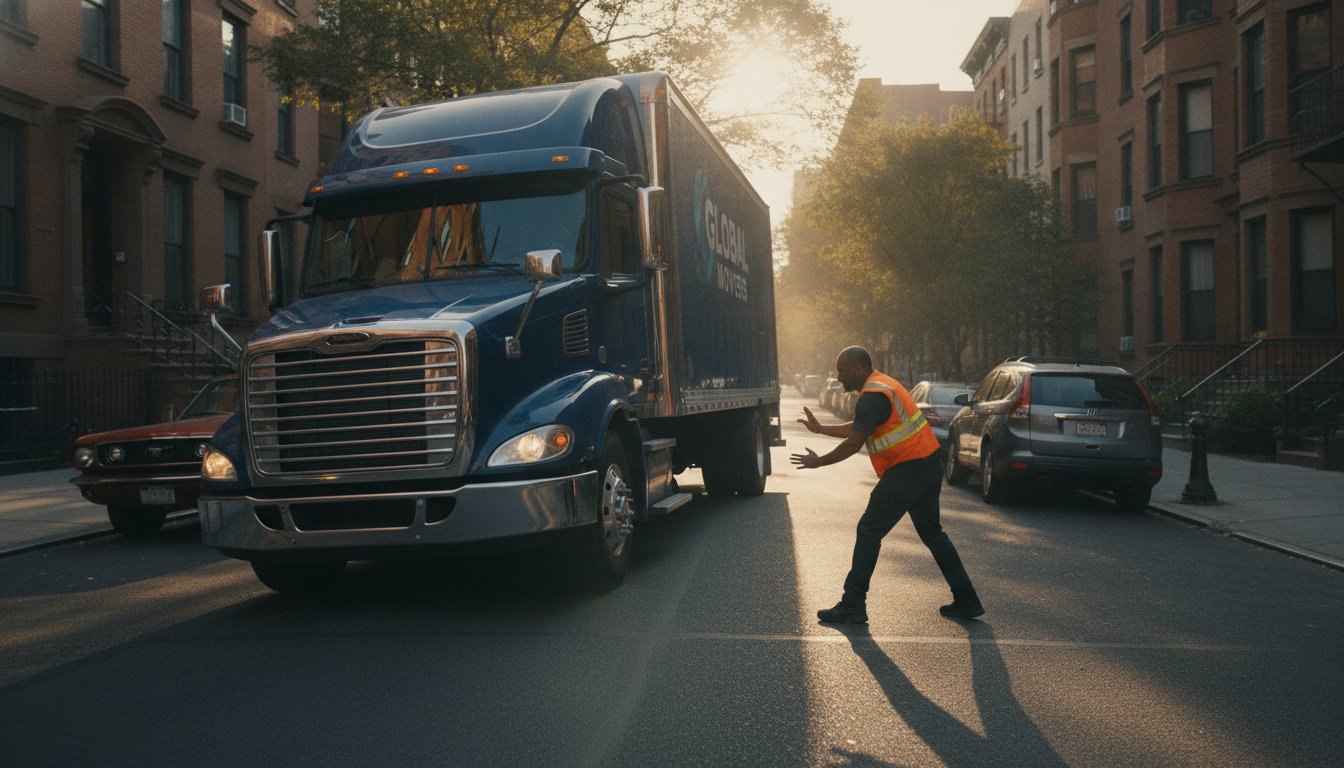
A single double-parking violation in New York City costs $115. In Boston, a tow can cost you $350 or more. These aren’t just minor inconveniences. They are expensive hurdles that can derail your moving day budget and schedule. Most people view parking a large moving truck in the city as a stressful gamble. It doesn’t have to be. You can secure your space and your peace of mind with a bit of tactical planning.
We know the feeling of staring at a narrow one-way street while driving a 26-foot rig. It’s intimidating. You worry about blocking traffic, missing permit deadlines, or returning to an empty curb where your truck used to be. This guide changes that. We’ve compiled the latest 2026 data on permit costs and local regulations to ensure your move is completely legal and ticket-free.
You’ll learn exactly how to navigate the permit systems in cities like Chicago and Los Angeles. We’ll show you how to find viable spots and provide professional tips for maneuvering in tight urban corridors. Read on to master the logistics of city parking and turn a high-stakes task into a straightforward success.
Key Takeaways
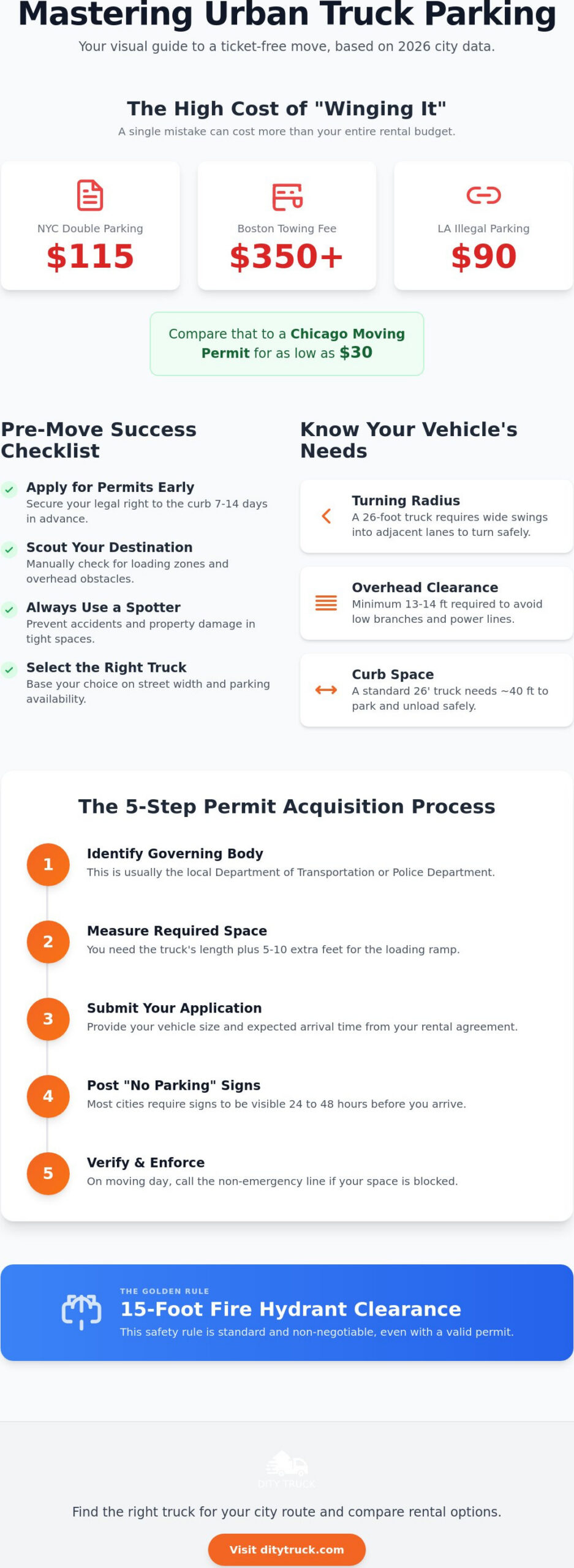
- Apply for city parking permits at least 7 to 14 days in advance to secure your legal right to the curb.
- Conduct a manual scout of your destination to identify loading zones and overhead obstacles before the truck arrives.
- Master the logistics of parking a large moving truck in the city to avoid common fines and expensive towing fees.
- Always use a spotter when maneuvering in tight spaces to prevent accidents and property damage.
- Select a truck size based on your destination’s street width and parking availability to ensure a smoother arrival.
The Reality of Urban Moving Truck Logistics
Driving a massive vehicle into a dense city center is a complex logistical operation. Most urban streets were designed for horses or compact cars, not 26-foot box trucks. When you are parking a large moving truck in the city, you are fighting against height, width, and weight constraints that simply don’t exist in the suburbs. Planning for the “last mile” of your journey is just as important as the drive itself. It’s the difference between a smooth unloading process and a day ruined by local authorities.
Understanding Your Truck’s Dimensions
Success starts with knowing exactly what you’re driving. Most large moving trucks require at least 13 to 14 feet of overhead clearance. This makes low-hanging tree branches and low-slung power lines significant hazards. If you ignore these, you risk thousands in property damage and truck repair fees. Check your route for height restrictions before you start the engine. Don’t assume an alleyway is wide enough just because a car fits through it.
Turning radius is another critical factor. A 26-footer requires a massive amount of space to clear a corner safely. You’ll often need to swing wide into adjacent lanes to avoid clipping curbs or parked cars. Weight also matters. Many residential neighborhoods or older bridges have strict weight limits. Entering these zones illegally can lead to structural damage or immediate fines from local authorities. You need a professional mindset to handle these dimensions in tight quarters.
The Consequences of Poor Planning
The urban parking challenges found in major cities are managed with strict enforcement. If you decide to wing it on moving day, prepare for high costs. In 2026, New York City fines for double parking commercial vehicles are $115. In Los Angeles, illegal parking costs between $60 and $90. Boston is even stricter. Fines there start at $90, and towing fees frequently range from $200 to $350. These costs can quickly eclipse your entire rental budget.
The risks aren’t just financial. One improperly parked truck can block an entire lane, creating a ripple effect that stalls local traffic for blocks. This creates a high-stress environment for you and your neighbors. There are insurance risks too. If an accident occurs while you are illegally parked, your insurance company might refuse to cover the claim. This leaves you personally liable for all damages. Proper planning ensures you aren’t parking a large moving truck in the city at the expense of your budget or your peace of mind.
Securing Your Spot: Permits and Regulations
City parking permits act as your legal shield against tickets and tow trucks. In the chaotic environment of urban relocation, a valid permit is the only thing standing between a successful move and a $200 impound fee. Most major metropolitan areas require you to apply for these permits 7 to 14 days in advance. Waiting until the week of your move is a high-stakes gamble you shouldn’t take.
The cost of a permit is almost always lower than the cost of a single violation. For example, a moving permit in Chicago can cost as little as $30 per day. Compare that to the $115 double-parking fines common in New York City or the $90 fines in Boston. Investing in the proper paperwork is the smartest financial decision you can make when parking a large moving truck in the city.
The 5-Step Permit Acquisition Process
Securing your space follows a predictable framework across most U.S. cities. First, identify the governing body. This is usually the local Department of Transportation or the Police Department. Second, measure your required space accurately. You need the total length of the vehicle plus an additional 5 to 10 feet for the loading ramp. A standard 26-foot truck typically requires about 40 feet of curb space to operate safely.
Third, submit your application. You’ll need to provide specific information from your moving truck rental agreement, including the vehicle size and expected arrival time. Fourth, once approved, you must post the physical “No Parking” signs. Most jurisdictions require these to be visible 24 to 48 hours before the truck arrives. You can learn more about the specifics of obtaining a street occupancy permit through official city portals. Finally, verify the spot is clear on moving morning. If a car is blocking your permitted zone, call the local non-emergency line for enforcement. To find the best vehicle for your specific city route, you can compare rental options online to ensure you have the right dimensions for the job.
Common Urban Parking Rules to Memorize
Even with a permit, certain rules remain non-negotiable. Hydrant clearance is the most critical. The 15-foot rule is standard. Parking a large truck in front of a hydrant is an invitation for an immediate tow. Street cleaning schedules are another common trap. If your move falls on a Tuesday morning and the street sweeper is scheduled for 8:00 AM, your permit might not protect you from a ticket. Always check the permanent street signs in addition to your temporary ones.
Understand the difference between commercial and residential zones. Some residential streets have strict weight limits that prohibit large trucks entirely, even with a moving permit. If your destination is in a restricted zone, you may need to park on a nearby commercial artery and use a smaller “shuttle” van to complete the move. Identifying these hurdles early keeps your moving day on track and your budget intact.
Strategy on the Ground: Where to Park
Success on moving day starts long before you put the truck in gear. You need a boots-on-the-ground assessment of your destination. Walk the block on foot 24 hours before arrival. This allows you to identify hidden obstacles like low-hanging signs or tight curb corners that digital maps might miss. When parking a large moving truck in the city, your goal is to minimize the distance between the ramp and your front door without violating local ordinances. A quick physical check ensures the space you planned for actually exists.
Follow a strict hierarchy for selecting your spot. Commercial loading zones are the gold standard. They offer the most clearance and legal protection. Permitted spots come next. These are the spaces you’ve reserved through the city. Paid parking lots are your last resort. They are expensive and often have height restrictions that make them unusable for a 26-foot truck. Using 2026-era parking apps can help you filter for truck-friendly zones in real-time. This technology identifies curb space specifically designated for oversized vehicles, saving you from driving in circles.
Loading Zones vs. Residential Streets
Commercial loading zones are efficient but strictly regulated. Most have 30-minute or 1-hour limits. You must be actively loading or unloading to stay legal. Residential streets offer more time but present physical challenges. Narrow lanes can turn into one-way traps if you aren’t careful. Use a scout car to hold your permitted space until the truck arrives. This prevents unauthorized vehicles from stealing your spot at the last minute. It’s a simple tactic that saves hours of frustration and keeps your move on schedule.
Alleys and Narrow Passageways
Alleys look like a shortcut to easy loading. They are often a trap. Always verify the alley has an exit wide enough for your specific truck before you enter. Getting stuck in a dead-end alley requires a professional tow and causes hours of delay. You must also ensure trash pickup and emergency vehicles can still pass. Blocking a fire lane is an immediate ticket and tow offense. Watch the ground clearance too. Steep inclines at alley entrances can high-center a long truck, leaving you stuck with your wheels spinning. Check the grade of the road before you commit.
Effective communication is your best defense against neighbor complaints. If you know you’ll be blocking a portion of the sidewalk or narrowing the street, tell your neighbors. A quick knock or a polite note on their door prevents angry neighbor calls to the local tow company. People are generally helpful when they know what to expect. Clear communication builds a friction-free environment for your entire move. Parking a large moving truck in the city is easier when the community is on your side.
Maneuvering and Securing the Vehicle Safely
Operating a 26-foot vehicle in a crowded downtown area requires a professional driver mindset. You are no longer driving a standard car. You are managing heavy machinery in a high-traffic environment where mistakes are expensive. Precision and patience are your best tools. Parking a large moving truck in the city is the most difficult part of the journey. It demands your full attention and a systematic approach to safety.
The “Spotter” rule is your primary safety protocol. Never attempt to reverse or park in a tight urban spot without a second set of eyes. Your mirrors provide limited data. A spotter can see low-hanging signs, cyclists, and small children that stay hidden in your blind spots. Establish clear hand signals before you start moving. Shouting is ineffective over city noise. If your spotter disappears from your mirror, stop the truck immediately. Safety depends on constant visual contact.
The Art of Parallel Parking a Box Truck
Parallel parking a massive truck is a test of spatial awareness. Your mirrors are your only source of truth. Adjust them so you can see the rear tires and the curb simultaneously. Remember the reality of tail swing. When you turn the steering wheel sharply to the right, the back left corner of the truck swings out into traffic. This can easily clip passing cars if you aren’t careful. Move slowly. Small adjustments are easier to correct than large errors.
Safety requirements for urban inclines are non-negotiable. Always curb your wheels. If you are parked facing downhill, turn your steering wheel toward the curb. If you are facing uphill, turn the wheels toward the street. This ensures the truck won’t roll into traffic if the parking brake fails. To find a vehicle that fits your specific skill level, you can compare moving truck rentals and choose a model with better visibility or a shorter wheelbase.
Theft Prevention While Parked
Urban theft is often opportunistic. A parked moving truck is a high-value target for quick-grab theft. Use the “Lock-and-Chock” method every time you walk away from the vehicle. This means locking the rear cargo door and placing chocks behind the wheels. Never leave the truck unlocked while you carry a box into a building. It only takes seconds for someone to grab a laptop or a small safe from the back of the ramp.
Physical security starts with high-quality hardware. Do not rely on the cheap padlocks sold at the rental counter. Purchase a heavy-duty, high-security disc lock. These are much harder to cut with bolt cutters. Park in well-lit areas whenever possible. If you must leave the truck overnight, try to park with the rear door flush against a wall or a sturdy fence. This physically prevents the door from being opened. Managing your ramp is also a safety priority. Never leave the loading ramp extended across a sidewalk when not in use. It is a major tripping hazard for pedestrians and can lead to personal liability claims if someone is injured.
Choosing the Right Truck for City Navigation
Parking success starts at the booking stage. If you choose a vehicle that is too large for your street, no amount of skill will save you from a ticket. You must match the truck to the destination. While a 26 foot moving truck is perfect for a four-bedroom house, it is a liability in a downtown historic district. Selecting the right size is the first step in stripping away the complexity of urban logistics. It sets the tone for your entire moving day.
Comparing Sizes for Urban Maneuverability
- Cargo vans: These are the “park anywhere” solution. They fit into standard metered spots and most parking garages. They are ideal for studio apartments or small one-bedroom moves where curb space is at a premium.
- 12 to 16 foot box trucks: This is the sweet spot for most city moves. You get enough volume for a one-bedroom apartment without sacrificing all maneuverability. These trucks are significantly easier to parallel park than their larger counterparts.
- Large box trucks (22 to 26 feet): Only go big if you have a guaranteed, permitted loading dock or a wide, multi-lane street. Parking a large moving truck in the city becomes exponentially harder with every extra foot of wheelbase.
Consider the “Two-Trip” strategy if your destination is particularly tight. Renting a smaller, more nimble truck and making two trips might feel less efficient. It is often cheaper than a single $350 towing fee or a $115 double-parking fine. You gain speed in parking and lose the stress of blocking traffic. It is a calculated move for the savvy urban mover who values peace of mind over a single-trip goal.
Streamlining Your Booking with DityTruck
DityTruck acts as your smart assistant, performing the heavy lifting behind the scenes. You can filter by truck size to find the most maneuverable options in your area instantly. This transparency allows you to see exactly what you are getting before you commit. You can also compare one way truck rentals for moving to find flexible drop-off points near your new home. This eliminates the need to drive a massive truck through city traffic twice.
The platform provides a clear path between your problem and a resolution. By comparing rates and dimensions across all major providers, you ensure you aren’t overpaying for a truck that won’t fit on your street. Don’t leave your urban move to chance. Compare urban-friendly truck rental rates on DityTruck now and secure the right tool for a ticket-free moving day.
Take Control of Your City Move
Urban parking doesn’t have to be a high-stakes gamble. You can eliminate the fear of expensive tickets and towing by securing your permits at least 14 days in advance. Remember that success depends on choosing the right tool for the specific physical constraints of your destination. Sometimes, a smaller and more nimble vehicle is the smartest financial decision you can make. Successfully parking a large moving truck in the city is a predictable process when you prioritize tactical planning over guesswork.
We are here to simplify your logistics. Our platform provides real-time rate comparisons and aggregated inventory from the most trusted US providers. You receive transparent pricing with no hidden fees or surprises at the counter. This clarity allows you to move with total confidence and speed. Find and book the perfect city-sized moving truck on DityTruck today. You have the knowledge and the right strategy. Your ticket-free moving day starts right now.
Frequently Asked Questions
Do I need a special driver’s license to park a large moving truck in the city?
You don’t need a Commercial Driver’s License (CDL) to operate or park most standard moving truck rentals. Consumer trucks, including 26-foot models, are designed to stay under the 26,001-pound weight threshold that requires special certification. You must be at least 18 or 21 years old and possess a valid standard license. Always verify the Gross Vehicle Weight Rating on your rental agreement to ensure compliance with local city ordinances and weight limits.
Can I double-park a moving truck if I stay with the vehicle?
Staying with the vehicle won’t protect you from a double-parking ticket in most major cities. In New York City, the $115 fine applies regardless of whether the driver is behind the wheel. Double-parking also creates significant liability if an accident occurs. It’s better to use a legal loading zone or a permitted space. If you must stop briefly, keep your hazard lights on and have a spotter ready to move the truck immediately for emergency vehicles.
How far in advance should I apply for a city moving permit?
You should apply for your permit 7 to 14 days before your move. Most municipal departments, like the Department of Transportation, require lead time to process the application and verify the street’s availability. This window also allows you to receive and post physical signs 24 to 48 hours in advance. Early planning is the most effective way to ensure successful parking a large moving truck in the city without the stress of last-minute denials.
What happens if someone parks in my permitted “No Parking” zone?
Call the local non-emergency police line or parking enforcement office immediately if an unauthorized vehicle occupies your permitted spot. Provide your permit number and the vehicle’s license plate. Authorities will typically issue a citation or dispatch a tow truck to clear the space. Don’t attempt to confront the owner or block them in. Having your physical permit on hand helps speed up the enforcement process so you can start unloading without significant delays.
Is it legal to park a moving truck overnight on a city street?
Overnight parking is often prohibited for commercial-sized vehicles in residential zones without a specific multi-day permit. Many cities have oversized vehicle ordinances that take effect between 2:00 AM and 6:00 AM. If your permit is only for daytime loading, you risk a heavy fine or towing. Check for nearby commercial lots or well-lit industrial areas that allow overnight stays. Always use high-security locks and back the rear door against a wall for added safety.
How do I find out the height clearance of city bridges on my route?
Use a truck-specific GPS app or consult the local Department of Transportation’s low-clearance map. Standard consumer apps often lack data on bridge heights and weight limits. Most rental trucks require at least 14 feet of clearance. Identifying these obstacles before you start driving prevents catastrophic damage to the vehicle and city infrastructure. It’s a critical step for anyone parking a large moving truck in the city safely and avoids the risk of getting stuck under an overpass.
Can I use orange cones to save a parking spot for my moving truck?
Orange cones have no legal authority and won’t prevent tickets or towing. While some residents use them as a courtesy signal, parking enforcement officers can cite you for obstructing the roadway. Only official city-issued signs or permits grant you the legal right to reserve curb space. If you don’t have a permit, use a scout car to hold the spot legally until the truck arrives. This is a much more reliable tactic than using cones or chairs.
What is the best time of day to arrive in the city with a large truck?
Arrive between 10:00 AM and 2:00 PM to avoid the worst urban congestion. This window sits comfortably between the morning rush hour and the afternoon school and work departures. It also avoids early morning street cleaning windows that can complicate your parking search. Mid-morning arrivals provide enough daylight to complete your move safely. Avoid Friday afternoons, as traffic volume increases significantly and parking enforcement often becomes more aggressive before the weekend starts.
Leave a Reply