
That $19.95 rental truck sticker price is usually a total myth. By the time you factor in fuel at $4.09 a gallon and mileage fees that reach $1.99 per mile, your “cheap” DIY move can quickly spiral out of control. The debate of movers vs truck rental isn’t just about the bottom line. It’s about weighing your physical health and time against a strict moving budget.
You’re likely feeling the pressure of 2026’s rising logistics costs. You want to save money, but you’re dreading the hidden fees in rental contracts and the literal heavy lifting of a multi-room home. We’re here to strip away that complexity. This guide provides a transparent, data-driven comparison to help you decide which path actually fits your specific needs. We’ll give you a clear financial breakdown, a checklist for your decision, and the tools to find the best possible rate for whichever route you choose. Moving is high stakes, but it doesn’t have to be complicated.
Key Takeaways
- Uncover the hidden costs of DIY moves. We calculate fuel, mileage, and insurance to show the true total beyond the sticker price.
- Evaluate movers vs truck rental with our four-filter framework. It simplifies your choice based on distance, volume, and labor.
- Find the “tipping point” for long-distance moves. Learn when professional efficiency beats the stress of a long DIY drive.
- Weigh your time against your budget. Decide if the physical toll of heavy lifting is worth the potential financial savings.
- Compare rates in real-time. Use smart tools to find the best rental deal without the manual search.
The Great Moving Dilemma: Professional Movers vs. DIY Truck Rental in 2026
Moving is a high-stakes task. It requires coordination, muscle, and a clear budget to execute successfully. In 2026, the logistics of relocation have become more expensive and more regulated than in previous years. Clarity is your best tool for navigating these changes without falling into common traps. Deciding between movers vs truck rental is the first major hurdle you will face. It is a decision that forces you to value your time against your wallet. The core trade-off between movers vs truck rental comes down to your personal bandwidth versus your financial flexibility.
Current market trends are shifting the math for most households. National average fuel prices sit at $4.09 per gallon. New federal regulations now require digital manifests and biometric cargo verification for interstate moves to enhance security. A quick moving industry overview shows that companies are focusing heavily on profitability. This often means less flexibility on pricing and scheduling for consumers. As more people migrate toward the South and Southwest, long-distance logistics are becoming more crowded. You need to understand the total investment required before you commit to a specific path.
What are Professional Movers?
Professional movers provide a full-service logistics solution for your relocation. They handle the packing, loading, driving, and unloading of your entire household. This is the hands-off approach. It offers high convenience but comes with a matching price tag to cover the labor and equipment. You are paying for their expertise with heavy items and their specialized tools. These companies also provide federally mandated liability coverage. Released Value Protection is standard at $0.60 per pound. Many families choose Full Value Protection to ensure their valuables are covered for their actual replacement costs. It is the most efficient way to move if you want to avoid the physical strain of the process.
What is a DIY Truck Rental?
A DIY truck rental gives you total control over the entire process. You choose the specific vehicle size and the exact route you take to your destination. You set the pace of the loading and the driving throughout the day. This is the sweat equity model. You can achieve significant savings if you are willing to do the heavy lifting yourself. It is a flexible option that works well for local moves or complex routes with multiple stops. However, you take on all the responsibility. You are the driver, the packer, and the project manager. The savings are clear, but you must account for the physical toll and the risk of managing a large vehicle on the highway. It requires a high level of organization to stay on schedule.
Calculating the Real Cost: Professional Movers vs. Rental Truck Expenses
Comparing movers vs truck rental requires looking past the initial estimate. Professional quotes often exclude gratuity or heavy item surcharges. Rental quotes usually hide the massive impact of mileage and fuel. You need a complete breakdown of every line item to see the true financial picture. Don’t be fooled by a low sticker price that ignores the reality of 2026 logistics. Transparency is the only way to protect your budget from unexpected spikes.
The True Cost of a Professional Move
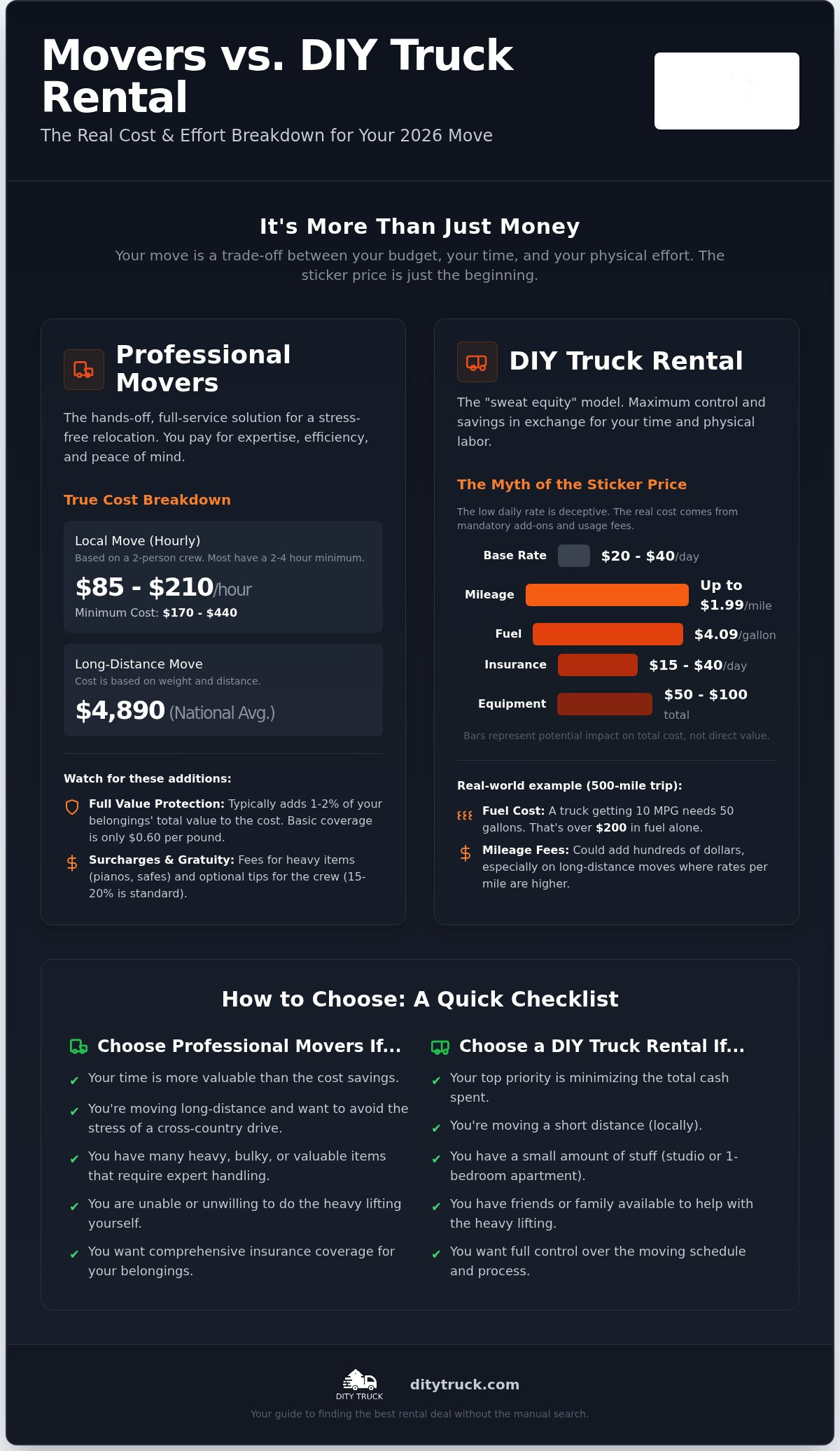
Local moves rely on hourly labor. Rates currently sit between $85 and $210 per hour for a two-person crew. Most companies enforce a 2 to 4 hour minimum. This means your baseline cost starts between $170 and $440 before the first box is loaded. For interstate moves, cost is driven by weight and distance. The national average for a long-distance move is approximately $4,890. You should also consult the FMCSA Protect Your Move checklist to avoid fraudulent operators who lowball quotes only to add fees later. Valuation coverage adds more to the bill. While basic protection is free, it only covers $0.60 per pound. Full Value Protection typically costs 1 percent to 2 percent of your belongings’ total value.
The True Cost of a Rental Truck
Rental trucks look affordable on paper. Base rates stay low, often between $20 and $40 per day. The real costs appear in the fine print. Mileage fees can reach $1.99 per mile for local trips. Fuel is another major factor. With gas at $4.09 per gallon and trucks getting only 10 to 12 miles per gallon, a 500 mile trip adds significant expense to your bill. You can find a detailed breakdown of box truck rental prices to see how these fees scale with vehicle size. Don’t forget equipment. Renting dollies, furniture pads, and ramps adds another $50 to $100 to your total. Rental insurance is also a necessity, typically costing between $15 and $40 per day.
Every move has ghost expenses that buyers often overlook. Packing supplies like boxes and tape can cost $200 for a standard three-bedroom home. Long-distance DIY moves require lodging and meals for every day you are on the road. Professional movers may charge extra for stairs, long carries, or narrow street access. These small costs add up fast. You can compare real-time rental rates to see which providers offer the most transparent pricing for your specific route. It’s the fastest way to ensure your DIY choice is actually the cheapest path forward.
Labor, Risk, and Control: The Moving Experience Compared
Moving is more than a financial transaction. It is a grueling physical event. The choice between movers vs truck rental determines how much of that physical burden lands on your shoulders. Professional crews turn a chaotic day into a managed process. DIY moves turn you into the driver, the loader, and the risk manager. This shift in responsibility changes the entire experience from a task to be completed into an endurance test.
Time management is the most immediate difference. A professional crew can often clear a standard three-bedroom home in under four hours. They move with practiced speed and specialized equipment. A DIY move typically stretches into a 12-hour marathon. You have to account for the learning curve of packing a truck and the slower pace of non-professional labor. When you choose the DIY path, you’re trading your entire weekend for a lower bill. It’s a valid trade, but you must be honest about your physical capacity.
The Physical Toll of DIY
Loading a 26-foot truck requires more than just muscle. It requires an understanding of physics and weight distribution. If you pack too much weight toward the rear, you risk dangerous trailer sway at highway speeds. Driving the vehicle is equally demanding. You’re suddenly responsible for a commercial-sized machine with significant blind spots and strict clearance heights. One wrong turn into a low-clearance parking garage can result in thousands of dollars in damage. You also have to consider the “Friend and Family” tax. Asking for help costs social capital. It often leads to a slower, less organized day where the risk of injury or damaged furniture increases significantly.
The Trust Factor with Professional Movers
Hiring professionals requires a different kind of effort. You must spend time vetting companies to avoid rogue operators who use bait-and-switch quotes. Once you find a reputable team, you gain the benefit of their expertise. They know exactly how to wrap a mahogany table or secure a refrigerator to prevent breakage. They also provide a clear path for liability. If a professional drops your television, their valuation coverage handles the claim. If you drop it during a DIY move, the cost comes directly out of your pocket. This peace of mind is often the primary reason people choose movers over a rental, even with the higher price tag. You’re paying for a result, not just a service.
The Decision Framework: Choosing Between Movers and a Rental Truck
Deciding between movers vs truck rental requires an objective filter. You need to strip away the emotion and look at the logistics. There are four primary filters to help you choose: distance, volume, physical capability, and driving confidence. Using these filters ensures you choose the path that maximizes your time and protects your budget. It turns a stressful guess into a logical plan.
Distance is the first major hurdle. Local moves under 50 miles are the sweet spot for a DIY rental. You can make multiple trips and return the truck quickly. Long-distance moves over 500 miles shift the advantage to professionals. The national average cost for an interstate move is $4,890. This price includes the fuel, the insurance, and the grueling hours behind the wheel of a heavy vehicle. You avoid the mental fatigue of a multi-day drive. Professionals handle the long-haul logistics so you don’t have to.
Volume and capability are equally critical. A studio or one-bedroom move is manageable for most people. A four-bedroom house is a logistical mountain. It requires a 26-foot truck and precise loading to avoid damage during transit. If you have chronic physical issues or have never driven a vehicle larger than an SUV, the DIY route is a high-risk gamble. Be honest about your capacity. Moving is an endurance event. One wrong lift or a tight turn in a large truck can cost more than the money you hoped to save.
When to Rent a Truck (The DIY Path)
- Strict budget: You have more time than money and need to keep costs as low as possible.
- Small home: Your inventory fits into a smaller truck and is under 1,500 square feet.
- Total control: You want to handle every item yourself and set your own loading schedule.
When to Hire Movers (The Pro Path)
- Specialty items: You own high-value, fragile, or heavy items like pianos and safes.
- Long-distance: You want to avoid the complexity and risk of a cross-country drive.
- Time value: Your professional or personal time is worth more than the cost of the service.
The Hybrid Move: A Middle Ground
The hybrid model is the best of both worlds. You rent the truck yourself to save on transportation markups. Then, you hire local labor specifically for loading and unloading. This approach provides professional muscle without the full-service price tag. It can save you up to 40 percent compared to hiring a traditional moving company. You keep the savings of a rental but skip the physical toll. It is a smart assistant strategy for a high-stakes task. You manage the truck while the pros manage the weight.
Your choice depends on your specific needs and constraints. Start by identifying your highest priority. If savings are the goal, book your truck rental through a platform that compares top providers in real-time. This ensures you get the best possible rate before you even pick up the keys.
Optimizing Your DIY Choice with DityTruck
If the decision framework pointed you toward the DIY route, your next task is securing the best rate. Settling for the first quote you see is a mistake that often costs hundreds of dollars. The choice between movers vs truck rental usually hinges on your desire to save money. You need a tool that ensures those savings are actually realized. DityTruck acts as your smart assistant throughout this process. We aggregate the market so you don’t have to perform the manual labor of searching multiple websites. We strip away the complexity of truck logistics to give you a clear, honest view of your options.
Transparency is our signature. We believe that booking a truck should be as simple as booking a flight. When you see real-time data from top providers in one place, the best choice becomes obvious. You compare the rates, you book the vehicle, and you save. This streamlined approach replaces the stress of uncertainty with the confidence of a logical plan. It is the most efficient way to manage a high-stakes task like a cross-country relocation.
Why Comparison is Non-Negotiable
Rental rates are volatile. They fluctuate daily based on inventory, seasonal demand, and specific pick-up locations. In 2026, dynamic pricing is the industry standard for all major providers. Comparing options from different rental companies side-by-side reveals significant price gaps for the exact same route. One company might have a surplus of trucks in your city, leading to a lower base rate for a one-way trip. Another might offer more favorable mileage terms for local moves. DityTruck brings this data to one screen. You see the whole market instantly. It’s the shortest path to financial honesty in a complex industry.
Ready to Move? Start with a Fair Comparison
Don’t guess on your 2026 budget. Get a real-time moving truck rental quote before you make any commitments. Digital reservations are now the standard for speed and accuracy. Booking online allows you to lock in rates that aren’t always available through traditional phone centers. It also provides a clear digital record of your contract and insurance selections. This prevents surprises when you arrive at the rental counter. The movers vs truck rental debate ends when you have a confirmed reservation and a clear budget. Finalize your dates and lock in your rate today to ensure a friction-free move. Your time is valuable, so use a tool that respects it.
Take Control of Your 2026 Move
Moving is a high-stakes logistics project. You’ve seen that the choice between movers vs truck rental depends on your specific balance of time and budget. Professional movers offer relief from the physical toll. Rental trucks provide unmatched financial control for those willing to do the work. Remember to look past the sticker price. Factor in the fuel costs and mileage fees that often hide in the fine print. Your decision should align with your inventory volume, your total distance, and your personal bandwidth.
Don’t leave your budget to chance. Compare Penske, Budget, and other top providers in seconds. National coverage for any move size. No hidden fees. Just transparent rates and a streamlined booking process. It’s the shortest path to a successful relocation. A stress-free move starts with a smart decision. Use the right tools to strip away the complexity. Focus on your new beginning.
Compare Moving Truck Rates and Save Today
Frequently Asked Questions
Is it always cheaper to move yourself than hire movers?
A DIY move is almost always cheaper in terms of direct cash outlay. However, the total cost comparison of movers vs truck rental must include your personal labor and the risk of damage. If you have to take three days off work and risk a back injury, the professional premium might be worth the investment. Always calculate the value of your own time alongside the rental fee before making a final choice.
How much should I budget for fuel when renting a moving truck?
Budget for approximately one gallon of gas for every 10 to 12 miles traveled. With national fuel prices averaging $4.09 per gallon in late 2026, a 500 mile trip will cost roughly $170 to $200 in fuel alone. Large box trucks have poor aerodynamics and heavy loads, so expect efficiency to drop on hilly terrain. Always return the truck with a full tank to avoid high refueling surcharges from the rental company.
Do I need special insurance when renting a truck for a DIY move?
Yes, you typically need supplemental insurance because most personal auto policies exclude commercial rental trucks. Rental truck insurance usually costs between $15 and $40 per day. This coverage protects you from liability and damage to the vehicle itself. Without it, you are personally responsible for the full replacement value of the truck. Check with your credit card provider, but most also exclude large moving vehicles from their rental benefits.
Can I hire movers just to load a truck I rented?
You can hire local labor specifically for loading and unloading your rented vehicle. This hybrid approach is a popular way to resolve the movers vs truck rental dilemma. You save money by handling the transportation and fuel yourself while utilizing professional muscle for the heavy lifting. It reduces the risk of injury and ensures your items are packed securely to prevent shifting during the drive. It is a smart middle ground solution.
What is the most difficult part of driving a rental truck?
Managing clearance heights and wide turns is the most challenging aspect for new drivers. Moving trucks are significantly taller than standard SUVs. You must stay alert for low hanging branches, bridge overpasses, and drive thru awnings. These vehicles also require a much wider arc when turning at intersections to avoid clipping curbs or other cars. Always use a spotter when backing up to manage the massive blind spots behind the cargo area.
How far in advance should I book a rental truck for a 2026 move?
Book your rental truck at least two to four weeks in advance to ensure availability. If you are moving during the peak season between May and September, try to reserve your vehicle six to eight weeks early. Demand is significantly higher during these months, which can increase costs by 20 percent to 30 percent. Securing your dates early locks in the current rate and prevents the stress of last minute inventory shortages.
Are there hidden fees I should look for in a truck rental contract?
Look closely at mileage fees, environmental surcharges, and cleaning deposits. While base rates are often advertised as low as $19.95, local mileage fees can reach $1.99 per mile. You should also check for late return penalties and equipment rental costs for dollies or pads. Some companies charge a one way fee if you don’t return the truck to the original location. Always read the full contract to see the total bottom line.
What happens if I break something during a DIY move?
You are generally responsible for any damage to your belongings during a DIY move. Standard rental truck insurance covers the vehicle and liability, but it rarely covers the contents of the truck. If a television breaks due to improper packing, the replacement cost comes out of your pocket. Professional movers offer valuation protection for this reason. If you choose the DIY path, invest in high quality packing materials to minimize the risk of breakage.
Leave a Reply