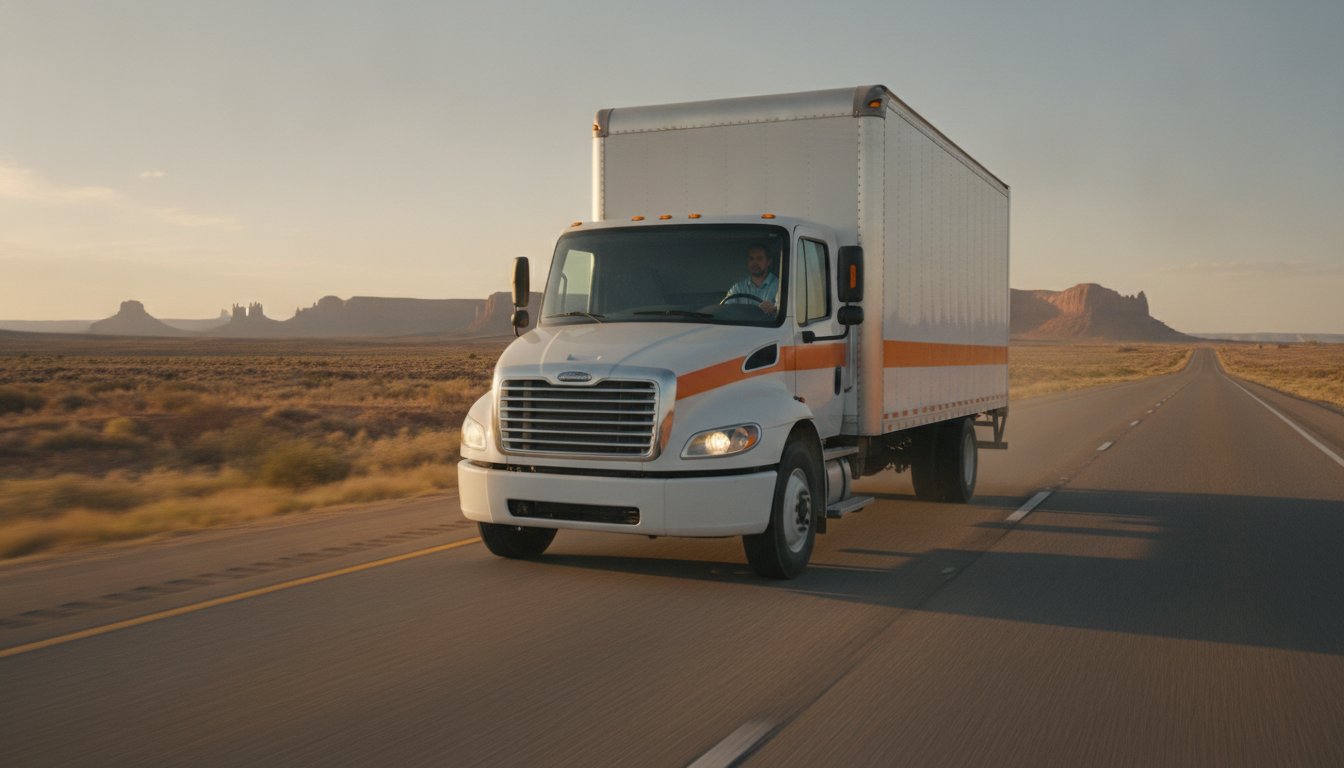
Did you know that over 145,000 accidents involving large trucks occurred in 2025? It is a sobering statistic when you are standing in a rental lot staring at a 26-foot vehicle. This machine is likely three times the size and weight of your daily driver. If you feel a knot of anxiety in your stomach, you are not alone. Learning specific tips for driving a large moving truck for the first time is the most effective way to replace that fear with genuine control.
We understand the pressure of maneuvering a heavy load through tight city streets or onto busy highways. You want to avoid vehicle damage and keep your family safe. We promise to help you master the art of driving a massive rental truck with total confidence. By following these steps, you’ll keep your belongings and your sanity intact throughout the journey. This guide provides a clear look at managing wide turns, understanding overhead clearance, and backing up without stress. You’ll arrive at your new front door ready to unload instead of dealing with an insurance claim.
Key Takeaways
- Conduct a thorough pre-trip inspection and mirror adjustment to eliminate massive blind spots before you start the engine.
- Master the four-car following distance rule and other essential tips for driving a large moving truck for the first time.
- Navigate tight corners with confidence by learning to drive deeper into intersections before starting your turn.
- Memorize your vehicle’s height to prevent costly accidents with low bridges, canopies, and overhanging trees.
- Use real-time comparison tools to find the most manageable truck size for your specific inventory and booking needs.
The Pre-Trip Inspection: Mastering Your Vehicle Before Moving
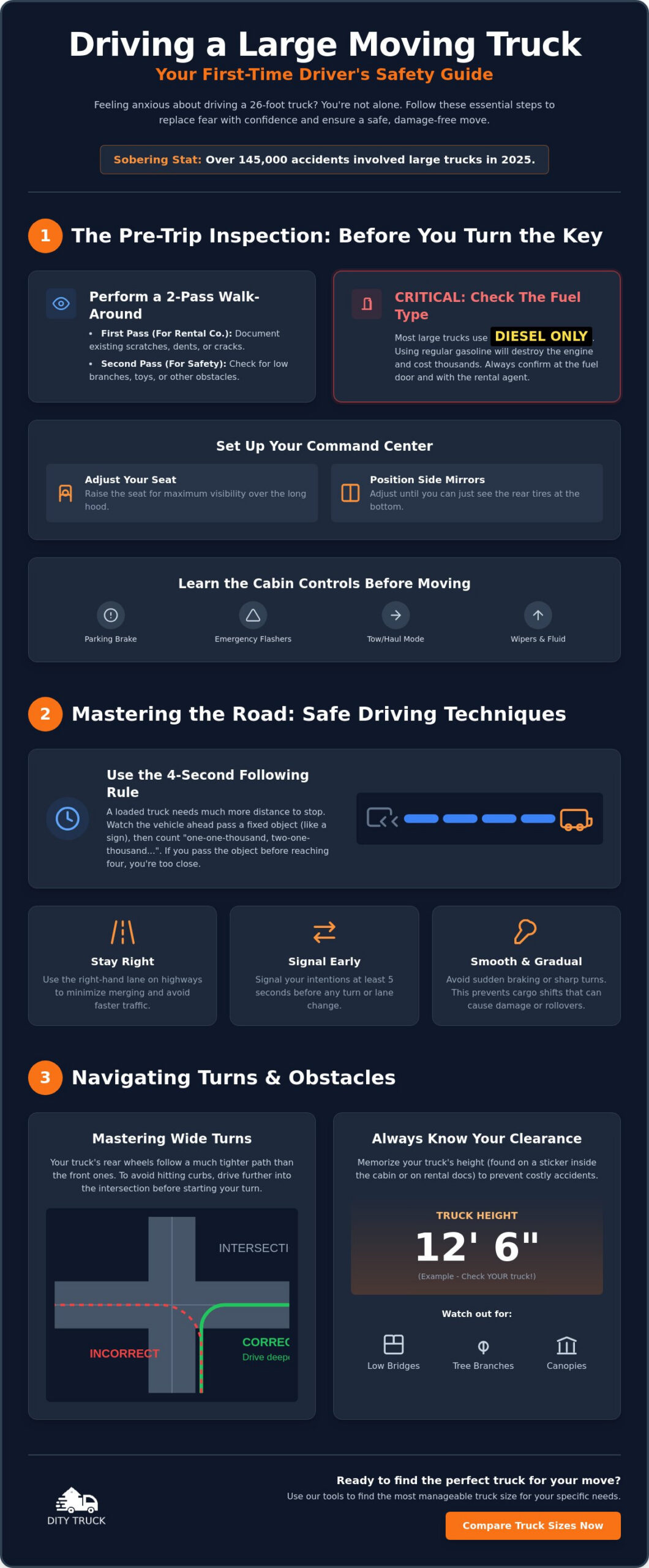
Before you even put the key in the ignition, you need to own the space around your vehicle. Walk around the truck twice. The first pass is for the rental company. Look for scratches, dents, or cracked mirrors. Document everything. The second pass is for your safety. Look for low-hanging branches, tight corners, or children’s toys near the tires. These small checks prevent massive headaches later. It is about accountability and total awareness. You are responsible for every inch of that machine the moment you leave the lot.
Check the fuel door immediately. Most large rental trucks require diesel fuel. Filling a diesel tank with standard gasoline will destroy the engine; it will leave you with a multi-thousand-dollar repair bill. Look for the “Diesel Only” sticker. If it is missing, ask the rental agent. This is one of the most critical tips for driving a large moving truck for the first time because the mistake is permanent and expensive. A simple label check saves your entire moving budget. Don’t assume the previous renter left it full of the right fuel either. Check the gauge and the cap before you pull away.
Setting Up Your Command Center
Adjust your seat height for maximum visibility over the hood. You aren’t in a sedan anymore. You need to see as much pavement as possible. Position the side mirrors so you can just barely see the rear tires in the lower portion of the glass. Mirror positioning is the primary safety factor because it allows you to track your truck’s path during turns and monitor lane positioning. If you can’t see your back tires, you can’t see the curb you’re about to hit. Proper visibility transforms a terrifying drive into a manageable task.
Learning the Cabin Controls
Locate the parking brake and emergency flashers before you move an inch. You don’t want to hunt for the hazard button while stalled on a busy highway. Find the tow/haul mode button. This setting adjusts the transmission to handle the extra weight of your furniture. It prevents the engine from overworking on steep inclines and assists with downhill braking. Test the wipers and the horn. It sounds basic, but you need to know how they feel before you’re in a downpour. While you don’t need a Commercial Driver’s License (CDL) for a DIY move, the truck’s dashboard icons follow industrial standards. Take a minute to understand the engine temperature lights to avoid mid-trip panic. Knowledge is the shortest path to a stress-free arrival. Use this checklist before leaving the lot:
- Identify the headlight switch and high-beam lever.
- Locate the windshield fluid reservoir and defrost settings.
- Confirm the location of the registration and insurance documents in the glovebox.
- Test the turn signals and brake lights with a partner standing outside.
Mastering the Road: Handling a Large Truck in Traffic
Driving a massive rental truck requires a total mental shift. You are no longer piloting a nimble sedan. You are managing several tons of steel and household goods. This weight creates a level of momentum that does not exist in your daily driver. One of the most vital tips for driving a large moving truck for the first time is to respect this physics shift immediately. Every action must be deliberate. Every reaction must be early.
Start with strict lane discipline. Stay in the right-hand lane whenever possible. This strategy minimizes the need to merge and keeps you away from faster, aggressive traffic. Signal your intentions at least five seconds before moving your steering wheel. This window gives other drivers time to react to your size and creates a safety buffer. Avoid sudden braking at all costs. Slamming the brakes causes your cargo to shift violently. This can damage your valuables or even cause a rollover if the weight distribution becomes uneven. Smooth, gradual movements are the key to a successful trip.
Managing Braking Distances and Gaps
A fully loaded truck requires significantly more pavement to stop than an empty one. Use the four-second rule to maintain a safe gap. When the vehicle in front of you passes a fixed object, like a road sign or a bridge shadow, count to four. If you reach that same object before you finish counting, you are following too closely. Anticipate traffic light changes by looking several blocks ahead. If you see a “stale” green light, lift your foot off the accelerator early to prepare for a stop. Increased weight directly increases the distance required for a full stop. This simple physics reality means you must monitor the road further ahead than you ever have before.
Navigating Highway Merging and Lane Changes
Your mirrors are your primary tools for survival on the interstate. Check them every five to eight seconds. This constant scanning keeps you aware of smaller cars that often lurk in your massive blind spots. When merging onto a high-speed highway, wait for an exceptionally large gap. You cannot accelerate quickly enough to “squeeze” into a tight space. Avoid passing smaller cars unless they are traveling at a dangerously low speed. Staying consistent is more important than being fast. If you are still planning your trip, you can compare rental options online to find a truck size that feels manageable for your skill level. A smaller truck is often easier to handle in heavy city traffic.
Turning and Backing Up: Navigating Tight Spaces Safely
Maneuvering a 26-foot box through a tight residential street feels like threading a needle with a sledgehammer. It isn’t impossible, but it requires a complete change in how you perceive vehicle movement. Most rental insurance claims involve low-speed collisions with stationary objects like poles or parked cars. This is why mastering turns and reversals is at the top of our tips for driving a large moving truck for the first time. You are no longer just steering a front end; you are managing a massive rear overhang and a shifting pivot point.
The Secret to Wide Right Turns
Standard right turns are the enemy of the first-time truck driver. In a car, you turn as soon as your shoulder clears the corner. In a truck, that leads to a curb strike or a destroyed mailbox. Wait until your cab is deep into the intersection before you begin rotating the steering wheel. This “button-hook” maneuver ensures the rear wheels clear the corner safely. The pivot point is the center of your rear axle, and the truck effectively rotates around this fixed line. Monitor your passenger-side mirror throughout the entire arc. If you see the rear tires getting too close to the curb, stop and reset.
Residential areas require extra vigilance regarding tail swing. When you crank the wheel sharply to the right, the back of the truck actually swings out to the left. This overhang can extend several feet beyond your lane. It is a common cause of accidents involving vehicles in the adjacent lane or trees lining a narrow driveway. Always check your left mirror before starting a sharp right turn to ensure the space is clear for your truck’s tail.
Reversing with a Spotter
Reversing is the most dangerous task you’ll face. Never put the truck in reverse without using the GOAL method: Get Out And Look. Walk the entire path behind the truck to check for low-hanging wires, hidden stumps, or narrow alleyway edges. Once the path is clear, use a spotter. A human eye is the only reliable tool for tight docking because backup cameras often have distorted perspectives and limited range.
Establish clear hand signals with your helper before shifting into gear. Your spotter should stand at the rear of the truck on the driver’s side where you can see them clearly in the mirror. If their face disappears from your view, stop the truck instantly. Don’t assume they moved to a better spot; assume they are in danger. Keep your window down so you can hear their shouts over the engine noise. This simple communication loop prevents 90 percent of backing accidents.
Clearance and Weight: Avoiding Common Rental Disasters
Driving a truck means thinking in three dimensions. Most drivers only focus on the path in front of them. You must focus on the space above you. Misjudging height is the most common cause of catastrophic rental damage. It often voids your insurance coverage instantly. This is one of the most vital tips for driving a large moving truck for the first time because overhead damage is almost always preventable with a simple glance upward. You are responsible for every inch of that box, including the roof.
Overhead Clearance Awareness
Memorize the truck height immediately. It is usually printed on a sticker on the dashboard or reversed on the front of the box for mirror viewing. Standard box trucks often stand 12 to 13 feet tall. This height makes drive-thrus, bank canopies, and low-hanging tree branches dangerous obstacles. Assume all parking garage entrances are too low. These structures are built for passenger cars. If you enter a gas station, stay in the outermost lane to avoid the canopy edge. Check for bridge height signs on every underpass. If a sign says 12 feet and your truck is 12 feet 6 inches, do not attempt it. Stop. Turn around. It’s better to be late than to lose the top of your truck.
Weigh Stations and Road Restrictions
Weigh station requirements for rental trucks are a frequent source of confusion. Regulations vary by state. In some regions, any vehicle over 10,000 pounds Gross Vehicle Weight Rating (GVWR) must stop. Other states exempt personal moves. Watch for “All Trucks Must Enter” signs. If you see one, follow the lane. It is better to spend five minutes on a scale than to face a highway patrol citation. Determine your loaded weight before you hit the road. Overloading affects your braking and suspension systems.
Look for “Truck Route” signs to stay on reinforced pavement. These designated paths avoid residential bridges that cannot handle your loaded weight. Avoiding these restricted roads prevents expensive fines and potential structural accidents. Before you commit to a specific vehicle, use a rental comparison tool to check height specs and weight capacities for different models. This step ensures you choose a truck that fits both your inventory and your route’s limitations.
Understand the difference between your GVWR and your actual weight. The GVWR is the maximum weight the truck can safely carry, including the vehicle itself, fuel, and all your belongings. Exceeding this limit is dangerous and illegal. Stick to major thoroughfares. They are designed for high-clearance vehicles and heavy loads. This planning strips away the stress of unexpected road closures or low-hanging obstacles.
Finding the Right Truck for Your Skill Level with DityTruck
Choosing the right vehicle is the final piece of the safety puzzle. Many movers rent the largest available truck because they fear leaving items behind. However, a larger vehicle increases your risk profile significantly. One of the best tips for driving a large moving truck for the first time is to select the smallest size that fits your inventory. A smaller profile means better visibility and easier handling. It reduces the stress of every turn and lane change discussed in the previous sections. You want a vehicle that matches your comfort level, not just your box count.
Approximately 15 percent of Americans moved in the last year. Many of them faced the same anxiety you feel now. You don’t have to guess which truck is right for your move. DityTruck strips away the complexity of logistics by providing a transparent comparison of your options. We act as your smart assistant. We perform the heavy lifting behind the scenes. You focus on the road. This organized approach ensures you aren’t paying for space you don’t need or driving a vehicle that feels overwhelming for your experience level.
Comparing Sizes to Avoid Over-Renting
Use the DityTruck comparison tool to evaluate your options. Sometimes a high-roof van or a 10-foot truck can replace a massive box truck if you pack efficiently. This choice directly impacts your comfort behind the wheel. If you are debating the jump to a larger model, check out our guide on the Cost to Rent a 26 Foot Moving Truck: 2026 Pricing & Comparison Guide. Balance your need for space with your personal driving confidence. A slightly smaller truck might require better packing, but it offers a much smoother experience on the highway. It also makes finding parking at gas stations or rest stops much easier.
Booking the Best Rate Fast
Efficiency matters during a high-stakes move. Our platform allows you to check availability across major national providers simultaneously. You can view real-time rates and features without jumping between multiple websites. For a full breakdown of your options, see our Moving Truck Rental: The Complete 2026 Comparison & Booking Guide. Locking in your reservation early ensures you get a vehicle with modern safety features. Newer trucks often include better mirrors and more intuitive dashboard controls. This reduces the learning curve for first-time drivers.
Ensure your rental includes 24/7 roadside assistance. Flat tires or mechanical issues are stressful enough without being stranded. Supplemental insurance for a rental moving truck typically costs between $14 and $50 per day. This is a small price for the peace of mind it provides during your first big drive. DityTruck simplifies the booking process so you can focus on the drive itself. You get transparent pricing and reliable support from the moment you book until you return the keys. Start your journey with the right tool for the job.
Command the Road with Confidence
Mastering the road starts with disciplined preparation. You now have the tools to handle wide right turns, manage extended braking distances, and avoid the trap of low-clearance obstacles. These tips for driving a large moving truck for the first time turn a high-stakes logistics task into a manageable process. It is about slowing down your reactions. It is about checking your mirrors every eight seconds. It is about trusting your spotter while reversing into tight spaces. You have transitioned from a car driver to a confident vehicle operator.
You are ready to choose your vehicle and start your journey. DityTruck simplifies this final step with a streamlined booking platform for local and long-distance moves. You can access real-time rate comparisons from major national providers in seconds. We prioritize transparent pricing with no hidden surprises or sudden fee changes. Compare moving truck rental rates and book your vehicle today to secure the right truck for your specific skill level. Moving is a massive milestone. Take it slow, stay alert, and enjoy the drive to your new front door. You’ve got this.
Frequently Asked Questions
Do I need a special license to drive a large moving truck?
No special license is required for personal moving trucks with a Gross Vehicle Weight Rating (GVWR) of 26,000 pounds or less. A standard, non-commercial driver’s license is sufficient in all 50 states for non-commercial use. This covers nearly all rental trucks, including the largest 26-foot models. Always verify the weight rating on your rental agreement to ensure compliance with local regulations before you leave the lot.
How much extra space do I need for braking in a loaded box truck?
You need at least four vehicle lengths of space between you and the car ahead. A loaded truck’s momentum requires double the stopping distance of a standard passenger vehicle. Use the four-second rule to maintain a safe gap. This buffer prevents rear-end collisions and gives you the time needed to bring several tons of weight to a controlled stop without shifting your cargo.
Are moving trucks allowed in the left lane on the highway?
Most states prohibit large trucks from using the far-left lane on highways with three or more lanes. Signs like “No Trucks in Left Lane” are legally binding and strictly enforced. Staying in the right lane is a key part of our tips for driving a large moving truck for the first time. It keeps you near exits and away from faster traffic. This discipline reduces the need for dangerous merges.
What should I do if I accidentally hit a low-clearance bridge?
Stop the vehicle immediately and do not attempt to back out or drive forward. Call the local police to report the incident and ensure the structure remains safe for other drivers. Contact your rental provider’s emergency line next. Do not try to hide the damage. Overhead collisions often involve structural damage to the bridge or the truck’s box that requires professional assessment before the vehicle can move again.
Do rental trucks have to stop at weigh stations during a move?
Requirements vary by state and are often based on the truck’s Gross Vehicle Weight Rating. Some states require all vehicles over 10,000 pounds to enter, regardless of whether the move is personal or commercial. Watch for signs that specifically mention rental trucks or weight limits. When in doubt, pull in. It is faster to be weighed and released than to deal with a highway patrol stop later.
Can I drive a 26-foot moving truck in a residential neighborhood?
Yes, you can drive a 26-foot truck in most residential areas, but you must watch for weight-restricted bridges and low-hanging tree branches. Check your route for “No Thru Trucks” signs that might indicate narrow roads or weak pavement. Use a spotter to navigate narrow streets or cul-de-sacs. Planning your path ahead of time prevents you from getting stuck in a tight turn or damaging overhead utility lines.
Is insurance necessary when renting a moving truck for the first time?
Supplemental insurance is highly recommended because most personal auto policies and credit cards exclude vehicles over 10,000 pounds. Basic damage waivers usually start around $14 per day. This coverage protects you from the high costs of roof damage or towing fees. Having specific protection is one of the most reassuring tips for driving a large moving truck for the first time. It removes the financial risk of a high-stakes task.
How do I handle the truck in high winds or bad weather?
Slow down and maintain a firm, two-handed grip on the steering wheel to counter wind gusts. A box truck acts like a sail and can be pushed easily by crosswinds or passing semi-trucks. If visibility drops or winds become severe, find a safe parking lot and wait. Do not park on the shoulder of the highway. Safety is more important than your arrival schedule; wait for the weather to clear.
Leave a Reply