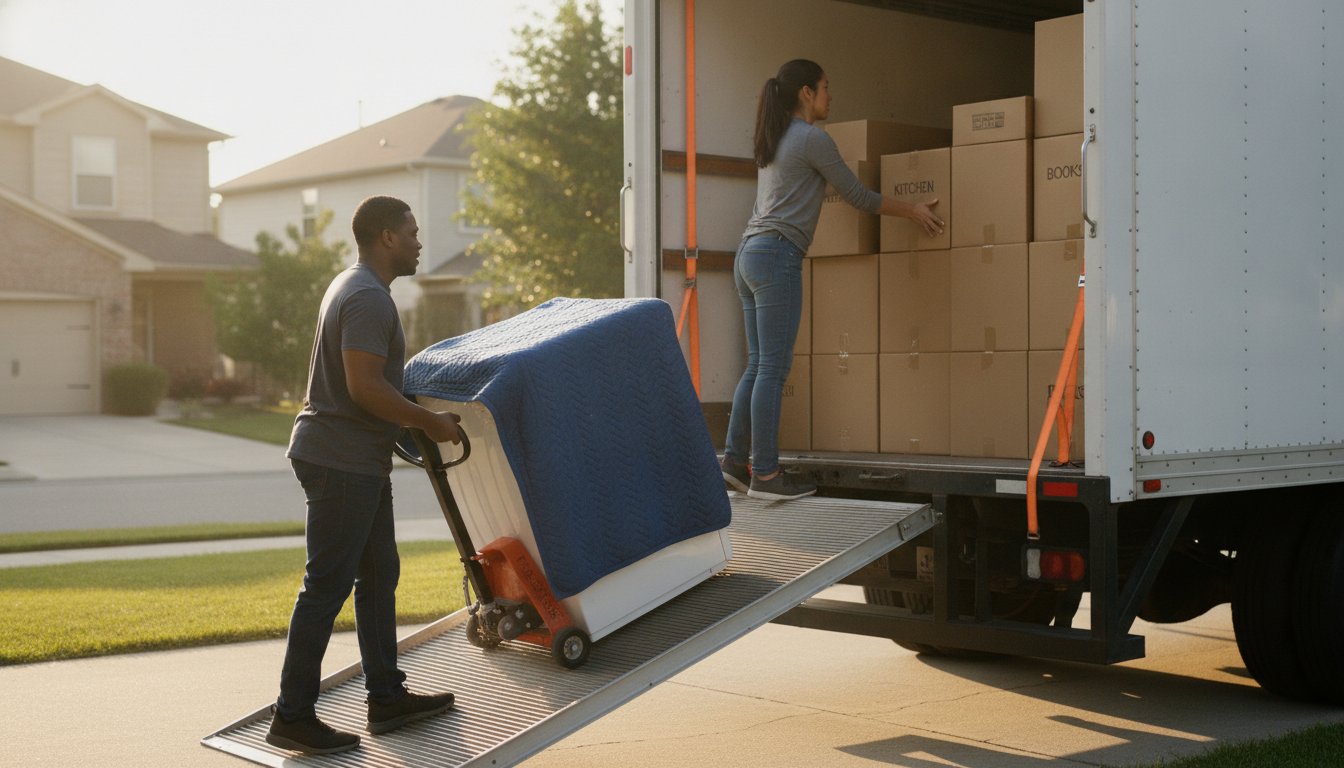
Most people treat a moving truck like a high-stakes game of Tetris, but that approach often leads to shattered glassware and scratched wood. You’ve likely felt that familiar dread of seeing a half-full truck and realizing your largest furniture still hasn’t been loaded. It’s frustrating to run out of space when you’ve already paid for the rental. Learning how to load a moving truck the right way isn’t just about fitting boxes. It’s about engineering a stable environment for your entire life. With 62 percent of people now choosing to move themselves, mastering these logistics is the best way to protect your investment.
You deserve a move that’s free of damage and physical strain. This guide simplifies the process. We’ll teach you the professional tiered packing method. It’s a system designed to maximize every cubic foot of your rental while keeping the vehicle balanced for a smooth drive. You’ll learn how to build solid vertical walls that won’t budge during a sharp turn. We’ll walk through the specific steps to protect your heavy items, eliminate empty gaps, and get you on the road with total confidence. Let’s turn a chaotic task into a streamlined success.
Key Takeaways
- Categorize inventory by weight and fragility. This streamlines the loading process before your rental arrives.
- Learn how to load a moving truck using professional vertical tiers. This method turns your cargo into a stable, structural wall.
- Implement the 60/40 weight distribution rule. Keeping the center of gravity low makes the truck easier to handle.
- Secure your load with furniture pads and ratchet straps. These tools eliminate shifting and prevent costly damage.
- Complete a final inspection of fuel and insurance. Proper documentation avoids unexpected fees and ensures peace of mind.
Preparing Your Inventory and Essential Loading Gear
Mastering how to load a moving truck begins with a clear plan. Success starts on the sidewalk, not inside the vehicle. Most DIY movers wait until the ramp is down to decide what goes where. This leads to wasted space and physical exhaustion. Instead, you should categorize every item by weight and fragility before the truck arrives. Heavy appliances and solid wood furniture form your foundation. Mid-weight boxes provide the core. Fragile items and loose bags act as the final layer. Determining this order now prevents the re-packing cycle that adds hours to your move.
Before you lift a single box, ensure you have secured a box truck rental that matches your total cubic footage. Underestimating your needs often results in multiple trips or leaving items behind. Professional logistics rely on truckload shipping principles to ensure every inch is utilized safely and efficiently. A sturdy loading ramp is your most valuable asset during this phase. It bridges the gap between your staging area and the truck floor. This reduces the vertical lift required for your heaviest inventory and protects your joints from unnecessary strain.
The Staging Strategy: Grouping by Tier
Create a staging area in your driveway or garage. Group items into tiers that mirror the truck’s interior. Place your heaviest appliances and largest furniture pieces closest to where the truck will park. Separate long items like mattresses, headboards, and sofas. These are wall-huggers that sit flat against the sides to maximize the center aisle. Identify your filler items early. Bags of clothes, pillows, and plush toys are essential for plugging gaps in your vertical walls. This pre-sorting phase is the secret to mastering how to load a moving truck without the mid-move panic. It allows you to visualize the finished load before you even open the back door.
Safety Equipment You Cannot Skip
Your gear list is your primary defense against damage. Don’t settle for twine or rope. Ratchet straps are superior because they allow you to apply precise tension. They lock heavy items into place, preventing the shifting that causes many of today’s most common moving insurance claims. Use furniture sliders to move heavy bureaus and washers across hard surfaces. They protect your back and prevent gouges in the truck floor. Moving blankets are equally vital. They stop rub-wear, which happens when two finished surfaces vibrate against each other during long hauls. Wrap every wooden surface. Tape the blankets tight. A well-protected load is a silent, secure load.
Loading the Front Tier: Heavy Appliances and Mom’s Attic
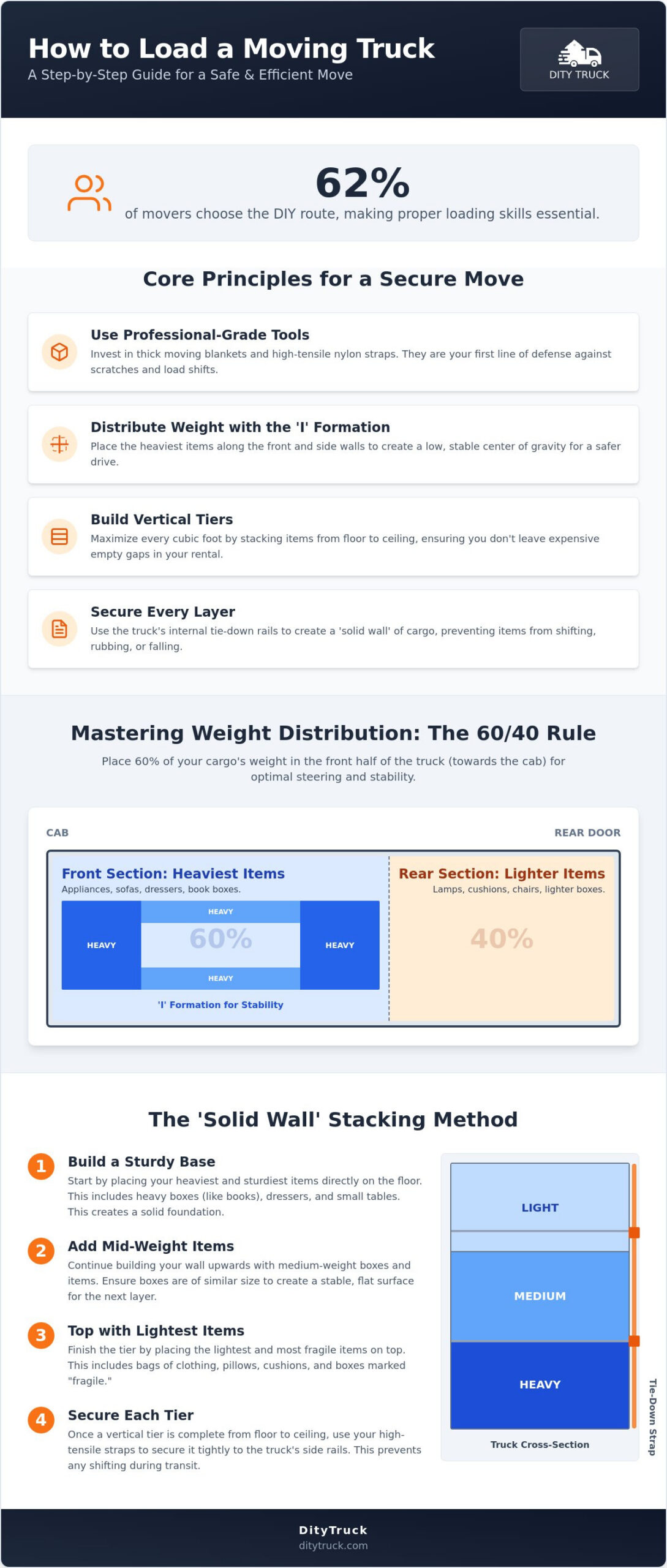
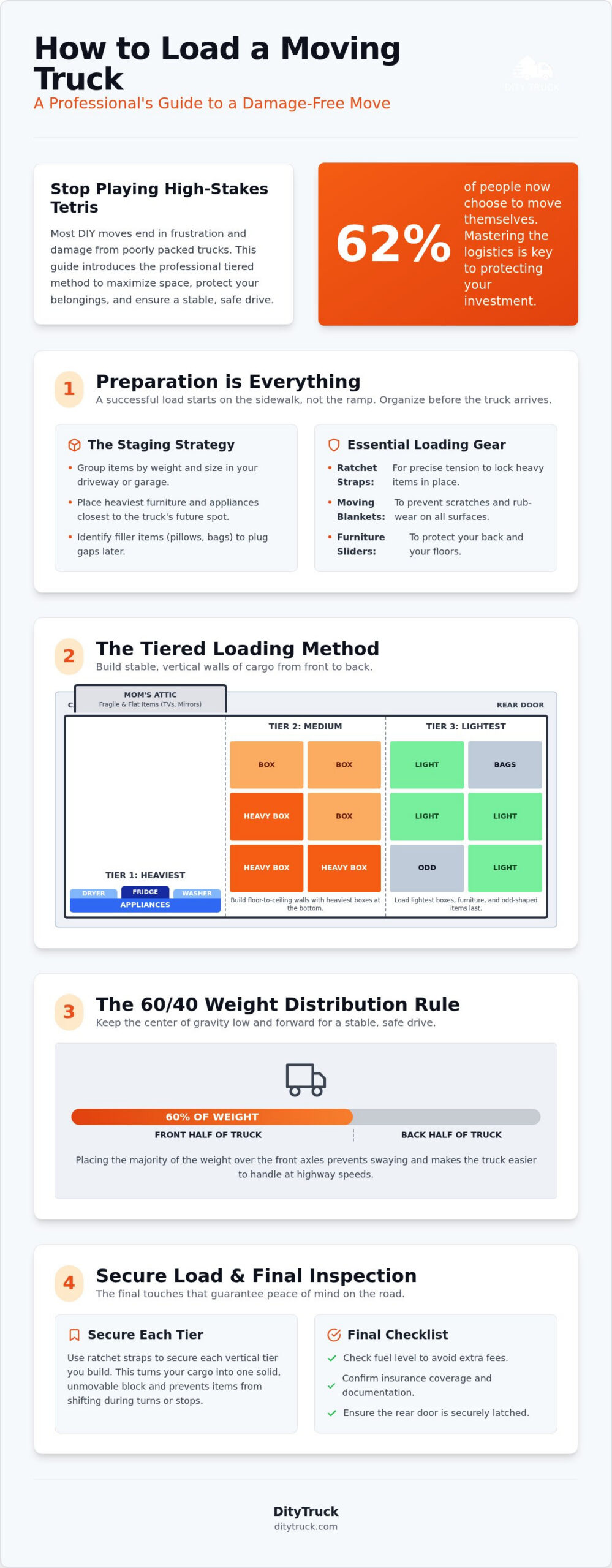
The front of the truck, the area closest to the cab, is where your move is won or lost. You must place your heaviest appliances here to ensure the weight remains over the front axles. This is a critical safety step in learning how to load a moving truck because it prevents the vehicle from swaying at highway speeds. If you place heavy items at the back, the truck becomes unstable and difficult to steer. Always position your refrigerator and washing machine directly against the front wall to create a solid anchor for the rest of your cargo.
The I-formation is the gold standard for appliance placement; it keeps the heaviest weight centered along the truck’s spine to maintain a balanced center of gravity. Following official cargo securement rules is the best way to prevent your items from shifting during sudden braking. If you’re still in the planning phase, you can compare truck rental options to ensure you have a vehicle with the right weight capacity. Balancing the load is simple: if you place a heavy dryer on the left side, place a similarly heavy item on the right side of the centerline.
Appliance Placement and Protection
Before moving any machinery, secure the doors with heavy-duty tape and drain all hoses to prevent leaks. These appliances serve as the foundation for your first vertical tier. Use the dead space inside your refrigerator or dryer to store non-breakable items like towels or pillows. This protects the interior of the appliance and saves space for other boxes. Once the appliances are in place, use ratchet straps to lock them against the wall. This creates a stationary wall that won’t budge, even on winding roads.
Mastering the Over-Cab Space
The Mom’s Attic is the shelf-like space above the cab, and it’s your secret weapon for fragile inventory. This area is the safest place for mirrors, framed artwork, and flat-screen TVs because it isolates them from the heavy shifting of the main floor. Always pad the leading edge of the attic with a rolled moving blanket to prevent items from sliding out during a stop. It’s also the perfect spot for your First Night boxes. Keeping your essentials here ensures they’re the first things you find when you arrive, saving you from digging through a sea of boxes at midnight.
The Tiered Loading Method: Building Your Structural Wall
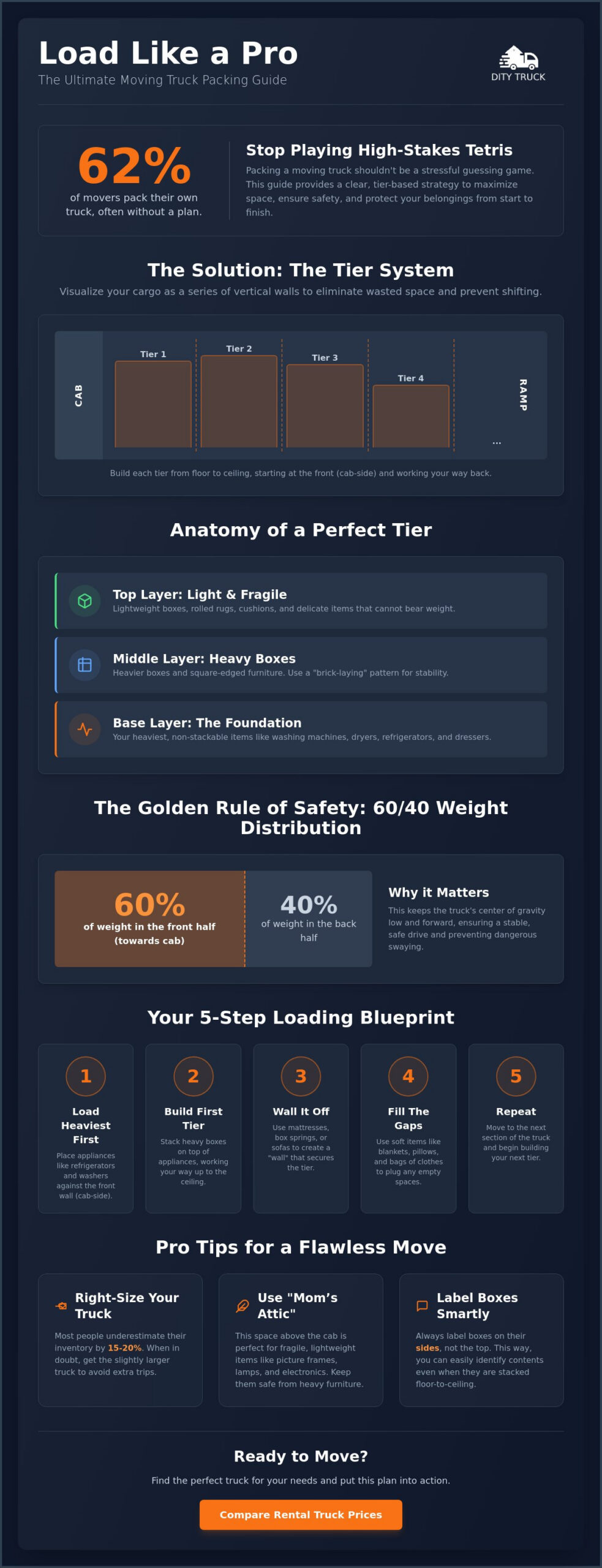
Stop thinking about the truck floor as a flat surface to cover. Professional movers view the cargo area as a series of vertical slices. This is the secret to how to load a moving truck without wasting space. You must build one “wall” at a time from the floor to the ceiling. Each wall is a tier. You should finish one section completely before moving to the next. This approach prevents items from sliding during transit. It turns your belongings into a single, structural unit that resists movement.
Building the Base of the Tier
Every tier requires a solid foundation. Place your heavy, sturdy furniture at the floor level. If you’ve removed the legs from a desk or dining table, turn it upside down. This creates a flat, stable platform for your medium-weight boxes. Fill the space under these tables with uniform, heavy boxes. This supports the furniture and prevents the wood from bowing under pressure. Be careful with upholstery. Never stack heavy crates on top of sofas or armchairs. This causes permanent indentations. Use furniture pads to separate finished surfaces from cardboard.
Once the base is set, stack your medium-weight boxes in the middle. Place the lightest items, like lampshades or small electronics, on the very top. Use long, flat items to seal the edges. Mattresses and headboards should stand upright against the side walls. They act as a buffer between the truck’s metal ribs and your finished furniture. This keeps the core of the tier compressed and secure. This method ensures that the weight is distributed vertically, which is more stable than horizontal layers.
Filling the Gaps: The “Tetris” Phase
A loose load is a dangerous load. Gaps allow items to gain momentum during a sudden stop. This is where the “Tetris” phase begins. Use soft items like bags of towels, pillows, or linens to plug every hole. Friction is your friend. A tight fit ensures the entire tier acts as a single block. This prevents the “domino effect” where one falling box ruins an entire row. Professional loaders know that air is your enemy; if you can see the truck floor or walls through a gap, you haven’t finished the tier.
Once you finish a tier, perform the “shake test.” Nudge the boxes with your hand. If the tier moves or rattles, it needs more filler. This extra minute of effort prevents thousands of dollars in damage. It turns a chaotic pile into a professional, safe transport. Remember that a balanced truck is easier to drive. By building these walls, you keep the weight distributed evenly from front to back, ensuring the vehicle handles predictably on the highway.
Weight Distribution and Road Safety Essentials
Packing the truck is only half the battle. Driving it safely is the other. Understanding the physics of your load is non-negotiable. You must follow the 60/40 rule. This means 60 percent of your total cargo weight should be in the front half of the truck. This is the core principle of how to load a moving truck for stability. It keeps the weight over the front tires. It ensures you maintain steering control and braking power. If you’re unsure about your vehicle’s limits, check your moving truck rental for specific weight capacity stickers. These are usually located on the dashboard or inside the driver’s door frame.
Keep your center of gravity low. Place your heaviest boxes and furniture directly on the floor. Don’t stack heavy items on top of light ones. This prevents the truck from becoming top-heavy and tipping during sharp turns. Use the truck’s built-in tie-down rails frequently. Secure your load at every second tier. This stops the domino effect if you have to stop suddenly. If you haven’t booked your vehicle yet, you can compare rental rates and capacities to find the safest match for your inventory.
Avoiding the “Rear-Heavy” Trap
Improper weight distribution leads to dangerous trailer sway. If the back is too heavy, the front wheels lose traction. This makes steering light and unresponsive. It also increases tail-swing. This is when the back of the truck kicks out during turns. Reserve the back of the truck for your lightest, bulkiest items. Think of plastic bins, pillows, or lawn chairs. Step back and look at the truck from the side. The vehicle should look level. If the rear is sagging, you need to move weight forward. This is the most critical part of learning how to load a moving truck for highway travel.
Securing the Final Tier
The final row of boxes near the roll-up door needs extra attention. Use the X-pattern strap technique. Cross two ratchet straps over the final tier to lock everything against the side rails. This prevents items from falling against the door. Before you pull the door down, run through this safety checklist:
- Retract the ramp: Ensure it’s fully slid into its housing and the pin is locked.
- Check the door: Pull the roll-up door down firmly and engage the latch.
- Secure the lock: Use a high-quality padlock; road vibrations can loosen cheap ones.
- Verify clearance: Check for any items that might interfere with the door track.
A secure lock ensures your belongings stay inside where they belong. Double-checking these small details prevents large problems on the road. Once the door is locked, you can focus on the drive ahead with total peace of mind.
Final Checklist and Booking Your Rental
The final phase of your move is about verification. You have built your walls. You have secured your straps. Now, you must protect your liability. Confirm your insurance coverage before you turn the key. Research shows that personal auto policies and credit cards rarely cover rental trucks. Options like U-Haul’s Safemove or similar protection from Penske and Budget are essential. They cover the vehicle and your cargo in ways your standard insurance won’t. Verify the fuel level and mileage before leaving the rental lot. Take a photo of the dashboard. This simple step prevents disputes when you return the vehicle at your destination.
Before you pull out of the driveway, perform a final walkthrough of your empty home. Check the back of every closet and the inside of the dishwasher. Hidden items often surface at the last minute. If you are moving across state lines, consult a one way truck rental guide. This helps you choose a provider with a convenient drop-off location near your new home. Knowing how to load a moving truck is only half the strategy. Choosing the right rental partner is the other. Proper planning ensures you don’t overpay for capacity you don’t need.
The DityTruck Comparison Advantage
Logistics shouldn’t be a guessing game. DityTruck acts as your smart assistant. We aggregate real-time rates from top-tier national providers. Comparing Penske, Budget, and U-Haul side-by-side saves users an average of 20 percent on DIY moves. You can filter for specific features to make your job easier. If you have exceptionally heavy appliances, find a truck with a hydraulic liftgate. If you want to reduce physical strain, look for low-deck designs. Our platform provides complete transparency. You see the honest price without hidden fees or surprise surcharges. It is the most logical path to a successful move.
Moving Day Momentum
Keep your momentum high by staying organized until the final mile. Your essentials bag should stay in the cab with you. This bag includes chargers, medications, and basic tools. Never pack your rental agreement or ID in the cargo area. Once the truck is fully loaded, take photos of the interior tiers. This provides visual proof of your professional packing. It is valuable evidence if you need to file an insurance claim for road-vibration damage later. You have the plan. You have the technique. Now, secure the best equipment for the job. Compare moving truck rates on DityTruck now and move with total confidence.
Ready to Hit the Road
Mastering how to load a moving truck is about shifting your mindset from stacking boxes to building structural tiers. You now have the professional blueprint to distribute weight using the 60/40 rule. These techniques protect your furniture. They keep your drive safe. You’ve learned to utilize every cubic foot of space effectively while avoiding common road hazards. Each vertical wall you build is a step toward a damage-free arrival.
The best loading strategy starts with the right equipment. You can find the cheapest moving truck for your DIY move on DityTruck. Our platform lets you compare real-time rates from Penske, Budget, and other top-tier providers. We provide transparent pricing with no hidden surprises. Whether you’re moving across town or across the country, we offer national coverage you can trust. It’s the simplest way to secure a reliable vehicle without the traditional hurdles.
Moving is a high-stakes task. It’s often stressful. But with this guide, you have replaced complexity with confident simplicity. You are ready to handle the logistics like a pro. Start your journey today with the right truck and a solid plan. You’ve got this.
Frequently Asked Questions
What is the most important rule when loading a moving truck?
The most important rule is the 60/40 weight distribution principle. You must place 60 percent of your cargo’s total weight in the front half of the vehicle, closest to the cab. This ensures the truck remains stable and responsive. Proper weight management is the foundation of learning how to load a moving truck safely. It keeps the front wheels grounded for better steering and prevents dangerous swaying at highway speeds.
Where should the heaviest items be placed in a moving truck?
Place your heaviest items directly against the front wall closest to the cab. This includes appliances like refrigerators, washers, and heavy oak furniture. Keeping this weight forward prevents the rear of the vehicle from sagging. It also maintains a low center of gravity. Balancing these items across the centerline prevents the truck from pulling to one side while you are on the road.
How do I prevent my furniture from scratching during the move?
Use professional-grade moving blankets to wrap every finished surface. Secure the blankets with packing tape or stretch wrap to prevent them from slipping during transit. Tight packing is also essential. Friction between items causes rub-wear during long hauls. By eliminating gaps between furniture and boxes, you stop the vibration that leads to deep scratches and permanent gouges.
Do I really need to use tie-down straps if the truck is full?
You absolutely need tie-down straps regardless of how full the truck appears. A full truck still has small gaps that allow for shifting during sharp turns or sudden stops. Ratchet straps lock your vertical tiers to the side rails. This prevents a single fallen box from triggering a domino effect. It ensures your cargo remains exactly where you placed it until you reach your new home.
What is the “tiered” loading method?
The tiered loading method involves building vertical sections from the floor to the ceiling. Instead of loading the entire floor first, you complete one wall of cargo at a time. This is the most efficient way how to load a moving truck because it turns your belongings into a solid, structural unit. It maximizes every cubic foot of rental space and prevents items from sliding backward during acceleration.
How much weight can a standard 26-foot moving truck hold?
A standard 26-foot moving truck typically has a payload capacity between 9,000 and 10,000 pounds. This varies by manufacturer and specific model. Always check the Gross Vehicle Weight Rating (GVWR) on the driver’s side door frame before you begin. Exceeding this limit is dangerous and can lead to mechanical failure. If you have a large home, find a truck with a higher weight rating to stay safe.
Should I load my mattress horizontally or vertically?
Always load your mattress vertically against the side walls of the truck. This saves significant floor space for heavy furniture and appliances. A vertical mattress also acts as a protective buffer between the truck’s metal ribs and your finished wood items. Use a mattress bag to keep the fabric clean and prevent tears while you are sliding other boxes into place.
What happens if I load too much weight in the back of the truck?
Loading too much weight in the back causes the front wheels to lose traction. This leads to light, unresponsive steering and dangerous trailer sway. It also increases the risk of tail-swing during turns. A rear-heavy truck is difficult to control in windy conditions or at high speeds. Always keep the bulk of your weight toward the cab to ensure a level, safe ride for your entire trip.