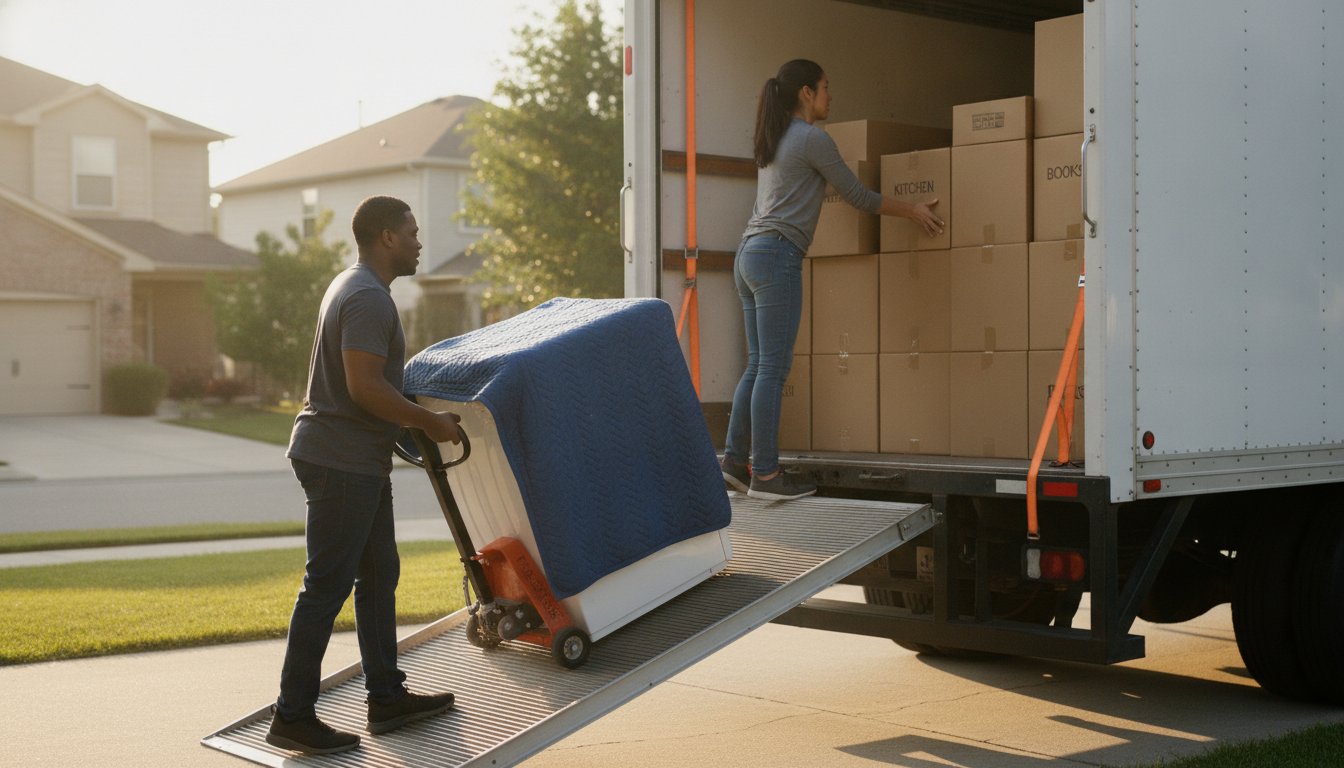
Did you know that 62% of people moving in 2026 choose to handle the heavy lifting themselves? It’s a smart way to save money, but it often comes with a side of “will it all fit?” anxiety. You’ve likely felt that knot in your stomach while staring at a mountain of boxes and a finite amount of cargo space. Moving is stressful enough without worrying about a shattered heirloom or a truck that’s packed so poorly it shifts on every turn.
Learning how to load a moving truck isn’t just about fitting boxes like a game of Tetris. It’s about engineering a stable, secure environment for your entire life. We’ll show you how to master the “solid wall” technique to maximize every cubic foot, prevent damage, and get you on the road faster. This guide covers everything from weight distribution secrets to current cargo securement regulations. We break the process into simple, manageable steps for a friction-free move.
Key Takeaways
- Invest in professional-grade moving blankets and high-tensile straps. These tools are your first line of defense against scratches and dangerous load shifts.
- Use the “I” Formation to distribute weight properly. Placing heavy appliances along the front and side walls keeps the center of gravity low for a safer drive.
- Master how to load a moving truck by building vertical tiers. Stacking from floor to ceiling ensures you don’t leave expensive gaps in your rental space.
- Secure every layer using the truck’s internal tie-down rails. Creating a “solid wall” of cargo prevents items from rubbing or falling during the journey.
- Match your inventory to the right truck specifications. Compare deck heights and ramp widths to simplify the loading process and finish your move faster.
Essential Equipment for a Successful Truck Load
Success starts before you lift the first box. You need the right tools to handle the physics of a moving vehicle. Renting a truck is only half the battle. Learning how to load a moving truck requires high-quality gear to protect your investment. Professional-grade equipment turns a chaotic DIY project into a streamlined logistics operation. Understanding the mechanics of a stable load begins with your toolkit.
Professional-grade moving blankets are non-negotiable. Skip the thin bed sheets or towels. These thick, quilted pads are designed to absorb impact and prevent wood-on-wood friction. They act as a buffer between your dining table and the truck’s hard walls. High-tensile nylon straps are equally vital. These straps anchor your cargo to the built-in rails of the truck. They prevent the load from shifting forward during a sudden stop or sliding sideways on a sharp turn. Without them, your furniture becomes a dangerous projectile.
Don’t forget the small stuff. Stretch wrap is your best friend for securing dresser drawers and loose cabinet doors. It provides a tight grip without leaving the sticky residue associated with traditional tape. Save the heavy-duty packing tape for sealing boxes. Finally, prioritize personal safety. Heavy-duty work gloves prevent blisters and improve your grip on smooth surfaces. Sturdy, closed-toe shoes are mandatory to protect your feet from heavy items or accidental drops. Efficiency is impossible if the loading crew is sidelined by an injury.
The Power of an Appliance Dolly
A standard hand truck won’t cut it for a refrigerator or a washing machine. Appliance dollies feature a wider frame, larger wheels, and built-in tension straps. They provide the mechanical advantage needed to tilt and move 300-pound machines with minimal effort. When renting the right moving truck, always include an appliance dolly in your rental package. Secure the appliance to the dolly frame before you tilt it back. When navigating the loading ramp, always stay on the uphill side of the dolly. This position gives you maximum control over the weight and prevents the machine from rolling away uncontrollably.
Inventory Management Tools
Organization is the key to maximizing space when you’re figuring out how to load a moving truck. Use a simple numbering system to track every box as it enters the vehicle. This ensures nothing gets left behind at the old house. Label every box clearly with its weight and fragility status. This data allows you to make smart stacking decisions on the fly. You’ll know exactly which heavy boxes can form a sturdy base and which light ones belong on top. Prepare a “loading essentials” bag for the very last items. Include your basic tools, cleaning supplies, and the truck’s padlock. This bag stays in the cab with you for immediate access at your destination.
Mastering Weight Distribution and the ‘I’ Formation
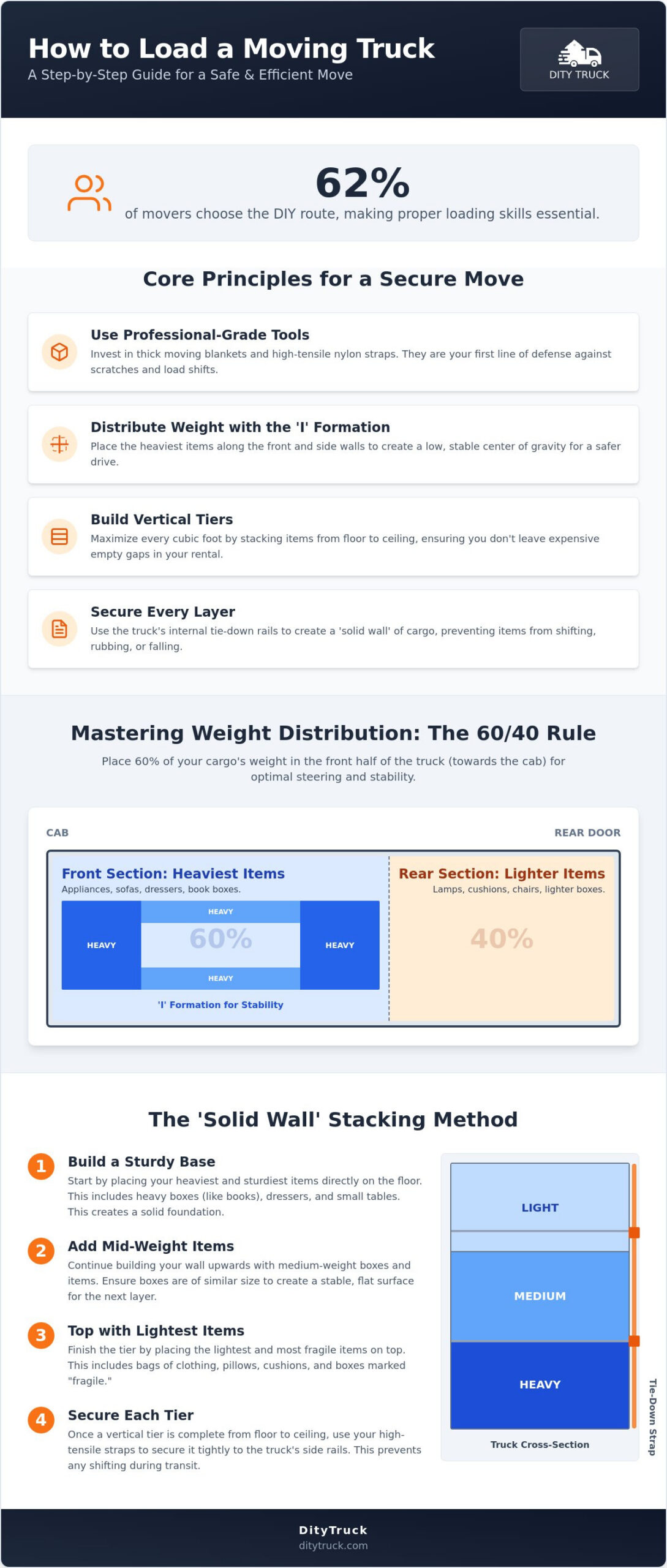
A moving truck isn’t just a container. It’s a heavy vehicle that responds to the laws of physics. If you want a smooth, stable drive, you must master weight distribution. The golden rule is the 60/40 split. You should place 60% of your total cargo weight in the front half of the truck. This keeps the steering responsive. It also prevents the rear from fishtailing on the highway. Understanding how to load a moving truck with this balance in mind is the difference between a confident drive and a white-knuckle experience.
The ‘I’ Formation is the most efficient way to achieve this balance. Imagine the letter ‘I’ inside your truck bed. The top bar represents the front wall (bulkhead). The long vertical line represents the center aisle. The bottom bar is the rear. In practice, you’ll place your heaviest items against that front wall. Then, you line the side walls with your next heaviest pieces. This creates a reinforced perimeter. It keeps the load from shifting toward the center where it could cause the truck to lean.
Keeping the center of gravity low is your best defense against tipping. Stack your heaviest boxes and densest furniture directly on the floor. Lighter items always go on top. You also need to balance the truck from left to right. If you put a heavy oak dresser on the left side, balance it with a heavy sofa or a stack of dense book boxes on the right. Uneven weight makes the truck pull to one side. It can even lead to premature tire wear. For those just starting their planning, it’s helpful to compare truck rental options to find a vehicle with the right weight capacity for your specific inventory.
Before you start lifting, make sure you have your essential moving supplies ready. Straps and pads are critical for maintaining this distribution once the truck is in motion.
Handling Heavy Appliances
Appliances are the anchors of your load. Position refrigerators, stoves, and washing machines directly against the front bulkhead. This is the most stable part of the truck. Always keep appliances upright. Laying a fridge on its side can damage the compressor or mix internal fluids. Use your appliance dolly to guide these items into their final slots with precision. Once they’re in place, strap them down immediately. They shouldn’t move an inch while you load the rest of the truck.
Balancing the Rear
The back half of the truck is for your medium-weight items. This includes mattresses, dining chairs, and standard boxes. Use the ‘attic’ space above the cab for your lightest, most fragile items. This keeps them away from the crushing weight of the main load. Before you close the door, take a step back. Look at the truck’s suspension. If the rear is sagging significantly lower than the front, you’ve overweighted the back. Re-distribute the weight forward. This ensures a predictable, safe drive to your destination.
The Step-by-Step ‘Tier Method’ for Loading
Forget the instinct to cover the entire floor first. That approach creates a disorganized mess and leaves too much empty space at the ceiling. The professional standard for how to load a moving truck is the Tier Method. You build the load in vertical sections, or “tiers,” starting from the front bulkhead and moving toward the door. Each tier acts as a self-contained wall. This method maximizes every cubic foot of your rental. It also prevents the “domino effect” during transit. If one item shifts, the tier structure keeps the rest of the cargo locked in place.
Building the First Tier
Your foundation starts at the very front of the truck. Place your heaviest anchors here. This includes refrigerators, washing machines, and heavy oak armoires. Maneuvering these items requires the right tools. An appliance dolly is essential for this stage. Unlike a standard hand truck, an appliance dolly features a wider base and integrated rub-rails. These rails allow you to slide heavy weight up the ramp and into tight corners with minimal physical strain. Once your anchors are set, look for “dead space.” Slide small, heavy boxes under table legs or into the voids of appliances. This creates a dense base layer that provides a stable platform for the rest of the tier.
Stacking for Stability
Build your wall using the “Bricks and Mortar” strategy. Place heavy, uniform boxes on the bottom. Stack lighter, smaller boxes as you move toward the ceiling. Never place fragile items or electronics in the bottom two feet of a tier. The cumulative pressure from the items above can easily crush lower boxes. To ensure zero movement, use “cellular packing.” This involves filling every small gap with soft items. Follow these steps for a stable stack:
- Fill the pockets: Shove pillows, cushions, or rolled-up towels into the gaps between boxes.
- Eliminate friction: Use moving blankets between finished wood surfaces to prevent “rub” damage.
- Lock the tier: Place a mattress or a large table top vertically against the front of the tier.
The final step is the most important. Use a nylon strap to secure the flat “lock” item to the truck’s side rails. This keeps the entire tier compressed. If an item can’t wiggle, it won’t break. Repeat this process tier by tier until the truck is full. This methodical flow keeps the work predictable and the cargo safe. It transforms a mountain of boxes into a single, immovable unit of cargo.
Securing the Load and Protecting Your Belongings
A perfectly stacked truck can still fail if it isn’t secured. The vibration of the road and the force of turns will eventually cause items to settle. This settling creates gaps. Once a gap exists, your cargo can move. The “Zero-Gap” rule is simple: if an item can wiggle, it can break. Your goal is to create a single, immovable block of cargo. Mastering how to load a moving truck means eliminating every inch of empty space between your tiers and the truck walls.
Utilize the built-in tie-down rails found along the interior walls of your rental. These rails are the skeletal support for your entire load. Don’t wait until the truck is full to start securing. Anchor every tier as you complete it. Use professional moving blankets to wrap every piece of finished wood or upholstered furniture. These blankets prevent “rub” damage. This occurs when two surfaces vibrate against each other for hundreds of miles, eventually wearing through the finish or fabric. Secure the blankets with stretch wrap to ensure they don’t slip during the drive.
The over-cab storage area, often called “Mom’s Attic,” requires a specific strategy. This space is isolated from the main floor vibration but can experience more swaying. It is the ideal spot for your lightest and most fragile items. Place your electronics, linens, and delicate glass boxes here. Never put heavy appliances or dense book boxes in this area. It raises the truck’s center of gravity and makes the vehicle harder to handle. Before you start the engine, compare truck rental prices to find a vehicle that offers the specific storage features your inventory requires.
Strapping Techniques
Tension is your best friend. Ratchet straps are far superior to simple rope. They allow you to apply significant pressure to the load without relying on complex knots. Create a “web” of straps across the face of each tier. Hook them into the side rails and tighten until the cargo is compressed. Physics will work against you during the first few miles. Vibration causes boxes to compress and straps to loosen. Stop after the first 10 miles of your trip to inspect the load. Re-tighten every strap to account for this initial settling.
Fragile Item Placement
Strategic placement protects your highest-value items. Mirrors and large flat-screen TVs should never be placed flat on the floor. Instead, slide them vertically between two mattresses or soft sofa cushions. This “sandwich” technique provides maximum shock absorption. For glass-fronted cabinets or china huts, face the finished glass side toward the truck wall with a thick blanket in between. The Crush Zone is the bottom two feet of any cargo tier where the cumulative weight of upper items is most likely to collapse boxes or damage structural integrity. Keep your valuables out of this zone at all costs.
Why Loading Efficiency Starts with the Right Truck Rental
Your strategy for how to load a moving truck is only as good as the vehicle you rent. Many DIY movers overlook the physical dimensions of the truck itself. Deck height and ramp width vary significantly between providers. A truck with a lower deck requires less effort to push heavy dollies up the incline. A wider ramp provides a safer margin for error. It makes maneuvering bulky appliances easier. These small mechanical differences directly impact your physical exhaustion levels and the speed of your move.
Finding the right balance between space and cost is essential. You need to match your inventory volume to current box truck rental prices to ensure you aren’t overpaying for empty air. However, cutting costs by renting a truck that is too small often backfires. A cramped space forces you to pack items too tightly. This increases the risk of damage. It also makes it impossible to follow the Tier Method effectively. By comparing different rental providers, you can identify which brand offers the specific features you need. Look for low-profile decks or side-door access to simplify your workflow.
Choosing Your Size Wisely
Space is a safety feature. A 26-foot truck is often easier to load than a 16-foot model. The extra floor space allows you to distribute weight more evenly. You won’t have to stack fragile items too high. Over-stacking is a leading cause of damage during transit. When you run out of floor space, you’re tempted to place heavy items on top of lighter ones. This creates a top-heavy load. It makes the vehicle dangerous on the road. Check the cost to rent a 26 foot moving truck before booking. The price difference is often negligible compared to the cost of replacing broken furniture.
The DityTruck Advantage
DityTruck acts as your smart assistant in the logistics process. Our comparison tool strips away the complexity of finding a moving truck rental that fits your specific needs. We help you find the best rates on the exact size you require. We ensure the provider offers the right equipment for a successful load. Mastering how to load a moving truck starts with the right foundation. Use our platform to verify availability and equipment packages. Confirm your reservation. Check your strap inventory. Start your move with the confidence that you have the right tool for the job.
Drive Confidently to Your New Destination
You now have the blueprint for a safe, damage-free move. By mastering the “I” Formation and building stable vertical tiers, you’ve turned a stressful task into a controlled process. Understanding how to load a moving truck correctly protects your belongings and ensures a stable drive. It’s about working smarter, not harder. You’ve eliminated the gaps, secured the straps, and balanced the weight to prevent shifting during transit.
The final step is securing the right vehicle for your specific inventory. DityTruck simplifies the logistics by offering national coverage across the US. Our platform provides access to real-time rates from top providers with zero hidden fees. Compare real-time moving truck rates and book your perfect size on DityTruck today. Take control of your DIY move with the confidence that you have the right tools and the right truck. You’re ready to hit the road and start your next chapter without the logistics headache.
Frequently Asked Questions
What is the very first thing I should load into a moving truck?
The heaviest appliances and largest furniture pieces should always be the first items you load. Position refrigerators, stoves, and washing machines against the front bulkhead closest to the cab. This placement ensures 60% of the weight sits in the front half of the truck. This initial layer provides the foundation for the rest of your tiers. It keeps the vehicle stable and the steering responsive during your trip.
How do I prevent my furniture from sliding around during the drive?
Use high-tensile nylon straps and the truck’s internal tie-down rails to keep furniture from sliding. Mastering how to load a moving truck requires securing every tier as you build it. Tighten these straps across the face of the cargo to lock everything in place. Fill every small void with soft items like moving blankets or pillows to eliminate movement. If an item can’t wiggle, it won’t break.
Is it better to load the mattress or the sofa first?
It is generally better to load the sofa first to establish your side-wall perimeter. Place the sofa vertically if possible to save valuable floor space for heavier boxes. Mattresses are best used as “lockers” at the end of a completed tier. They provide a flat, soft surface that can be strapped down. This protects the sofa’s fabric and prevents smaller, lighter items from shifting during the drive.
Can I load a moving truck by myself, or do I need a crew?
You should have at least one or two helpers for safety and efficiency. Lifting heavy items like appliances or mattresses alone is a significant safety risk. A crew allows you to form an efficient loading line. One person stays in the truck to stack while others move items up the ramp. This speeds up the process significantly and prevents the physical exhaustion that leads to accidents.
What should I never put in a moving truck for safety reasons?
You must never load flammable, corrosive, or explosive materials into a moving truck. This includes propane tanks, charcoal, car batteries, and aerosol cans. These items can leak or ignite due to heat and friction in the enclosed cargo area. Keep your personal valuables, such as passports, legal documents, and jewelry, in the cab with you. This ensures they don’t get lost or damaged in the main load.
How much weight can a standard 16-foot moving truck ramp hold?
Most standard moving truck ramps are rated for approximately 1,000 pounds. You should verify this limit by looking for a weight rating sticker on the ramp itself or checking your rental agreement. Exceeding this limit is dangerous. It can cause the ramp to bend or disconnect from the truck bed. Always move heavy items one at a time to stay within safe weight limits and avoid equipment failure.
How do I use an appliance dolly on a steep truck ramp?
Always position yourself on the uphill side of the appliance dolly when navigating a ramp. Pull the dolly up the ramp while walking backward into the truck. This allows you to use your body weight as a brake. It prevents the heavy appliance from gaining downward momentum if you lose your footing. Never stand below a loaded dolly on a steep incline. This position gives you maximum control and safety.
What happens if I can’t fit everything in the truck I rented?
If you run out of space, you must choose between making a second trip or renting an additional towing trailer. Don’t compromise safety by over-stacking items in an unstable way. Learning how to load a moving truck efficiently helps maximize every cubic foot, but physics has its limits. Check with your rental provider for a same-day trailer add-on to solve the capacity issue quickly without leaving items behind.