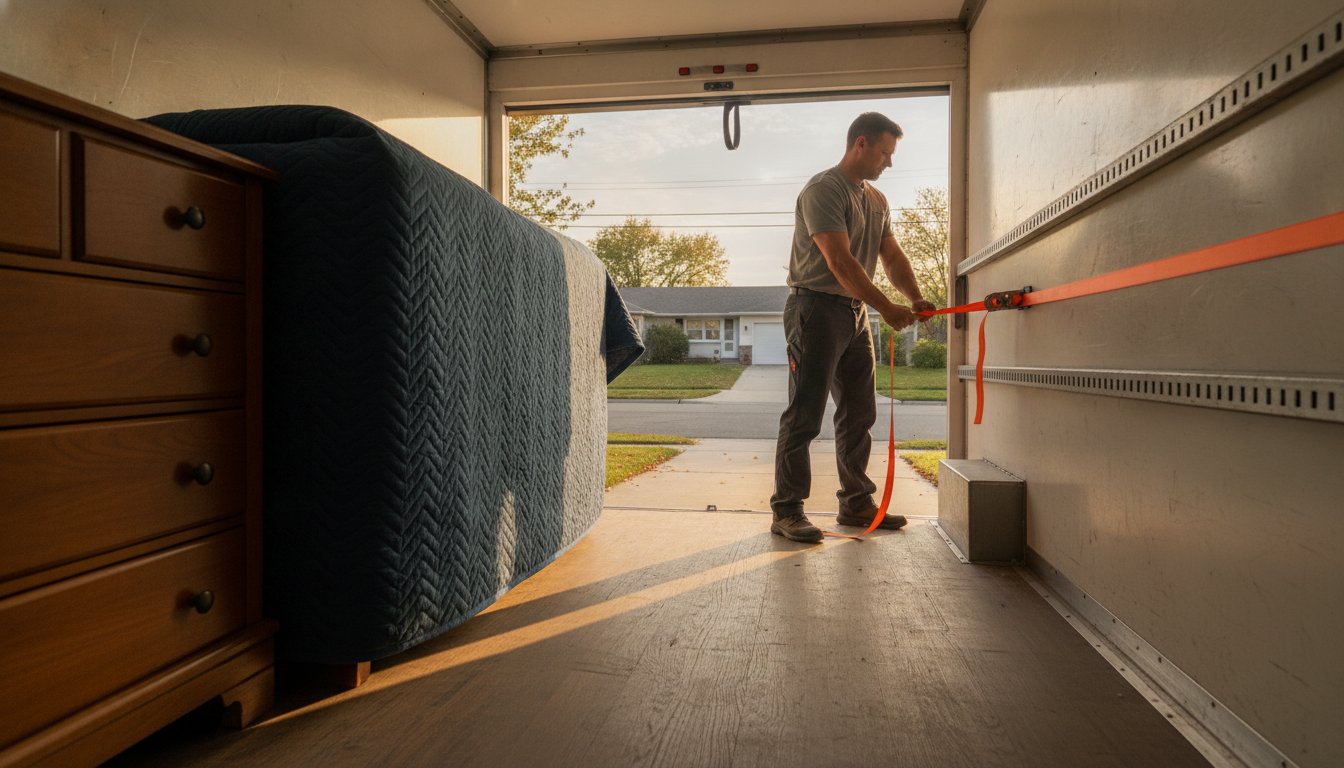
A single unprotected corner can turn your $2,000 mahogany dresser into a piece of scrap wood in seconds. Most people realize too late that renting moving blankets is the cheapest insurance policy available for a DIY move. You don’t want to arrive at your new home only to find your dining table scratched or your leather sofa torn. It’s a common fear. It’s also entirely preventable with the right supplies and a clear plan. Professional movers don’t leave protection to chance, and you shouldn’t either.
We understand the stress of keeping your belongings safe while managing a tight budget. This guide simplifies your logistics by showing you how to compare rental rates from major providers and calculate the exact number of pads for your specific truck size. You’ll learn the professional wrapping techniques that ensure your blankets stay secure during transit. We’ve broken down the math so you know whether to grab 12 or 24 pads for your reservation. This is the shortest, most logical path to a confident, damage-free move in 2026.
Key Takeaways
- Understand why heavy-duty quilted pads are vital for absorbing shock and preventing friction between your items during transit.
- Compare the “Big Three” rental providers to find the best rates when renting moving blankets for your specific route.
- Use the Inventory Method to calculate exactly how many pads you need for your truck size. This prevents overspending on supplies you won’t use.
- Master professional “Burrito Wrap” techniques to keep blankets securely in place. You’ll protect your furniture surfaces from dust and scratches.
- Analyze the cost difference between renting and buying to make the smartest financial decision for your one-way or local move.
What Are Moving Blankets and Why Is Renting Them Essential?
Moving blankets are heavy duty quilted pads designed to absorb shock. They prevent friction between items in a moving truck. Every professional moving company uses these pads to ensure furniture arrives without a scratch. The anatomy of a professional pad is specific. It usually features a durable poly-cotton blend on the outside. Inside, you’ll find recycled textile fibers that provide bulk and cushion. This combination creates a high tear-strength that household linens simply can’t match.
The reality of the road is that cargo shifts. Even on a smooth highway, your truck experiences constant micro-vibrations. Items lean against each other. Without thick padding, finished surfaces rub together. This creates permanent scuff marks or deep gouges. Renting moving blankets is a strategic move. It’s about more than just padding. These blankets act as a buffer that turns a high-stakes logistics task into a simple, safe process. They are the shortest path between a packed house and an undamaged delivery.
Renting vs. Using Household Blankets
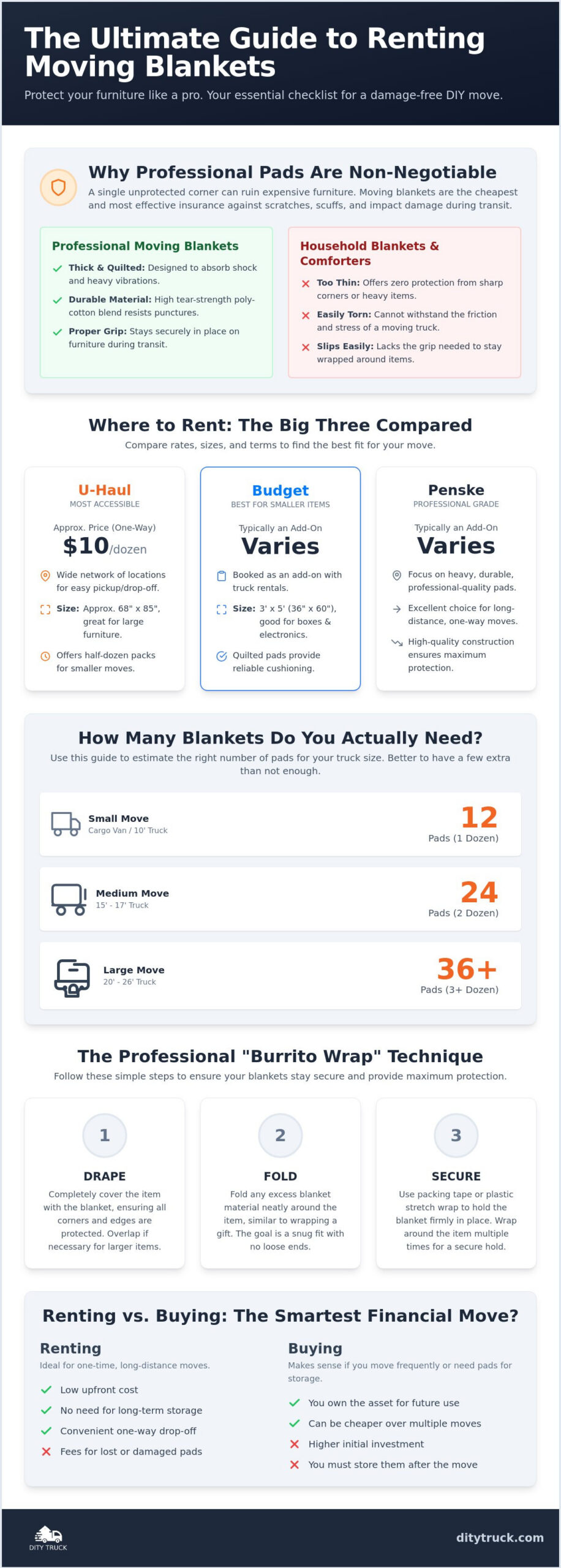
Old comforters offer zero protection against heavy vibrations. They are often too thin to stop a sharp corner from piercing through. They also lack the grip needed to stay in place. Renting moving blankets is a small investment that protects high-value assets. Consider the math. A rental dozen costs a tiny fraction of the price of a new mahogany dresser. Beyond the money, there is a psychological benefit. Neighbors and hired helpers take more care with pro-wrapped items. A professional appearance signals that the contents are valuable and deserve respect.
Key Terminology: Furniture Pads vs. Moving Skins
You’ll encounter different terms when booking your supplies. Heavy-duty quilted blankets are the gold standard for furniture. These are often called furniture pads. They are thick, durable, and designed for multiple uses. Moving skins or textile pads are different. These are thinner, non-quilted options. They are usually made from compressed recycled fibers. Use skins for lighter items or to prevent dust. Use quilted furniture pads for anything made of wood, glass, or metal. Choosing the right material ensures your protection matches the risk level of each piece of furniture.
Where to Rent Moving Blankets: Comparing U-Haul, Budget, and Penske
Choosing your supplier is just as critical as choosing your vehicle. The “Big Three” rental companies offer different sizes and qualities. U-Haul remains the most accessible option. They rent furniture pads in dozens for approximately $10 on one-way moves. Their blankets measure roughly 68 inches by 85 inches. This size provides ample coverage for large appliances and dining tables. If you only need a few, they also offer half-dozen packs for $5. This flexibility makes renting moving blankets easy for small apartment moves.
Budget Truck Rental provides a different product. Their quilted pads are smaller, measuring 3 feet by 5 feet. These are available as add-ons to your truck reservation. While smaller than U-Haul’s version, they work well for stacking between boxes or wrapping small electronics. Penske Truck Rental focuses on professional-grade quality. Their blankets are heavy and durable. They are a top choice for long-distance relocations because you can return them to any Penske location nationwide. Local equipment shops also offer rentals, but they often lack the “return anywhere” convenience of the national brands.
Pricing and Rental Terms Comparison
Rental costs vary based on your move distance. Local rentals usually charge a daily rate. One-way moves include a flat fee for the entire duration. You must return every pad to avoid extra costs. U-Haul, for example, charges a $6 replacement fee for each unreturned blanket. This fee does not mean you own the blanket; it is a penalty. Most companies require you to rent in packs of 6 or 12. This ensures you have enough material to protect a full room. For more advice on consumer safety during a move, visit the official Protect Your Move website.
One-Way vs. Local Rental Logistics
One-way logistics offer the most freedom. You pick up the gear at your starting point and drop it off at your destination. This eliminates the need for a return trip. To ensure availability, always add these items when you book your moving truck rental. Supplies can run low during peak moving weekends. Booking early guarantees your pads are waiting on the truck. If you want to find the best overall value for your trip, it is smart to compare moving truck rentals before you sign any paperwork. This simple step can save you hundreds of dollars in hidden fees and equipment costs.
How Many Moving Blankets Do You Actually Need?
Underestimating your supply needs is a common mistake that leads to avoidable damage. You don’t want to realize you’re short on protection while the truck is half-full and the sun is setting. When renting moving blankets, you should choose between two calculation strategies. The ‘Rule of Thumb’ method relies on your truck’s total volume. It provides a safe estimate for most standard moves. The ‘Inventory Method’ requires more effort but offers total precision. You list every large item and assign a specific pad count. This ensures you aren’t paying for gear you won’t use while still maintaining a safety net.
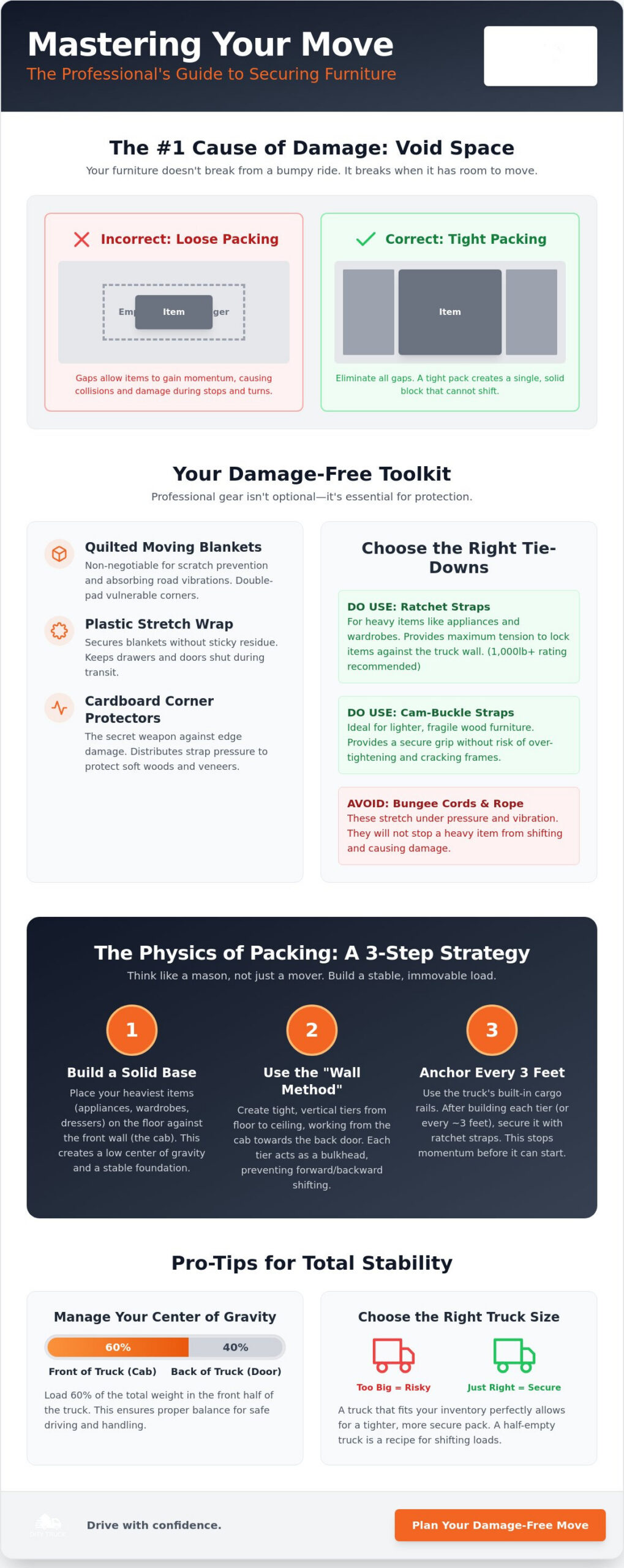
Professional movers always account for ‘filler’ pads. These blankets aren’t wrapped around specific items. Instead, they are folded and wedged into gaps between furniture stacks and the truck walls. This prevents the shifting that occurs during turns or sudden stops. It keeps your load tight and stable. For additional resources on managing your relocation safely, check the Protect Your Move website from the FMCSA. It is a great tool for understanding best practices and consumer rights during a transition.
Blanket Count by Truck Size
Your truck size dictates the maximum amount of gear you can realistically use. Use these ranges as your baseline:
- 10-12 Foot Truck: Reserve 1 to 2 dozen blankets (12-24 pads). This quantity is perfect for studio apartments or small one-bedroom units with minimal furniture.
- 15-20 Foot Truck: You will need 2 to 4 dozen blankets (24-48 pads). This range covers most two-to-three bedroom homes effectively.
- 26 Foot Truck: Plan for 4 to 6 dozen blankets (48-72 pads). Large family homes have more surface area to protect and more vertical gaps to fill in the cargo area.
Item-Specific Padding Guide
Precision matters when you’re protecting specific surfaces. A standard dresser or buffet usually requires 2 to 3 blankets. This covers the top and wraps around the finished front and sides. Dining tables need one blanket for the surface. If you detach the legs, wrap them together in a second pad. Sofas and armchairs are bulky. They typically take 2 to 3 blankets to cover the upholstery completely and protect the feet. For high-value items like large mirrors, flat-screen TVs, or family antiques, use the ‘Double Pad’ rule. Wrap the item in one blanket first. Then, add a second layer for extra shock absorption. This creates a thick cushion that resists impacts and prevents piercing from other cargo.
How to Use Moving Blankets: A Step-by-Step Wrapping Guide
Applying protection correctly is just as important as renting moving blankets in the first place. A loose blanket offers little safety. It can slip during transit and leave your valuables exposed. Follow this structured process to wrap your furniture like a professional mover. It ensures every surface stays pristine from your old front door to your new living room.
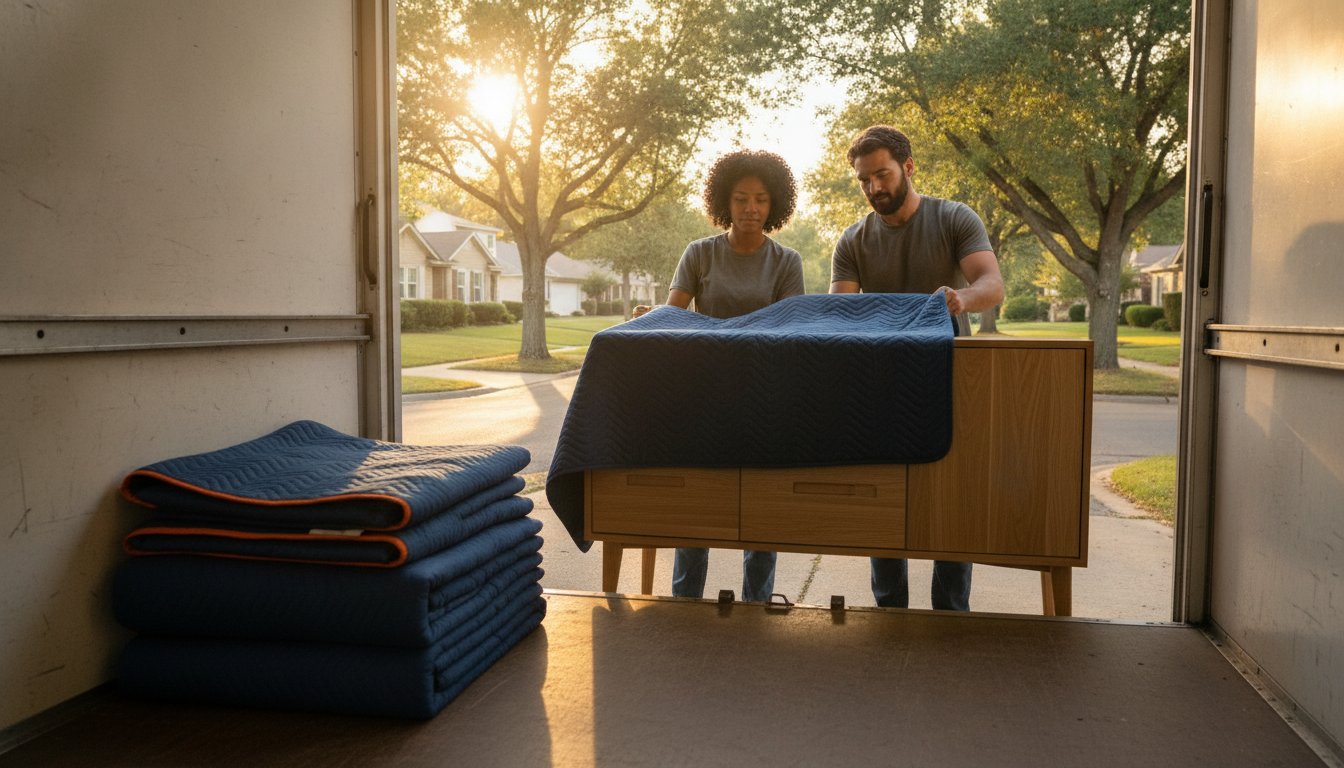
Step 1: Clean the furniture surface. Use a soft cloth to remove all dust and debris. If dust gets trapped between the blanket and the wood, it acts like sandpaper. The constant vibration of the truck will grind that grit into the finish. Step 2: The Burrito Wrap. Place the blanket over the center of the item. Drape the sides down and tuck the excess material underneath the base. This creates a complete envelope of padding that resists shifting.
Step 3: Secure the pad. This is where most DIY movers fail. Use professional stretch wrap rather than packing tape. Wrap the plastic film tightly around the blanket multiple times to create a “shrink-fit” seal. Step 4: Corner protection. Corners are high-impact points. Fold the blanket over itself at these edges to create a double-thick buffer. Step 5: Stacking in the truck. Blankets are only effective if the load is tight. Pack items close together so they cannot move or vibrate against each other during the drive.
The Golden Rule: Tape Never Touches Furniture
Never apply adhesive tape directly to wood finishes or upholstery. Hot moving trucks cause the adhesive to melt and bond with the furniture. This often results in permanent staining or stripped lacquer. Use stretch wrap to secure your blankets instead. It sticks only to itself and leaves zero residue behind. For smaller items or quick adjustments, rubber moving bands are a smart alternative. They provide a secure hold and are much faster to apply than plastic film.
Wrapping Large Appliances
Refrigerators and washing machines are prone to “truck rub.” This occurs when the metal finish vibrates against the truck wall or other cargo. Always secure doors and power cords with stretch wrap before you apply the blanket. To protect adjacent items, wrap the refrigerator handle with a small piece of folded blanket and secure it tightly with tape or wrap to prevent it from denting nearby furniture. This simple step prevents one of the most common causes of accidental damage. Before you start wrapping your heavy gear, book your moving truck rental to ensure you have the right vehicle and equipment ready for your move date.
Renting vs. Buying: Which Is the Smartest Financial Move?
Deciding between renting and buying depends on your move duration and future storage capacity. For most people, renting moving blankets is the most logical financial choice. You pay roughly $15 per dozen for a rental. Purchasing that same dozen in professional-grade quality costs approximately $150. That is a 10x price difference. If you only need protection for a weekend, the rental keeps your overhead low. It also eliminates the hassle of storing bulky gear after you unpack.
Cleanliness is another factor to consider. Rented pads are reused across hundreds of moves. They are often dusty or carry a specific industrial scent. If you are wrapping a brand new white velvet sofa, buying a few pristine blankets might be worth the premium. However, for standard wood furniture and appliances, the utility of a rented pad is hard to beat. You get professional-level protection without the long-term commitment or the high upfront cost.
When to Rent
Choose the rental option for local moves where the truck and gear return to the same lot. It is the most efficient path. You use the pads, return them with the truck, and walk away. This is ideal if you live in a small apartment and have no room for 48 bulky blankets. Many people find that booking through a box truck rental service allows them to bundle supplies for maximum savings. It simplifies your logistics by putting everything on one bill.
When to Buy
Long-distance moves change the math. If your cross-country trip lasts two weeks, the daily rental fees can quickly approach the purchase price. Buying is also smarter if you plan to store items in a long-term unit. You can’t return rented pads if they are sitting in a storage locker for six months. Purchased blankets also have post-move utility. Use them for soundproofing a home office, creating heavy-duty pet bedding, or protecting your trunk when hauling garden supplies. If you need to save, look for “economy” non-quilted skins for lighter items.
Final Decision Framework
Use this 3-question checklist to determine your best path:
- Is your move local or one-way? Local moves favor renting. One-way moves require a cost comparison of daily fees.
- Do you have storage space? A dozen pads take up as much room as a large suitcase.
- Are you storing items long-term? If yes, buying is mandatory to avoid late return fees.
Integrating your supply decision with your overall one-way truck rental strategy ensures you don’t overpay for logistics. Every dollar saved on blankets is a dollar you can spend on your new home. Ready to get started? Compare truck rental rates and add your supplies at DityTruck to find the most efficient solution for your move.
Secure Your Move with Confidence
Protecting your furniture doesn’t have to be a guessing game. You now have a clear roadmap for your logistics. You know that matching your blanket count to your truck size is the first step toward a damage-free arrival. You also understand that professional wrapping techniques, like the burrito wrap and using stretch wrap instead of tape, are non-negotiable for preserving wood finishes. Whether you are moving across town or across the country, renting moving blankets is a cost-effective way to secure your high-value assets without the long-term storage burden.
Efficiency starts with having the right tools and the right information. We help you skip the complexity of calling multiple locations for quotes. You can access real-time rate comparisons from major providers and see transparent pricing with no hidden supply fees. Our national coverage ensures you find the best deal for both local and long-distance routes. Compare Moving Truck Rates and Supplies at DityTruck to finalize your plan today. You’ve done the research. Now it’s time to execute a smooth, stress-free move.
Frequently Asked Questions
Can I rent moving blankets without renting a truck?
You can often rent moving blankets as standalone items from companies like U-Haul. Other providers, such as Budget or Penske, typically require a truck reservation to add equipment to your order. Always call your local branch ahead of time to confirm they have enough inventory for a supplies-only rental.
Are moving blankets waterproof?
Moving blankets are not waterproof. They are made of absorbent poly-cotton blends or recycled fibers designed for shock protection. If they get wet, they can trap moisture against your furniture and damage wood finishes. Use a layer of plastic stretch wrap over the blanket if you expect rain during your move.
How do I keep moving blankets from sliding off furniture?
The most efficient way to keep blankets secure is by using professional stretch wrap. Wrap the plastic film tightly around the padded item multiple times to lock the blanket in place. You can also use large rubber moving bands for a faster, reusable solution that doesn’t involve adhesive or plastic waste.
Do I need to wash rented moving blankets before or after use?
You don’t need to wash rented blankets at any point. Rental companies handle the cleaning and maintenance of their equipment between customers. Simply ensure the pads are dry and free of major debris before you return them to avoid potential cleaning or damage fees.
How much does it cost to rent 12 moving blankets on average?
When renting moving blankets, you can expect to pay between $10 and $15 per dozen for the duration of your move. This rate is usually a flat fee for one-way trips or a daily rate for local rentals. It is a significant saving compared to the $150 purchase price for a professional-grade dozen.
What is the difference between a furniture pad and a moving blanket?
These terms are used interchangeably by most rental companies. Furniture pads usually refer to the thicker, quilted blankets used for heavy-duty protection. Moving blankets can sometimes describe thinner, non-quilted textile skins designed for lighter items or dust protection. Quilted pads are the industry standard for wood and glass.
Can moving blankets be used to protect floors?
You can use moving blankets to protect hardwood or tile floors from scratches. They provide a soft buffer under heavy furniture legs or appliance dollies. Be aware that blankets can be slippery on smooth surfaces. Secure them with painter’s tape to the baseboards to prevent them from sliding as you walk.
What happens if I lose a rented moving blanket?
If a blanket is lost or not returned, you’ll be charged a replacement fee. This fee is typically around $6 per pad depending on the rental provider. Paying this fee does not mean you’ve purchased the blanket. It’s a penalty for the loss of rental inventory, so keep a close count during your move.