Tag: DIY moving

  • Cargo Van Rental for Small Moves: The 2026 Comparison Guide

    Cargo Van Rental for Small Moves: The 2026 Comparison Guide

    Renting a massive box truck for a studio apartment move is often a costly mistake. You don’t need a twenty-foot behemoth to transport a bed and some boxes, especially when a cargo van rental for small move tasks offers better fuel economy and easier parking. It’s natural to feel anxious about driving a large vehicle or getting blindsided by hidden insurance fees at the counter. You want a solution that fits your gear and your budget without the traditional rental friction.

    Discover how to find the most efficient cargo van for your move while comparing the best national rates in seconds. This guide simplifies the process by stripping away the complexity of 2026 logistics. You’ll learn about the latest federal liability coverage mandates that are now included in every agreement at no extra charge. We also break down how to read the new one-page data privacy summaries so you know exactly what is being tracked during your trip. From verifying interior dimensions to navigating the latest young renter fee changes, we provide the clarity you need for a fast and confident booking experience.

    Key Takeaways

    • Choose a cargo van to maximize maneuverability and fuel savings during local relocations. It’s the most efficient way to handle furniture without the bulk of a full-sized truck.
    • Compare standard and high-roof dimensions to guarantee your belongings fit. Selecting the right cargo van rental for small move projects prevents the stress of making multiple trips.
    • Evaluate your inventory for items longer than nine feet or those requiring a loading ramp. This simple check helps you decide if a van or a small box truck is your best tool.
    • Spot hidden mileage and refueling fees before you book. Knowing these extra costs upfront ensures the rate you see is the total price you actually pay.
    • Use comparison tools to scan national rates in seconds. This approach strips away the complexity of logistics and puts the lowest prices at your fingertips.

    Why a Cargo Van is the Smart Choice for Small Moves

    Selecting a cargo van rental for small move tasks is about finding the perfect balance between volume and agility. You don’t need a massive commercial truck to move a studio apartment. You need a tool that handles like a family vehicle but carries like a pro. These vans offer enough floor space for your essentials without the intimidation factor of a 15-foot box truck. They are specifically designed for “micro-moves” where efficiency is the priority. Whether you’re upgrading a single room or clearing out a college dorm, the cargo van is your most logical path. It strips away the anxiety of navigating narrow streets while keeping your costs low.

    What Actually Fits in a Cargo Van?

    Understanding the capacity of different types of vans is the first step toward a friction-free move. You want to confirm your inventory fits before you arrive at the rental counter. A standard cargo van typically accommodates:

    • A twin or full-sized mattress set.
    • Approximately 10 to 15 medium-sized moving boxes.
    • A small dresser, a nightstand, and a desk chair.
    • A bicycle or a few pieces of exercise equipment.

    If you have a queen-sized mattress, you should specifically look for a high-roof model. This extra vertical space allows you to stand the mattress on its side; this leaves more floor room for your boxes. Most of these vehicles include built-in tie-down points along the interior walls. Use these to secure fragile items like mirrors or televisions. It’s a simple step that prevents damage during sudden stops.

    Fuel Efficiency and Driving Ease

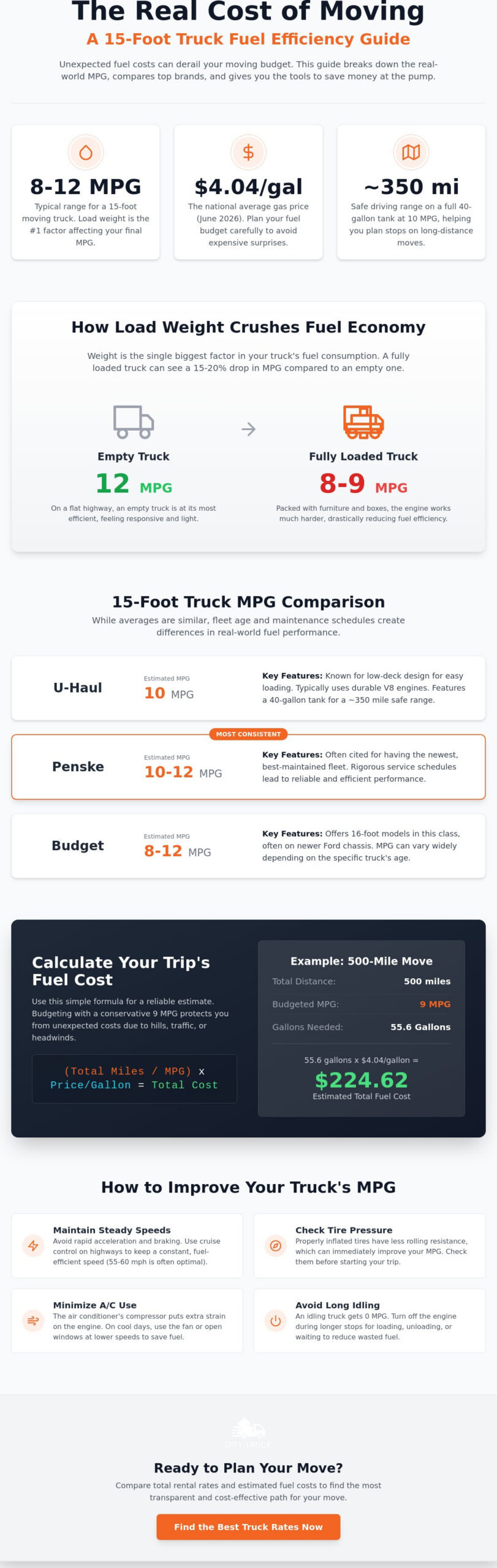
    The financial benefit of choosing a cargo van over a box truck is immediate. A 10-foot box truck often struggles with fuel economy due to its heavy frame and poor aerodynamics. In contrast, a cargo van operates much more like a standard SUV. You’ll spend significantly less at the pump, especially on local trips with frequent stops. The savings add up quickly when you’re making multiple runs across town.

    Driving stress is also lower. The “van-like” handling makes lane changes and turns feel natural. You won’t need to learn how to use massive commercial side-view mirrors or account for a wide turning radius. You don’t have to worry about overhead clearance in most residential areas. Many cargo vans even fit inside standard parking garages. This is a massive advantage in dense city centers where street parking is a gamble. It’s the shortest path between your old front door and your new one.

    Comparing Cargo Van Dimensions and Capabilities

    Choosing the right vehicle isn’t just about the daily rate. It’s about the dimensions. A cargo van rental for small move projects succeeds when you match your inventory to the vehicle’s interior volume. Most standard cargo vans offer an interior length between 10 and 12 feet. This is usually enough space for a standard three-person sofa and several stacks of boxes. You should also consider the payload capacity. Most modern vans handle between 3,000 and 4,000 lbs. Since furniture is often bulky but not incredibly heavy, you’ll likely run out of floor space long before you hit the weight limit. This capacity ensures the vehicle remains stable and safe even when fully loaded with your belongings.

    Loading height is another factor that often gets overlooked. Unlike box trucks, cargo vans sit much closer to the pavement. You don’t need to navigate a steep, narrow ramp while carrying a heavy dresser. You simply step into the back. This lower entry point speeds up the process and reduces physical strain. If you want to see how different brands compare on these specific measurements, you can view real-time specs and rates to find the best fit for your gear.

    The High-Roof Advantage for Furniture

    Standard vans are great, but standing items often require more vertical clearance. High-roof models provide an interior standing height of approximately 70 to 75 inches. This is a game-changer for tall bookshelves, floor lamps, or wardrobes that shouldn’t be laid flat. It also makes the loading process much more comfortable. You can walk around inside the van without hunching over. This extra height is highly sought after; check availability at your local rental hub early in the planning process. Some national brands keep fewer high-roof models in their fleet compared to standard versions.

    Compact Cargo Vans for City Deliveries

    Sometimes a full-sized van is still too much. If you’re only moving a few electronics, some luggage, and twenty small boxes, a compact van like the Ford Transit Connect is the most efficient tool. These vehicles are built for dense urban environments where every inch of parking space matters. They offer incredible fuel economy and fit into almost any parking structure. However, don’t expect to fit a mattress or a large dining table inside. Always verify the specific model during your booking to ensure a cargo van rental for small move tasks doesn’t leave your largest items on the sidewalk. Precision in your choice leads to a faster, cheaper move.

    Cargo Van Rental for Small Moves: The 2026 Comparison Guide

    Cargo Van vs. Small Box Truck: Which One Do You Need?

    Deciding between a cargo van rental for small move projects and a 10-foot box truck comes down to three factors: length, lifting, and location. Start by measuring your largest piece of furniture. If your sofa exceeds nine feet in length, it likely won’t fit in a standard van. You shouldn’t try to force it. This leads to damage or an unsecured load. Also, consider your physical strength. Cargo vans lack loading ramps. You must lift every item directly into the back. If you’re moving heavy appliances or solid wood furniture, the ramp on a box truck is a safer choice for your back. It’s about choosing the tool that protects your body and your belongings.

    Your driving route matters just as much as your gear. Box trucks are taller and wider. They are often prohibited from certain parkways and may not clear low-hanging trees or old apartment awnings. A cargo van navigates narrow alleys and tight city corners with ease. It’s the smart choice for urban environments where parking a box truck is a logistical nightmare. You can pull right up to the curb or into a driveway without blocking the entire street. This accessibility saves you time and reduces the distance you have to carry heavy boxes.

    When to Upgrade to a 10-Foot Box Truck

    The “sofa rule” is your best guide. If your couch is too long for the van’s interior floor, upgrade immediately. Don’t risk driving with the back doors open or items hanging out. Heavy appliances like washers or refrigerators are also easier to manage with a box truck. The integrated ramp saves your spine and makes the loading process much faster. If you realize your inventory is too large for a van, check out our moving truck rental guide for larger options. It helps you determine exactly when more cubic footage becomes a necessity rather than a luxury.

    Cost Implications of the Size Choice

    Vans usually offer the lowest entry price for any motorized moving vehicle. Their daily base rates are consistently lower than those of box trucks. You’ll also see a difference in insurance costs. Many personal auto insurance policies extend coverage to cargo vans because they are classified as light-duty vehicles. Box trucks often require specialized, more expensive rental insurance. As of 2026, federal mandates require state-minimum liability to be included in all agreements at no extra charge, but you still need to consider damage waivers. A van’s superior fuel economy means you pay less at the pump on top of the per-mile fee. It’s the most cost-effective path for a light load when every dollar counts.

    The 2026 Guide to Booking the Best Cargo Van Rate

    Avoid the Single-Site Trap. Prices for a cargo van rental for small move projects fluctuate constantly across different national brands. One provider might have a surplus of vans in your neighborhood while another is completely sold out. This local imbalance creates massive price gaps for the same vehicle type. Comparison is your only tool for financial honesty. You need to see the total cost before you provide any credit card details. Seeing every available option at once ensures you don’t overpay for a simple task.

    Timing your reservation is the most effective way to slash your bill. Booking your rental for a Tuesday, Wednesday, or Thursday often results in significantly lower base rates. Rental hubs are usually crowded on weekends; this drives prices up. If your schedule allows a mid-week transition, you’ll find more vehicle choices and shorter lines. Always watch for hidden fees that can inflate a quote. Environmental fees, refueling surcharges, and vehicle licensing recovery fees are common industry standards. You can compare all national cargo van rates in seconds to see exactly what you’ll pay at the counter.

    Understanding Mileage and Insurance

    Pricing models usually split into flat rates or per-mile charges. Local moves often use a low base rate plus a fee for every mile driven. These charges in 2026 typically range from $0.59 to $1.99 per mile. Before you buy extra protection, verify your credit card benefits. Many premium cards offer secondary coverage for cargo vans. This can save you $15 to $40 per day on damage waivers. One-way moves use a different structure; they often combine costs into a single total price rather than a daily rate plus mileage.

    How to Compare National Providers Fast

    Checking every major brand website individually is a poor use of your time. Every site uses different steps and hidden menus to show the final price. The most efficient method is viewing every available option on one screen. This helps you spot the best value without managing five different browser tabs. If you’re moving across state lines, the logistics change. Review our one way truck rentals guide to see how pricing shifts for long-distance trips. Modern booking should be about speed and clarity.

    Why DityTruck is Your Best Tool for a Stress-Free Move

    DityTruck exists to solve the complexity of modern moving logistics. We act as your savvy consumer advocate by performing the heavy lifting behind the scenes. Instead of opening multiple tabs and manually comparing quotes, you get instant access to aggregated real-time data. This ensures you find the most efficient cargo van rental for small move needs without the traditional stress. We prioritize your time and your budget by stripping away the noise. You see the inventory. You see the rates. You make a decision based on clarity. It is the most direct path to a successful relocation.

    Financial honesty is our core principle. The rental industry is often plagued by hidden fees and shifting prices. We combat this by providing transparent pricing from the start. You won’t face surprises at the rental counter because the data is verified and current. This level of transparency offers immediate relief for a high-stakes task. It transforms a confusing process into a simple, logical progression. You are no longer guessing if you got the best deal; you are confirming it. Our platform ensures that the rate you see is the rate you can trust. We don’t believe in fine-print traps.

    Efficiency is the primary driver of our platform. Our streamlined interface allows you to find, compare, and reserve your vehicle in under three minutes. This speed mirrors the physical momentum of your move. We move as fast as you do. By consolidating the best national providers into one view, we eliminate the friction of traditional booking. You skip the manual research; you get the results instantly. We remove the hurdles so you can focus on your new home. It is about confident simplicity in a crowded marketplace.

    The Smart Assistant for Logistics

    Our platform functions as a smart assistant that never stops working for you. The process follows a clear action-result flow. You enter your moving details; we scan national databases. You receive the lowest aggregated rates; you save money instantly. It is a friction-free solution designed for the modern renter. We replace confusion with a grounded, helpful experience. DityTruck is the shortest path between a moving problem and its resolution. We handle the data so you can handle the boxes.

    Ready to Book Your Cargo Van?

    You’ve done the research. You understand the dimensions, the fuel savings, and the 2026 mandated liability requirements. Now is the time to lock in your rate before availability shifts. Our reservation process is designed to be quick and simple. Every step is logical and direct. Experience the relief of a confirmed booking with a provider you trust. There is no need for further searching or second-guessing. Compare cargo van rates and book your rental today.

    Get Moving with Confidence

    You now possess the roadmap for a streamlined relocation. Selecting a cargo van rental for small move tasks means you’ve chosen agility over unnecessary bulk. By utilizing the insights on vehicle dimensions and strategic booking times, you’ve already bypassed the most common moving hurdles. You’re no longer guessing about payload capacities or hidden mileage fees. You’re making a data-driven decision that protects both your belongings and your budget. The 2026 moving landscape is complex, but you’ve simplified it through careful research.

    Don’t let the noise of the rental market stall your progress. DityTruck provides access to real-time rates from major national providers in seconds. Our platform offers comprehensive coverage across the United States with a focus on total transparency and no hidden booking fees. This is the most direct path to a friction-free reservation. Compare Real-Time Cargo Van Rates and Save on Your Move today. Your transition to a new space should be defined by relief, not stress. You’re ready to lock in your rate and start your journey.

    Frequently Asked Questions

    How much does it cost to rent a cargo van for a day?

    Typical local rates involve a small daily base fee combined with a per-mile charge. Industry data shows mileage fees often range from $0.59 to $1.99 depending on the rental company and location. These costs change frequently based on demand and vehicle availability in your specific city. You should also account for fuel expenses and any supplemental insurance coverage you choose at the counter.

    Do I need a special license to drive a rental cargo van?

    You only need a standard, valid driver’s license to rent and operate a cargo van. These vehicles are classified for light-duty use and don’t require a commercial driver’s license or special certifications. Just ensure you meet the provider’s age requirements. Renters under 25 may face additional daily fees that vary significantly by state, particularly in New York where fees recently increased.

    Will a queen-sized mattress fit inside a standard cargo van?

    A queen-sized mattress fits inside most standard cargo vans if the interior is clear of other large furniture. However, choosing a high-roof model for a cargo van rental for small move tasks is the most efficient choice. The extra vertical space allows you to stand the mattress on its side. This clears valuable floor room for your boxes and prevents you from having to stack heavy items on top of your bed.

    Is insurance included in the cargo van rental price?

    As of January 1, 2026, all rental agreements must include state-minimum liability coverage at no extra charge due to a federal mandate. While this provides basic protection, it often doesn’t cover damage to the rental vehicle itself. Supplemental damage waivers typically cost between $15 and $40 per day. You should check if your personal auto insurance or credit card provides secondary coverage before paying for these extras.

    Can I rent a cargo van for a one-way move?

    One-way rentals are widely available from national providers, though they use a different pricing structure than local returns. Industry estimates for a cross-country trip, such as California to North Carolina, can reach around $3,000 for a cargo van. These moves are usually quoted as a flat rate rather than a daily fee plus mileage. This pricing model provides more certainty for long-distance logistics and budget planning.

    What is the difference between a cargo van and a high-roof van?

    The primary difference is the interior standing height and total cubic volume. Standard vans have a lower ceiling that requires most adults to crouch while loading. High-roof models offer approximately 70 to 75 inches of vertical space, allowing you to walk upright inside the vehicle. This extra height is critical for transporting tall items like floor lamps or wardrobes that cannot be laid flat during transit.

    Are cargo vans more fuel-efficient than box trucks?

    Cargo vans are much more fuel-efficient than even the smallest box trucks because they are lighter and more aerodynamic. They operate like a standard passenger SUV, which translates to lower costs at the pump. This efficiency is a major advantage for local moves involving multiple trips or heavy stop-and-go traffic. You’ll save money on fuel while enjoying a vehicle that is much easier to park and maneuver.

    How far in advance should I book my van for a weekend move?

    You should book your vehicle at least two to three weeks in advance to guarantee availability for a weekend move. Weekends are the peak period for rental hubs and inventory often sells out quickly. Securing a cargo van rental for small move projects early ensures you get the specific high-roof or standard model you need. If your schedule is flexible, booking mid-week can often lead to better rates and more vehicle choices.

  • Long Distance Moving Truck Rental: The 2026 Guide to One-Way Moves

    Long Distance Moving Truck Rental: The 2026 Guide to One-Way Moves

    The price you see on a rental website isn’t the price you’ll actually pay to get your life across state lines. In 2026, the gap between a base rate and your total out-of-pocket cost for a long distance moving truck rental often exceeds $1,000. A high-stakes task. It shouldn’t feel like a gamble. You likely worry about a mechanical breakdown in a remote area or getting hit with surprise charges for exceeding mileage limits. These concerns are valid. Logistics are complicated.

    We’re here to simplify the process. This guide shows you how to secure your vehicle without the usual friction. You’ll learn to understand one-way rental mechanics and identify the specific cost drivers that bloat your bill. We compare national brands side-by-side and provide a clear framework for selecting the right truck size. Don’t pay for empty space or end up leaving furniture behind. Get the clarity you need to move your belongings safely while staying within your budget. We’ve broken down the logistics into manageable steps to ensure your move is efficient and predictable.

    Key Takeaways

    • Distinguish between local round-trips and one-way logistics. It’s the first step to planning a successful cross-country transition.
    • Master the math behind base rates and mileage allotments. Knowing these variables prevents unpredictable costs at the finish line.
    • Secure a reliable long distance moving truck rental by comparing national footprints and fleet maintenance standards.
    • Protect your budget from hidden fees. Learn why personal insurance often fails and how simple cleaning prevents extra charges.
    • Skip the manual search. Use aggregate platforms to view real-time rates from all top national providers in one place.

    What is a Long Distance Moving Truck Rental?

    A one-way rental is a service where the vehicle is returned to a different location than it was picked up. This simple definition hides a complex logistical web. When you book a long distance moving truck rental, you’re participating in a massive equipment balancing act. National providers constantly move thousands of vehicles across the country to meet consumer demand. Unlike a local rental where the truck returns to its home base, a long-distance move requires a provider with a robust network of drop-off locations. You need a system that works with your destination, not against it.

    Understanding the moving industry overview helps explain why prices fluctuate. Providers charge differently based on where their trucks are needed most. If a specific city has a shortage of vehicles, the cost to rent a truck leaving that area might rise. Conversely, if a city is flooded with returned trucks, you might find a bargain for a move heading out. This demand-based pricing is why your quote can change from one week to the next. The rental agreement isn’t just for the truck. It’s for the logistical convenience of leaving it behind at your destination. It’s about freedom and efficiency.

    One-Way vs. Local Rentals: Key Differences

    Local moves are straightforward. You usually pay a low daily base rate plus a fee for every mile you drive. This model works well for round trips within the same city. If you’re planning a shorter move and want to understand how teaser rates and per-mile costs compare across providers, our guide to the best local moving truck rental options for 2026 breaks down the total cost of in-town trips side-by-side. A long distance moving truck rental operates on a different logic. These agreements typically include a flat rate that covers a specific number of days and a predetermined mileage allotment. This structure provides a clearer picture of your total cost upfront. The most critical factor is drop-off flexibility. Choosing a company with a location five miles from your new home is much better than driving an hour away to return the keys. Logistics matter. You want to finish your move, not start a new commute.

    Why Vehicle Choice Matters for Long Hauls

    The vehicle you select dictates your fuel budget and your physical comfort. Cargo vans are nimble and fuel-efficient. They’re ideal for small studio moves across several states. However, a 26-foot box truck is a different beast. These larger vehicles have a significant impact on fuel costs due to their weight and wind resistance. Beyond the size of the cargo hold, consider the cabin. For a multi-day journey, features like lumbar support and reliable air conditioning aren’t luxuries. They’re essentials. You’ll be spending long hours on the interstate. A well-maintained, modern fleet ensures you arrive at your new home without unnecessary fatigue or mechanical delays. Speed and safety go hand in hand.

    Decoding the Cost: How Long-Distance Rental Rates Are Calculated

    Pricing for a long distance moving truck rental isn’t a single flat number. It’s a combination of several variables that change daily. The base rate covers the core cost of the vehicle for a set time. This is your starting point. However, the timing of your move significantly shifts this figure. Data shows that the peak season for rentals runs from May through August. This window accounts for 58% of annual revenue for rental businesses. Moving in June will almost always cost more than moving in January. High demand leads to lower inventory and higher prices. It’s that simple.

    Your destination also dictates the final quote. If you’re moving to a popular city, providers may add destination surcharges. These fees help companies balance their fleets. If everyone is moving to North Carolina and nobody is moving out, the company has to pay to transport empty trucks back to other regions. You essentially pay for that logistical imbalance. It’s a supply and demand game. Understanding these drivers helps you time your move for maximum savings. Clarity leads to better decisions.

    The Role of Mileage in Your Quote

    Most one-way moves include a specific mileage allotment based on the most direct route. If you go over this limit, expect to pay between $0.59 and $1.99 per mile. For a cross-country haul, a few wrong turns can become expensive. You should calculate potential overage charges before you sign the agreement. Penske offers a different approach. Their unlimited mileage model for one-way rentals is a major differentiator. It removes the stress of counting miles or avoiding detours. You can compare real-time rates and mileage terms to see which provider offers the best value for your specific route.

    Hidden Factors Influencing 2026 Prices

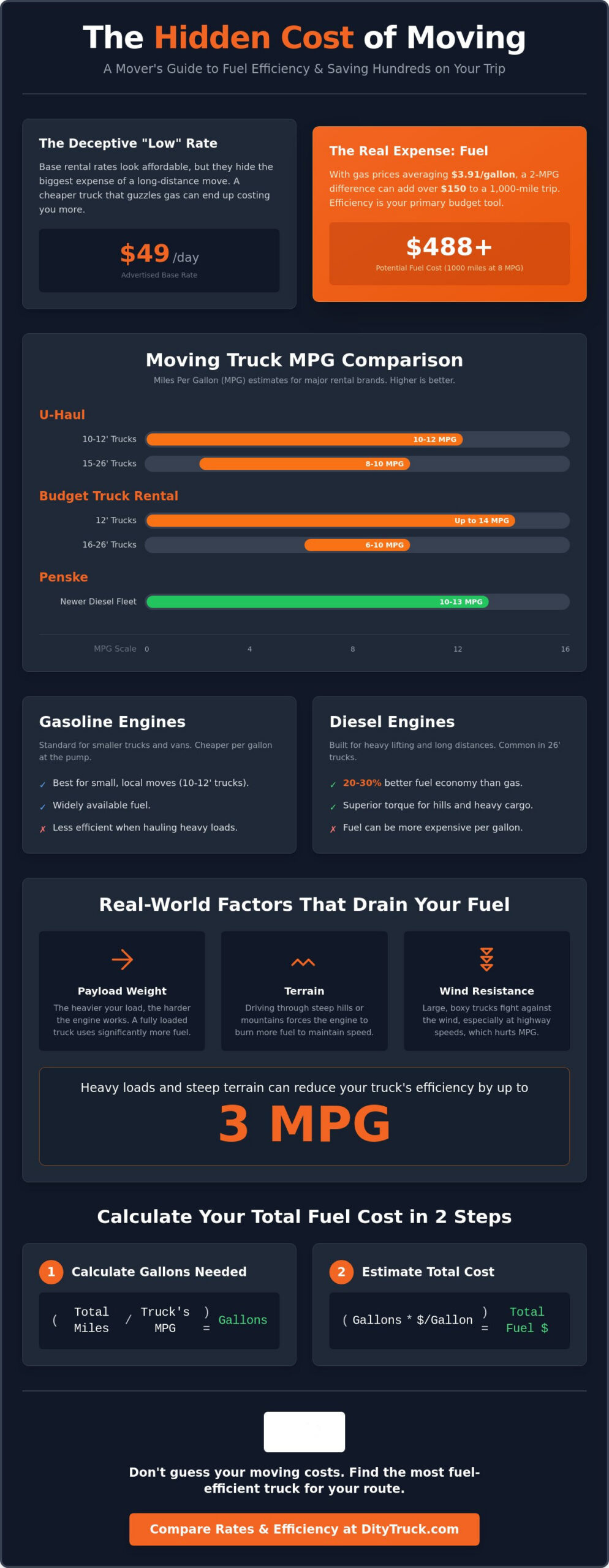
    The base rate is just the beginning. Fuel is your largest variable expense. A 26-foot box truck consumes a significant amount of diesel or gasoline. You should use a fuel estimator tool to budget for this cost separately. Expect to pay environmental fees, which typically range from $5 to $15 per rental. State and local taxes are also significant. These can add between 7% and 12% to your total bill depending on your pick-up location. Booking your truck well in advance is the smartest way to lock in a lower rate. It protects you from the price hikes that occur as peak season approaches. Secure your rate early. Save your budget.

    Long Distance Moving Truck Rental: The 2026 Guide to One-Way Moves

    Top Comparison Factors for a Multi-State Move

    Selecting a long distance moving truck rental requires looking beyond the sticker price. You need a provider with a massive national footprint. A deep network ensures there’s a drop-off point near your new home. It also means help is close if something goes wrong. Check the provider’s map before you commit. Roadside assistance is a non-negotiable feature for multi-state hauls. You need 24/7 support. A breakdown in a remote area shouldn’t derail your entire schedule. Reliable support turns a crisis into a minor delay. It keeps your move on track.

    Fleet age is a critical reliability factor. Newer trucks break down less often. They also feature modern engines that maximize fuel efficiency. This saves you significant money over a 1,000-mile journey. Ask about maintenance intervals. High standards prevent mechanical failures before they happen. You want a truck that’s been inspected and cleared for long-haul travel. It’s about safety. It’s about keeping your belongings moving forward without interruption. Equipment reliability is the foundation of a stress-free move.

    Brand Comparison: Penske, Budget, and U-Haul

    Penske is often the preferred choice for long distances. They maintain a newer fleet and offer unlimited mileage on one-way moves. This removes the fear of surprise fees at the end of your trip. Budget positions itself as the value leader. They offer competitive rates for those on a strict budget. U-Haul provides the most pick-up and drop-off locations in the United States. This convenience is unmatched. However, their truck age and mileage policies vary by location. You must read the fine print carefully. For a deeper dive into these options, check out our one way truck rental comparison. It helps you find the best rates for 2026.

    Add-ons and Moving Supplies

    The right equipment makes the physical work easier. Ensure your truck includes a wide, pull-out loading ramp. It’s a safety essential. If you need to transport a vehicle, choose between a tow dolly and a car carrier. A tow dolly is cost-effective for shorter distances. A car carrier is better for long hauls. It keeps all four wheels off the pavement. This prevents wear and tear on your car’s transmission and tires. It’s the safer choice for your vehicle. Don’t forget the small items. Book moving blankets and hand trucks when you reserve the vehicle. Having these supplies ready saves time on moving day. It ensures a friction-free experience from start to finish. You focus on the destination. We’ll help with the gear.

    Avoiding Hidden Fees and Common Long Distance Rental Pitfalls

    Hidden fees destroy budgets. A long distance moving truck rental quote often omits mandatory extras. Always verify if taxes and environmental fees are included before you book. Some states charge additional surcharges for interstate moves. Read the fine print. Don’t assume the first number you see is the final price. Verification protects your bank account. Transparency is key.

    Late returns are expensive. One-way agreements provide a specific drop-off window. Missing this by even an hour can trigger a full extra day of charges. Plan for traffic. Build a buffer into your schedule. Return the truck early to avoid the stress of a ticking clock. Efficiency starts with a solid timeline.

    Cleaning and refueling are simple to manage. Sweep the cargo area thoroughly. Use a damp cloth on the dashboard and seats. Return the truck with the same fuel level recorded at pick-up. Providers charge premium rates for gas if they have to fill it themselves. These rates are often double the local pump price. It’s a massive, avoidable expense. Take a photo of the fuel gauge when you drop off the keys. Evidence prevents disputes.

    Understanding Rental Truck Insurance

    Your personal auto policy likely stops at the truck’s bumper. Standard insurance usually excludes vehicles exceeding 10,000 pounds. This applies to most medium and large box trucks used for a long distance moving truck rental. You need a damage waiver to protect the vehicle itself. Liability coverage is equally important. It protects you against third-party claims if an accident occurs. Cargo protection is also vital. It secures your furniture and boxes against damage from shifting or theft during the long haul. Insurance provides peace of mind on the interstate. It’s the one extra you shouldn’t skip.

    Planning Your Route for Efficiency

    Driving a large truck isn’t like driving a sedan. You must avoid low-clearance bridges and restricted residential routes. Use a truck-specific GPS or app to map your path. Identify fuel stations with high-clearance canopies. Not every gas station can accommodate a 26-foot vehicle. Plan your rest stops at dedicated truck centers. These facilities offer the space you need to park safely. For more detailed advice, see our one way truck rentals for moving guide. It covers route planning in depth.

    Ready to secure your vehicle? Compare national truck rental rates and book your move today to ensure total price transparency.

    Streamlining Your Search with a National Truck Rental Comparison Platform

    Checking individual rental websites is a drain on your time. You open five tabs. You enter the same zip codes repeatedly. It’s a repetitive cycle. A long distance moving truck rental search should be faster. DityTruck aggregates real-time data from top national providers into one streamlined view. You see every option side-by-side. This level of transparency removes the usual guesswork. You see the total cost before you click book. No more jumping between pages to calculate mileage allotments or base rates on your own.

    Speed matters when inventory is low. In 2026, the global truck rental market is projected to reach $152.18 billion. This growth means more consumers are competing for the same limited fleet. You can move from comparison to reservation in minutes. The platform performs the heavy lifting behind the scenes. It acts as your smart assistant. You save hours of manual research. You gain immediate clarity. It’s the most logical path to a successful move.

    Why Comparison Shopping is Essential in 2026

    Dynamic pricing is the industry standard. Rates change daily based on fleet availability and local demand. Aggregators catch these price dips automatically. You might find a significantly lower rate just by comparing different drop-off locations or pickup dates. Comparing multiple brands ensures you don’t miss out on seasonal promotions or regional discounts. Get a moving truck rental quote that fits your specific needs without the manual labor. It’s about working smarter, not harder. You deserve the best rate available.

    How DityTruck Simplifies the DIY Move

    Logistics are stressful enough. Your booking platform shouldn’t be. DityTruck provides centralized booking for all major truck sizes and types. Whether you need a nimble cargo van or a massive 26-foot box truck, the options are clear. The user-friendly interface is built for rapid decision-making. You see the facts. You make the choice. It’s the shortest, most efficient path between your current problem and your new home. Compare rates and book your long-distance truck today to experience a friction-free transition. Your move starts here.

    Secure Your Move with Confidence

    You now have the framework to navigate the complexities of one-way logistics. Understanding how base rates, mileage allotments, and seasonal demand intersect allows you to spot a fair deal instantly. Avoiding common pitfalls like insurance gaps and refueling surcharges keeps your hard-earned money in your pocket. A successful move is the result of clear information and early preparation. Logistics don’t have to be a burden.

    Finding a reliable long distance moving truck rental shouldn’t involve hours of manual research or confusing spreadsheets. We’ve built a system that does the heavy lifting for you. You can compare top national brands in one place and access real-time pricing for 2026 moves within seconds. Our streamlined booking process removes the friction from your transition. It provides the clarity you need for a high-stakes task. Confidence comes from having the right tools at your disposal.

    Take the next step toward your new home. Compare Long Distance Truck Rental Rates Now. You’ve done the research. Now, secure the vehicle that fits your budget and your timeline. Your new beginning is just a few clicks away. Move forward with total peace of mind.

    Frequently Asked Questions

    What is the cheapest long distance moving truck rental company?

    Budget often provides the lowest base rates for a long distance moving truck rental. However, the final price depends on your specific route and timing. You must compare total out-of-pocket costs, including fuel and insurance, rather than just the initial quote. Prices fluctuate based on seasonal demand and fleet availability. Comparing multiple brands ensures you find the most economical option for your move.

    Does Penske really offer unlimited mileage on one-way moves?

    Yes, Penske provides unlimited mileage on one-way rental agreements. This policy removes the stress of calculating distances or paying for overages. It’s a major advantage for cross-country trips where detours or wrong turns are possible. While other companies might cap your miles, Penske allows you to focus on the drive without watching the odometer. This transparency helps in maintaining a predictable budget.

    Can I tow my car behind a long distance rental truck?

    You can tow your vehicle using a tow dolly or a car carrier attached to the rental truck. Most national providers offer these equipment add-ons during the booking process. A car carrier is better for long distances because it keeps all four wheels off the ground. This prevents wear on your car’s transmission. Ensure your vehicle’s weight is compatible with the truck’s towing capacity before you start your journey.

    How much does it cost to rent a moving truck for a cross-country move?

    A 1,000-mile move typically costs between $1,800 and $2,800 in total out-of-pocket expenses. For a full cross-country journey, a 26-foot truck can cost nearly $7,400. These figures include the base rental, fuel, taxes, and lodging. Costs vary significantly based on the time of year and the popularity of your destination. Booking in advance is the most effective way to secure a lower rate during peak seasons.

    What size truck do I need for a 3-bedroom house long-distance move?

    A 26-foot truck is the standard choice for a 3-bedroom house long-distance move. This size provides enough cubic footage for large furniture, appliances, and several dozen boxes. Choosing a truck that is too small leads to multiple trips or leaving items behind. It’s better to have slightly more space than you need. This ensures you can pack your belongings safely without cramming them against the roof.

    Do I need a special driver’s license to drive a large moving truck?

    No, you don’t need a Commercial Driver’s License (CDL) to drive a rental truck for personal use. A standard Class D license is sufficient for most vehicles in a rental fleet. However, you must be aware of the truck’s weight and height. Many states require non-commercial rental trucks to stop at weigh stations if they exceed 10,000 pounds. Always check the Department of Transportation rules for every state on your route.

    What happens if my rental truck breaks down in another state?

    National rental companies provide 24/7 roadside assistance for long-distance customers. If your truck breaks down, you call the provider’s dedicated support line to dispatch a mechanic or a replacement vehicle. This coverage is essential for the peace of mind needed during a multi-state haul. Most modern fleets are well-maintained to prevent these issues. Having a support network in place ensures a mechanical failure won’t end your move prematurely.

    Are there hidden fees in long distance truck rental quotes?

    Hidden fees often appear as environmental surcharges, state taxes, or cleaning penalties. A long distance moving truck rental quote may not include the 7% to 12% in taxes added at checkout. You also face high refueling fees if you return the truck with less gas than when you started. Reviewing the entire rental agreement helps you identify these costs upfront. Transparency prevents your final bill from exceeding your initial budget.

  • How to Use a Cargo Van Rental for Moving Furniture: 2026 Guide

    How to Use a Cargo Van Rental for Moving Furniture: 2026 Guide

    That massive 26-foot box truck might be the biggest mistake of your move. It’s hard to park. It’s expensive to fuel. For many apartment dwellers or DIYers, a cargo van rental for moving furniture is the smarter, faster choice. It offers the capacity you need with the drivability of a standard SUV. With the 2026 IRS business mileage rate at 72.5 cents per mile, every unnecessary mile in an oversized, thirsty truck adds up fast.

    You probably have two major concerns. Will your expensive sectional actually fit? Will it survive the trip without a single scratch? It’s frustrating to pay for a giant truck that stays half-empty. It’s even worse to realize your gear won’t fit in the van you just booked. We understand that stress. You want a solution that’s simple, honest, and effective.

    This 2026 guide simplifies the process. You’ll master the art of the small-scale move. We’ll help you confirm dimensions, secure your items like a pro, and ensure a damage-free arrival. We’ll break down how to choose the right van size and load it efficiently to maximize every inch of space. Let’s get your furniture moved without the typical logistics headache.

    Key Takeaways

    • Discover why the low deck height of a cargo van simplifies loading heavy dressers and sofas. This design saves your back and speeds up the move.
    • Measure your items against standard 10 to 12-foot floor lengths. Remember to account for wheel well intrusions to ensure everything fits perfectly.
    • Find the most affordable cargo van rental for moving furniture by comparing mileage rates and local versus one-way options.
    • Master the bulkhead-first loading technique to secure your heaviest items. This strategy prevents shifting and protects your furniture from damage.
    • Skip the rental counter hassle by using a streamlined booking service. Compare national providers quickly to find a van that matches your schedule.

    Why Cargo Van Rental is the Smartest Choice for Furniture

    A cargo van is a high-roof, windowless vehicle designed specifically for payload efficiency. It’s built to carry weight without the bulk of a semi-truck. For many, a cargo van rental for moving furniture is the smartest choice because it balances size and accessibility. Unlike larger vehicles, these vans sit lower to the ground. This low deck height makes loading heavy dressers and sofas much easier on your back. You don’t have to lift items nearly as high to get them inside. It’s a simple change that prevents injury and exhaustion during a long day of heavy lifting.

    These vehicles are also built for the city. They handle like a large SUV. You can navigate tight residential streets and fit into standard parking spots without the stress of a wider truck. It’s a friction-free way to handle a high-stakes task. You get the space you need without the anxiety of driving a massive commercial vehicle. The controls are intuitive, the visibility is manageable, and the parking process is straightforward. It’s the shortest path between your old home and your new one.

    Cargo Van vs. Pickup Truck for Furniture

    Pickups have open beds. This leaves your valuable wood furniture exposed to dust and sudden rain. A cargo van offers total climate and weather protection. Your belongings stay dry and clean throughout the trip. You don’t need to buy expensive tarps or messy tie-down nets. Security is another major win. The enclosed cargo area prevents theft during quick stops for gas or food. You can’t leave a sofa in an open pickup bed while you grab lunch. You also gain significant vertical space. High-roof models allow you to stand taller items like floor lamps or shelving units upright. This saves floor space and reduces the risk of items tipping over.

    Cargo Van vs. Small Box Truck

    Box trucks are often overkill for a single room or a few pieces of furniture. Cargo vans offer much better fuel efficiency. This lowers your overhead costs for local furniture deliveries. You also don’t need any special “truck” driving experience. Height clearance is the final advantage. Most cargo vans easily enter apartment complex parking garages. Box trucks are often too tall and get stuck outside. This forces you to carry furniture across a long parking lot. A cargo van gets you closer to the door. This saves time, energy, and money on every trip.

    Sizing Up: Will Your Furniture Fit in a Cargo Van?

    Knowing exactly what will fit inside the vehicle prevents last-minute stress. Most standard cargo vans provide between 10 and 12 feet of floor length. This is typically enough for the contents of a studio apartment or a single large room. However, the floor is not a perfect rectangle. You must account for wheel well intrusions. These protrusions reduce the floor width between the wheels. Plan to place narrower items or boxes between them. If you are moving a tall wardrobe or an armoire, check the roof height. Low-roof models are common. High-roof versions offer the vertical clearance needed for standing furniture upright. This prevents you from having to lay delicate items on their side.

    Weight capacity is the final technical hurdle. A cargo van rental for moving furniture must handle the payload of your specific items. Solid oak dressers or heavy marble-top tables add up quickly. Exceeding the payload rating makes the van harder to stop and steer. It’s vital to follow regulations for Transporting Cargo Safely to keep your trip legal and secure. If you want to see which vehicles are available in your area, check current rental options to find the right fit for your load.

    Common Furniture vs. Van Capacity

    A standard three-seater sofa is usually about 7 to 8 feet long. It fits easily along the side wall. This leaves plenty of room for coffee tables and nightstands. Mattresses are trickier. A Queen mattress is 80 inches long. It might need to lean diagonally if the van floor is crowded. King mattresses almost always require a high-roof van if you want to stand them up. For dining sets, the table is your foundation. Place it flat on the floor. Stack chairs upside down on the tabletop with padding in between. This uses the vertical space that often goes to waste.

    Measuring Your Furniture the Right Way

    Don’t guess on dimensions. Use a tape measure on every large piece. Measure the absolute widest and longest points. Protruding handles, legs, and crown molding all count. You also need a packing buffer. Add at least 2 inches to every measurement to account for moving blankets and cardboard corner protectors. This ensures you don’t run out of room because of the padding. Look for detachable parts. Removing the legs from a sofa or the leaves from a dining table can save several inches. These small adjustments often make the difference between a one-trip move and a frustrating second journey.

    How to Use a Cargo Van Rental for Moving Furniture: 2026 Guide

    Comparing Top Cargo Van Rental Providers Side-by-Side

    Choosing a provider involves looking at service areas and return policies. Some companies limit vans to local, round-trip moves. Others support one-way routes for those relocating further away. Mileage fees vary based on the day of the week and the specific location. Rates can range from $0.20 to $1.39 per mile depending on the company. For longer trips, these costs often become the largest part of your budget. Use a Weekly Moving Checklist to time your booking so you don’t pay for extra days you don’t need.

    Age and insurance are critical filters. Some brands allow 18-year-old drivers for local rentals. Others require a minimum age of 21 or 24 for any vehicle. Always verify these rules before you arrive at the lot. Your personal car policy might not cover a cargo van rental for moving furniture. These vehicles are often classified differently than standard passenger cars. Check with your agent to avoid a gap in protection. Getting these details right ensures a friction-free start to your logistics task.

    What to Look for in a Furniture-Ready Rental

    Look for tie-down points along the interior walls. They are vital for using ratchet straps to lock heavy items in place. Without them, your furniture will slide during every turn. Rubberized floors are another advantage. They provide natural grip and protect wooden legs from scratches. Some high-roof vans include pull-out ramps. Smaller models usually don’t. Knowing the equipment level helps you plan for the physical lifting required on moving day.

    Using DityTruck to Filter the Best Rates

    DityTruck simplifies the search by acting as your smart assistant. We aggregate inventory from major national providers into a single view. You can see real-time availability without opening multiple tabs. This saves you hours of research and prevents financial surprises. You get a clear view of the market so you can Compare Moving Truck Rental Rates in One Simple Step. It is the shortest, most logical path to an affordable and efficient move.

    How to Pack and Secure Furniture in a Cargo Van

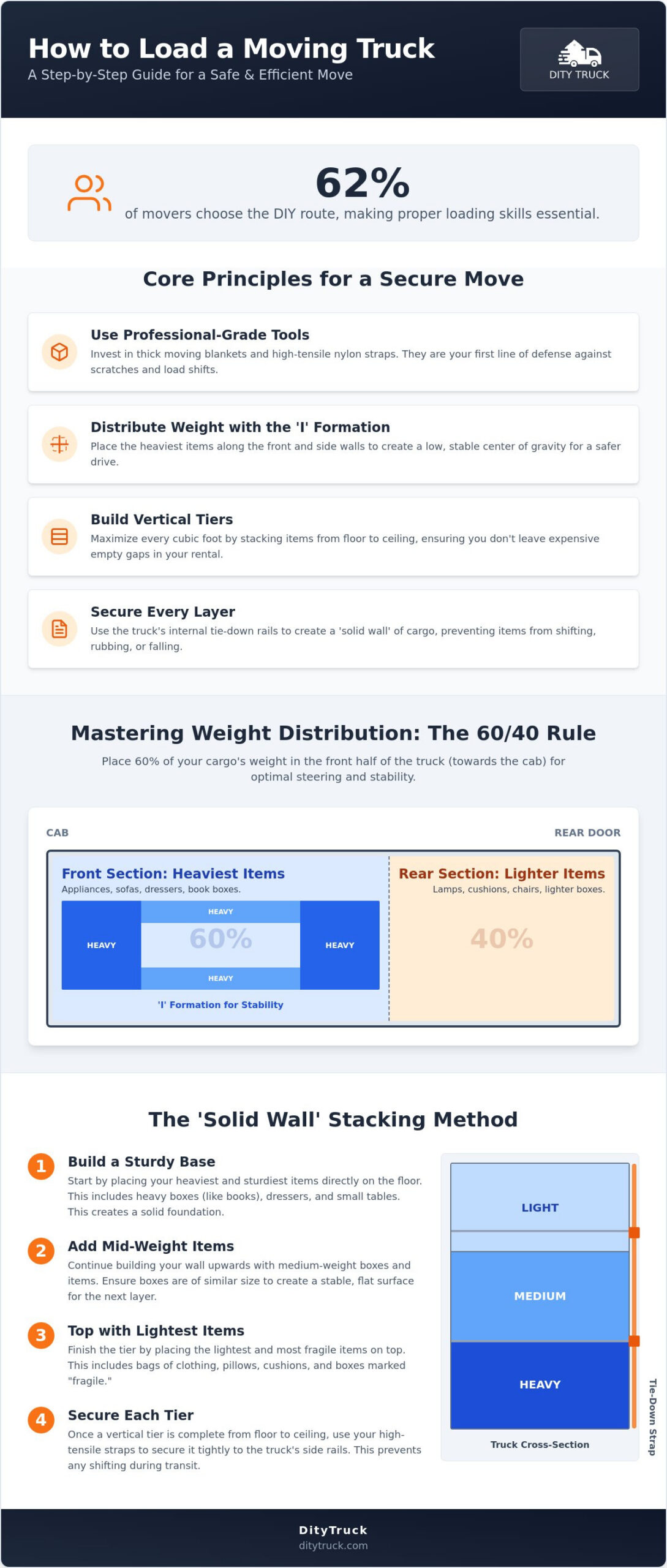
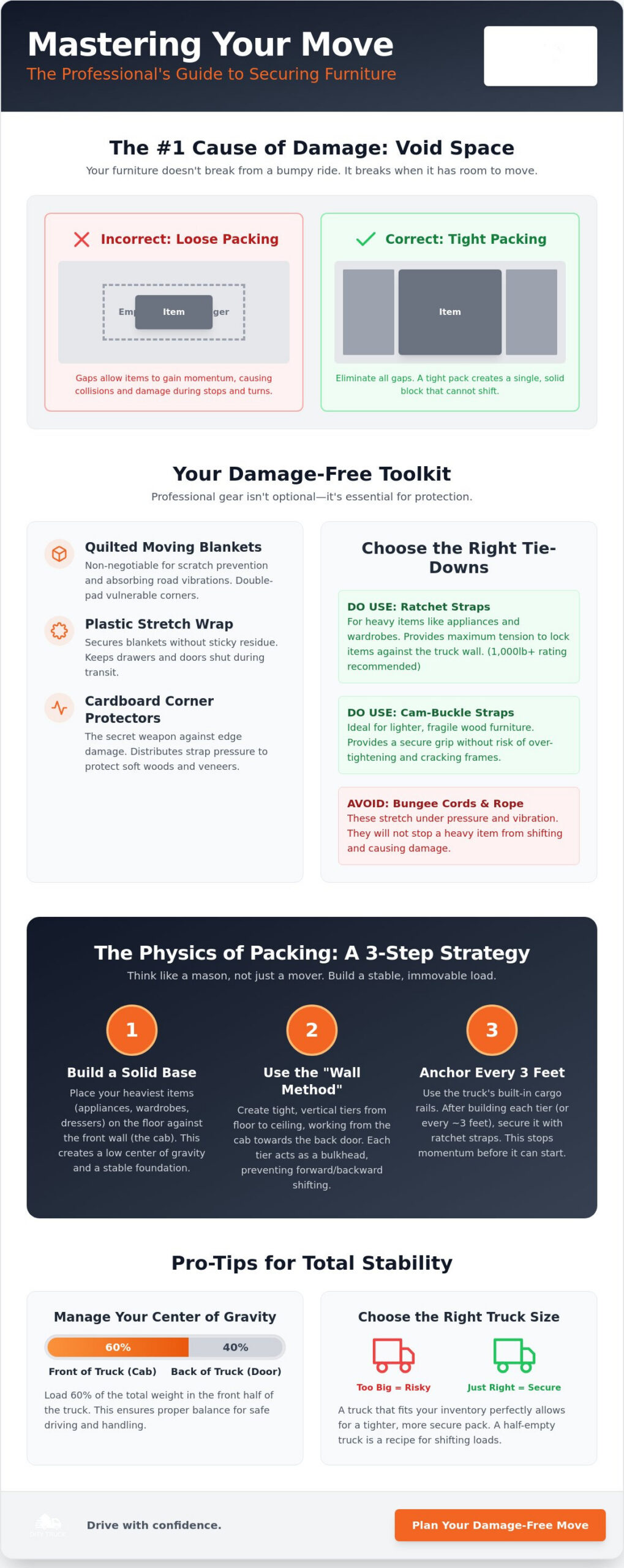
    Loading a cargo van rental for moving furniture requires a methodical approach. Start by clearing the van floor of any debris. Check the side walls for anchor points. These metal loops are your best friends for stabilization. Load the heaviest items first. Place them against the bulkhead, which is the wall directly behind the driver’s seat. This keeps the heaviest weight in the center of the vehicle. It prevents the van from becoming back-heavy. A balanced load ensures the van handles predictably during turns and sudden stops. It’s the shortest path to a safe, damage-free arrival.

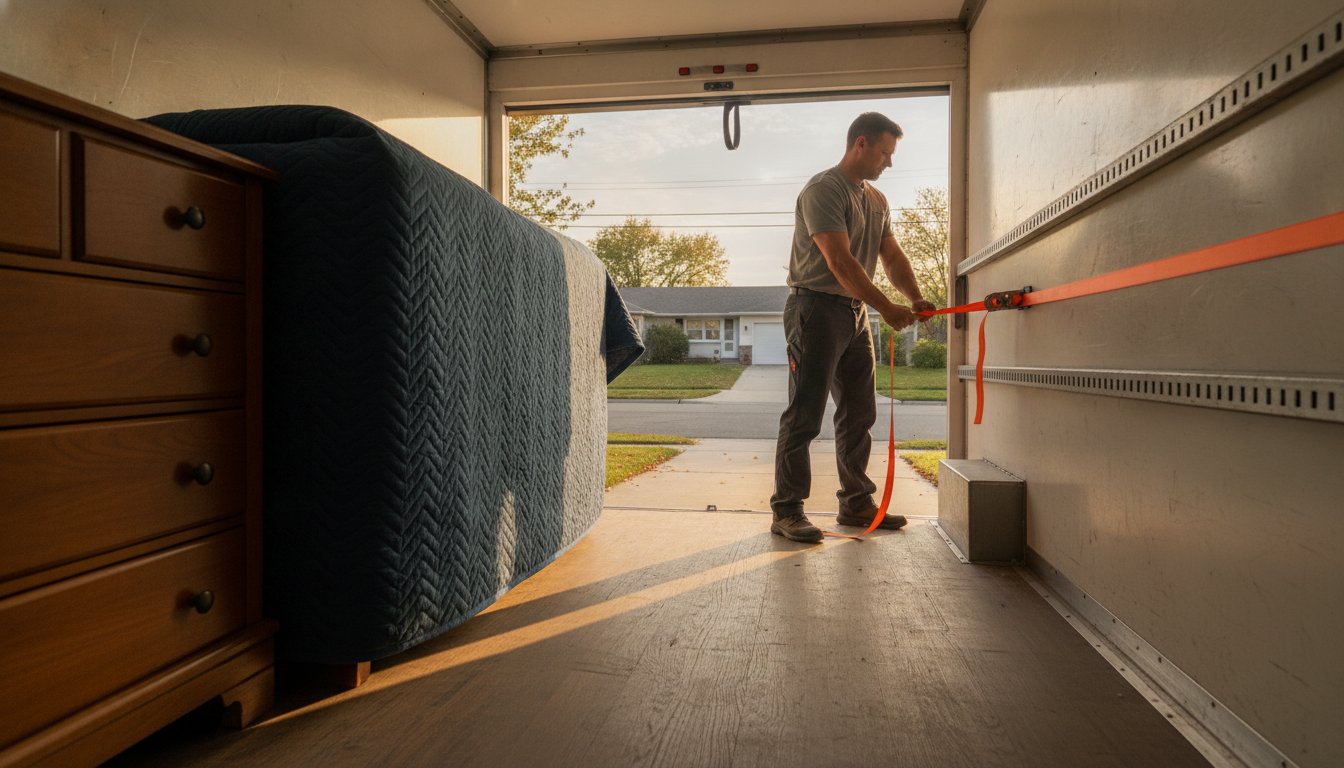
    Surface protection is non-negotiable for high-stakes moves. Use professional-grade moving blankets for every wood or upholstered surface. Wrap them tightly with stretch wrap to keep the padding in place. Don’t apply stretch wrap directly to wood finishes, as it can trap moisture. Wrap the blanket first, then the plastic. Once your items are in, secure them with ratchet straps. Connect the straps to the anchor points you located earlier. Tighten them until the furniture doesn’t budge. Never rely on bungee cords. They stretch under pressure and won’t stop a heavy dresser from sliding.

    The final step is filling the gaps. Small spaces between furniture cause rattling and friction damage. Use soft items like sofa cushions, bagged linens, or pillows to plug these holes. This creates a solid block of cargo that moves as one unit. If one piece can’t move, nothing can move. This logic prevents the shifting that leads to scratches and dents. It’s a simple, honest way to protect your investment.

    The Art of the “Tight Pack”

    Keep the center of gravity low and balanced between the wheels. Place heavy bases of tables on the floor. Stack lighter boxes or chairs on top of sturdy dressers. This maximizes your vertical space and keeps the van stable. For mirrors and glass, follow the “edge rule.” Always stand glass items on their long edge. Never lay them flat. A flat piece of glass is far more likely to shatter when the van hits a bump. Secure these items between mattresses or flat sofa sections for extra cushioning.

    Essential Tools for a Van Move

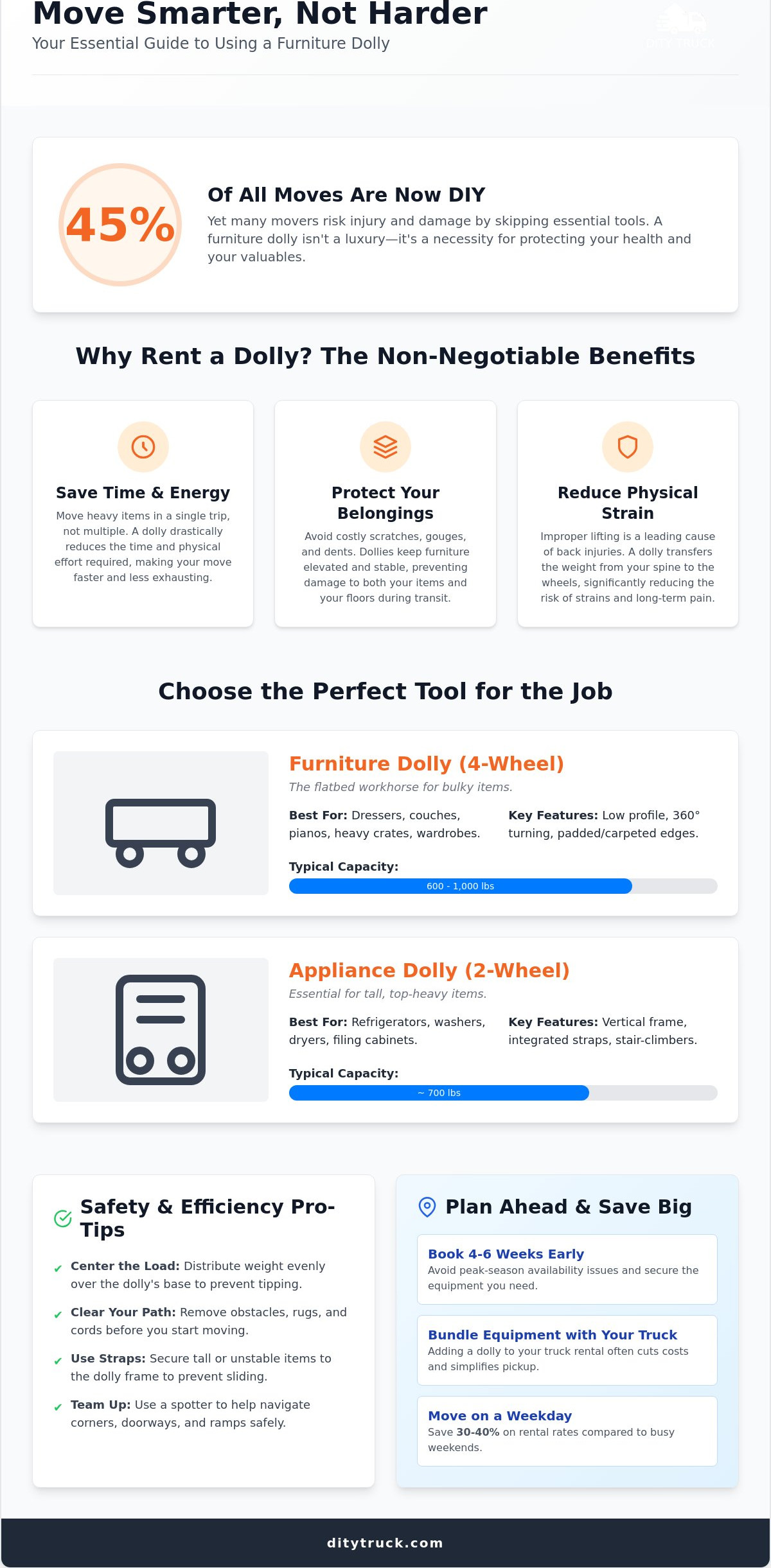
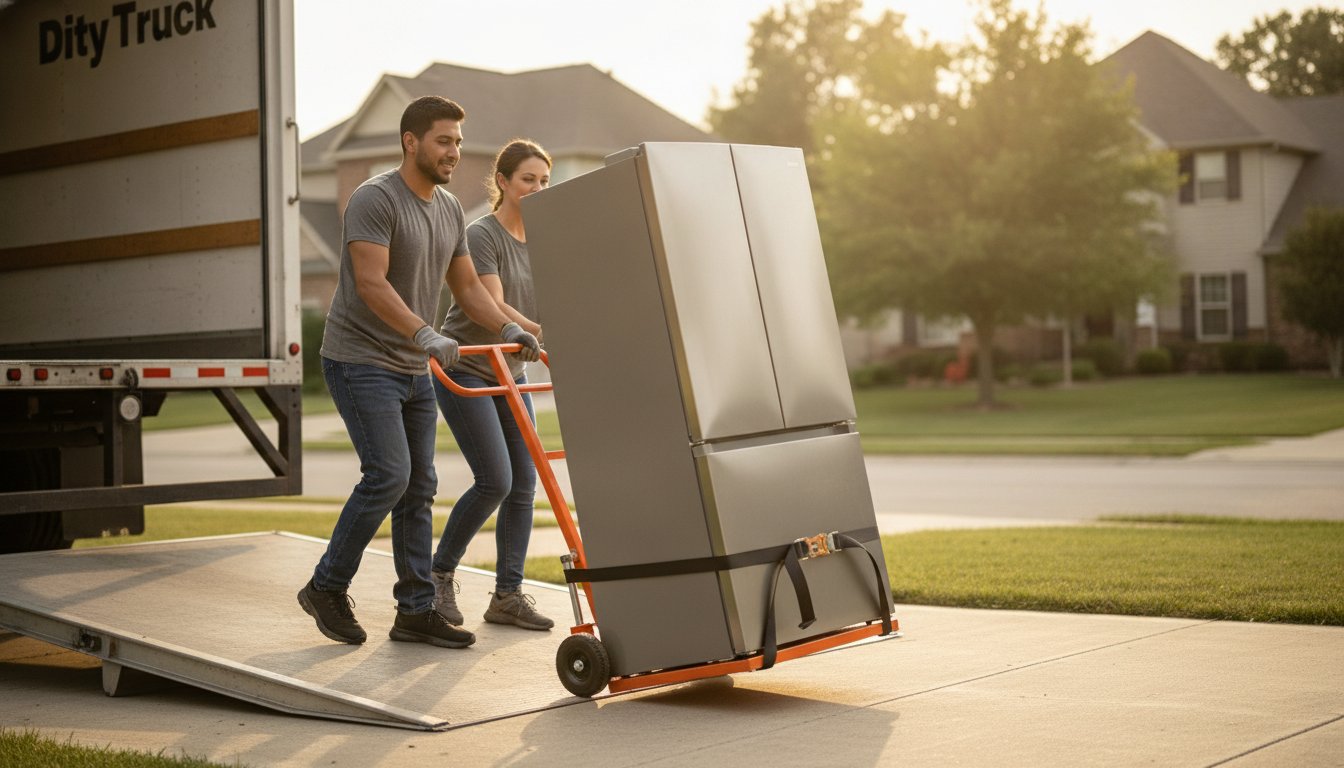
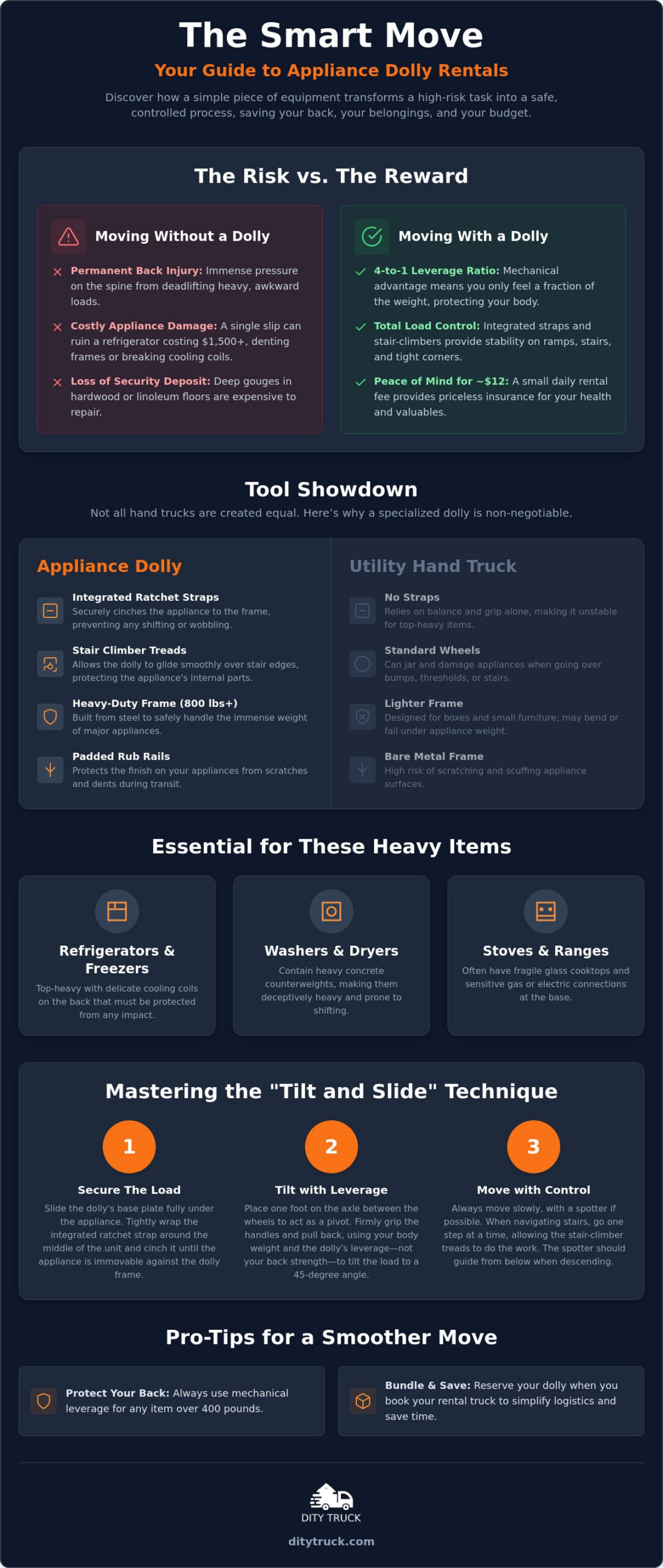
    Don’t attempt this move without the right gear. Ratchet straps are mandatory for heavy loads. They provide the mechanical tension needed to lock items down. Cam straps are a good alternative for lighter boxes. Furniture dollies are equally important. They protect your floors and your back. Use them to wheel heavy items directly to the van’s low deck. Finally, stock up on moving blankets. They are the only real defense against friction damage during transit. Ready to get moving? Book your furniture-ready van now to ensure you have the right tools for a damage-free trip.

    Booking Your Furniture-Ready Cargo Van with DityTruck

    Reservations shouldn’t be a chore. Most people dread the rental counter. Long lines. Confusing paperwork. Unexpected upselling. We’ve removed those hurdles. You can secure a cargo van rental for moving furniture in minutes. Our system is built for speed. It’s designed for your peace of mind. We offer national coverage. This means you can find a van in nearly any city across the country. Local loops are easy. Long-distance trips are manageable. We act as your expert advocate. We navigate the complex fine print for you. We look for the hidden mileage fees. We check the insurance requirements. You get a transparent view of the total cost. No surprises at pickup. Just a clean, straightforward transaction.

    Flexibility is vital for a successful move. Every furniture inventory is different. You might be moving a single antique armoire. You might be clearing out a college dorm room. We provide access to various van sizes. You can find low-roof models for tight apartment garages. You can find high-roof models for standing lamps and tall wardrobes. You pick the vehicle that matches your specific inventory. This prevents you from overpaying for a truck that is too large. It ensures you don’t get stuck with a van that is too small. It’s a friction-free solution for a high-stakes task.

    Why DityTruck is the Smart Assistant for Your Move

    Our platform acts as a smart assistant. It performs the heavy lifting so you don’t have to. We aggregate the best current market rates from major providers. Our comparison engine is fast. It’s accurate. It’s honest. We prioritize your time. We value your budget. No-nonsense logistics are our specialty. We provide the shortest path between your problem and a resolution. We strip away the complexity of traditional rentals. You get clarity and relief. Enter your dates. Discover which vans are available right now. Experience the momentum of an organized move.

    Ready to Move Your Furniture?

    Measure your couch one last time. Double-check those wheel well dimensions. Once you are certain of your needs, use our search tool. We simplify the process of One Way Truck Rentals for Moving. You get the data you need to make a savvy decision. Stop clicking through endless tabs. Avoid the stress of price hunting. Get the relief of a confirmed, transparent booking. We are here to help you master the art of the furniture move. Find your perfect cargo van rental on DityTruck now.

    Get Your Furniture Moving with Confidence

    Mastering the logistics of a small move starts with the right vehicle choice. You now have the tools to verify interior dimensions and use the “tight pack” method to keep your items safe. Choosing a cargo van rental for moving furniture is the most logical way to balance capacity with driving ease. It strips away the complexity of larger trucks while providing the weather protection your valuable pieces deserve. You are ready to load efficiently and arrive without a single scratch. This approach turns a high-stakes task into a manageable, organized process.

    Efficiency doesn’t stop at packing. It extends to how you book your vehicle. Use our smart assistant to skip the long research phase. We aggregate inventory from top US providers so you can see every available option in one place. You get real-time rate comparisons and a transparent booking process with no hidden fees. It’s the shortest, most honest path to a successful moving day. Stop overpaying for space you don’t need and start your move the smart way.

    Compare Cargo Van Rental Rates Now and take the stress out of your furniture logistics. You have the plan. Now get the van. Your damage-free trip is just a few clicks away. We are here to ensure your move is simple, fast, and successful.

    Frequently Asked Questions

    Can a king-size mattress fit in a standard cargo van rental?

    A king-size mattress will not fit flat on the floor of a standard van. These mattresses are 76 inches wide, while the space between wheel wells is typically only 50 to 55 inches. You can often fit one by leaning it on its side, but check the door opening height first. High-roof models are usually required to stand a mattress upright without bending it significantly.

    Do I need a special license to rent a cargo van for moving furniture?

    You only need a standard, valid driver’s license to operate these vehicles. No commercial license is required because they fall under the same weight class as large SUVs. Most national rental brands require drivers to be at least 21 or 24 years old. Always bring a major credit card for the security deposit to ensure a friction-free pickup experience.

    Is it cheaper to rent a cargo van or a small box truck?

    A cargo van is almost always the more affordable choice for smaller loads. You save money on the base daily rate and significantly reduce your fuel expenses. These vans are also easier to park, which helps you avoid costly urban parking tickets. It is the most logical financial path for apartment moves or single-room furniture deliveries.

    How many ratchet straps do I need for a typical furniture move?

    Plan on using four to six ratchet straps for a standard move. Use two straps per large item, like a sofa or heavy dresser, to lock them against the interior anchor points. This prevents the cargo from shifting during sudden stops. Having extra straps allows you to secure smaller boxes or chairs on top of your primary load for a safer, tighter pack.

    Can I rent a cargo van for a one-way furniture delivery?

    One-way availability depends on the specific provider and their current inventory needs. Some brands only offer cargo vans for local, round-trip moves to keep their fleets balanced. Other national providers allow one-way routes between major cities. Using a comparison tool is the fastest way to find a cargo van rental for moving furniture that supports your specific start and end points.

    Does a cargo van rental come with a loading ramp?

    Most standard cargo vans do not include a loading ramp. They are designed with a low deck height that allows you to step directly into the vehicle from the ground. For extremely heavy items, you may need to use a furniture dolly or rent a portable ramp separately. Verify the equipment specs of your specific van model before you arrive at the lot.

    What happens if the furniture I bought doesn’t fit in the van I rented?

    You may need to upgrade to a high-roof model or a small box truck if your items exceed the van’s capacity. This is why measuring your furniture at the widest points is critical before booking. If you are at a furniture store and realize the fit is too tight, check real-time availability for a larger vehicle immediately. It is better to switch vehicles than to risk damaging your furniture or the van.

    Will my personal car insurance cover a rental cargo van?

    Many personal auto policies exclude commercial-style vehicles like cargo vans. These policies often have weight limits or usage restrictions that don’t apply to rental trucks. Call your insurance agent to verify your specific coverage before you decline the rental protection plan. Ensuring you have the right coverage is a smart, no-nonsense way to protect your peace of mind during a high-stakes move.

  • How to Calculate Moving Truck Capacity: A 2026 Guide for Stress-Free Loading

    How to Calculate Moving Truck Capacity: A 2026 Guide for Stress-Free Loading

    What if the difference between a one-trip move and a midnight return to your old house is just three inches of vertical space? Most people guess their rental size based on bedroom count. That’s how you end up overpaying for a half-empty van or running out of room before the mattress is even loaded. You need to know how to translate your specific furniture and box count into a truck size that actually fits. Learning how to calculate moving truck capacity isn’t about complex geometry. It’s about matching your inventory to real-world dimensions so you can move with total confidence.

    It’s stressful to stare at a pile of boxes and wonder if they’ll actually fit. You deserve a process that’s fast, honest, and eliminates the guesswork. This guide promises to strip away the confusion of cubic feet versus linear feet. You’ll master a reliable formula to determine the exact truck size you need for your specific belongings. We’ll walk through the Tetris Factor of stacking, compare standard rental dimensions, and show you how to use a comparison platform to lock in the best rate without the typical logistics headache.

    Key Takeaways

    • Understand the difference between truck length and cubic feet. This ensures you measure total volume instead of just floor space.
    • Master a simple 3-step formula to discover how to calculate moving truck capacity. Use your furniture inventory and the 10-per-100 box rule for accuracy.
    • Maximize rental value by applying the “Tetris Factor.” This strategy involves stacking items to fill the entire vertical cargo area efficiently.
    • Avoid common pitfalls by accounting for vehicle weight limits. Don’t forget to utilize the “Mom’s Attic” compartment over the truck cab for extra space.
    • Use your final volume calculation to compare rates across multiple rental providers. Secure the most cost-effective truck size for your specific needs.

    What is Moving Truck Capacity? Understanding Cubic Feet vs. Dimensions

    Capacity is measured in cubic feet. This represents the total internal volume of the cargo area, providing a 3D view of what you can actually fit inside. While you often see a 10-foot or 16-foot label, that’s just a marketing shorthand for length. The real magic happens when you look at the height and width. Most common moving truck types feature an internal width of 7 to 8 feet. You can’t just measure the floor and call it a day. The vertical space is what separates a successful one-trip move from a logistical nightmare. Cubic capacity is the product of internal length, width, and height minus the space lost to wheel well intrusions.

    Don’t forget the door opening. Sometimes the internal height is 8 feet, but the roll-up door only clears 7 feet. This small detail can stop a tall armoire in its tracks. Measuring the actual clearance helps you visualize how to calculate moving truck capacity for your tallest items. It’s about more than just the numbers on the side of the truck. It’s about understanding the box you’re filling.

    The Box-to-Volume Conversion Chart

    Boxes are the hidden space-eaters of any move. A small box typically holds about 1.5 cubic feet. A large box jumps to 4.5 cubic feet. If you mix and match sizes without a plan, you create “dead air” that you can’t fill. Aim for 10 boxes per 100 cubic feet of truck space as a safe estimate for a standard household. Box uniformity is your best friend here. Identical boxes stack like bricks. This creates a solid foundation and improves your actual usable capacity. When boxes are the same size, you eliminate the gaps that usually swallow up valuable volume. It makes the math predictable and the loading process much faster.

    Why Bedroom Counts Often Fail

    Relying solely on bedroom counts is a common trap. Rental websites love this metric because it’s fast. It isn’t always accurate. A minimalist 2-bedroom home might have half the volume of a 1-bedroom home filled with heavy antiques and exercise equipment. These standard labels don’t account for the specific volume of your belongings. They assume you have “average” furniture. Use room counts to narrow your search at the start. Then, dive into the actual math of your inventory. Knowing how to calculate moving truck capacity for your unique items prevents you from overpaying for empty air or under-sizing your rental. It’s the difference between a guess and a plan.

    The 3-Step Formula to Calculate Your Required Truck Space

    Moving isn’t a guessing game. It’s a math problem. Most people look at their living room and pick a truck size based on a gut feeling. That leads to two outcomes: you pay for empty air or you leave the sofa on the sidewalk. You need a system that handles your actual belongings, from that oversized sectional to your collection of mountain bikes. This 3-step formula simplifies the process. It helps you understand how to calculate moving truck capacity based on your specific inventory rather than a generic room count. By the time you finish this calculation, you’ll be ready to look at a moving truck rental guide with total confidence.

    Step 1: Measuring the Heavy Hitters

    Start with your largest items. These “Big Three” (beds, couches, and tables) dictate your base volume. A King bed typically consumes about 70 cubic feet; a Queen bed takes up roughly 60. Don’t forget the appliances. A standard refrigerator requires 40 to 60 cubic feet, while a washing machine needs about 25. Modern movers often have “weird” gear that doesn’t stack well. Bicycles, floor lamps, and standing desks are notorious space-wasters. Treat these as solid blocks in your calculation. If a bicycle is 6 feet long and 4 feet high, budget 24 cubic feet for it even if it looks thin. This ensures you don’t underestimate the footprint of irregular items.

    Step 2: Doing the Box Math

    Boxes are the primary variable in any move. Counting your boxes before you book a rental is the most effective way to save money. Medium boxes are the industry standard for capacity planning. They usually offer about 3 cubic feet of space. Use the 10-per-100 rule as a benchmark; for every 100 cubic feet of truck space, you can comfortably fit about 10 standard boxes alongside your furniture. To get your total box volume, multiply your estimated box count by three. This simple step provides a concrete number to add to your furniture total, removing the mystery from how to calculate moving truck capacity.

    Step 3: The 20% Buffer Rule

    Never pack a truck to 100% of its theoretical capacity. Real-world loading involves “dead space.” This is the air between a rounded chair back and a flat box. Professional loaders call this the Tetris Factor. Add a 15 to 20% buffer to your total cubic foot requirement. If your math says you need 800 cubic feet, look for a truck with at least 960. This is your “Moment of Truth.” If your calculated total is within 50 cubic feet of a truck’s maximum, size up to the next class. It’s much cheaper to pay for a slightly larger truck than to realize you need a second trip on moving day. You can compare available truck sizes and their actual volumes to find the perfect match for your final number.

    How to Calculate Moving Truck Capacity: A 2026 Guide for Stress-Free Loading

    The Tetris Factor: Usable Space vs. Theoretical Volume

    Theoretical volume is just a starting point. A truck rated for 1,200 cubic feet doesn’t automatically swallow 1,200 cubic feet of gear. You have to earn that space through smart loading. Understanding how to calculate moving truck capacity means acknowledging the gap between a blueprint and a packed wall. If you leave a foot of air at the top of the truck, you’ve wasted 15% of your rental budget. Usable space relies on verticality. Stack to the ceiling or lose the gamble.

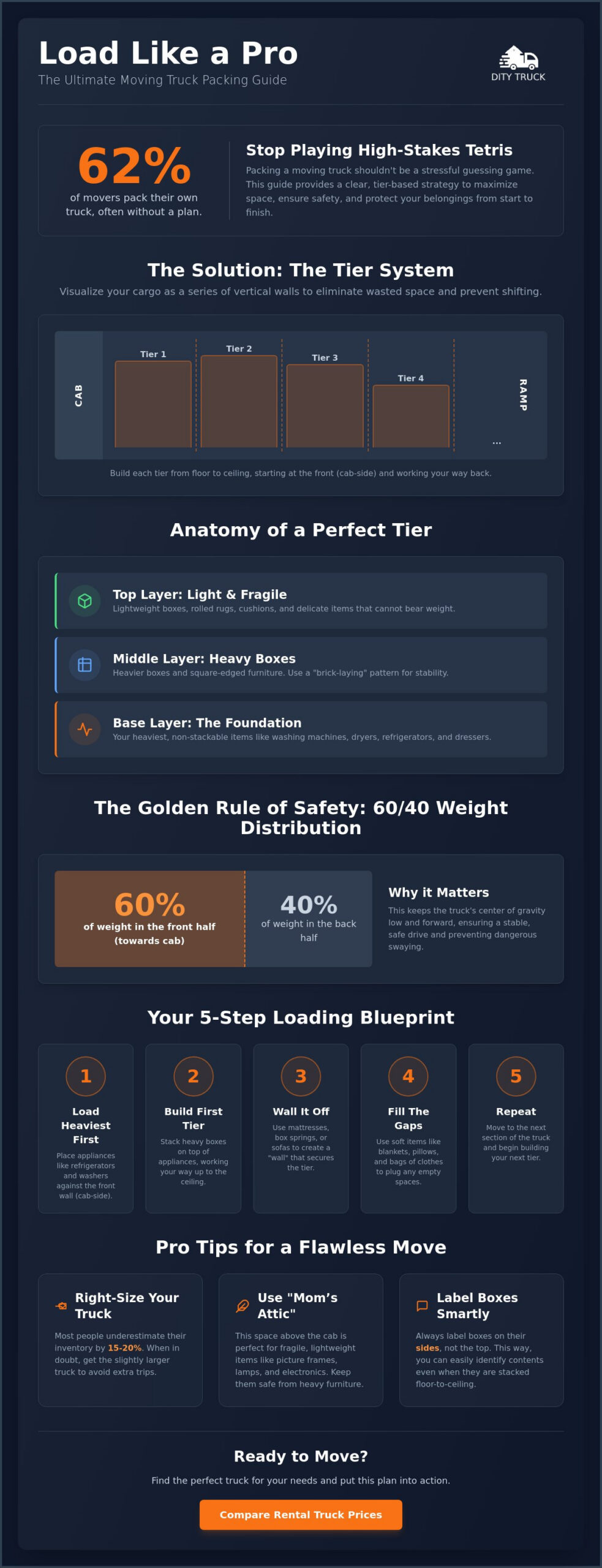
    Start with a solid foundation. Heavy appliances and dense boxes belong on the floor. This creates a stable platform for lighter items. Once the base is set, use soft goods as your secret weapon. Garbage bags of clothes, pillows, and blankets are perfect fillers. They plug the odd gaps between chair legs and headboards. This turns “dead air” into usable volume. It’s the most efficient way to ensure your calculation holds up in the real world.

    Safety dictates your final capacity. Don’t forget to leave room for the loading ramp and the interior tie-down tracks. If you pack items flush against the walls, you can’t use straps to secure the load. An unsecured load shifts during transit. This creates new gaps and can damage your belongings. A safe truck is a full truck, but it must be a secured one. Leave small pockets of space specifically for your tie-down points.

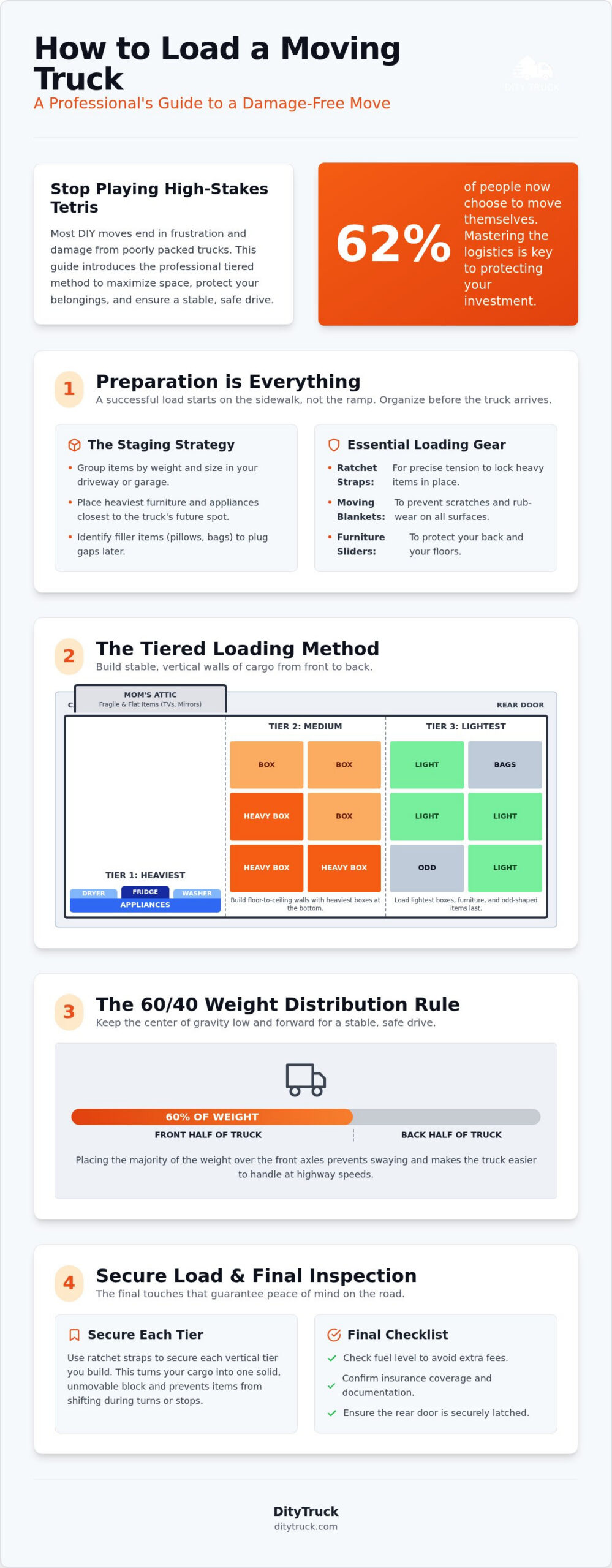
    The “Tier” Packing Method

    Visualize the truck in vertical sections called tiers. Build a wall from the floor to the ceiling. Secure it. Then start the next one. This method helps you track your remaining capacity in real-time. If you’ve used half the truck length but still have 70% of your inventory, you know you need to pack tighter. Long and flat items like mattresses or mirrors are the ultimate space-savers. Slide them along the side walls. This creates a smooth surface for other items to lean against and protects fragile surfaces.

    Managing Oddly Shaped Items

    Lawnmowers, grills, and exercise equipment are capacity killers. They have a large footprint but low stackability. You can’t put a heavy box on top of a gas grill without consequences. For these items, focus on the footprint rather than the volume. Budget the entire vertical column of space for that single item. If you have several “un-stackables,” you might need to size up. Using a comparison tool like DityTruck helps you find one way truck rentals for moving that offer wider cargo doors or lower decks. These features make it easier to load heavy machinery without wasting the surrounding space. Knowing how to calculate moving truck capacity for these outliers ensures you don’t run out of room at the last minute.

    Common Mistakes in Truck Capacity Estimation

    Calculating volume is only half the battle. Many movers spend hours measuring sofas but ignore the Gross Vehicle Weight Rating (GVWR). A full truck isn’t always a safe truck. If you load too much weight, you risk brake failure or tire blowouts. Weight capacity is just as vital as volume capacity. You must balance the physical space with the actual payload the vehicle can handle. This is the most common way people fail when learning how to calculate moving truck capacity effectively.

    Don’t forget the “Mom’s Attic.” This is the storage compartment located directly over the truck cab. It’s a prime spot for fragile electronics or small boxes. However, it’s often omitted from mental calculations. If you count it as standard floor space, you’ll struggle to load it. It requires a different packing strategy. Use it for the items you need to access first or things that can’t be crushed. It’s bonus volume, but only if you plan for it.

    The Weight vs. Volume Trap

    Density matters. Books and tools take up very little volume but carry massive weight. You might fill a 10-foot truck halfway and already exceed the legal weight limit. Always check the payload capacity on your rental agreement. If you have a home library or a full workshop, you might need a larger truck with a higher GVWR even if the cubic footage looks sufficient. This prevents dangerous handling issues on the highway. It also keeps you legal at weigh stations.

    The “Garage and Attic” Surprise

    The garage is where capacity estimates go to die. Hidden clutter adds up fast. Most garages require an extra 5 feet of truck length just to handle the “stuff” that isn’t in boxes. Outdoor furniture, patio sets, and gardening tools have awkward footprints. They don’t stack well. Don’t forget your closets and junk drawers. These small spaces can easily add 50 to 100 cubic feet to your total. Account for every corner of your home to avoid a last-minute crisis. If you’re worried about these variables, you can compare truck rental options to find a vehicle with the right payload and volume for your specific inventory.

    Ready to Rent? How to Use Your Calculation to Save

    You’ve done the math. Now it’s time to apply it. Take your total cubic foot requirement and head to DityTruck. This is where your preparation turns into actual savings. You can compare 16-foot versus 20-foot rates across multiple providers instantly. It eliminates the stress of visiting five different websites to find the best deal. By knowing exactly how to calculate moving truck capacity, you protect yourself from the “up-sell” at the rental counter. You won’t be talked into a massive truck you don’t need. You’ll book the smallest size that safely fits your volume. It’s about efficiency. It’s about financial honesty.

    Preparation is the ultimate stress-killer. When you walk into a rental office with a specific cubic foot requirement, you’re in control of the conversation. You aren’t guessing. You aren’t anxious. You’re simply executing a plan. The comparison tool acts as your smart assistant, performing the heavy lifting behind the scenes. It strips away the complexity of logistics. It leaves you with clear choices and transparent pricing. Use your math to lock in a rate that respects your budget and your time.

    Comparing Sizes Across Brands

    Labels are often deceptive in the rental world. One brand’s 20-foot truck may have significantly more cubic feet than another brand’s version. DityTruck streamlines the “Size vs. Price” comparison by providing the raw data behind the marketing names. You see the actual volume. You see the price. Then you decide. Booking early is your best defense against availability issues. It secures the specific size you calculated. This prevents a scenario where you’re forced to rent a larger, more expensive vehicle because your ideal choice is sold out. Secure your choice at least one month in advance for the best results.

    Final Checklist Before You Book

    Before you finalize your reservation, run through a quick checklist. Preparation prevents moving day disasters. Confirm the specific internal dimensions including the height, width, and door clearance. Ensure the vehicle includes a loading ramp or a liftgate. These tools are essential for maximizing your effort and protecting your furniture. Your math has given you the confidence to lead this move. Now, use that data to secure the best deal available. A few minutes of checking dimensions now saves hours of frustration later. It’s the final step toward a friction-free moving experience.

    Compare moving truck rates and sizes now on DityTruck

    Move with Total Confidence

    You’ve mastered the math. You know the “Big Three” furniture volumes. You’ve factored in the 20% Tetris buffer. Now, you can stop guessing and start booking. Understanding how to calculate moving truck capacity is the best way to protect your budget and your sanity. It ensures you never overpay for empty air or leave your favorite chair behind on the sidewalk.

    DityTruck simplifies the next step. Our platform offers real-time rate comparisons from major US providers. You get transparent pricing with no hidden reservation fees. This makes booking for local and long-distance DIY moves faster than ever. Use your inventory numbers to filter through options. Lock in the most efficient vehicle for your specific load requirements. Our tool does the heavy lifting so you don’t have to.

    Find the perfect truck size and rate on DityTruck

    You're ready for a friction-free moving day. Trust your numbers. Secure your rental. Get moving.

    Frequently Asked Questions

    How many cubic feet is a 16-foot moving truck?

    A 16-foot truck typically provides between 800 and 900 cubic feet of storage space. This volume varies slightly depending on the specific manufacturer and the presence of a “Mom’s Attic” compartment. It is the standard choice for moving a one to two-bedroom apartment. Always verify the internal dimensions on your rental agreement to confirm the exact capacity before you start loading.

    Is it better to get a truck that is too big or too small?

    It is always better to rent a truck that is slightly larger than you think you need. A bigger truck allows for a single trip and provides the extra space needed for secure, professional packing. If you rent a truck that is too small, you risk the stress of a second trip or leaving valuable items behind. This is why learning how to calculate moving truck capacity accurately is vital for a smooth move.

    How do I calculate how many boxes will fit in a rental truck?

    Use the 10-per-100 rule to estimate box volume alongside your furniture. This means budgeting for roughly 10 medium boxes for every 100 cubic feet of total truck space. To get a precise number, multiply your total box count by 3 to determine the total cubic footage required for your containers. This simple math prevents you from underestimating the footprint of your smaller belongings.

    What size truck do I need for a 3-bedroom house?

    A 22-foot to 26-foot truck is generally required to move a three-bedroom home. These larger vehicles offer between 1,200 and 1,600 cubic feet of internal volume. This size accommodates heavy appliances, multiple bedroom sets, and large dining tables. If you have a full garage or a basement, choose the 26-foot option to ensure everything fits in one trip.

    Does the “Mom’s Attic” space count toward the total cubic feet?

    Yes, the storage area located over the truck cab is included in the total cubic foot rating. This area is perfect for fragile electronics, mirrors, or small boxes that should not be crushed by heavier furniture. Keep in mind that this space has a lower ceiling height than the main cargo floor. Account for this height difference when you plan your loading sequence.

    Can I overload a moving truck if there is still physical space left?

    No, you must never exceed the Gross Vehicle Weight Rating regardless of how much empty space remains. Overloading a truck makes it dangerous to handle and can lead to tire blowouts or brake failure. Dense items like books, tools, or weight sets can reach the weight limit very quickly. Always check the payload capacity on your rental contract to ensure a safe journey.

    What is the most common moving truck size for a local move?

    The 10-foot and 15-foot trucks are the most popular choices for local DIY moves. These sizes are easy to drive through residential streets and offer enough volume for most small apartments. For local moves, making two quick trips with a smaller truck is sometimes more cost-effective than renting a massive 26-foot vehicle. It depends on your total volume and the distance between homes.

    How much extra space should I leave for padding and blankets?

    Budget roughly 5% of your total truck volume for moving blankets and protective padding. While blankets look thin, they add significant bulk when wrapped around multiple pieces of large furniture. This extra space ensures you can protect your belongings without running out of room at the end of the load. It’s a small but essential part of knowing how to calculate moving truck capacity for a damage-free move.

  • How to Rent a Truck for Moving: The Ultimate 2026 Step-by-Step Guide

    How to Rent a Truck for Moving: The Ultimate 2026 Step-by-Step Guide

    What if the low price you see on a rental site is actually the most expensive mistake you’ll make this year? It’s a common trap when you try to rent a truck for moving. You start with a tempting daily rate but end up buried under mileage fees, insurance costs, and environmental surcharges. You shouldn’t have to spend hours jumping between browser tabs just to find a fair deal.

    We understand that choosing the right truck size while avoiding hidden fees feels like a high-stakes gamble. It’s frustrating to realize that diesel averages $4.15 per gallon or that mileage fees can quickly double your expected costs. This guide changes the way you look at logistics. You’ll learn how to leverage market data to compare every major provider in one step. We’ll show you how to secure a guaranteed reservation at the lowest price while skipping the typical rental counter confusion. From utilizing 2026’s latest discount codes to picking the perfect vehicle size, we’ve mapped out the fastest path to a stress-free move.

    Key Takeaways

    • Maximize your budget and schedule by choosing the DIY route over high-priced full-service movers.
    • Identify the exact truck size you need, from cargo vans to 12-foot box trucks, to ensure you only pay for the space you use.
    • Master the math behind daily rates and mileage charges to avoid unexpected surcharges at the rental counter.
    • Learn the most efficient way to rent a truck for moving by comparing all major providers on a single, transparent platform.
    • Streamline your entire booking experience with a step-by-step inventory audit and a guaranteed reservation process.

    Why Renting a Truck for Moving is the Best DIY Move in 2026

    The logistics of relocation have shifted. In 2026, more people are choosing the DIY route to avoid the unpredictability of full-service crews. When you rent a truck for moving, you gain complete authority over your transition. You decide when the first box goes in. You decide when the truck leaves the driveway. There is no four-hour arrival window to wait for. There is no stress about a crew rushing to finish an hourly job. It is just you, your timeline, and your belongings.

    The DIY Advantage: Control and Savings

    Packing and loading should happen on your terms. Full-service movers often create a high-pressure environment. You feel forced to have everything perfect before they arrive. Renting your own vehicle removes that friction. You can load a few boxes every evening or tackle the whole house on a Saturday morning. This control extends to your bank account too. The cost difference is often staggering. Many families find they save thousands of dollars by handling the labor themselves. These are funds you can reallocate toward new furniture or home repairs. You eliminate the middleman and handle your items personally. This ensures that fragile heirlooms receive the care they deserve. You also gain the flexibility to choose exact pickup and drop-off points across the country. This makes one-way relocations much simpler to manage.

    Modern Fleet Standards in 2026

    The trucks available today are not the clunky vehicles of the past. Modern rental fleets have undergone a massive high-tech transformation. Major brands now offer vehicles equipped with advanced safety features. You can expect backup cameras and lane-assist as standard equipment in newer models. These tools make driving a large box truck feel much more like operating a standard SUV. Safety is no longer a luxury; it is a baseline expectation.

    Fuel efficiency has also seen a major boost. With diesel prices averaging $4.15 per gallon in early 2026, every mile matters. Newer engines are designed to maximize your range and minimize your stops at the pump. The technology doesn’t stop at the engine. Digital-first keys and mobile-app unlocks are becoming the industry norm. You can often bypass the rental counter entirely. You simply walk up to your assigned vehicle, unlock it with your phone, and start your journey. This level of convenience turns a complex logistics task into a simple, tech-driven experience. It provides the relief and clarity you need during a high-stakes move.

    Choosing the Right Size: A Moving Truck Capacity Guide

    Picking the wrong vehicle leads to expensive delays. If it’s too small, you’re stuck with a second trip. If it’s too big, you’re paying for air. When you rent a truck for moving, matching the volume to your inventory is the first step toward a friction-free day. Most rental companies categorize their fleets by room count. This is a helpful baseline, but your actual inventory matters more than the number of walls in your home.

    • Cargo Vans: These are best for studio apartments or small dorm-style moves. They typically offer around 250 cubic feet of space. They are perfect for those who don’t have large appliances or heavy furniture.
    • 10 to 12 Foot Box Trucks: This is the sweet spot for a standard 1-bedroom apartment. You can usually fit a queen-sized mattress, a loveseat, and approximately 30 to 50 medium boxes.
    • 16 to 22 Foot Trucks: These are workhorses for 2 to 3 bedroom homes. These trucks offer enough vertical clearance for large wardrobes and dining room sets. They are the standard choice for families.
    • 26 Foot Trucks: This is the maximum size for DIY moves. It handles 4 plus bedrooms or large estates. If you have a massive amount of outdoor equipment or a home gym, this is your only logical path.

    The ‘One Size Up’ Rule

    Always apply the ‘One Size Up’ rule. It is safer to have 10% extra space than to run out of room on the curb. Running out of space creates a logistical nightmare. You’re forced to choose between leaving items behind or making a second, expensive trip. Don’t just calculate by room count. Measure your largest pieces of furniture. Factor in wheel well intrusions too. These are the internal bumps over the tires that reduce usable floor space. A king-sized headboard might not sit flush if the wheel well is in the way. You can compare truck dimensions across all major brands to find the specific layout that fits your bulkier items.

    Weight Limits and Driving Requirements

    Driving a large vehicle can feel intimidating. The good news is that most moving trucks do not require a Commercial Driver’s License (CDL). As long as the move is for personal use, a standard government-issued license is sufficient. However, you should stay aware of the Gross Vehicle Weight (GVW). If your truck is fully loaded, you may be required to stop at highway weigh stations. This depends on the specific state regulations along your route. If you plan on towing your personal car, check the truck’s hitch rating. Smaller trucks often lack the power or hardware to pull a car trailer safely. Larger trucks are built for this task and provide better stability on the road.

    How to Rent a Truck for Moving: The Ultimate 2026 Step-by-Step Guide

    Calculating the Real Cost: Avoiding Hidden Rental Fees

    The advertised price is rarely the final number. When you rent a truck for moving, the base rate is just the foundation of your bill. You need to look at the total cost of ownership for your trip. Local moves typically feature a daily base rate between $20 and $130. However, mileage fees between $0.70 and $2.00 per mile can quickly double that figure. Long-distance rentals often bundle mileage into a flat rate, but the average total still hovers around $1,005. You must also account for environmental fees and vehicle licensing surcharges. These small, non-negotiable costs are often added at pickup. They can add $15 to $50 to your final invoice without warning.

    • Daily Base Rate: This is the starting price for the vehicle. It varies by truck size and demand.
    • Mileage Charges: Expect to pay for every mile on local moves. Track your route to avoid surprises.
    • Add-on Equipment: Furniture dollies cost $10 to $15. A dozen moving blankets usually adds $15 to $20.
    • Taxes and Surcharges: Local sales tax and state-specific environmental fees apply at the counter.

    The Fuel Factor

    Fuel costs are a major variable in 2026. With diesel prices averaging $4.15 per gallon, your choice of vehicle impacts your wallet at every pump. A fully loaded 26-foot truck may only achieve 8 to 10 miles per gallon. In contrast, an empty cargo van might reach 18 miles per gallon. Always follow the full-to-full rule. Rental companies often charge a refueling penalty that exceeds $7.00 per gallon if you return the tank below the starting level. Refilling the tank yourself at a local station is the simplest way to keep costs down. It ensures you only pay the market rate for the fuel you actually used.

    Insurance: Protection or Profit?

    Insurance is another area where costs can balloon. You might pay between $10 and $35 per day for supplemental coverage. Collision Damage Waivers (CDW) protect the truck itself from accidental damage. Personal Accident Insurance (PAI) covers medical costs for you and your passengers. Before you buy, check your personal auto policy or your credit card benefits. Many standard policies exclude box trucks or commercial-sized vehicles. If you are moving long-distance, roadside assistance is a non-negotiable addition. It provides a safety net for tire blowouts or mechanical failures on the highway. This small daily fee replaces the stress of a breakdown with a guaranteed solution.

    How to Rent a Truck for Moving: The 5-Step Booking Process

    Execution is where your planning meets reality. Once you understand the costs, you need a methodical approach to secure your vehicle. The 2026 rental market moves fast. Digital-first booking is now the standard. Following a structured process ensures you don’t miss a detail that could derail your moving day. It turns a high-stakes task into a series of manageable actions.

    Step 1: Inventory Audit. Don’t guess your truck size based on a vague room count. List your largest items first. Measure the length of your sofa, the height of your headboard, and the number of large appliances. This data allows you to choose a vehicle with confidence. It prevents the frustration of a half-loaded house and a full truck. If you are a military member planning a PPM, this list also helps you estimate if you are within your weight allowance, such as the 8,000 lb limit for an E-4 with dependents.

    Step 2: Comparing Rates Side-by-Side

    Market comparison is the most critical step to save money. You should look for one way truck rentals for moving if your journey crosses state lines. These rates differ significantly from local round-trip prices. Compare the total estimate rather than just the daily base rate. Some providers show a low daily fee but add heavy surcharges later. Check for ‘hidden’ pickup locations in nearby suburbs. These satellite lots often have better availability and lower local taxes than major city hubs. You can compare every major brand in one place to see the entire market instantly.

    Step 3: Reservation. Book your truck 4 to 6 weeks in advance. This is especially important during the peak season from May through September. Early booking locks in ‘early bird’ rates and guarantees your equipment. In 2026, many companies offer lower prices for reservations made through mobile apps. Step 4: Verification. Confirm your pickup details 48 hours before the move. Verify the lot hours and the specific pickup process. Many locations now use contactless, app-based unlocks. Ensure your phone is charged and the app is updated before you arrive at the lot.

    Step 5: The Pre-Trip Inspection

    Documentation is your best defense against unfair damage claims. Take a 360-degree video of the truck’s exterior before you leave the lot. Capture the roof, the bumpers, and the top corners. These areas are frequently overlooked but often sustain damage from low-hanging branches. Check the tire tread and fluid levels if your trip exceeds 100 miles. Safety is a priority. Verify that the fuel gauge matches your paperwork exactly before you turn the key. If there is a discrepancy, notify the attendant or document it in the app immediately. This simple habit provides the relief and clarity you need for the road ahead.

    Streamlining Your Reservation with DityTruck

    Searching for a vehicle shouldn’t be a full-time job. Most people waste hours opening dozen of tabs to check individual rental sites. DityTruck acts as your smart assistant. We do the heavy lifting of data aggregation so you don’t have to. When you need to rent a truck for moving, you deserve a single view of the entire market. Our platform provides that clarity. You get one search results page featuring every major brand. It is the shortest path from a problem to a solution.

    Transparency is our priority. We highlight the fees that other sites hide in the fine print. You see the total cost upfront. This includes the base rates, estimated mileage, and those pesky environmental surcharges mentioned in previous sections. We only show trucks that have real-time availability for your specific dates. No more ghost inventory. No more “call for price” messages. Just honest data and a fast booking experience.

    Why Comparison Beats Brand Loyalty

    Brand loyalty often costs you money. Rental rates fluctuate daily based on local demand and fleet availability. DityTruck captures the most current 2026 pricing across the industry. A company that was the cheapest last month might be the most expensive today. Local availability also varies wildly. One brand might be sold out of 16-foot trucks while another has five sitting on the lot. Comparison ensures you find the exact vehicle you need at the best possible price. For a deeper dive into the market, read our Moving Truck Rental: The Complete 2026 Comparison & Booking Guide.

    Ready to Move? Book in Minutes

    Efficiency is the core of our service. You input your dates and locations once. We fetch results from every major provider instantly. You can filter your search by truck size, price, or even brand reputation. It’s a friction-free process designed for quick scanning and rapid decision-making. You get a guaranteed reservation without the traditional hurdles. This is the logical way to rent a truck for moving in 2026. Stop the endless tab-switching and take control of your logistics today. Compare Moving Truck Rates Now and secure your vehicle in minutes.

    Take Control of Your 2026 Move

    Success in a DIY move depends on preparation and transparency. You now have the tools to audit your inventory, select the perfect vehicle size, and identify hidden costs before they hit your bill. When you rent a truck for moving, you shouldn’t have to guess about availability or overpay for insurance you don’t need. You’ve learned how to navigate the 2026 rental market with confidence and speed.

    Our platform simplifies the entire process by bringing the market to you. You can compare rates from Penske, Budget, and other major providers in a single search. We offer national coverage across the United States with no hidden booking fees to worry about. It is the most logical path to a smooth transition. Your focus should be on your new home, not on logistics. Let us handle the heavy lifting of data comparison so you can get on the road faster.

    Find the Best Moving Truck Rates on DityTruck

    You’re ready to start this new chapter. With the right truck and a clear plan, your moving day will be the simple and efficient experience you deserve.

    Frequently Asked Questions

    What is the cheapest day of the week to rent a truck for moving?

    Tuesdays and Wednesdays are typically the cheapest days to secure a vehicle. Demand is lower during the middle of the week compared to high-traffic weekends. You should also avoid the first and last days of the month when most leases expire. Booking during these off-peak windows can lead to significant savings on your base rate.

    Do I need a special license to drive a 26-foot moving truck?

    No, you do not need a Commercial Driver’s License (CDL) to drive a 26-foot truck for personal use. A standard, government-issued driver’s license is sufficient for all common rental sizes. However, you must be comfortable handling a vehicle with a much wider turning radius and longer stopping distance. Always check the Gross Vehicle Weight (GVW) if your route includes highway weigh stations.

    Can I rent a moving truck for a one-way trip?

    Yes, you can rent a moving truck for a one-way trip through all major national providers. This is the standard choice for long-distance relocations. While the base rate may be higher than a local return, these rentals often include a set mileage allowance. It eliminates the need to drive the empty vehicle back to your starting point, saving you time and fuel.

    How much does insurance usually cost for a rental truck?

    Rental insurance typically costs between $10 and $35 per day. The price depends on the level of protection you choose, such as a basic damage waiver or full supplemental liability. Many personal auto insurance policies exclude large box trucks from coverage. Purchasing the rental company’s protection provides the relief of knowing you aren’t liable for expensive repairs.

    What happens if I return the moving truck late?

    Late returns usually result in an extra day’s rental fee or steep hourly charges. Most companies operate on a strict 24-hour clock. If you miss your drop-off window by even an hour, you might be billed for an entire additional day. Always call the rental lot if you encounter a delay to see if they can offer a small grace period.

    Are there age requirements for renting a moving truck in the US?

    Most rental companies require the primary driver to be at least 18 years old. However, some brands set the minimum age at 21 or 24 for larger box trucks. If you are under 25, you may face a “young renter” surcharge. All drivers must be present at the time of pickup with a valid license to be legally added to the contract.

    How do I calculate how much gas I will need for the move?

    To calculate your fuel needs, divide your total trip distance by the truck’s estimated miles per gallon (MPG). A loaded 26-foot truck usually gets about 8 to 10 MPG. Multiply the resulting number of gallons by the current fuel price, such as the early 2026 average of $4.15 for diesel. This gives you a realistic budget for your journey before you start the engine.

    Is it better to rent a truck or a moving container?

    Renting a truck is generally the fastest and most affordable option for a DIY move. Moving containers offer more flexibility for loading over several days but come with higher price tags and delivery fees. If you want a simple, fast booking experience and immediate control over your timeline, choosing to rent a truck for moving is the logical choice.

  • The Best Moving Truck Size for a 4 Bedroom Apartment or Home

    The Best Moving Truck Size for a 4 Bedroom Apartment or Home

    What if the extra space in a large rental is actually the only thing standing between you and a five hundred dollar second trip? Choosing the wrong moving truck size for 4 bedroom apartment isn’t just a minor planning error. It is a recipe for a logistical nightmare that leaves your furniture on the curb. You shouldn’t have to deal with the physical exhaustion of over-packing a small space or the hidden costs of multiple trips. It’s about getting the job done right the first time.

    We know you’ve already put in the hard work of packing every room. You deserve the relief of knowing everything will fit behind the roll-up door on the first try. This guide provides the definitive recommendation you need to move with confidence. We will show you why a 26-foot truck, with its 1,682 cubic feet of space, is the operational minimum for a four-bedroom home. You will discover how to secure the best rate and ensure your entire inventory arrives at your new front door in a single, efficient trip. Let’s strip away the complexity and find your perfect fit.

    Key Takeaways

    • Opt for a 26-foot box truck. It is the only reliable way to move a four-bedroom home in one go.
    • Aim for 1,600 to 1,700 cubic feet of space. This capacity handles large appliances and standard boxes without the risk of overflow.
    • Calculate your inventory using the room-by-room rule. Estimating 150 to 200 cubic feet per room helps determine the perfect moving truck size for 4 bedroom apartment.
    • Use the tier loading method. Build walls of boxes and keep heavy items low to maximize capacity and safety.
    • Compare rental rates across major brands. A larger truck saves money by eliminating the high cost of a second trip.

    The Standard Moving Truck Size for 4 Bedroom Apartments

    The industry standard for a large household relocation is clear. You need a 26-foot vehicle to ensure a smooth transition. When determining the ideal moving truck size for 4 bedroom apartment, logistics experts prioritize the 26-foot model. It offers the necessary volume to avoid the nightmare of a second trip. A second trip is more than just an inconvenience. It effectively doubles your fuel costs, mileage fees, and total labor time. Most 4-bedroom homes contain a volume between 1,600 and 1,700 cubic feet. A standard 26-foot box truck provides exactly this capacity. It serves as the operational minimum for a single-trip relocation. Choosing anything smaller turns your moving day into a high-risk gamble that often ends with furniture left on the curb.

    Why 26 Feet is the Magic Number

    Determining the moving truck size for 4 bedroom apartment requires looking at total volume, not just room count. A 26-foot truck typically offers internal dimensions around 26 feet long, 8 feet wide, and 8 feet high. To visualize this space, imagine a standard one-car garage filled from the floor to the ceiling. This volume is essential for the specific inventory found in a typical 4-bedroom home. You likely have a king-sized bed, multiple wardrobes, a large dining table, and several major appliances. These heavy, non-stackable items consume floor space quickly. The 26-foot length provides the necessary depth to stack boxes in tiers while still fitting your largest furniture pieces comfortably. According to industry data, these trucks can handle a payload of up to 12,859 pounds. This capacity ensures you don’t exceed weight limits while transporting a full household.

    The Risk of the 20-Foot Alternative

    A 20-foot truck might seem like a way to save money on the base rental rate. However, it only works if you live a strictly minimalist lifestyle or are performing a partial move. For a standard family home, a 20-footer creates a difficult Tetris problem. You end up forcing items into tight spaces. This significantly increases the risk of scratches, dents, or broken furniture legs. This approach also leads to hidden time sinks. A move that should take eight hours can easily stretch into a 14-hour ordeal because you are constantly rearranging the load to make things fit. The physical exhaustion of over-packing a small space isn’t worth the marginal savings. Selecting the larger truck from the start provides the peace of mind that every box has a dedicated spot.

    Calculating Your Total Volume and Payload

    Don’t rely on room counts alone. They are often misleading. A minimalist 4-bedroom home is very different from a family household packed with years of belongings. To find the right moving truck size for 4 bedroom apartment, you must perform a volume audit. Use the “Cubic Foot” rule as your baseline. Budget for 150 to 200 cubic feet of space for every room in your house. For a 4-bedroom layout, this puts your requirement between 1,200 and 1,600 cubic feet. This calculation doesn’t even include “Space Hogs” like oversized sectionals, king-sized mattresses, or heavy oak dining sets. These items don’t stack well. They consume floor space rapidly. If you are unsure about your total inventory, it’s easy to compare truck capacities online to see which models offer the most usable depth.

    The 15% Buffer Rule for Large Moves

    Professional loaders aim for a 15% buffer. You should never plan to use 100% of the truck’s advertised volume. It’s a common mistake that leads to second trips. Real-world items aren’t perfect cubes. Odd-shaped chairs, bicycles, and floor lamps create “dead air” pockets that you can’t fill. This buffer also provides a safety net for those last-minute boxes that always appear on moving day. If your math shows you need 1,500 cubic feet, you should rent a truck with at least 1,725 cubic feet of capacity. This ensures you aren’t left with a sofa on the sidewalk because of poor spatial planning.

    Weight Limits and Road Safety

    Volume is about space. Payload is about weight. You must understand both to stay safe during your relocation. A 26-foot rental truck typically has a payload limit between 10,000 and 12,859 pounds. While 1,700 cubic feet of pillows is light, 1,700 cubic feet of books and appliances will exceed the Gross Vehicle Weight (GVW). Overloading your truck is dangerous. It affects braking distance and tire integrity. It can also lead to expensive fines at highway weigh stations. Distribute your heaviest items, like refrigerators and washers, over the axles. Keep the center of gravity low and forward. This prevents the truck from swaying at high speeds. Checking the specific weight rating of your rental ensures you don’t just fit everything in, but you get it there safely. Finding the correct moving truck size for 4 bedroom apartment means balancing the physical dimensions with the mechanical limits of the vehicle.

    The Best Moving Truck Size for a 4 Bedroom Apartment or Home

    26-Foot vs. 20-Foot Truck: Which is Right for You?

    Choosing between a 20-foot and a 26-foot truck is where many people make a costly mistake. For a 4-bedroom move, the 20-footer often looks appealing on paper due to a slightly lower base rate. However, the return on investment for the larger vehicle is far superior. The 26-foot truck is the definitive moving truck size for 4 bedroom apartment moves because it eliminates the risk of a second trip. If you gamble on the smaller size and lose, you’ll spend more on extra fuel and additional rental days than you saved initially. It’s about efficiency from the first hour.

    Comparing the Specs

    The differences in raw numbers are significant. A 20-foot truck typically offers around 1,000 cubic feet of space. In contrast, the 26-foot model provides over 1,600 cubic feet. That’s a 60% increase in capacity for a relatively small price difference. Beyond volume, consider the loading mechanics. Large 26-foot trucks often feature wider ramps and lower loading decks. These features save your back during a long day of lifting. Fuel economy does vary. Larger trucks average 8 to 10 MPG compared to 10 to 12 MPG for the smaller size. For local moves, this difference is negligible. For long-distance hauls, the larger fuel tank means fewer stops at the pump.

    Many renters fear the 26-foot truck because of its physical size. It’s a valid concern, but the reality is simpler than you think. Both sizes require wide turns and extra braking distance. If you can drive a 20-foot truck, you can handle a 26-footer. The height is the most critical factor to watch. Both are much taller than a standard SUV. Be aware that 26-foot trucks book up much faster during peak moving seasons. They are the first to disappear from inventory because they’re the only viable option for large households. Don’t wait until the last minute to secure your equipment.

    The Stress Factor

    There is a massive psychological benefit to having extra space. It removes the constant worry of whether everything will fit. This allows you to load without over-stacking heavy boxes. It protects your belongings and your physical health. When you aren’t forced to pack every inch like a Tetris master, you finish the job much faster. You can compare moving truck rental rates for both sizes instantly to see the actual price gap. Often, the peace of mind costs less than a single dinner out. Secure the right moving truck size for 4 bedroom apartment early to ensure availability and a stress-free experience.

    Loading Strategies for Maximum Capacity

    Professional loading is a science. You don’t just throw boxes in. You build tiers. A tier is a wall of items that reaches from the floor to the ceiling. This method prevents shifting during transit. It maximizes every inch of the 1,600 plus cubic feet available in your rental. When you finally lock in the moving truck size for 4 bedroom apartment, remember that space is only useful if you use it vertically. Pack tight. Move fast. It’s the only way to ensure a single-trip move.

    Weight distribution is your next priority. Keep the center of gravity low. Place your heaviest items toward the front of the box near the cab. This keeps the weight forward and balanced. It makes a 26-foot truck much easier to steer on the highway. Don’t skimp on protection. A 4-bedroom move typically requires at least two dozen furniture pads. Wrap everything. Wood on wood causes scratches. Metal on fabric causes tears. Use tie-down straps every three to four feet. They lock the tiers in place. This prevents the domino effect during a sudden stop or a sharp turn.

    Building Your Base Layer

    Start at the front bulkhead. Fill the “Mom’s Attic” compartment with fragile items or soft goods like pillows and blankets. Use heavy appliances like your refrigerator or washing machine as anchors. These should be the foundation of your first few tiers. They don’t move. They provide a solid wall to pack against. Protect your mirrors and flat-screen TVs by sandwiching them between mattresses. Mattresses are the ultimate shock absorbers. They provide a soft, stable environment for your most expensive electronics. This strategy turns a high-stakes task into a manageable process.

    Final Checklist Before Closing the Door

    Think about “Last In, First Out” logic. Your cleaning supplies, basic tool kit, and bed frames should be at the very back of the truck. You will need these the moment you arrive at your new home. Before you pull the door down, double-check your tie-downs. A single loose strap can lead to thousands of dollars in damage. Once the door is shut, secure it with a high-quality disc lock. Driving a fully loaded 26-foot vehicle requires focus. Take wide turns. Increase your following distance. If you are ready to get started, you can reserve the correct moving truck size to guarantee your equipment is ready when you are.

    Finding the Best Rate for Your 26-Foot Rental

    Rental rates for large inventory vehicles are highly volatile. They shift based on local equipment availability and the time of year. While you now know the ideal moving truck size for 4 bedroom apartment, finding a price that fits your budget requires a broad search. Because 26-foot trucks are the gold standard for family moves, they are often the first to be reserved. This high demand can trigger price spikes as your move date nears. Comparing rates from all major national providers in a single view ensures you see the full market landscape. It is the most efficient way to verify you are getting a fair deal without jumping between different websites.

    Efficiency thrives on transparency. DityTruck simplifies this search by aggregating live data from across the industry. You can find the best moving truck rental for your specific route in seconds. This tool serves as your savvy consumer advocate, stripping away the complexity of logistics to present clear, actionable choices. You get the relief of knowing you haven’t missed a better deal elsewhere. It positions you to move with a sense of confident simplicity.

    The Comparison Advantage

    Hidden fees can quickly inflate a seemingly cheap quote. Always inspect the mileage rates before finalizing your reservation. For local moves, these fees often range from $0.59 to $1.00 per mile. Insurance is another critical variable. Standard personal auto policies rarely extend coverage to large box trucks. Expect to pay for supplemental protection to cover potential damage or liability. Environmental fees and late return charges also vary by company. By using a comparison service, you identify these costs upfront. This prevents surprises at the rental counter and ensures financial honesty from the start.

    Ready to Book?

    Timing is the most important factor for a large-scale relocation. If you are planning a 4-bedroom move, aim for at least a 4-week lead time. This is especially vital during the summer peak season when equipment is scarce. Booking early guarantees that the 26-foot moving truck size for 4 bedroom apartment is actually available on the lot. Once you have confirmed your move date, the booking process takes less than 30 seconds. It is the shortest path between a logistical problem and a successful resolution. You can move forward with the peace of mind that you have the right tool for the job.

    Secure Your One-Trip Move

    Choosing the right moving truck size for 4 bedroom apartment is the difference between a successful relocation and a logistical disaster. You now know that the 26-foot box truck is the only reliable choice for a single-trip move. It provides the 1,600 to 1,700 cubic feet of volume necessary to handle large appliances and furniture tiers. By following the 15% buffer rule and using strategic loading methods, you protect your belongings and your peace of mind. Don’t risk the exhaustion of a second trip. Avoid the damage caused by over-packing a smaller vehicle.

    The final step is securing the best rate without the stress of hidden fees. DityTruck acts as your smart assistant. We offer national coverage across all major brands. You get real-time rate comparisons. The transparent booking process takes less than 30 seconds. There are no hidden booking fees. Compare 26-foot truck rates from top providers at DityTruck today. You’ve done the hard work of packing. Now, get the right tool to finish the job. Your new home is waiting.

    Frequently Asked Questions

    Is a 26-foot truck big enough for a 4 bedroom house?

    A 26-foot truck is the industry standard and the correct moving truck size for 4 bedroom apartment or home relocations. It provides approximately 1,682 cubic feet of space. This volume comfortably accommodates large sectionals, major appliances, and dozens of standard boxes. It serves as the operational minimum to ensure you complete your move in a single trip.

    Do I need a special license to drive a 26-foot rental truck?

    You don’t need a commercial driver’s license (CDL) to drive a 26-foot rental truck for personal use. Federal regulations allow you to operate these vehicles with a standard driver’s license. It’s classified as a non-commercial rental. You should still take wider turns and allow for extra braking distance due to the vehicle’s weight and length.

    How much gas does a 26-foot moving truck use?

    Expect a 26-foot moving truck to average between 8 and 10 miles per gallon. This fuel economy varies based on your total payload weight and whether you’re driving on highways or city streets. Most of these large rentals feature fuel tanks that hold up to 60 gallons. Always verify the fuel type at the pump to avoid engine damage.

    What happens if I rent a truck that is too small?

    Renting a truck that is too small often results in a logistical nightmare. You’ll likely be forced to make a second trip. This effectively doubles your fuel costs and mileage fees. It also adds hours of physical labor to an already exhausting day. Having extra space is always a safer investment than leaving furniture on the curb.

    Can I fit a king-size bed in a 20-foot truck?

    You can fit a king-size bed in a 20-foot truck, but it consumes a massive amount of floor space. This makes it much harder to fit the rest of your 4-bedroom inventory. In a 26-foot truck, you can stand mattresses on their side more easily. This leaves more room for the rest of your household items without the risk of damage.

    How far in advance should I book a large moving truck?

    Book your 26-foot truck at least four weeks before your move date. These large vehicles are the first to sell out, especially during the peak summer moving season. Securing your equipment early guarantees it’ll be waiting for you at the local lot. It also helps you lock in the best available rate before prices fluctuate.

    Are there weight limits for rental trucks on residential streets?

    Most residential streets allow moving trucks for active loading and unloading. However, you should watch for specific neighborhood weight restrictions or signs. A fully loaded 26-foot truck can weigh over 20,000 pounds. Be aware of low-hanging branches or power lines, as these trucks stand about 13 feet tall.

    Does DityTruck offer insurance for large truck rentals?

    DityTruck is a comparison and booking service that helps you find the right moving truck size for 4 bedroom apartment. We help you compare rates and book your rental across major national brands. The specific insurance packages, such as damage protection or supplemental liability coverage, are provided by the rental company during the checkout process.

  • U-Haul vs. Penske Truck Rental: The Complete 2026 Comparison Guide

    U-Haul vs. Penske Truck Rental: The Complete 2026 Comparison Guide

    What if the truck with the lowest sticker price actually costs you hundreds more by the time you reach your destination? It’s a common trap in the moving industry. You see a low daily rate, but hidden mileage fees and fuel costs quickly add up. Moving is already a high-stakes task. You don’t need the added stress of a potential breakdown or a truck that isn’t there when you arrive. Finding the right balance in the u-haul vs penske truck rental debate is about more than just the brand name. It’s about making a tactical choice for your specific trip.

    We understand the frustration of confusing truck sizes and the fear of equipment failure during a long-distance haul. You want a friction-free solution that respects your time and your wallet. This guide delivers a transparent comparison of U-Haul and Penske to help you secure the lowest total cost move. We’ve analyzed the 2026 data on pricing models, fleet reliability, and booking availability. You will get the facts you need to choose a reliable vehicle and enjoy a simple, stress-free rental process from start to finish.

    Key Takeaways

    • Identify the core trade-off between U-Haul’s vast location network and Penske’s focus on newer, commercial-grade vehicles.
    • Evaluate loading deck heights and ramp technology to choose the truck that makes your moving day physically easier.
    • Master the pricing differences in a u-haul vs penske truck rental, from local base rates to long-distance unlimited mileage offers.
    • Apply our scenario-based decision matrix to find the cheapest option for everything from studio apartments to multi-bedroom homes.
    • Discover how to use a smart comparison assistant to skip manual research and book your rental with total confidence.

    U-Haul vs. Penske: Understanding the Core Value Propositions

    Choosing between a u-haul vs penske truck rental is a tactical decision. It’s not just about which logo you like better. It’s about matching the right tool to your specific job. One company thrives on being everywhere you look. The other focuses on the mechanical health of the vehicle. Understanding these core differences helps you avoid common moving day disasters and unnecessary costs.

    U-Haul’s Market Dominance and Accessibility

    U-Haul is the undisputed king of accessibility. They operate over 21,000 locations across North America. You can usually find a truck within minutes of your front door. This neighborhood presence makes them the primary choice for a local moving company or a quick DIY cross-town haul. They offer a massive variety of equipment. You can rent cargo vans, pickup trucks, or 26-foot giants. A popular feature is “Mom’s Attic.” This is the extra storage compartment located directly over the truck cab. It protects your fragile items by keeping them away from the heavy furniture in the main cargo area.

    Penske’s Reputation for Vehicle Reliability

    Penske takes a different approach by positioning themselves as the reliability specialist. Their fleet is generally younger than U-Haul’s. This is a critical factor when you’re driving across state lines. Newer trucks mean fewer mechanical failures and better fuel efficiency. Penske follows commercial-grade maintenance standards. They treat their consumer rentals with the same rigor as their professional logistics fleet. They’re also known for honoring guaranteed bookings. If you reserve a specific truck size for a specific day, it’ll be there. This reliability provides immense peace of mind for high-stakes relocations.

    The sticker price on the side of a truck rarely reflects the final bill. You’ll often see low daily rates that look like a bargain. However, hidden mileage fees and environmental charges can quickly inflate the cost. You need to look at the total expense of the move. While U-Haul is often cheaper for short distances, Penske’s unlimited mileage perk for one-way rentals can save you hundreds on long hauls. Successful movers look past the initial quote to find the true bottom line.

    Actionable Takeaway:

    • Choose U-Haul for local moves where accessibility and low base rates are the priority.
    • Choose Penske for long-distance hauls where truck reliability and unlimited mileage provide more value.

    Comparing Fleet Features: Tech, Ramps, and Loading Ease

    Moving day is a physical marathon. The truck you choose dictates how tired you’ll feel by sunset. In the u-haul vs penske truck rental comparison, fleet features are more than just technical specs. They are tools for saving your back and your sanity. Every inch of deck height and every degree of ramp incline matters when you’re moving a household of heavy furniture.

    The Battle of the Loading Ramp

    U-Haul focuses on low-profile decks. Their trucks sit closer to the pavement, which makes stepping in and out much easier. Their ‘EZ-Load’ ramps are wide, sturdy, and feel stable underfoot. Penske trucks use a standard commercial height. This design requires a longer ramp to manage the steeper incline. While Penske’s ramps are commercial-grade and very durable, they can feel narrower to the average DIY mover. A lower deck height significantly reduces the physical fatigue caused by repetitive loading cycles.

    In-cab features also play a massive role during long hauls. Penske’s fleet is generally newer. This means you are more likely to have reliable air conditioning, ergonomic seats, and Bluetooth connectivity. U-Haul trucks vary significantly by location. You might get a modern vehicle, or you might end up in an older model with a more basic interior. If you are spending ten hours on the road, these small comfort details become essential for a stress-free trip.

    Size Matters: Cargo Vans to 26-Foot Box Trucks

    U-Haul holds a clear advantage for small, quick deliveries. Their pickup trucks and cargo vans are perfect for studio apartments or picking up a single appliance. Penske excels at the larger end of the spectrum. Their 22-foot and 26-foot powerhouses are built for multi-bedroom homes. These trucks offer a smoother ride under heavy loads due to their professional-grade suspension systems.

    It is vital to understand Gross Vehicle Weight Rating (GVWR) before you start packing. This is the maximum weight a truck can safely carry, including passengers and fuel. Overloading a vehicle is dangerous and can lead to mechanical failure or legal issues. Knowing your consumer rights and responsibilities helps you stay safe and compliant on the road. If you’re feeling overwhelmed by the technical options, you can compare truck features side-by-side to see which fleet fits your specific inventory.

    When evaluating a u-haul vs penske truck rental for towing, consider the equipment. U-Haul’s trailers and car carriers are ubiquitous and very easy to attach. Penske’s towing gear is heavy-duty and often better maintained, though it is primarily available for one-way rentals. Both companies provide the tools you need, but the physical ease of use often leans toward U-Haul’s low-deck philosophy.

    U-Haul vs. Penske Truck Rental: The Complete 2026 Comparison Guide

    Pricing Structures: Local Rates vs. One-Way Long-Distance

    Finding the lowest total cost move requires looking past the bold numbers on a billboard. You need a clear breakdown of how fees accumulate over miles and days. In the u-haul vs penske truck rental comparison, the winner often changes based on the distance you travel. A local trip across town has a completely different financial profile than a cross-country relocation. You must calculate the total cost of ownership for your specific moving window.

    Decoding the Local Move Quote

    Local moves often feel like a bargain at first glance. U-Haul frequently advertises a base rate of $19.95 per day for smaller vehicles. It’s a compelling price point. However, this is just the starting line. You’ll also pay a mileage fee that typically ranges from $0.59 to $1.39 per mile. If your new home requires three or four trips, those miles add up fast. Penske’s local daily rates are higher, often between $130 and $250, but their mileage fees also apply. Peak pricing is another factor to watch. Since 42% of annual rentals happen between June and August, expect rates to spike during the summer or on busy holiday weekends.

    Long-Distance Strategy: One-Way Flat Rates

    Penske offers a significant competitive edge for long-distance relocations. They often include unlimited mileage for one-way rentals. This allows you to focus on the drive without counting every exit. U-Haul uses a fixed-rate model for long-distance trips. This quote includes a predetermined number of days and miles based on your route. When evaluating a u-haul vs penske truck rental for cross-country trips, remember that traffic or detours lead to extra charges in a fixed-rate model. Drop-off fees are costs associated with returning the truck to a location different from where you picked it up; you can avoid these by strictly following the location specified in your contract.

    Fuel efficiency is a hidden variable that impacts your final bill. Penske’s newer fleet often features more fuel-efficient engines. This saves you money at the pump, especially on 1,000-mile journeys. Beyond gas, you must account for non-negotiable hidden fees. U-Haul charges an environmental fee of $1 to $5 on every rental. Penske’s environmental fee is closer to $9. Taxes and rental protection coverage also vary. U-Haul’s SafeMove coverage typically costs between $14 and $30 per day. These small line items can shift a budget by $50 or $100 before you even turn the key.

    Smart movers look for ways to trim these costs further. Penske offers various discounts, such as 10% for students and 12% for AAA members. They even have seasonal codes like SUNNY26 for 10% off one-way rentals through June 2026. Comparing these nuances ensures you find the most honest price for your move.

    The Decision Matrix: When to Choose U-Haul vs. Penske

    Success in a u-haul vs penske truck rental choice depends on your specific logistics. One size never fits all. You need a tactical approach based on distance, volume, and timing. These scenarios help you identify the shortest path to a stress-free moving day. By matching your needs to the right provider, you strip away the complexity of the rental process.

    Scenario A: The 10-mile local move with a studio apartment. If you’re moving just a few blocks, accessibility is your primary goal. You want a truck you can pick up and drop off within minutes. U-Haul is the logical choice here. Their high density of neighborhood locations minimizes the time you spend driving an empty vehicle. The low base rate works in your favor when mileage is minimal.

    Scenario B: The 1,000-mile cross-state relocation with a 4-bedroom house. Long hauls demand reliability above all else. You can’t risk a breakdown in the middle of a multi-day trip. Penske’s newer fleet and unlimited mileage for one-way rentals provide the necessary security. Their 26-foot trucks are built for these heavy, high-volume tasks. The smoother ride and commercial maintenance standards reduce the stress of a long journey.

    Scenario C: The last-minute move when availability is the only priority. Sometimes you don’t have the luxury of planning weeks in advance. If you need a truck today, U-Haul’s massive inventory is your best bet. With over 21,000 locations, they’re more likely to have a vehicle ready for immediate pickup. It’s the most efficient way to handle an urgent relocation.

    Scenario D: The budget-conscious move where fuel economy is key. Fuel is a major expense on long trips. Penske trucks often feature newer, more efficient engines that save money at the pump. When you combine this with their specific discount programs, the total cost often drops below the competition. You can book your truck rental now to lock in these savings before the peak season begins.

    Choose U-Haul If…

    • You need a truck today and want a pickup location within five miles of your home.
    • Your move requires specialized towing equipment or a variety of trailer sizes.
    • You have a small load that easily fits into a pickup truck or a cargo van.

    Choose Penske If…

    • You are driving over 200 miles and want the peace of mind that comes with a newer engine.
    • You qualify for AAA, student, or military discounts that can slash your total bill.
    • You want a guaranteed reservation that will be waiting for you on moving morning.

    Simplify Your Move with DityTruck: Compare and Book Fast

    Moving shouldn’t feel like a part-time job. You’ve already done the hard work of weighing the pros and cons of a u-haul vs penske truck rental. You’ve analyzed deck heights, considered engine reliability, and calculated potential mileage costs. Now, you need a friction-free way to finalize your plan. DityTruck acts as your savvy consumer advocate. We strip away the complexity of logistics; we replace confusion with confident simplicity. Our platform is the shortest path between your moving problem and a logical resolution.

    Comparison fatigue is a real obstacle to a successful move. Jumping between multiple tabs to check availability and changing rates is inefficient. It invites errors and adds unnecessary stress to a high-stakes task. We provide a transparent environment where you can see all your options in one place. You get the clarity you need to make a tactical choice. No hidden hurdles. No high-pressure sales tactics. Just a reliable tool designed to prioritize your time and peace of mind.

    Real-Time Comparisons at Your Fingertips

    Our platform aggregates data from top national providers to find the best deals available for your specific route. You can filter results by truck size and total distance to ensure the vehicle matches your inventory perfectly. The smart assistant handles the heavy lifting behind the scenes. It performs the complex task of comparing a u-haul vs penske truck rental based on real-time inventory. This level of financial honesty ensures that the rate you see is the rate you can trust. You gain the advantage of discovery without the traditional complications of manual research.

    Securing Your Reservation Today

    The clock is ticking toward your moving date. In an industry where demand can spike overnight, securing your equipment early is a vital step. A streamlined booking process allows you to move from discovery to a confirmed reservation in just a few minutes. This speed is essential for maintaining momentum. Booking through DityTruck protects your moving date and ensures the truck you need is waiting for you when you arrive. It is a methodical approach to a multi-step process.

    Action leads to immediate results. When you simplify the logistics, you remove the friction from your entire relocation. Reserve your truck. Save your precious time. Move with total confidence. It is time to stop searching and start moving. You deserve a rental process that is as efficient as the move itself. Take the final step toward a stress-free experience by using a tool built for the modern mover.

    Compare real-time truck rental rates on DityTruck now

    Secure Your Moving Day Success

    Choosing between a u-haul vs penske truck rental doesn’t have to be a gamble. You now have the tactical data to make an informed decision. Remember that U-Haul’s vast network is perfect for quick, local trips with smaller loads. Conversely; Penske offers the mechanical reliability and unlimited mileage needed for cross-country relocations. Your focus should remain on the total cost of ownership. This includes fuel efficiency and hidden fees rather than just the initial sticker price. Stripping away the complexity of logistics is the first step toward a stress-free experience.

    DityTruck serves as your no-nonsense logistics guide. We provide real-time price aggregation and a national coverage comparison to save you from comparison fatigue. Our smart assistant performs the heavy lifting behind the scenes. You can find the most reliable truck for your specific inventory in just a few clicks. Take control of your move today and book with total confidence.

    Compare U-Haul and Penske rates on DityTruck

    Your new home is waiting. Start your journey with the right vehicle and the peace of mind you deserve. Moving is a high-stakes task; let us help you finish it successfully.

    Frequently Asked Questions

    Is Penske or U-Haul cheaper for local moves?

    U-Haul is typically the more cost-effective choice for local moves under 20 miles. Their base rates start at $19.95 for cargo vans and pickup trucks. Penske daily rates start much higher, often over $130, which makes them less competitive for quick cross-town tasks. You should always calculate your total mileage to see where the tipping point lies for your specific route.

    Does Penske really offer unlimited mileage on one-way rentals?

    Penske is famous for offering unlimited mileage on one-way, long-distance rentals. This policy removes the stress of tracking every mile during a cross-country trip. In the u-haul vs penske truck rental comparison, U-Haul uses a fixed-mileage model. They give you a set number of miles based on your route and charge extra for any overages you accumulate during the journey.

    Which company has newer trucks, U-Haul or Penske?

    Penske maintains a newer fleet with a lower average vehicle age than U-Haul. Their trucks follow commercial maintenance standards to ensure high reliability for long hauls. U-Haul has a massive inventory across North America, but the age of the truck you receive can vary significantly between different neighborhood locations. Newer trucks generally offer better fuel efficiency and fewer mechanical risks.

    Can I tow my car with a U-Haul or Penske truck?

    You can tow a vehicle with both companies using car carriers or tow dollies. U-Haul offers a wider variety of specialized towing gear for both local and one-way trips. Penske typically reserves their towing equipment for customers who are also renting a truck for a one-way move. Check the weight limits of your chosen truck to ensure it can safely handle the additional load of a car trailer.

    What are the most common hidden fees in truck rentals?

    Environmental fees and mileage overages are the most frequent additions to your final bill. U-Haul applies an environmental fee between $1 and $5 per rental. Penske’s environmental fee is approximately $9. You should also watch for fuel refill charges; these apply if you return the truck with less gas than when you picked it up. Taxes and insurance also add to the base quote.

    Do I need special insurance to rent a moving truck?

    Your personal car insurance likely excludes commercial rental trucks. You should consider the protection plans offered at the rental counter to avoid high out-of-pocket costs. U-Haul’s SafeMove coverage usually costs between $14 and $30 per day. These plans provide peace of mind by covering potential damage to the vehicle or your belongings during the move.

    What happens if my rental truck breaks down on the highway?

    Both providers offer 24/7 roadside assistance for mechanical failures. If you experience a breakdown, call the emergency number provided in your rental contract immediately. Penske’s focus on a younger fleet often results in fewer roadside incidents during long-distance relocations. Always keep your rental agreement and the service number in the cab for quick access during an emergency.

    How far in advance should I book my U-Haul or Penske truck?

    Aim to book your truck at least two to four weeks before your moving date. This is especially critical during the peak season from June to August. These three months account for 42% of annual rentals. Booking early through a u-haul vs penske truck rental comparison tool ensures you get the exact truck size you need and protects your preferred moving date.

  • Moving Truck Size for 2 Bedroom Apartment: 15ft vs. 20ft Guide

    Moving Truck Size for 2 Bedroom Apartment: 15ft vs. 20ft Guide

    If you’re currently debating between a 15-foot and a 20-foot rental, you’ve likely already outgrown the smaller truck. It’s a common trap. Selecting the right moving truck size for 2 bedroom apartment shouldn’t feel like a high-stakes gamble. You want to avoid paying for empty air. However, the fear of a second trip is even worse. We understand that anxiety. Nobody wants to realize at 4:00 PM that their dining table won’t fit. It’s frustrating and expensive.

    This guide provides a definitive answer to your sizing dilemma so you can book with total confidence. We’ll strip away the confusion of cubic feet and weight capacities. You’ll learn exactly when a 15-foot truck works. You’ll also see when the 20-foot upgrade is the only way to ensure a stress-free loading day. We’re going to compare the real-world capacity of both options. Our goal is to help you keep your rental costs low and your move on schedule. Let’s find the shortest path to your new home.

    Key Takeaways

    • Decide between a 15-foot and 20-foot model by analyzing the cost-to-space ratio for your specific inventory.
    • Avoid the nightmare of a second trip by calculating the correct moving truck size for 2 bedroom apartment based on standard box counts.
    • Compare specifications between major rental brands to understand the difference between low-deck ease and high-capacity hauling.
    • Learn how underestimating your space needs can double your mileage and gas expenses through hidden “second trip” costs.
    • Streamline your logistics by comparing rates and booking your truck before peak season demand drives prices up.

    The 15-Foot vs. 20-Foot Dilemma: Which Fits a 2-Bedroom Apartment?

    Industry standards usually point to the 15-foot truck as the baseline for a 2-bedroom move. It’s the most common recommendation you’ll find. However, this advice often ignores the reality of modern living. Choosing the correct moving truck size for 2 bedroom apartment depends heavily on your specific inventory and the distance of your move. A 15-foot truck offers roughly 764 cubic feet of space. A 20-foot truck jumps to over 1,000 cubic feet. That extra space represents more than just room for boxes; it’s your insurance policy against a logistics nightmare.

    Smart spending means analyzing the cost-to-space ratio. While a larger truck has a higher daily rate, it often saves money on the back end. If you choose a truck that is too small, you face the “second trip” math. This doubles your mileage fees and fuel costs. It also drains your time and energy. Spending a few extra dollars on a larger vehicle is a proactive way to lower your total relocation expenses. It replaces chaos with a predictable, one-trip schedule.

    Driving comfort is the other side of the coin. Many renters feel a sense of “driving anxiety” when considering larger vehicles. A 15-foot truck handles much like a standard pickup or a large SUV. It’s easier to park and navigate through narrow apartment complex gates. In contrast, a 20-foot truck requires a different mindset. You must account for a larger turning radius and increased braking distances. Understanding the different moving truck sizes helps you prepare for these physical demands. If you’re moving across town, the maneuverability of the 15-footer is a major plus. If you’re heading out of state, the stability and capacity of the 20-footer are worth the learning curve.

    Finally, never skip the “Safety Buffer.” Aim for 10% more space than your initial estimate suggests. This extra room allows for inefficient packing or last-minute items you forgot to tally. It’s the difference between a truck that closes easily and a truck where you’re forced to leave your favorite armchair on the sidewalk.

    When the 15-Foot Truck is Sufficient

    The 15-foot truck is the ideal choice for minimalist 2-bedroom apartments, specifically those under 800 square feet. It’s the perfect fit if you’ve embraced a “less is more” lifestyle or primarily own flat-packed furniture. This size works best for local moves where the destination is nearby. If you happen to run out of room, a quick second trip is a manageable fallback plan. It’s also the right call if your inventory includes zero large appliances or heavy, vintage furniture pieces that can’t be disassembled.

    Why the 20-Foot Truck is the Safer Bet

    A 20-foot truck is the only reliable option for “fully furnished” 2-bedroom units exceeding 1,000 square feet. If your home includes a king-sized mattress, a large sectional sofa, or a full dining room set, the 15-foot truck will likely fail you. This larger size is mandatory for long-distance relocations. When you’re moving hundreds of miles away, there is absolutely no room for error. The 20-foot truck provides the high capacity needed to fit every box and heirloom in a single, secure load.

    Inside the Box: Visualizing Your 2-Bedroom Inventory

    Stop thinking in cubic feet. It’s an abstract number that doesn’t help when you’re staring at a mountain of boxes. For a standard two-bedroom unit, you are likely looking at 40 to 60 boxes in total. This volume alone can consume half of a 15-foot truck. When you add furniture, the math changes instantly. Selecting the right moving truck size for 2 bedroom apartment requires a detailed room-by-room audit. It’s the only way to avoid the stress of leaving a sofa on the sidewalk.

    Don’t forget the “hidden rooms.” Your inventory isn’t just what’s visible in the bedrooms. Closets, balconies, and kitchen cabinets hold more than you think. A single patio set or a collection of heavy storage bins can derail a tight packing plan. Also, consider the payload capacity. A 15-foot U-Haul truck has a max load of 6,385 pounds. A 16-foot Penske truck supports up to 4,300 pounds. If you own heavy, solid wood furniture or large appliances, you might hit the weight limit before the truck is physically full.

    The Standard 2-Bedroom Furniture List

    A typical inventory includes two beds, one sofa, a kitchen table with chairs, and three to four dressers. Large appliances add a significant footprint. A standard fridge or a washer and dryer set takes up valuable floor space that cannot be used for stacking. Factor in “odd-shaped” items as well. Bicycles, floor lamps, and exercise equipment are difficult to pack efficiently. They create “dead air” around them, which reduces your usable volume. If you have these items, the 20-foot truck becomes the logical choice for a one-trip move.

    Calculating Your Total Box Volume

    Expect to pack 20 to 30 boxes per bedroom for clothing, linens, and personal items. The kitchen and living room often produce the heaviest and bulkiest loads. Books and kitchenware require smaller, heavy-duty boxes that stack well. However, the “Stacking Factor” is where most DIY movers struggle. You will lose space to air gaps between mismatched boxes. Most people lose about 15% of truck volume to poor stacking and irregular shapes. To see how these variables impact your specific needs, you can compare rental options to find the best fit for your inventory.

    Moving Truck Size for 2 Bedroom Apartment: 15ft vs. 20ft Guide

    Rental Brand Breakdown: Comparing 15’ and 20’ Trucks

    A “15-foot” label doesn’t mean the same thing at every rental counter. Dimensions and usable space vary significantly between providers. Selecting the right moving truck size for 2 bedroom apartment requires looking past the name on the side of the vehicle. You need to compare actual cubic volume and loading features to ensure your furniture fits on the first try. U-Haul, Penske, and Budget each offer different advantages for the mid-range move.

    U-Haul’s 15-foot truck provides 764 cubic feet of space. It features a low deck design, which makes walking heavy items into the cargo area much easier. Their 20-foot model increases capacity for larger homes but maintains a similar loading height. Budget’s 16-foot truck is actually smaller than U-Haul’s 15-footer, offering only 658 cubic feet. If you have a dense inventory, that 100-cubic-foot difference is massive. Penske’s 16-foot truck is the roomiest in this class with 800 cubic feet of space. It often serves as the gold standard for reliability and volume.

    Fuel economy also changes based on the vehicle’s footprint. Larger trucks are heavier and less aerodynamic, which impacts your total gas budget. Penske’s 16-foot truck is relatively efficient, reaching up to 12 mpg. Budget’s 16-foot model typically gets between 6 and 10 mpg. These small differences in fuel efficiency add up quickly during long-distance relocations. Always factor in the cost of fuel when comparing daily rental rates.

    Penske vs. Budget for 2-Bedroom Moves

    Penske’s 16-foot truck often feels larger than a U-Haul 15-footer because of its boxy interior dimensions. It’s a favorite for movers who prioritize reliability and clean cargo areas. Budget’s pricing strategy for 16-foot rentals is highly competitive and transparent, making it a strong choice for budget-conscious movers. However, pay attention to the loading equipment. Penske typically uses sturdy loading ramps with high weight capacities. Budget trucks often feature translucent roofs and interior lighting to help you organize your load effectively.

    U-Haul’s Unique Sizing Logic

    The 15-foot U-Haul truck includes “Mom’s Attic.” This is a specialized storage compartment located over the cab. It’s the perfect spot for fragile items, electronics, or small boxes that you don’t want crushed by heavier furniture. U-Haul is often the most convenient choice for local, quick-turnaround moves due to their massive network of locations. Before you commit to a single brand, you can compare moving truck rental rates across all these providers in seconds. This ensures you get the most volume for your dollar without jumping between multiple tabs.

    The Cost of Underestimating: Why a Small Truck Costs More

    Saving a few dollars on a rental can cost you hundreds by the end of the day. It’s a common trap. Underestimating the moving truck size for 2 bedroom apartment turns a simple Saturday into a logistical nightmare. When you run out of space, the “Second Trip” math begins. You aren’t just driving back for the last few boxes. You are doubling your mileage fees. You are burning twice the fuel. You are paying for extra hours of rental time. It’s a high price for a small error.

    Time is your most valuable asset during a move. A 4-hour local move can easily stretch into an 8-hour ordeal if you have to unpack and repack a cramped truck. Late return fees are aggressive. Most rental companies charge for an entire extra day if you miss your window by even an hour. There is also the “stress tax.” The emotional toll of realizing your sectional sofa won’t fit is immense. You either leave it behind or pay a premium for a last-minute solution that you didn’t budget for.

    Safety is the final, hidden cost. Overloading a small truck is a major liability risk. It negatively affects your braking distance and overall handling. If you exceed the payload capacity, you risk damaging the suspension or your belongings. Insurance policies may not cover accidents if the vehicle was packed beyond its legal weight limits. Choosing the right size isn’t just about convenience; it’s about protecting your investment.

    Hidden Expenses of the Wrong Size

    An overloaded small truck is a fuel hog. The engine works much harder to move the excess weight, often resulting in worse fuel economy than a larger truck carrying the same load comfortably. You also spend more on specialized supplies. You will need extra tie-downs and heavy-duty padding to “squeeze” items into tight gaps without causing damage. If you hire professional help, labor costs will skyrocket. Movers charge by the hour. They spend more time playing “Tetris” with your boxes in a small truck than they would simply loading a spacious one.

    How to Get the Right Size Every Time

    Follow the “One Size Up” rule. If you’re on the fence between a 15-foot and a 20-foot truck, the upgrade is your best insurance policy. Relying on a truck size calculator is a good starting point, but a human estimate often accounts for the “odd-shaped” items better. In 2026, the average cost difference between a 15-foot and 20-foot truck is approximately $10 to $15 per day for local rentals. It’s a small price to pay for a stress-free loading day. You can book your ideal truck size now to lock in the best available rates.

    Secure Your Size: Comparing Rates and Booking Fast

    Timing is the final hurdle in your moving journey. You’ve identified your inventory. You’ve analyzed the brands. Now, you must act before the inventory disappears. Truck rentals operate on a dynamic supply-and-demand model. During peak moving seasons, specifically weekends and the end of the month, popular sizes sell out weeks in advance. Securing the right moving truck size for 2 bedroom apartment requires speed and a clear view of the market.

    DityTruck strips away the complexity of the search. Instead of opening a dozen browser tabs, you see every available option in one place. We prioritize transparency and real-time availability. You get a direct look at which brands have a 15-foot or 20-foot truck ready for your specific dates. It is the shortest path between your current problem and a confirmed reservation. No hidden obstacles. No unnecessary phone calls.

    Before you hit the reserve button, run through a final checklist. Confirm your pick-up and drop-off locations carefully. Verify that your rental window includes enough time for loading, transit, and unloading. Most importantly, double-check your size choice. If you have any doubt about fitting your 2-bedroom home into a 15-footer, lock in the 20-footer now. The peace of mind is worth the small price difference. It ensures your move stays on track without last-minute panic.

    Step-by-Step to a Confident Reservation

    Start by inputting your move details to generate instant quotes. Look past the advertised daily rate. Focus on the bottom line, which includes mileage estimates, environmental fees, and insurance. This total cost provides the only honest comparison between brands. For a deeper dive into the logistics of the current market, consult our Moving Truck Rental: The Complete 2026 Comparison & Booking Guide. It covers everything you need to know about the latest industry shifts and pricing trends. Understanding these factors helps you avoid unexpected charges at the rental counter.

    Ready to Move?

    If you’re moving a standard two-bedroom apartment, the 20-foot truck remains our top recommendation for a stress-free experience. It eliminates the risk of a second trip and provides the safety buffer you need for oversized items. Don’t leave your loading day to chance. You can compare moving truck rental rates in one simple step right now. You’ve done the research. You have the facts. Lock in your rate today and focus on the next chapter of your move.

    Lock In Your Stress-Free Move Today

    Selecting the right moving truck size for 2 bedroom apartment doesn’t have to be a guessing game. You now know that while a 15-foot truck works for minimalists, the 20-foot model is the safer bet for a reason. It provides the necessary safety buffer to handle your beds, sofas, and boxes in a single trip. Choosing the larger size is a smart investment. It prevents the high costs of mileage overages and late return fees. It’s the shortest path to a successful loading day.

    Efficiency is the goal. Compare Penske, Budget, and U-Haul side-by-side. Find the best fit for your budget. We provide real-time 2026 pricing. No hidden fees. Total transparency. It’s time to stop jumping between tabs and start packing with confidence. Use our tool to see your options instantly.

    Compare 15ft and 20ft Moving Truck Rates Now

    Your move is a major milestone. With the right truck secured, you can focus on the excitement of your new home. You have the data. Now, take the final step toward a seamless transition. You’re ready for a stress-free move.

    Frequently Asked Questions

    Is a 15-foot truck big enough for a 2-bedroom apartment?

    A 15-foot truck is sufficient for minimalist apartments under 800 square feet. It typically offers around 764 cubic feet of space, which fits two rooms of furniture and about 40 boxes. If you have large appliances, a king-sized bed, or a heavy sectional sofa, this size will likely be too cramped for a single trip.

    How many boxes can fit in a 20-foot moving truck?

    You can comfortably fit over 100 medium boxes in a 20-foot truck alongside standard furniture. Since most 2-bedroom apartments require 40 to 60 boxes, this size provides a significant safety buffer. It allows room for “odd-shaped” items like bikes or floor lamps that don’t stack perfectly. This extra space prevents the need for a second trip.

    What is the difference between a 15ft and 16ft moving truck?

    The main difference lies in the total cubic volume and brand-specific dimensions. A 16-foot Penske truck provides 800 cubic feet of space, while a 15-foot U-Haul offers 764 cubic feet. That 36-cubic-foot gap can hold roughly 10 to 12 additional medium boxes. Always prioritize the cubic volume over the length when comparing rental options.

    Should I get a 20-foot truck if I only have a small 2-bedroom?

    Yes, especially if you are moving long-distance or have a lot of “hidden” items in closets. The daily rate difference is often as low as $10 to $15 for local moves. This small upgrade acts as an insurance policy against logistical errors. It ensures you won’t have to leave a single item behind on moving day.

    How much gas does a 20-foot moving truck use compared to a 15-foot?

    A 20-foot truck generally averages 6 to 10 miles per gallon, while a 15-foot truck can reach 10 to 12 mpg. However, an overloaded small truck burns more fuel because the engine works harder to move the weight. One trip in a 20-foot truck is almost always more fuel-efficient than making two trips in a smaller vehicle.

    What happens if I rent a truck that is too small?

    Renting a truck that is too small forces you into a “second trip” scenario. This doubles your mileage fees, fuel costs, and labor hours. You also risk aggressive late return fees if the extra trip pushes you past your scheduled drop-off time. In many cases, you may be forced to leave furniture behind or pay for a last-minute storage unit.

    Can I drive a 20-foot moving truck with a standard driver’s license?

    Yes, you can drive a 20-foot rental truck with a standard Class D driver’s license. These vehicles are not classified as commercial trucks and do not require a CDL. You should still be mindful of the increased turning radius and longer braking distances. Take corners wide and use your side mirrors constantly to stay safe.

    Is it cheaper to rent two small trucks or one large truck?

    It is significantly cheaper to rent one large truck. Renting two vehicles requires paying two daily rates, two insurance policies, and double the fuel. Determining the correct moving truck size for 2 bedroom apartment from the start is the most efficient way to lower your total costs. One large truck is the shortest path to a stress-free loading day.

  • Moving Truck Size Calculator: Find the Perfect Fit for Your Move in 2026

    Moving Truck Size Calculator: Find the Perfect Fit for Your Move in 2026

    What if the most expensive part of your move isn’t the rental fee, but the six inches of space you didn’t account for? Standing in your driveway with a full truck and half a house left to pack is a logistics nightmare. Finding the right fit starts with a precise moving truck size calculator that cuts through the confusion of cubic feet and inconsistent brand labels. It’s the smartest way to ensure your furniture fits the first time without overpaying for empty air.

    We know that moving is stressful enough without playing a high-stakes guessing game. You’ve likely felt the anxiety of staring at a stack of boxes and wondering if they’ll actually fit in one go. This guide will show you how to calculate the exact truck size you need for your specific inventory. You’ll avoid wasted space and secure the lowest possible price for your rental choice. We’ll break down sizing by room count, explain the inventory method, and compare top rental brands to get you moving with total confidence in 2026.

    Key Takeaways

    • Avoid the “second trip” nightmare by using the Goldilocks rule. It helps you find a truck that is neither too small nor too expensive.
    • Use a moving truck size calculator to turn your inventory into precise cubic feet. This stops you from paying for empty air.
    • Learn why truck dimensions vary between rental brands. Decipher nominal versus actual cargo space before you sign a contract.
    • Master the inventory method and account for the “Tetris Factor.” This ensures your volume audit reflects real-world packing conditions.
    • Move from estimation to booking. Use a comparison tool to filter the entire market and secure the lowest price for your specific size.

    The Moving Truck Size Dilemma: Why Estimation Matters

    Sizing is a balancing act. Too small, and you are left with leftovers on the sidewalk. Too large, and you are paying to transport empty air. This is the Goldilocks rule of logistics. You need a fit that is just right. In 2026, many rental fleets have standardized internal volumes. However, labels across the industry remain inconsistent. One provider’s “large” vehicle might be another’s “medium.” This makes a reliable moving truck size calculator essential for a friction-free move. It translates confusing marketing labels into actual cargo capacity.

    Financial impact is the most immediate concern. Wrong sizing leads to mileage overages and wasted fuel. Safety is also a priority. An overstuffed truck is a road hazard. It changes vehicle handling and increases braking distances. Understanding standard moving truck sizes provides a foundational classification before you book. It ensures you don’t push a vehicle beyond its intended mechanical capacity.

    The Hidden Costs of the “Second Trip”

    Guessing usually results in a 20% cost increase. It’s rarely a clean mistake. You pay for extra gas and additional mileage fees. Then there is the labor. Doubling your trips means doubling your exhaustion. The psychological toll is heavy. A move that should take six hours quickly turns into a twelve-hour ordeal. It’s a high-stakes task that requires clarity from the start. Don’t wing it. Use a moving truck size calculator to get a definitive recommendation.

    Volume vs. Weight: What Actually Limits You?

    Space isn’t your only constraint. You must account for the Gross Vehicle Weight Rating (GVWR). This is the maximum weight the vehicle can safely carry. A truck full of heavy books requires different sizing than one filled with lightweight sofas. Suspension limits are real. If you pack for volume but ignore weight, you risk a breakdown or a fine at a weigh station. Balance your cubic footage with these mechanical limits. It’s the shortest path to a successful, stress-free relocation.

    Metrics for Success: Bedrooms, Boxes, and Cubic Feet

    Finding the right fit requires the right metrics. Most people start with the Bedroom Method. It’s the industry standard for quick planning. If you have a two-bedroom home, you look for a truck marketed for two bedrooms. It’s simple but risky. This method assumes you have an average amount of furniture. It doesn’t account for your massive sectional or that basement full of power tools. For a more accurate result, professional movers use the Cubic Foot Method. This calculates the actual volume of every item. A moving truck size calculator bridges the gap between these two approaches. It gives you a data-driven starting point so you don’t overpay for empty space.

    According to the official consumer moving guide, understanding your inventory is the first step in avoiding unexpected costs. You can also use the Box Count Method if you’re a minimalist. If most of your belongings fit in medium boxes, you can estimate your needs based on total box volume rather than furniture pieces. A medium box is roughly 3 cubic feet. If you have 50 boxes, that’s 150 cubic feet before you even count the furniture. Converting rooms into truck feet is a matter of density. For every fully furnished room, plan for about 150 to 200 cubic feet of truck space. This level of detail prevents the “second trip” disaster mentioned earlier.

    Standard Room-to-Volume Conversion Chart

    Use these benchmarks as a starting point. They represent the typical density of modern American households in 2026. These numbers help you narrow down your search before looking at specific brand inventory.

    • Studio or Small Apartment: Requires a 10 to 12 ft truck. This provides approximately 400 to 500 cubic feet of cargo space.
    • 1 to 2 Bedroom Home: Requires a 15 to 16 ft truck. This offers roughly 600 to 800 cubic feet.
    • 3+ Bedroom Home: Requires a 22 to 26 ft truck. These larger vehicles provide 1,200 to 1,600 cubic feet of space.

    Visualizing Cubic Feet: Real-World Examples

    Cubic footage can be hard to picture. Think of your garage. A space that is 5 feet wide, 5 feet deep, and 4 feet high is exactly 100 cubic feet. That is roughly the size of a standard cargo van’s interior. For another comparison, consider a standard refrigerator. It takes up about 60 cubic feet of space. That same footprint could hold a stack of 12 medium moving boxes. A cubic foot is 1,728 cubic inches for precise inventory. Once you have these numbers, you can compare real-time rental rates based on your specific volume requirements. This ensures you only pay for the metal you actually need.

    Moving Truck Size Calculator: Find the Perfect Fit for Your Move in 2026

    Universal Sizing Guide: Comparing Major Rental Brands

    A 16-foot truck at one rental company isn’t the same as a 16-foot truck at another. This is a common industry challenge. Most providers use “nominal sizing,” which is a marketing label rather than a precise measurement of usable floor space. One brand might include the front bumper in their length calculation while another only measures the interior box. This inconsistency makes using a universal moving truck size calculator essential. It translates these confusing labels into actual cargo capacity so you can compare options accurately. You need to look past the sticker on the door to find the real usable volume.

    The “Mom’s Attic” factor adds another layer of complexity to your choice. This is the storage compartment that extends over the truck cab. It adds significant cubic footage, but it isn’t floor space. You can’t put a heavy dresser or a refrigerator there. It’s designed for blankets, pillows, and fragile items. When you see a high volume rating, check how much of it is tucked into that attic. DityTruck simplifies this by aggregating these disparate sizes into a single comparison view. It strips away the marketing fluff to show what you’re actually renting. It’s about total transparency across the entire market.

    Market Sizing Breakdown: Medium to Extra Large

    The medium truck category, typically 15 to 17 feet, is the most popular choice for 2-bedroom moves. Some models in this range feature low deck heights to make loading heavy appliances easier without a steep ramp. Other providers utilize higher decks that align with loading docks. These might require more physical effort to load, but they often provide a smoother ride on the highway. The 26-foot truck remains the ceiling for DIY movers. It is the largest vehicle you can drive without a commercial driver’s license (CDL). It’s the heavy hitter for 4-bedroom homes and long-distance relocations.

    Specialty Vehicles: When to Choose Vans and Pickups

    You don’t always need a massive box truck. For dorm moves or studio apartments, a cargo van or pickup rental is often the smarter choice. These vehicles have higher availability for local moves and are much easier to park on tight city streets. If your moving truck size calculator shows a volume under 250 cubic feet, consider ditching the big rig. A smaller vehicle saves you money on fuel and insurance. It’s the shortest path to a quick, efficient move when you have a smaller inventory.

    The Inventory Method: How to Calculate Your Load Manually

    General estimates provide a baseline. However, a manual inventory audit offers the highest level of precision. This is where you account for the “Tetris Factor.” Professional movers are experts at utilizing every inch of a cargo hold. Most DIY movers are not. You must include a 15% safety buffer in your final calculation. This extra space accounts for the gaps between mismatched boxes and the awkward angles of your furniture. It’s the difference between a single trip and a midnight return to your old driveway. A moving truck size calculator works best when you feed it accurate, audited data from your specific home.

    Step-by-Step DIY Volume Audit

    Follow this five-step process to build a reliable inventory list. It strips away the guesswork and replaces it with functional data.

    • Group by room: Walk through your home. List every major item room by room to ensure nothing is missed.
    • Categorize items: Label everything as “stackable” or “fragile.” Stackable items like plastic bins form your base. Fragile items like lamps go on top.
    • Estimate box counts: Use 10 boxes per room as your safe baseline. If you’ve lived in your home for over five years, increase this to 15.
    • Identify non-stackables: Flag items like bicycles, treadmills, or large potted plants. These “space eaters” cannot have items placed on top of them.
    • Measure the big three: Find your three tallest or widest items. Measure them to ensure they clear the door height of your chosen truck.

    The “Stacking Height” Reality Check

    Advertised volume is often a laboratory number. In the real world, usable volume is often 10 to 15% less than advertised volume due to wheel wells and interior hardware. Most DIYers also struggle with vertical space. The top 12 inches of a truck usually remain empty because it’s difficult and dangerous to stack heavy items that high without professional straps. If you aren’t comfortable stacking boxes above your head, you need to increase your truck size by one tier.

    Don’t forget about your garage and patio. Exercise equipment and outdoor furniture are rarely uniform in shape. They create “dead air” in a truck that you can’t easily fill with boxes. Once you’ve completed your manual audit, you can book your ideal truck size with total confidence. Using a moving truck size calculator alongside your manual audit ensures you get the lowest price for the exact space you need. It’s about being smart with your time and your budget.

    From Calculation to Comparison: Booking Your Ideal Truck

    Knowing your volume is only half the battle. Now you need a rate that fits your budget. Market prices shift daily. A specific size might cost more on a Friday than a Tuesday. Using a moving truck size calculator gives you the specific volume you need. DityTruck then takes that data and finds every available match in your area. It is the fastest way to see the whole market at once. You skip the tedious task of visiting multiple websites. You get clarity instead of confusion.

    The transition from estimation to reservation should be seamless. Once you have a definitive truck size recommendation, you can filter the comparison engine by that exact specification. This ensures you aren’t distracted by “deals” on trucks that are too small for your inventory. You focus only on the vehicles that can actually complete your move in a single trip. It is about efficiency and financial honesty.

    Finding the Best Rate for Your Size

    Rates fluctuate based on seasonal demand. During peak summer months, smaller trucks often sell out first. This can lead to a fleet oversupply of larger vehicles. Paradoxically, the larger truck is sometimes cheaper because the rental company needs it moved to a different location. Always check DityTruck for “pay now” discounts. These upfront payments often secure a lower total price for your specific size compared to paying at the counter.

    Confirming Availability and Pickup

    Understand the difference between a request and a guaranteed reservation. A request is just a placeholder. A guarantee means the truck will be on the lot when you arrive. If your calculated size isn’t available at the nearest lot, look at adjacent zip codes. Sometimes a ten-minute drive saves you significant money. Before you hit the final button, run through this checklist:

    • Verify the pickup location and operating hours.
    • Check for mileage limits on one-way moves.
    • Confirm your insurance coverage options.
    • Review the fuel return policy.

    Book your moving truck rental today on DityTruck for the best rates. By combining your moving truck size calculator results with real-time market data, you ensure a friction-free move. You’ve done the math. You’ve compared the options. Now, secure your truck and start packing with total confidence.

    Take Control of Your Move Today

    Moving doesn’t have to be a guessing game. You now have the tools to avoid the “second trip” nightmare and the cost of wasted space. By mastering the inventory method and understanding the difference between nominal and actual cargo space, you’ve removed the biggest hurdles in the planning process. Using a moving truck size calculator ensures your furniture fits the first time. It replaces anxiety with a clear, data-driven plan. You’ve learned how to account for the “Tetris Factor” and safely buffer your load for real-world conditions.

    The next step is simple. Compare Penske, Budget, and U-Haul in seconds to find the best rate for your specific needs. DityTruck provides real-time 2026 availability across the US with no hidden fees or surprise surcharges. You’ve done the heavy lifting of calculation. Now, let us handle the comparison. Compare moving truck rates and book your perfect size now. You are ready for a smooth, efficient transition to your new home. Secure your rental today and start packing with total peace of mind.

    Frequently Asked Questions

    What size moving truck do I need for a 2 bedroom house?

    A 15 to 17 foot truck is the standard recommendation for a 2 bedroom house. This size typically provides 600 to 800 cubic feet of space. It’s ideal for a home with roughly 1,200 square feet of living space. If you have a large sectional or a packed garage, consider using a moving truck size calculator to see if you need to move up to a 20 foot model for a single trip.

    Is a 10 foot or 15 foot truck better for a studio apartment?

    A 10 foot truck is usually sufficient for a studio apartment with minimal furniture. It offers approximately 400 cubic feet of space, which fits a bed, a small sofa, and about 20 boxes. However, if you have oversized items like a king sized mattress or a large desk, a 15 foot truck provides a safer buffer. Choosing the larger option prevents the exhaustion of a second trip.

    How many boxes can fit in a 16 foot moving truck?

    A 16 foot moving truck can hold approximately 250 to 300 medium sized boxes if it is completely empty. In a real world move with furniture, you can typically fit 60 to 90 boxes alongside your larger items. This assumes you stack boxes efficiently from floor to ceiling. Always place heavier boxes at the bottom to create a stable base and protect your fragile belongings.

    What happens if I rent a moving truck that is too small?

    Renting a truck that is too small forces you to make multiple trips. This immediately increases your mileage fees and fuel costs. It also adds hours of extra labor to your moving day. In some cases, you might have to leave items behind or rent a second vehicle at the last minute. This mistake often results in a 20% increase in your total moving expenses.

    Can I drive a 26 foot moving truck with a normal license?

    Yes, you can drive a 26 foot moving truck with a standard driver’s license in the United States and Canada. These vehicles are classified for consumer use and fall below the weight limit that requires a Commercial Driver’s License. However, you must be at least 18 to 21 years old depending on the rental company and have a valid license. Always check specific brand requirements before booking.

    Does the truck size include the space over the cab?

    Yes, most rental companies include the over cab compartment in their total cubic footage ratings. While this space adds volume, it is not part of the main floor length. It is designed for fragile items, blankets, or light boxes. When using a moving truck size calculator, remember that this space cannot support heavy furniture. It is a supplement to the main cargo area, not a replacement.

    Is it better to get a larger truck than I think I need?

    Yes, renting one size larger than your estimate is a smart strategy to avoid the stress of tight packing. A larger truck allows for easier loading and prevents you from having to stack items dangerously high. While the daily rate might be slightly higher, it is far cheaper than the cost of a second trip or damaged furniture caused by overstuffing a small vehicle.

    How do I calculate cubic feet for my furniture?

    Calculate cubic feet by multiplying the length, width, and height of an item in feet. For example, a dresser that is 5 feet long, 2 feet wide, and 3 feet tall is 30 cubic feet. For a faster result, use a moving truck size calculator that provides pre set volumes for common household items. This ensures your inventory audit is accurate and saves you time during the planning phase.