Renting a moving truck isn’t just about finding a vehicle; it’s about executing a smart logistics strategy. Most people treat it like a simple errand. Getting it wrong leads to hundreds in hidden fees and unnecessary stress. You’ve likely spent hours worrying about how to rent a moving truck without getting hit with surprise mileage charges or size confusion. It’s exhausting to juggle pickup times while staring at a dozen different pricing tabs. We understand that frustration. You need clarity, speed, and a price that makes sense.
This guide simplifies the entire process by stripping away the industry noise. We provide the exact steps to secure the right vehicle at the lowest possible rate. You’ll learn how to master the reservation process with our expert roadmap. We cover everything from choosing the perfect size to avoiding those common hidden fees that catch most renters off guard. Our goal is a friction-free experience that protects your time and your budget.
We’ll walk you through sizing your inventory, decoding the fine print on mileage, and mastering the logistics for a seamless, one-trip move. You’ll gain the confidence to book a reliable truck without the typical headaches. It’s time to make your move simple.
Key Takeaways
- Inventory your home by counting large furniture and estimating box volume before starting your search.
- Match vehicle dimensions to your living space. Cargo vans suit studios, while 12-foot trucks handle most one-bedroom apartments.
- Master how to rent a moving truck by using a comparison tool to filter results by real-time price and location.
- Look beyond the base rate. Identify hidden mileage charges and “unlimited” package traps before you commit.
- Leverage regional truck availability instead of brand loyalty. This strategy secures the lowest rate for your specific route.
Preparing for Your Move: What to Know Before You Rent
Preparation is the antidote to moving day chaos. Before you search for a vehicle, you need a clear data set of what you actually own. Guessing your truck size leads to two expensive outcomes. You either pay for empty space or you end up making three trips in a truck that is too small. Start by creating a detailed inventory. Count every large furniture piece, from the sectional sofa to the dining table. Estimate your box volume by visualizing 10 to 15 medium boxes per room. This data allows you to compare rates with precision. Accuracy here prevents a logistical nightmare later.
You also need to verify your credentials. Many people worry about special permits or commercial endorsements, but a standard driver’s license is sufficient for most trucks up to 26 feet. If you are hiring a professional moving company, they handle the heavy lifting and the liability. As a DIY renter, the responsibility is yours. Understanding how to rent a moving truck begins with knowing your own limits and your vehicle’s requirements. Double check your expiration date today. You don’t want a paperwork snag at the rental counter.
Local vs. One-Way Rentals
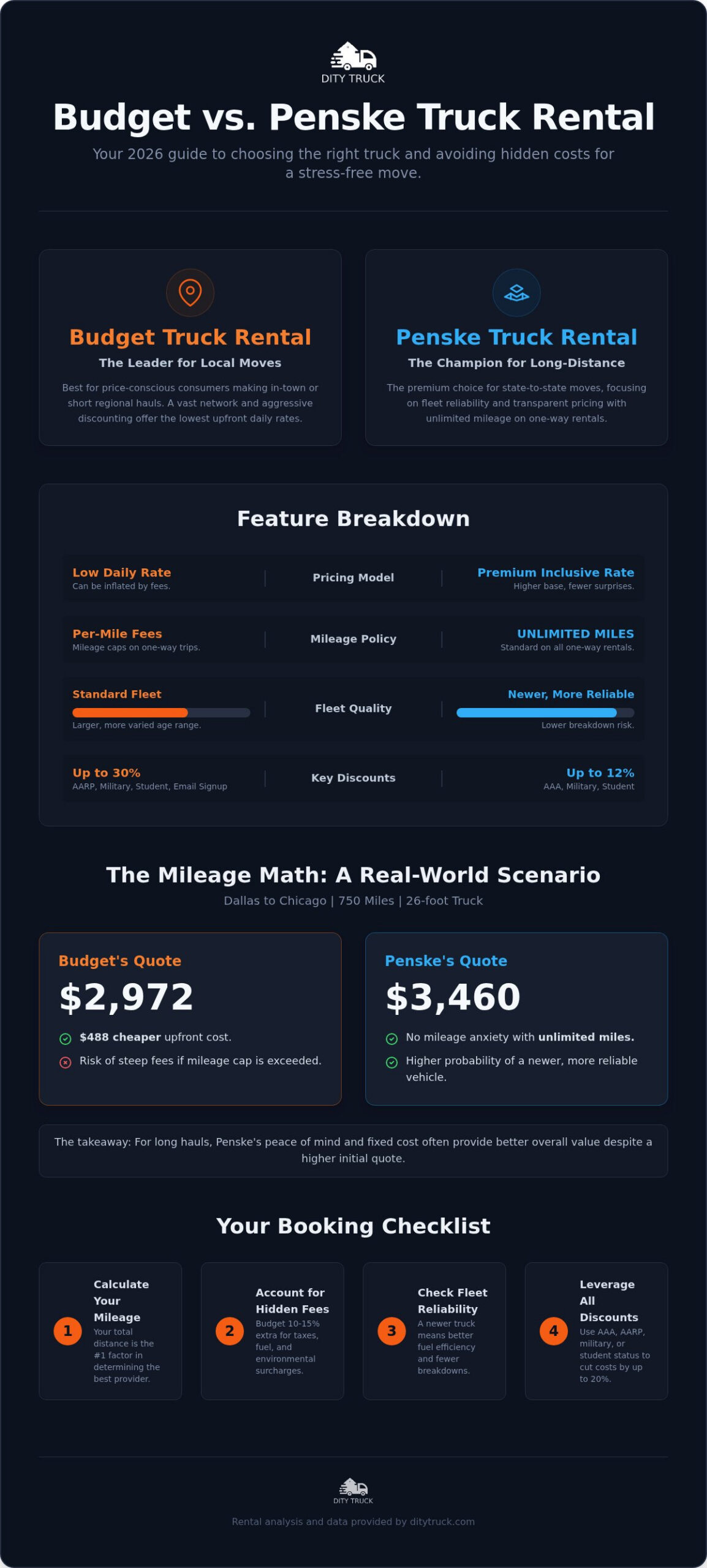
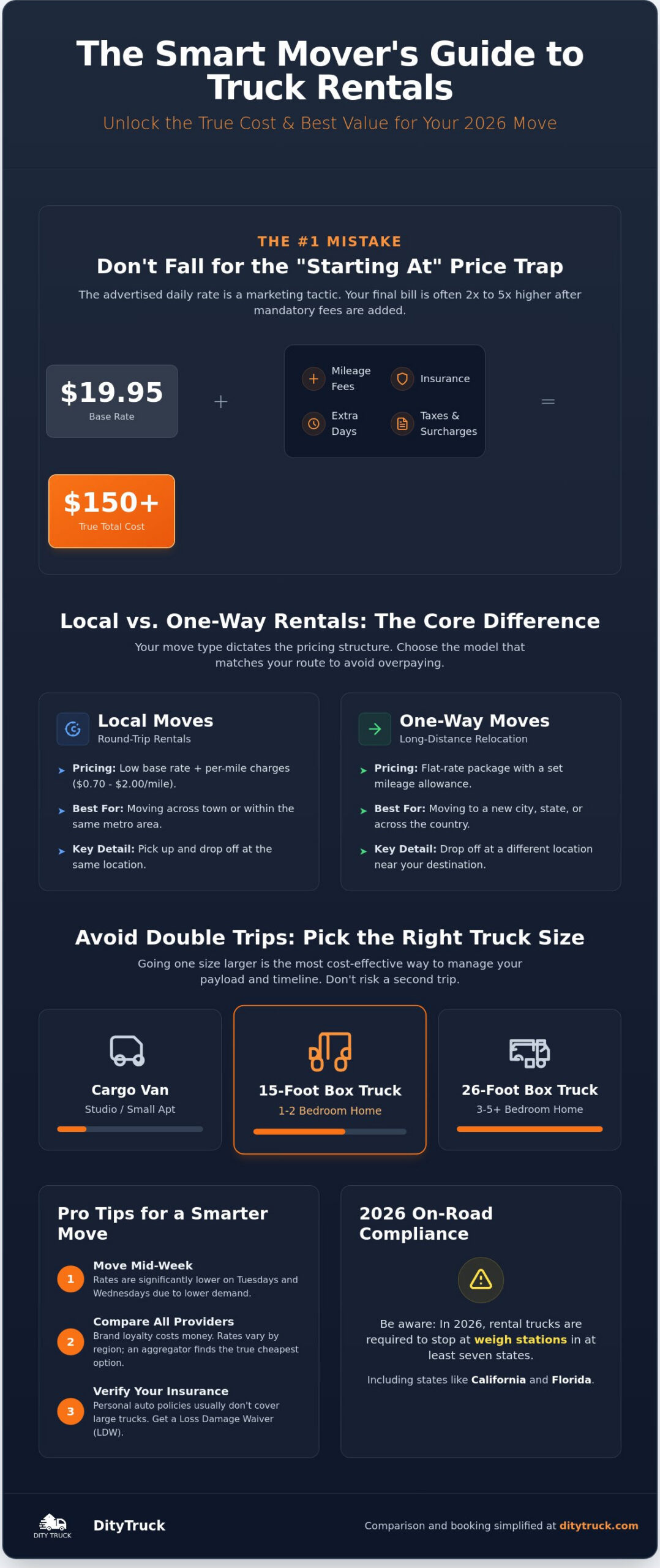
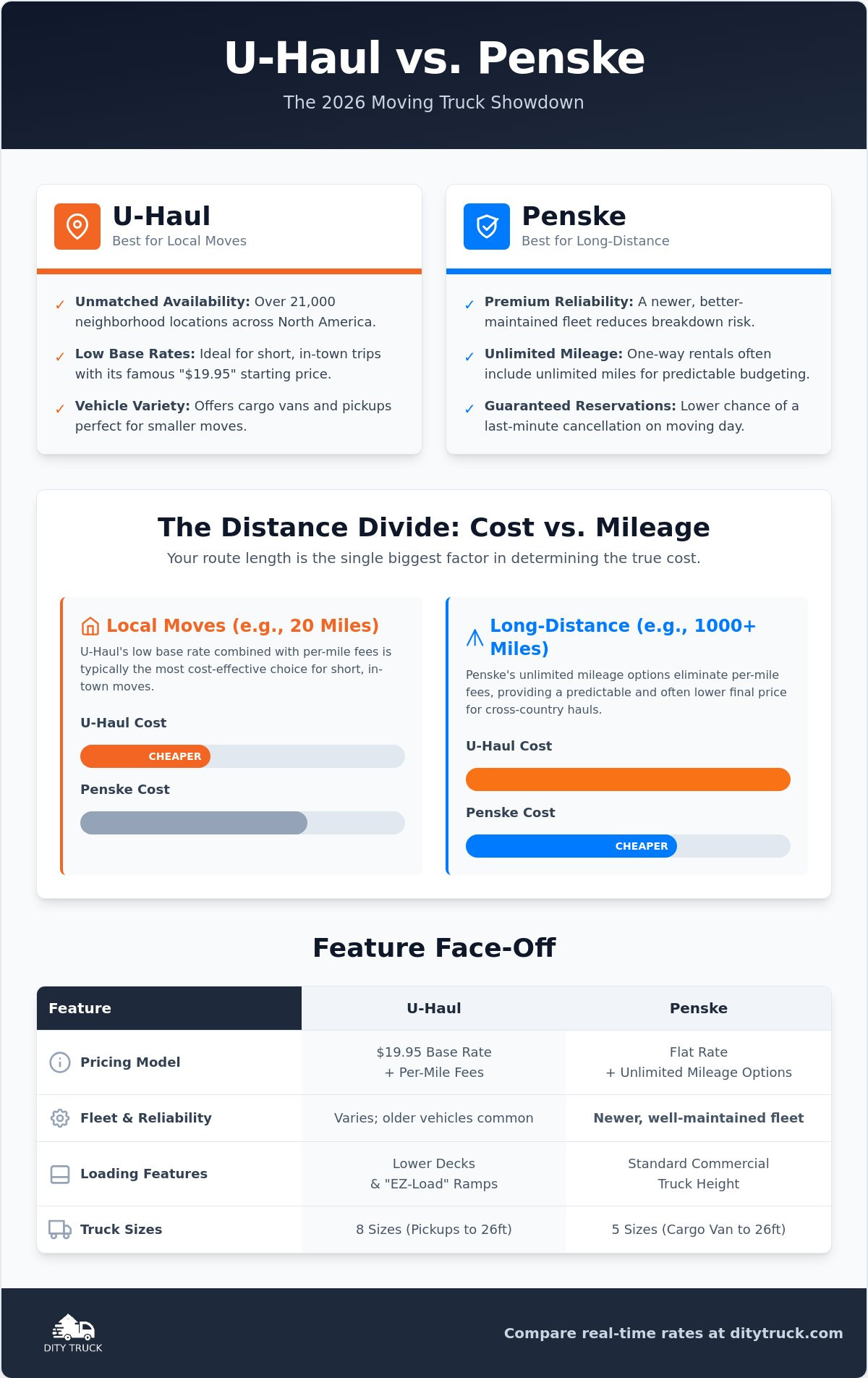
Your route dictates your price structure. Local “In-Town” moves are designed for round trips. You pick up and drop off at the same location. These usually feature a low base rate, but the per-mile fees can add up quickly. One-way rentals are different. They often include a higher flat fee but provide a set mileage allowance. This is the standard choice for long-distance relocations. Decide early if you have the time to drive the truck back to its origin. If you can’t, the one-way premium is worth the convenience. It saves you hours of return travel.
Timing Your Reservation
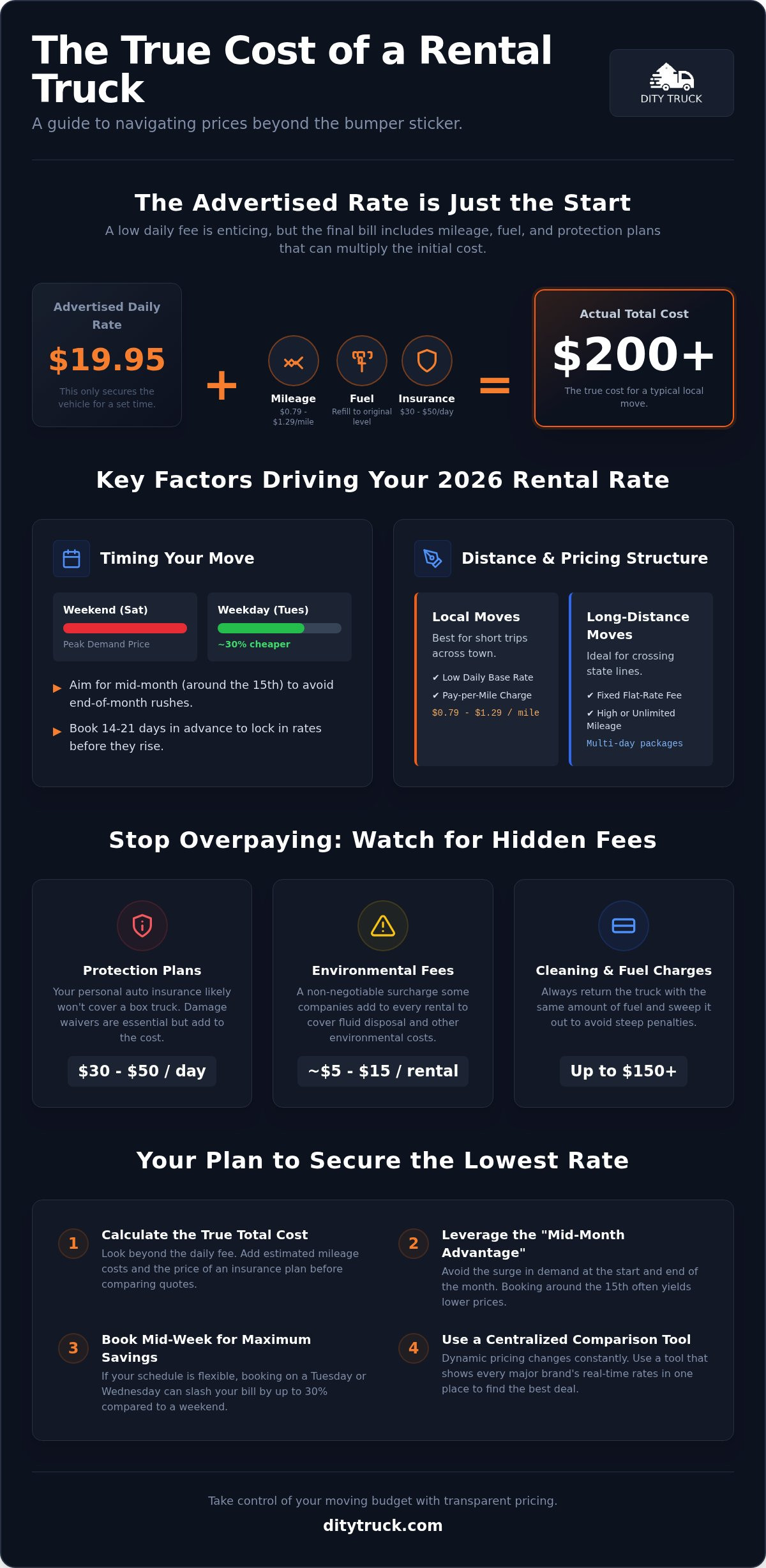
The calendar is your biggest tool for cost control. In 2026, demand remains high during summer months and holiday weekends. Booking at least 2 to 4 weeks in advance is the bare minimum for peak season. If your schedule allows, move on a Tuesday or Wednesday. Off-peak days can save you up to 20 percent compared to Friday or Saturday rates. Check for 2026 holiday surcharges specifically. These hidden spikes can inflate a “cheap” quote instantly. Learning how to rent a moving truck efficiently means outsmarting the peak demand cycles. Secure your date early to lock in the best available rate.
Selecting the Right Truck Size: The Math of Moving
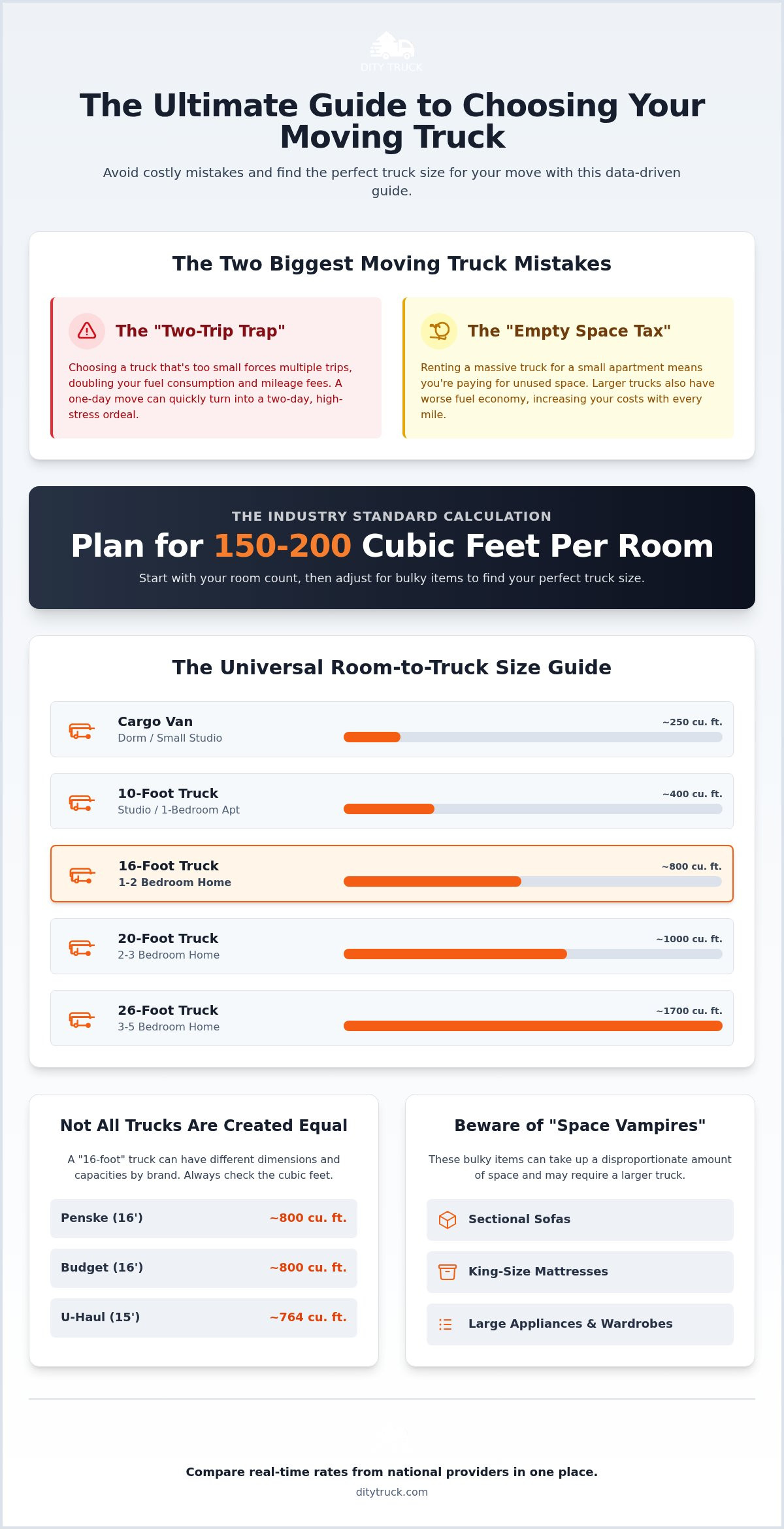
Selecting a vehicle size is the most critical decision in your logistics chain. Pick a truck that is too small and you face the nightmare of multiple trips. Pick one that is too large and you waste money on unused air. Most people struggle with how to rent a moving truck because they rely on vague bedroom counts rather than actual volume. You need a data-driven approach to sizing. This ensures your belongings fit safely and your budget stays intact.
Cargo vans are the agile choice for studio apartments or single-room deliveries. They park easily and offer excellent fuel economy. For a standard one-bedroom apartment without large appliances, 10 to 12 foot trucks are the industry standard. Once you move into two-bedroom homes, 15 to 16 foot trucks become the sweet spot. They balance maneuverability with enough depth for large sectionals. The 20 to 26 foot giants are reserved for three-plus bedroom houses and multi-story moves. These require careful driving but ensure you finish the job in one trip.
Capacity and Cubic Feet
Think in three dimensions. Cubic feet measurements include the space all the way to the roof. You must pack tall to maximize your value. Many brands offer a “Mom’s Attic” feature. This is a specialized compartment over the cab. Use this for fragile items or small boxes to keep them away from heavy furniture. If you are stuck between two sizes, always size up. The cost of a larger truck is minimal compared to the fuel and time lost on a second trip. You can find more details on how to rent a moving truck by reviewing expert capacity charts.
Weight Limits and Payload
Volume isn’t your only constraint. You must also monitor the Gross Vehicle Weight Rating (GVWR). This is the maximum weight the truck can safely carry. It includes the vehicle, fuel, and your belongings. Overloading a rental truck leads to mechanical failure or steep fines at highway weigh stations. Check the GVWR if you are moving heavy machinery, safes, or dense collections. It is a known fact that box truck rental prices vary significantly based on the payload capacity and engine power of the vehicle. If you want to see which size fits your budget today, you should view available truck sizes and compare real-time rates across all major carriers.
The Step-by-Step Booking Process: Reserving Your Vehicle
Once you know your size, the logistics begin. Learning how to rent a moving truck in 2026 means using technology to skip the line. Start by entering your pickup location, date, and move type into a comparison tool. This is the fastest way to aggregate real-time data from major providers. Don’t waste time on individual websites. A centralized search provides the clarity you need to make an informed choice. It puts the power back in your hands.
Next, filter your results. Narrow the list by truck size and the total estimated price. This step ensures a smooth experience by removing options that don’t fit your budget or cargo needs. Look specifically for “all-in” pricing that includes base rates and estimated mileage. After picking a vehicle, select your essential add-ons. You’ll need dollies, furniture pads, and potentially towing equipment. These items are often significantly cheaper to rent than to buy for a single use.
Insurance is your final hurdle before confirmation. Review the standard options carefully. Collision Damage Waiver (CDW) covers the truck itself. Personal Accident Insurance (PAI) protects you and your passengers. Supplemental Liability Insurance (SLI) covers third-party damage. Most 2026 rentals require a digital deposit via credit card. Confirming your reservation now locks in the current rate. It guarantees vehicle availability and prevents last-minute price spikes.
Add-Ons and Equipment
Your back will thank you for choosing the right tools. A utility dolly handles standard boxes, but an appliance dolly is necessary for heavy refrigerators or washers. Furniture pads are the cheapest way to prevent thousand-dollar scratches on your wood finishes. These thick blankets provide a critical buffer during transit. If you are towing a car, verify that your specific truck has a compatible hitch installed. Not every rental is tow-ready by default. Check these details before you arrive at the lot.
The Digital Check-In Experience
Modern logistics are moving toward contactless solutions. Many 2026 providers allow you to skip the rental counter entirely via smartphone apps. Prepare to upload a clear photo of your driver’s license and a “selfie” for identity verification. This process takes minutes and gets you on the road faster. It eliminates the friction of traditional paperwork. Read our guide on how to rent a truck for moving to master these mobile-first reservations. Digital keys and app-based check-ins are the new standard for efficient moves.
Mastering Moving Costs: Avoiding Hidden Fees
The price you see on the billboard is rarely the price you pay. Mastering how to rent a moving truck requires looking past the base rate. This number is just a starting point. It doesn’t include the variables that actually drive your total cost. You need to identify these surcharges before you hand over your credit card. Transparency is the only way to protect your budget.
Mileage charges are the biggest variable in your final bill. Some providers offer a low base rate with a high per-mile fee. Others bundle “unlimited” packages for a higher flat rate. Calculate your total distance before you sign. If you are moving across town, the per-mile fee is manageable. For longer distances, an unlimited package is usually the smarter financial move. You should also expect environmental fees in 2026. These are standard industry surcharges for carbon offsets or tire disposal. They are usually small, but they add up quickly when combined with other costs.
Refueling penalties are the easiest fees to avoid. Return the tank at the exact level you received it. Rental companies charge a premium per gallon if they have to fill it for you. It’s often double the local pump price. To avoid these surprises, you need a transparent breakdown of every cost. You can compare real-time rental rates to see exactly what is included in your quote before you book.
Understanding Rental Insurance
Your personal auto insurance likely excludes commercial vehicles. Most policies stop at a certain weight limit; a 26-foot truck falls into a different category. Damage Waivers are the solution. Paying for “zero-deductible” protection provides the ultimate peace of mind. It removes the financial risk of minor dings or major accidents. Cargo protection is equally important. It ensures your belongings are covered if a collision occurs during transit. Don’t assume you’re covered. Verify your policy details today.
Late Fees and Cleaning Surcharges
Don’t believe the “1-hour grace period” myth. Most companies charge a full day of rental for being even slightly late. Logistics rely on tight turnarounds. If you miss your window, you pay the price. Cleaning surcharges are another common trap. Sweep the truck out before you return it; a small amount of dirt or debris can trigger a cleaning fee of $50 or more. Companies also charge “Loss of Use” fees, which represent the daily revenue lost while a vehicle is being repaired following an accident. These daily charges can quickly exceed the cost of the actual repairs.
Why Comparison is the Smartest Way to Rent a Truck
Brand loyalty is an expensive habit in the logistics world. Most people stick to the provider they recognize, but rates fluctuate constantly based on regional truck availability. A company might have a surplus of vehicles in one city and a severe shortage in another. This imbalance creates massive price swings that change daily. If you only check one website, you miss the opportunity to save hundreds on your relocation. Learning how to rent a moving truck with a data-driven mindset means comparing the entire market before committing your budget.
Some brands act as one-way move specialists. they offer better incentives for drop-offs in specific regions to rebalance their fleet. By using real-time data aggregation, you can spot these incentives instantly. You see the total cost, including all estimated fees, before you click the book button. This transparency removes the guesswork and the stress of hidden surcharges. It positions you as a savvy consumer rather than a victim of fluctuating market rates.
The DityTruck Difference
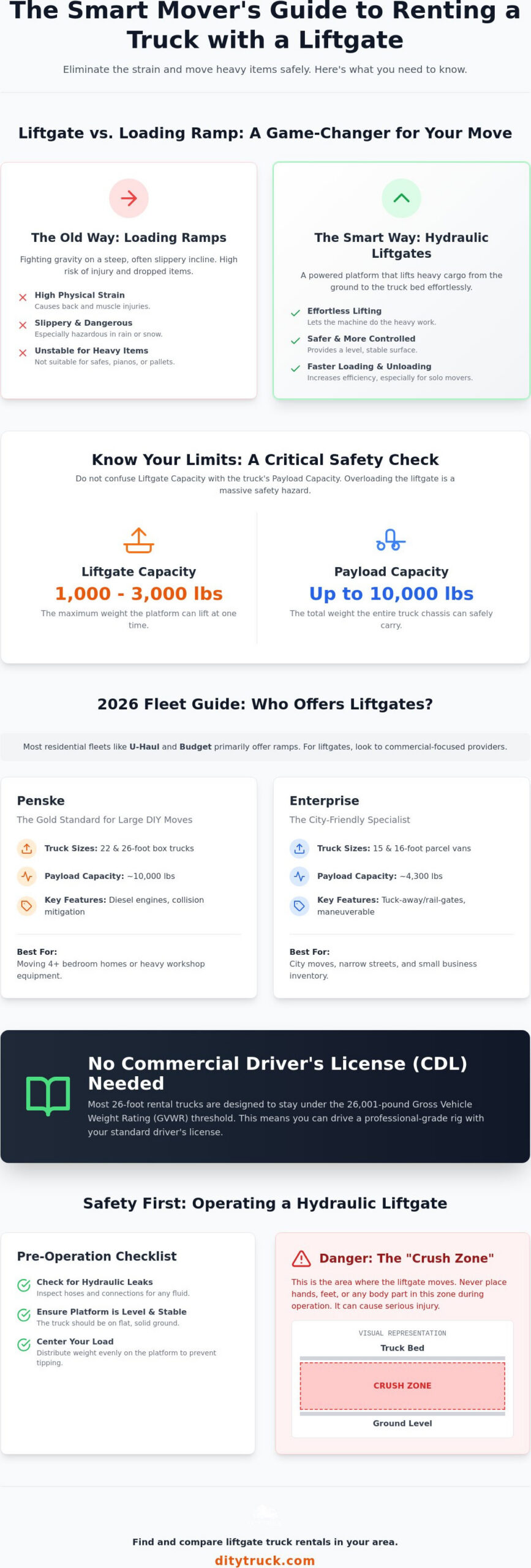
Stop opening 10 browser tabs and chasing individual quotes. You can see the entire market in 30 seconds using a streamlined interface. This efficiency allows you to filter by the features that actually matter for your specific cargo. Choose between a loading ramp for easy walking or a hydraulic liftgate for heavy appliances. Decide between diesel or gas engines based on your total distance. Check out our one way truck rentals for moving to see how we compare long-distance rates across major providers. We act as your smart assistant, doing the heavy lifting of price hunting so you don’t have to.
Final Checklist Before You Drive Away
Your reservation is confirmed and the price is locked. Now you need to protect yourself at the rental lot. Perform a thorough walk-around of the vehicle and photograph every existing scratch, dent, or upholstery tear. These timestamped photos are your evidence if a provider tries to charge you for pre-existing damage later. Test the headlights, turn signals, and brakes before you leave the property. Confirm the exact drop-off location and the specific hours of operation. Getting this wrong can lead to “wrong location” fees or an extra day of rental charges. Mastery of how to rent a moving truck ends with a successful, fee-free return. By following this roadmap, you’ve secured the best rate and a vehicle that fits your life perfectly.
Execute Your Friction-Free Move
Success on moving day depends on two factors: precision and transparency. You’ve learned how to inventory your home to avoid sizing errors. You know how to identify hidden mileage fees before they hit your final bill. Mastering how to rent a moving truck is no longer a guessing game. It is a strategic process that puts you in control of your budget and your timeline. You have the tools to avoid the common pitfalls of regional price spikes and cleaning surcharges.
Don’t waste time opening multiple tabs to chase individual quotes. DityTruck acts as your smart assistant by aggregating the entire market into one clean interface. You can compare the top national rental brands in seconds. We provide real-time 2026 pricing and availability with absolutely no hidden booking fees. This is the shortest path to a stress-free reservation and a lower rate. It ensures you get the vehicle you need without the administrative headache.
Compare Moving Truck Rates and Book Your Move Today. You are ready to handle the logistics with confidence. Your one-trip move starts here.
Frequently Asked Questions
Do I need a special license to rent a moving truck?
No special license is required for standard rental vehicles. Most providers allow you to drive trucks up to 26 feet with a basic Class C license. If you’re moving a large household, a 26-foot truck is the largest size you can drive without a Commercial Driver’s License (CDL). Always verify that your license is current and not expired before you arrive at the rental lot. This ensures a friction-free pickup and keeps you legal on the road.
What is the cheapest day of the week to rent a truck?
Tuesday and Wednesday are typically the most affordable days for rentals. Demand spikes on weekends and at the end of the month. These peaks drive up base rates significantly. By avoiding the weekend rush, you gain more flexibility with pickup times. It also reduces the risk of the company running out of your preferred truck size. Choosing a mid-week date can save you significant money compared to a Friday or Saturday booking.
Does my credit card insurance cover moving truck rentals?
Most personal credit cards exclude cargo vehicles or trucks over a certain weight from their rental insurance benefits. You should call your provider to confirm their specific weight limits. It’s often safer to purchase the damage waiver directly from the rental company. Collision Damage Waivers (CDW) are the standard choice for DIY movers. They remove your financial liability if the truck is damaged in an accident or stolen during your move. This provides full protection for the vehicle.
How much gas does a 26-foot moving truck use?
A 26-foot truck generally averages between 8 and 10 miles per gallon. This figure varies based on the total weight of your cargo. Driving through mountainous terrain also impacts fuel efficiency. Factor this consumption into your total budget to avoid surprise expenses at the pump. Keep in mind that idling the engine for long periods also wastes fuel. Plan your route to avoid heavy traffic and minimize the number of stops you make along the way.
Can I rent a moving truck for just a few hours?
Yes, many companies offer hourly rates for local moves. However, most providers still charge a minimum base rate that covers the first few hours or a full day. Checking how to rent a moving truck for short durations often reveals that daily rates are more cost-effective than hourly ones. Some local hardware stores offer 90-minute rentals for small deliveries. For a full apartment move, the standard daily rental remains the most reliable option for your timeline.
What happens if I return the rental truck late?
Returning a truck late usually triggers a full day’s rental charge. Most companies don’t offer a grace period because they have other customers waiting for that vehicle. Logistics depend on tight schedules. Always plan to return the truck at least 30 minutes before your scheduled drop-off time. If you realize you’re running behind, call the rental office immediately. They might be able to extend your window for a smaller fee if the truck isn’t booked for another customer.
Is it cheaper to rent a truck one-way or return it to the same location?
Local rentals are cheaper for short distances because they have lower base rates. One-way rentals are designed for long-distance moves where returning the truck to the origin isn’t practical. The best choice depends on your total mileage. Consider the time and fuel required for a return trip. One-way moves often include a set number of days and miles in the flat fee. This simplifies your planning. Local moves require you to track every mile to stay within your budget.
How do I calculate the total cost of a moving truck rental?
Add your base rate to your estimated mileage costs and insurance premiums. Don’t forget to include environmental fees, taxes, and the cost of fuel. Using a comparison tool is the most efficient way to see an all-in price. This prevents surprise charges on your final bill. Mastering how to rent a moving truck requires looking at the bottom line. Don’t forget to account for the security deposit that most companies hold on your credit card until the return.