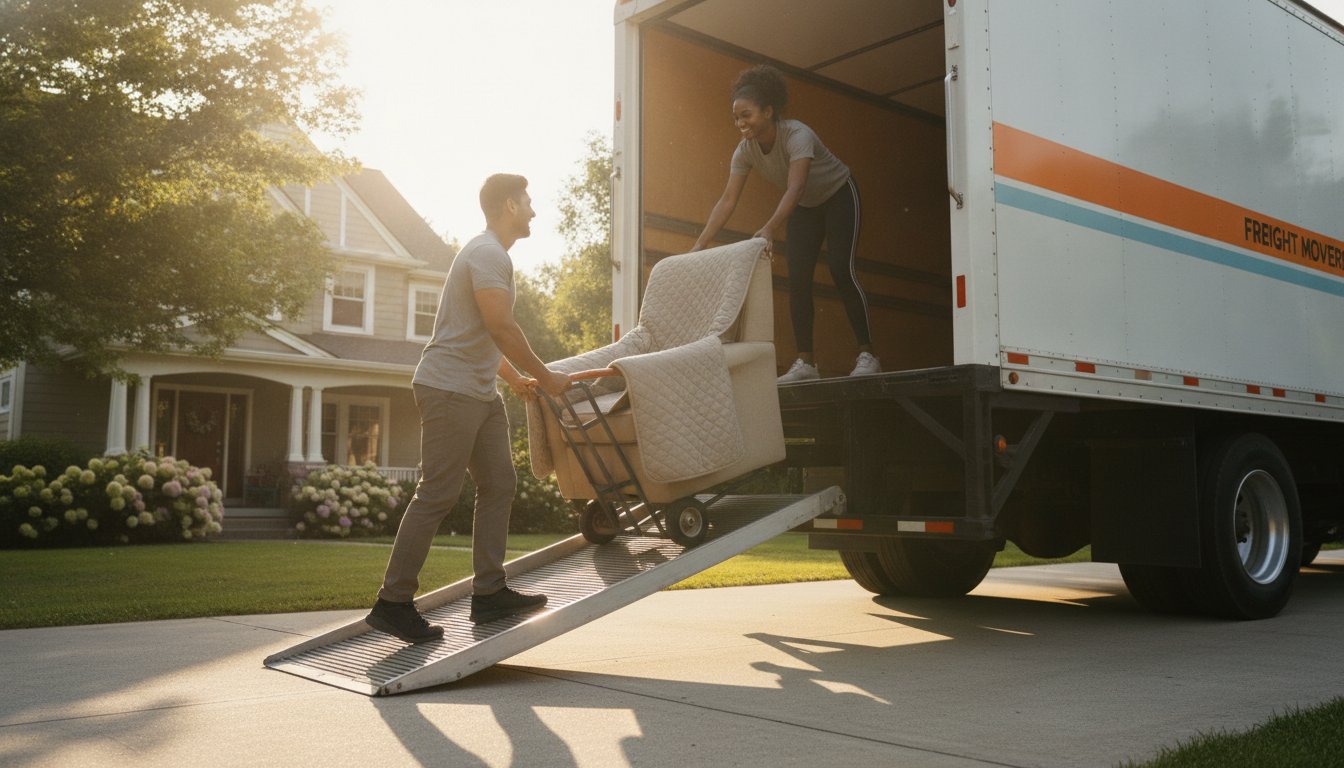
Your choice of truck size matters, but the piece of metal tucked under the floorboard determines whether you finish your move in a recliner or an emergency room. Lifting a heavy sofa three feet into the air without assistance is a recipe for a permanent back injury. Finding a moving truck rental with ramp is the single most important step you can take to protect your health and your furniture. You’ve likely spent hours worrying about steep inclines or dropping an expensive appliance during the loading process. These fears are valid because the wrong equipment turns a simple task into a dangerous hurdle.
We’re here to strip away that complexity and give you total clarity. You’ll learn exactly which truck sizes include built-in ramps, such as the 15-foot U-Haul or the 16-foot Budget models. This guide compares the safety differences between standard ramps and hydraulic liftgates so you can make a smart, informed choice. We’ll also walk through the 2026 fleet updates and show you how to use a comparison platform to book the best value for your specific route. Let’s get your move on the right track without the physical strain.
Key Takeaways
- Protect your back and reduce vertical lifting by up to 90% by selecting a moving truck rental with ramp for your DIY move.
- Identify the critical differences between standard pull-out ramps for furniture and hydraulic liftgates for industrial-strength heavy lifting.
- Compare fleet-specific features like Penske’s wide aluminum ramps and U-Haul’s low-deck designs to find the easiest loading angle for your items.
- Master essential safety protocols, including the dolly method, to prevent accidents and avoid the danger of walking backward on a steep incline.
- Use comparison filters to verify that your specific truck size includes a ramp before you finalize your reservation.
Why a Moving Truck Rental with Ramp is Essential for DIY Moves
Lifting is the enemy of a successful move. A standard moving truck rental with ramp provides a retractable plane that bridges the gap between the ground and the truck bed. This simple incline transforms a high-risk physical challenge into a manageable logistical task. It’s the difference between a smooth afternoon and a trip to the chiropractor. By using a ramp, you eliminate the need to deadlift your entire life three feet into the air. This tool acts as a mechanical bridge, allowing you to roll items directly into the cargo area with minimal vertical effort.
Efficiency is the immediate result of choosing the right equipment. Hand-carrying individual boxes or chairs up into a truck is slow and exhausting. You lose momentum. You get tired. Eventually, you start making mistakes. A ramp allows you to use a utility dolly to move multiple items at once. You can stack three or four boxes and roll them up the incline in seconds. This speeds up your loading process significantly, often cutting your total moving time by several hours. It also keeps your energy levels high for the driving portion of your journey.
Ramp vs. Manual Loading: The Physical Toll
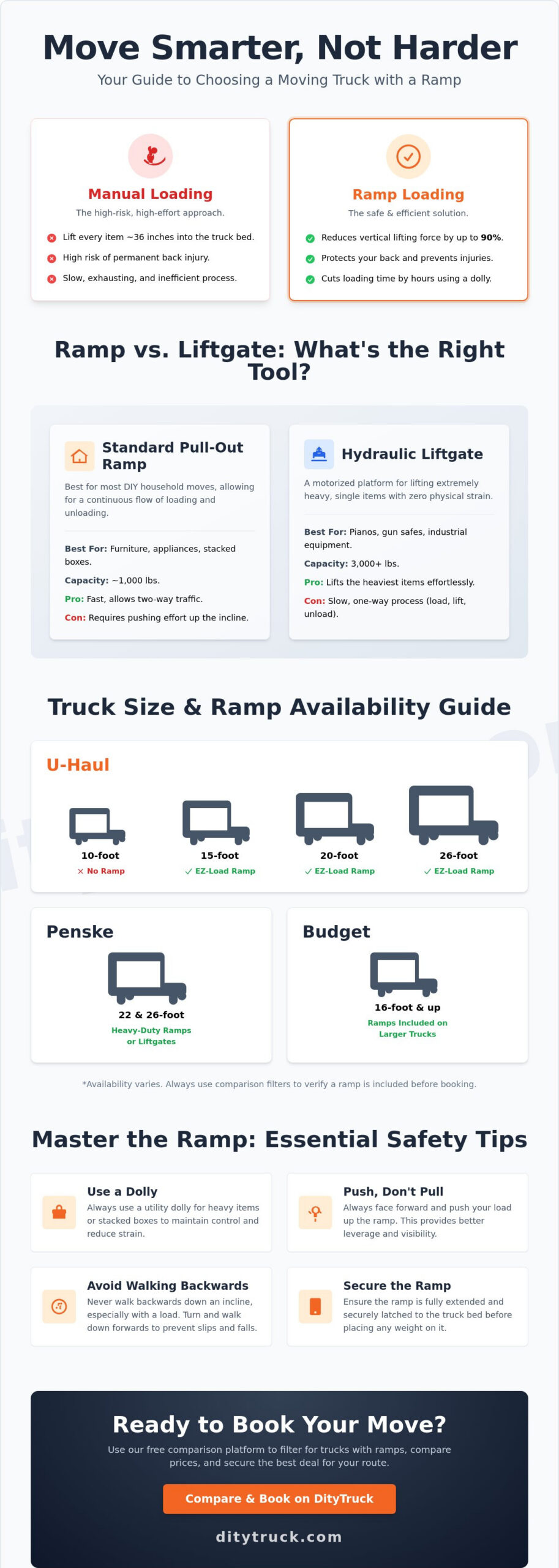
Truck beds typically sit about 36 inches off the pavement. Lifting a 200-pound refrigerator or a solid wood dresser that distance is a recipe for a musculoskeletal injury. The physics of an incline change everything. A 10 or 12-foot ramp, which functions much like industrial loading dock components, stretches that vertical climb over a long horizontal space. This reduces the force required to move heavy objects by up to 90%. Instead of a dangerous vertical lift, you perform a controlled push. The cost of a moving truck rental with ramp is a tiny fraction of the potential medical bills or lost wages resulting from a back injury.
Who Needs a Ramp Truck?
Certain moves simply cannot happen safely without an incline. If your inventory includes large appliances like washers, dryers, or refrigerators, a ramp is mandatory. These items are too heavy and awkward for manual lifting by a small team. You also need a ramp if you’re moving a multi-bedroom household. The sheer volume of heavy furniture, like bed frames and dining tables, will eventually wear down even the strongest helpers. Solo movers or small teams of two benefit the most from this mechanical advantage. It levels the playing field, allowing a smaller crew to handle a large-scale move with professional-grade efficiency and safety.
Understanding Ramp Types and Truck Size Availability
Not all trucks are built equal. While smaller cargo vans or 10-foot trucks often lack loading equipment, a moving truck rental with ramp becomes standard as you move into larger fleet sizes. Understanding the specific hardware attached to your vehicle is the only way to avoid a loading day surprise. Standard pull-out ramps are the most common choice. These aluminum or steel planks slide out from a compartment under the truck bed. They usually support around 1,000 pounds, which is plenty for household furniture and most appliances.
Width is a factor many movers overlook. A 2-foot wide ramp feels narrow when you’re balancing a heavy dresser on a dolly. Newer fleet models often feature 3-foot wide ramps to provide extra stability and room for error. When you’re following safe loading procedures, that extra foot of width makes a massive difference in preventing dolly wheels from slipping off the edge.
Ramp vs. Liftgate: Which Should You Choose?
Choosing between a ramp and a hydraulic liftgate depends on your specific inventory. Ramps allow for a continuous flow of traffic. One person can go up while another comes down, keeping the momentum high. Liftgates are motorized platforms that level with the ground. They are perfect for extremely heavy single items like gun safes or pianos. However, liftgates are slow. You have to wait for the motor to cycle for every single load. Most DIY movers prefer a ramp because it keeps the process moving faster.
Truck Sizes That Typically Include Ramps
Size availability varies by brand. A 10-foot truck is the cutoff point. Most companies exclude ramps on this size to save weight, meaning you’ll be lifting everything manually. The 15-foot to 20-foot range is the sweet spot. U-Haul’s 15-foot and 20-foot models come equipped with their EZ-Load ramps. Budget offers ramps starting at the 16-foot size. If you step up to a 26-foot truck, you are almost guaranteed a heavy-duty ramp or even a liftgate. Penske’s 22-foot and 26-foot trucks often feature liftgates or ramp combinations with a 3,000-pound capacity.
Before you commit, verify the specific features of your local fleet. You can compare truck specifications and availability across multiple providers to ensure you get the right ramp for your needs.
Comparing the Best Moving Truck Companies with Ramps
Your choice of provider determines the quality of the hardware you’ll be using for ten hours straight. Not every moving truck rental with ramp offers the same user experience. Penske is often the top choice for those who value newer equipment. Their fleet is frequently updated, meaning their wide aluminum ramps are less likely to have the dents or warping found in older trucks. This stability is vital when you’re balancing a heavy appliance. Penske’s 22-foot and 26-foot models are particularly impressive. They feature high-capacity ramps or liftgates that support up to 3,000 pounds, making them the heavy-hitters of the DIY world.
U-Haul takes a different approach with their proprietary EZ-Load ramps. Instead of a standard truck height, U-Haul designs their vehicles to sit lower to the ground. This creates a much shallower incline. A shorter, flatter ramp means you spend less energy fighting gravity. Budget Truck Rental provides a reliable, no-frills alternative. They offer standard ramps on their 16-foot and 26-foot models. While their hardware is basic, it’s consistent and functional for most household moves. DityTruck simplifies this entire selection process. It acts as a smart assistant, pulling data from these major players so you can compare ramp specs and vehicle ages side-by-side.
Penske vs. U-Haul: The Ramp Showdown
The battle between these two giants comes down to deck height versus ramp width. U-Haul’s low deck is a massive advantage for solo movers. It makes the walk up the ramp feel more like a gentle stroll than a steep climb. Penske counters this with superior ramp grip and material quality. Their aluminum surfaces provide excellent traction even in damp weather. If you are booking one way truck rentals for moving, both companies offer extensive drop-off networks. Your decision should rest on whether you prefer U-Haul’s easier angle or Penske’s heavy-duty stability.
Budget and Enterprise: Reliable Alternatives
Budget is often the winner for local moves due to their competitive pricing and standard equipment. Their 16-foot truck is a popular middle-ground option that always includes a ramp. Enterprise is the dark horse in the consumer market. They focus heavily on commercial-grade vehicles. This means their ramps are often wider and built to withstand more daily abuse than standard consumer rentals. Regardless of which company you choose, you must adhere to official Cargo Securement Rules once your items are inside. Proper securement ensures that the effort you spent using the ramp isn’t wasted by items shifting in transit. You can use DityTruck to find the best moving truck rental rates and confirm ramp availability for your specific dates in seconds.
Safe Loading Techniques: Mastering the Ramp
Securing a moving truck rental with ramp is only the first half of the battle. The second half is using that equipment without damaging your property or yourself. Most accidents happen at the transition points, where the ramp meets the ground or the truck bed. You must treat the ramp as a high-traffic zone that requires constant attention. Before you move a single box, ensure the ramp is fully extended. A partially deployed ramp can collapse under weight. Once extended, check that the locking pins are engaged. These small metal tabs are the only things keeping the ramp from sliding backward while you’re halfway up the incline.
Weight distribution is critical for a safe drive. You should aim to place about 60% of your cargo weight in the front half of the truck, closest to the cab. This stabilizes the vehicle and prevents the front wheels from losing traction. Start by loading your heaviest appliances and solid wood furniture first. Use the ramp to roll these items into the very back of the cargo area. This strategy keeps the center of gravity low and forward, which is essential for highway handling. If you haven’t secured your vehicle yet, you can book a ramp-equipped truck now to ensure you have the right tools for a balanced load.
The 3-Step Ramp Safety Check
- Clear the Surface: Check for oil, water, or loose debris. A single pebble can jam a dolly wheel and cause a sudden, dangerous stop.
- Flush Transition: Ensure the transition plate at the bottom sits flat against the pavement. If there is a gap, use a piece of plywood or a rubber mat to create a smooth entry point.
- Locking Verification: Physically shake the ramp to confirm the locking pins are seated. If the ramp moves more than an inch, reset it.
Using a Utility Dolly on an Incline
Gravity is your biggest challenge on the ramp. When using a utility dolly, never walk backward down the incline. This is how most trips and falls occur. Instead, always keep the load on the uphill side of you. When going up, you push the dolly ahead of you. When coming down, you lead with your body while holding the dolly handles, letting the weight rest against your center of gravity. This gives you maximum leverage to act as a brake.
Oversized items require a different approach. For sofas or mattresses, always use a spotter. One person guides the item from the top of the ramp while the other pushes from the bottom. Use a steady, walking pace to maintain momentum. If you stop halfway, it’s much harder to get the load moving again. If the weather turns and the ramp becomes slippery, stop immediately. Use sand, salt, or even a piece of old carpet to regain traction. Safety always takes priority over speed.
How to Book Your Ramp-Equipped Truck with DityTruck
Booking a moving truck rental with ramp shouldn’t be a guessing game. The process starts with your specific move date and distance. Local moves often have different fleet availability than long-distance hauls. Enter your zip codes into the DityTruck search tool to see what is currently sitting on the lots near you. This platform acts as your logistics filter. It strips away the noise and presents only the vehicles that meet your criteria. You won’t waste time looking at cargo vans that lack the loading equipment you need for heavy furniture. You get clear, actionable data immediately.
Efficiency is the primary goal. Once you enter your details, use the feature filters to ensure your selected truck size includes a ramp. Remember that the 15-foot to 26-foot range is your best bet for built-in loading inclines. DityTruck pulls real-time rates from major providers like Penske, U-Haul, and Budget. You can compare these prices side-by-side in seconds. This prevents you from overpaying for a standard feature. You get the best value without the hassle of opening ten different browser tabs. The final reservation is a single, simple step that secures both your vehicle and your peace of mind.
Avoiding Hidden Fees and Surprises
Hidden costs are the enemy of a stress-free move. You’ll find that a ramp usually doesn’t cost extra. It is typically integrated into the rental price of larger box trucks. However, surprises often happen when a renter switches truck sizes at the last minute. If you downgrade to a 10-foot model to save money, you might lose your ramp entirely. DityTruck provides transparency by confirming ramp availability at your specific pickup location. This ensures the truck waiting for you on moving day actually has the hardware you need. You see the full picture before you commit any funds. No hidden hurdles. Just honest logistics.
Final Checklist Before You Drive Away
Your move starts the moment you arrive at the rental lot. Don’t just sign the paperwork and leave. Perform a physical inspection of the loading equipment. Test the ramp operation before you drive away. Pull it out to its full extension. Ensure the locking pins engage firmly. Check the weight rating sticker, usually located near the pull-handle, to verify it can handle your heaviest appliances. If the ramp is bent or difficult to slide, request a different truck immediately. It is much easier to swap vehicles at the lot than to deal with a broken ramp in your driveway. Ready to start? Compare moving truck rates now and lock in your equipment today.
Secure Your Move with the Right Equipment
You now have the blueprint for a safer and more efficient loading day. Choosing a moving truck rental with ramp isn’t just about convenience. It’s about protecting your body and your belongings from the physical risks of manual lifting. You understand which fleet sizes offer the best equipment. You’ve learned how to master the incline using the uphill dolly method and a proper safety check. Don’t leave your logistics to chance or settle for a vehicle that forces you to do all the heavy lifting yourself.
DityTruck acts as your smart assistant by letting you compare Penske, Budget, and U-Haul in one place. We provide real-time pricing transparency so you can see exactly what you’re paying for. This is the most simplified booking experience available for 2026 moves. You can filter for the specific features that matter most to your health and your timeline. Find and Compare Moving Trucks with Ramps Today to lock in a vehicle that fits your specific needs. Your move is a high-stakes task, but it doesn’t have to be a high-stress one. You’re ready to tackle this transition with confidence and ease.
Frequently Asked Questions
Do all moving trucks come with a ramp?
No, smaller vehicles like cargo vans, pickup trucks, and 10-foot box trucks typically lack this feature. Most companies exclude ramps on these sizes to reduce vehicle weight and maximize fuel efficiency. You’ll need to manually lift items into these smaller beds. Always verify the equipment list for your specific moving truck rental with ramp before you finalize your booking to avoid surprises on moving day.
What is the smallest moving truck with a ramp?
The 15-foot truck from U-Haul is currently the smallest standard model equipped with a built-in loading ramp. Budget typically starts offering ramps on their 16-foot models. If you opt for a smaller 10-foot or 12-foot truck from most providers, you should expect to lift your items manually. Always check the specific fleet details at your local pickup location because equipment can vary by region.
Is a ramp or a liftgate better for moving furniture?
A ramp is superior for general furniture because it allows for a continuous flow of traffic. You can walk up and down quickly without waiting for a motorized platform to cycle. Liftgates are better for single, extremely heavy items like gun safes or pianos that exceed 1,000 pounds. For a standard multi-room move, the speed and simplicity of a ramp usually provide the best experience.
How wide are standard moving truck ramps?
Standard ramps are typically between 24 and 36 inches wide. A 2-foot width is common on older or smaller fleet models, while newer 26-foot trucks often feature 3-foot wide aluminum ramps. This extra width is essential when you’re navigating a wide utility dolly or moving oversized items like sofas. The wider surface provides more stability and a larger margin for error during the loading process.
Can I use a ramp if it is raining or snowing?
You can use it, but you must take extreme caution because aluminum surfaces become incredibly slick when wet. Rain and ice significantly increase the risk of slips or the dolly losing traction. If you must load in bad weather, use sand or a specialized traction mat to improve your footing. It’s often safer to wait for the weather to clear before you tackle steep inclines with heavy furniture.
What is the weight limit for a rental truck ramp?
Most standard pull-out ramps have a weight capacity of approximately 1,000 pounds. This is sufficient for almost all household furniture and standard kitchen appliances. However, some heavy-duty trucks, such as the Penske 22-foot and 26-foot models, offer ramp and liftgate combinations rated for up to 3,000 pounds. Always check the capacity sticker located near the ramp handle to ensure you don’t exceed the safety limits of the metal.
How do I stow the ramp after loading is finished?
Slide the ramp back into its designated housing under the truck bed and secure the latch firmly. You must ensure the locking pins or safety hooks are fully engaged so the ramp doesn’t slide out during transit. A loose ramp is a major road hazard. Double-check the security of the handle and the latching mechanism before you start the engine and drive away from your home.
Are there any extra charges for renting a truck with a ramp?
There is typically no separate fee for the ramp itself. It is included in the base rate for the specific truck size you’ve selected. You’ll find that a moving truck rental with ramp is a standard offering for most vehicles 15 feet and larger. While the truck itself costs more than a small van, the ramp is a built-in feature designed to speed up your move and prevent injuries.
Leave a Reply