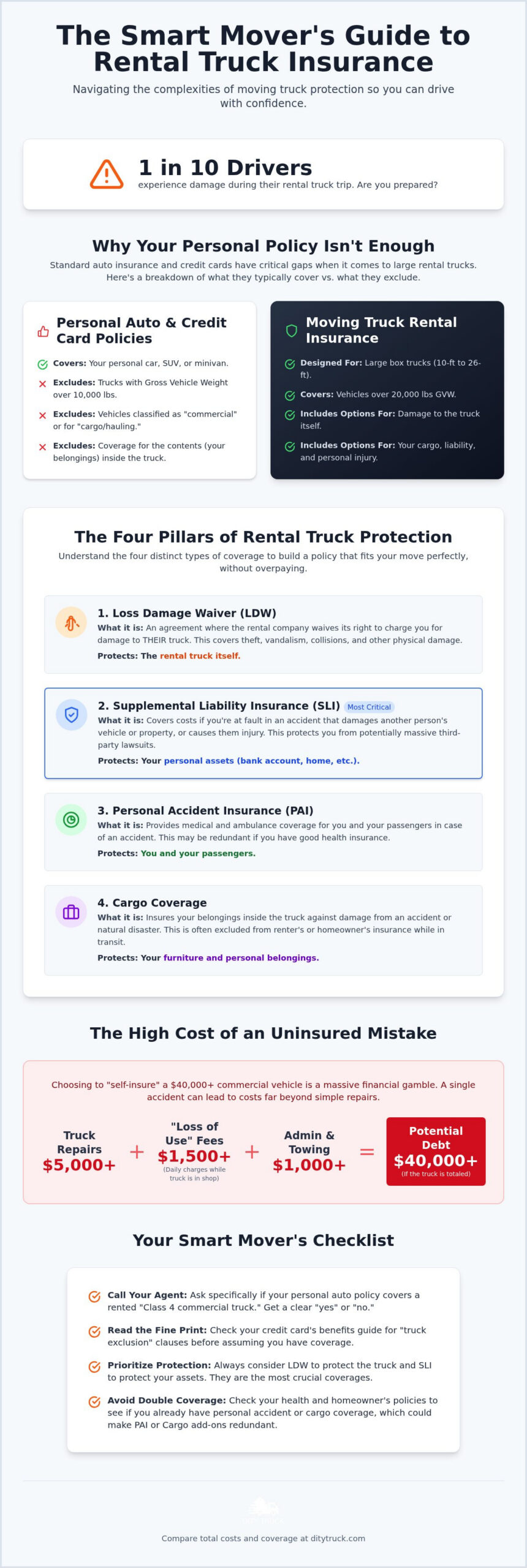
Did you know that 1 in 10 rental truck drivers experience some form of damage during their trip? It’s a sobering statistic that makes the insurance desk feel like a high-stakes gamble. You’re probably wondering if your personal auto policy covers a 26-foot box truck. The short answer is almost certainly no. Most personal insurance and credit cards specifically exclude commercial-grade vehicles. This makes finding the right moving truck rental insurance a necessity rather than an expensive add-on.
We understand the frustration of staring at jargon like LDW and SLI while a line forms behind you. You want protection. You also don’t want to get ripped off by daily premiums that double your bill. This guide helps you cut through the noise. We’ll show you exactly where your current coverage fails and which protections actually matter for your specific move. You’ll get a clear checklist of necessary versus optional coverages. This simple step helps you secure a lower total cost. Let’s strip away the complexity and get you on the road with total peace of mind.
Key Takeaways
- Stop relying on your personal car insurance. Most policies and credit cards exclude box trucks because of their weight and size.
- Master the “Four Pillars” of protection. Understand the critical differences between truck damage waivers and supplemental liability.
- Compare moving truck rental insurance options from major providers to find the most cost-effective protection for your trip.
- Identify redundant add-ons to avoid the double-coverage trap. This simple check helps keep your total rental bill low.
- Use DityTruck to reveal the all-in price. See base rates and insurance fees side-by-side for total transparency before you book.
Moving Truck Rental Insurance: Why Your Personal Policy Isn’t Enough
Many DIY movers assume their current car insurance or premium credit card has them covered. It’s a dangerous assumption that can lead to a $40,000 mistake. Standard Vehicle insurance is built for passenger cars, minivans, and SUVs. It is not designed for the heavy steel and high profile of a commercial box truck. Moving truck insurance is specialized protection for commercial-sized DIY vehicles that standard consumer policies simply won’t touch. If you hit a low-hanging branch or scrape a parked car in a 26-foot truck, you are likely on your own without specific moving truck rental insurance.
Choosing to “self-insure” a $40,000+ commercial vehicle is a massive financial gamble. Rental companies hold you responsible for more than just repairs. You are often on the hook for “loss of use” fees. These are daily charges the company loses while the truck is in the shop and cannot be rented to other customers. These administrative costs and towing fees can triple your out-of-pocket expenses instantly. A single mistake behind the wheel can turn a budget-friendly move into a multi-year debt. It’s about protecting your bank account from the unexpected costs of DIY logistics.
The Weight Limit Problem
The biggest hurdle is Gross Vehicle Weight (GVW). Most personal policies have a hard cutoff at 10,000 pounds. A small 10-foot rental truck might slide under this limit, but anything larger quickly enters commercial territory. A fully loaded 26-foot truck can weigh over 20,000 pounds. Insurers classify these as commercial vehicles. They view them as higher risks due to their size and the lack of driver experience with large equipment. You should check your own policy for “commercial vehicle” or “weight-based” exclusions before you book your moving truck rental. If that language exists, your personal coverage effectively disappears the moment you turn the key. This technicality is the primary reason why moving truck rental insurance is a non-negotiable for most drivers.
Credit Card Coverage Gaps
Credit card benefits are equally restrictive. While your Amex or Visa might offer “rental car protection,” the fine print usually contains a “truck exclusion” clause. They specifically exclude vehicles with open beds, cargo vans, and anything designed for hauling household goods. Look for phrases like “excludes commercial vehicles” or “excludes trucks over a certain payload” in your Benefits Guide. Cargo protection is another common gap. Even if a card covers the vehicle, it almost never covers the $20,000 worth of furniture inside it. The “Smart Assistant” tip is simple. Call your insurance agent 48 hours before your move. Ask them specifically if your policy covers a “Class 4 commercial truck.” Getting a “no” over the phone is much better than getting a “no” after an accident. This clarity allows you to budget for the right protection without any last-minute surprises at the counter.
Decoding the Four Pillars of Rental Truck Protection
Choosing moving truck rental insurance isn’t just about ticking a box. It’s about understanding four distinct layers of protection. Each pillar serves a different purpose. One protects the vehicle. Another protects your bank account from lawsuits. The Federal Motor Carrier Safety Administration provides resources to help you Protect Your Move from common pitfalls. Knowing these categories helps you build a custom safety net without paying for redundant coverage.
The first pillar is the Loss Damage Waiver (LDW). This isn’t technically insurance. It’s an agreement where the rental company waives its right to collect from you if the truck is damaged. Supplemental Liability Insurance (SLI) is the second pillar. It covers damage you cause to other people or their property. Personal Accident Insurance (PAI) handles medical costs for you and your passengers. Finally, Cargo Coverage protects the items inside the truck. This last one is often the most misunderstood portion of the contract.
LDW vs. SLI: Which One Matters Most?
Both are important, but they protect different things. LDW keeps you from paying for a new truck if you wreck the rental. SLI is often more expensive because the stakes are higher. It protects you against third-party claims that can reach hundreds of thousands of dollars. Before you commit, check the box truck rental prices to see how these daily fees impact your total budget. While LDW is vital for the equipment, SLI is the ultimate shield for your personal assets. Most rental companies provide SLI as an excess policy, meaning it kicks in after any other valid insurance you might have.
Cargo and Personal Protection
Don’t assume your homeowners or renters insurance covers your move. Most policies only cover items inside your residence. Once your couch is in a truck on the highway, it might be unprotected. You can often skip PAI if you already have a robust health insurance policy with a low deductible. However, cargo protection is a different story. Standard cargo protection usually caps at $15,000 to $25,000 and carries a $100 deductible. Most cargo policies exclude water damage from rain or leaks. This means a leaky roof during a storm could still leave you with a wet, ruined mattress and no payout.
Smart movers use DityTruck to compare these protection levels side-by-side. It allows you to weigh the value of each pillar before you stand at the rental counter. Understanding these specific details ensures you only buy the moving truck rental insurance you actually need for your specific route and cargo load.
Comparing Insurance Models: Budget, Penske, and U-Haul
Every major rental brand uses unique names for their protection plans. This branding often masks the fact that most products offer similar coverage levels. One prominent rental company relies on its Safemove and Safemove Plus packages. Safemove covers the truck and cargo but leaves a massive gap in liability. If you want protection against third party lawsuits, you must upgrade to Safemove Plus. This higher tier provides $1,000,000 in supplemental liability coverage. Another major provider offers a similar choice between Value Protection and Complete Protection. Their Value tier covers the vehicle, while Complete adds the vital liability shield most drivers need.
A third popular rental company takes a more modular approach with its Basic and Standard bundles. These packages primarily focus on the Limited Damage Waiver (LDW) to protect you from repair bills. However, this provider’s Supplemental Liability Insurance (SLI) offers different limits than others in the market. It typically covers up to $300,000 for bodily injury and $50,000 for property damage. State agencies often issue a Consumer Alert on Insurance Coverage for Rental Cars to warn drivers about these varying limits. You should always check the specific dollar amounts before signing the contract. A $300,000 limit might seem high, but a multi car accident can exceed that figure quickly.
Brand-Specific Jargon Decoded
The terminology changes, but the goal remains the same. Some providers use the term “Damage Waiver” to describe truck protection. Others use terms like “Safemove.” Most basic insurance packages from rental providers do not include premium roadside assistance. You often have to pay a small extra fee for services like lockout assistance or jump starts. When comparing different truck rental options, look closely at the deductible. A $0 deductible plan costs more per day but saves you hundreds if a “low clearance” bridge surprises you. Moving truck rental insurance is only as good as the fine print you read before the trip starts.
One-Way vs. Local Insurance Costs
Your destination changes how you pay for protection. Local rentals usually charge a daily insurance rate. This makes it easy to calculate costs for a quick cross-town move. One-way rentals are different. Many providers shift to a flat-rate insurance model for long-distance trips. This fee covers the entire duration of your one-way contract regardless of how many days you take to drive. This is common when booking one way truck rentals for moving across state lines. These flat rates are often higher because long-distance driving increases the statistical likelihood of an accident. Highway speeds and unfamiliar routes create more risk than a three-mile trip to a local storage unit.
How to Avoid Overpaying for Rental Protection
Paying for protection you already own is a common way to inflate your moving budget. This is the “Double Coverage” trap. Many renters buy Personal Accident Insurance (PAI) despite having comprehensive health insurance. If your current medical plan covers injuries from vehicle accidents, you are paying twice for the same peace of mind. The same applies to your belongings. Some high-end renters insurance policies cover items while they are being moved. Always verify these details before you agree to every add-on at the desk. Stripping away redundant moving truck rental insurance allows you to focus your budget on the coverage that actually matters.
Your strategy should change based on the move type. A local, low-risk trip might not require a $0 deductible plan. Opting for a higher deductible can lower your daily bill significantly. However, you must be comfortable with the potential out-of-pocket cost if an accident occurs. Pre-booking your insurance online is the best way to secure lower rates. Counter prices are often higher because the agent knows you are in a rush to get the keys. Use DityTruck to compare real-time rates and see exactly how insurance impacts your total bill before you arrive.
Risk Assessment: When to Go Big
Long-distance moves across state lines carry higher risks. Fatigue and unfamiliar highways make maximum Supplemental Liability Insurance (SLI) a smart investment. Tight urban areas are another danger zone. Navigating a massive vehicle through narrow city streets increases the chance of property damage. Before you decide, check the cost to rent a 26 foot moving truck to see how much vehicle you are actually protecting. A larger truck has bigger blind spots and a wider turning radius. In these high-stakes scenarios, the “Full Bundle” is usually worth the extra cost to avoid a catastrophic financial loss.
Surcharges and Hidden Fees
Watch out for fees that aren’t strictly insurance but appear in the same section of your bill. Some companies add environmental fees or vehicle licensing recovery fees to every protection plan. These small charges add up over a multi-day rental. Age also plays a role in your total expense. Drivers under 25 often face young driver surcharges. These fees can sometimes limit which moving truck rental insurance tiers you are allowed to purchase. Pre-booking your rental and protection package is the most effective “Pre-Book Advantage.” It locks in your price and prevents last-minute price hikes based on local truck availability.
Use DityTruck to Compare Total Costs and Coverage
Comparing base rates is only half the battle. Many DIY movers fall into the trap of booking the lowest “sticker price” only to find that moving truck rental insurance doubles their daily cost at the counter. DityTruck eliminates this frustration. We act as your smart assistant to strip away the marketing fluff and show you the total cost of your move upfront. Our platform aggregates real-time data from national providers like Budget and Penske. This gives you a clear view of the all-in price before you ever hand over a credit card.
The “multi-tab madness” of jumping between rental sites is over. Instead of manually tracking different damage waivers and liability limits, you can see them side-by-side in one place. This transparency is vital for identifying the best value for your specific route. A provider with a higher base rate might actually be cheaper once you factor in their bundled moving truck rental insurance packages. DityTruck performs the heavy lifting behind the scenes so you don’t have to. You get the relief of knowing exactly what you’ll pay, including those often-hidden protection fees.
The DityTruck Advantage
We advocate for the consumer by prioritizing financial honesty. In 2026, logistics should be friction-free. Our comparison tool identifies the specific gaps in coverage discussed earlier in this guide. We help you discover which brands include roadside assistance and which ones charge extra for it. This methodical approach ensures you find the shortest path to a successful move. You won’t face high-pressure sales tactics at the rental counter because you’ve already made an informed decision. It’s about confident simplicity for a high-stakes task.
Secure Your 2026 Move Today
The rental market in 2026 is subject to dynamic pricing. Rates fluctuate based on demand, location, and even the time of month. Booking early is the most effective way to protect your budget from these shifts. Early reservations often lock in better insurance premiums as well. Our no-nonsense booking process provides clear terms and clear prices from the start. You get a reliable guide that values your time and your peace of mind. Don’t wait for the last minute to discover your total costs. Take control of your logistics now.
Compare 2026 Moving Truck Rates and Insurance Now
Secure Your Journey with Confidence
Moving doesn’t have to be a gamble. You now know that your personal auto policy and credit card benefits likely stop at the weight limit of a commercial truck. Understanding the four pillars of protection allows you to choose exactly what you need without paying for redundancy. Whether you opt for a full bundle or a basic waiver, the goal is clarity and financial safety. You have the tools to identify gaps and avoid the double coverage trap.
Finding the right moving truck rental insurance is the final step in a successful DIY logistics plan. You don’t need to spend hours on multiple websites to find the best value. DityTruck provides real-time insurance cost transparency and a national provider comparison in one place. We ensure there are no hidden booking fees to surprise you later. Our tool acts as your smart assistant. It helps you discover the most efficient path for your trip and your budget.
Ready to lock in your 2026 moving plans? Compare Moving Truck Rates and Save Today. Take the stress out of the process and get back to focusing on your new home. Safe travels start with smart choices.
Frequently Asked Questions
Does my personal car insurance cover a moving truck rental?
No. Most personal auto policies only cover passenger vehicles like sedans or SUVs. They almost always have weight limits that exclude commercial vehicles over 10,000 pounds. You should call your agent to confirm, but expect a gap in coverage for any large box truck.
Do credit cards provide insurance for box truck rentals?
Almost never. Standard credit card rental benefits specifically exclude trucks, cargo vans, and vehicles designed for hauling household goods. They are built for passenger rentals. Relying on your card for a box truck move is a significant financial risk.
What is a Loss Damage Waiver (LDW) and do I need it?
It is an agreement where the rental company waives its right to charge you for truck repairs. It isn’t technically insurance. It is a vital shield against high commercial repair costs and “loss of use” fees. These fees are charged for every day the truck is in the shop and cannot be rented.
How much does moving truck insurance typically cost per day?
Basic moving truck rental insurance usually starts around $15 to $30 per day. Comprehensive bundles with zero deductibles and high liability limits can reach $40 daily. These rates vary based on your location and the size of the vehicle you choose.
Is Supplemental Liability Insurance (SLI) worth the extra cost?
Yes. SLI is the only protection that covers damage you cause to other people or their property. It generally costs an additional $10 to $20 per day. Without it, you are personally liable for third-party medical bills and property repairs after an accident.
Does rental truck insurance cover my personal belongings?
Only if you purchase specific Cargo Protection. Damage waivers and liability policies do not cover your furniture or boxes. Keep in mind that most cargo policies have a $100 deductible and often exclude damage caused by rain or roof leaks.
What happens if I decline all insurance and have an accident?
You become personally responsible for the full cost of repairs and all third-party claims. The rental company will charge your credit card for the truck’s market value and any lost rental income. This can quickly result in tens of thousands of dollars in debt.
Can I buy moving truck insurance from a third-party provider?
You can, but options are very limited for large commercial trucks. Most third-party rental policies are designed for cars. Buying moving truck rental insurance directly from the rental company is usually the most efficient way to ensure you have the right weight-class coverage.