Tag: moving safety

  • Moving Truck Rental with Liftgate: The 2026 Comparison Guide

    Moving Truck Rental with Liftgate: The 2026 Comparison Guide

    You’re standing at the base of a steep loading ramp with a 400-pound refrigerator, wondering if your spine can handle the climb. It is the moment every DIY mover dreads. Choosing a moving truck rental with liftgate isn’t just a luxury; it is a safety strategy that keeps you out of the doctor’s office. You want the savings of a self-move without the physical toll of a professional powerlifter. We understand the frustration of calling five different rental lots only to find they don’t actually have the equipment you need in stock.

    This guide simplifies your search for the right hydraulic help. You’ll learn which national providers actually stock liftgates for residential customers and how to navigate weight requirements without needing a commercial driver’s license. We’ve broken down the 2026 inventory landscape to help you compare rates and secure a truck that does the heavy lifting for you. Stop guessing about availability and start planning a move that protects your back and your budget. We’ve compiled everything you need to find the best equipment at the lowest price.

    Key Takeaways

    • Eliminate the physical strain of steep loading ramps. Learn how a hydraulic liftgate does the heavy lifting for you.
    • Navigate the 2026 rental market with ease. Find out which providers offer 26-foot trucks you can drive without a CDL.
    • Compare the true costs of a moving truck rental with liftgate against traditional ramp models to maximize your budget.
    • Protect your crew and your cargo. Master essential safety checks and the “Crush Zone” concept before operating the machinery.
    • Skip the endless phone calls. Use smart aggregation tools to find real-time liftgate inventory and the best rates in your area.

    Why a Moving Truck Rental with Liftgate is a Game-Changer

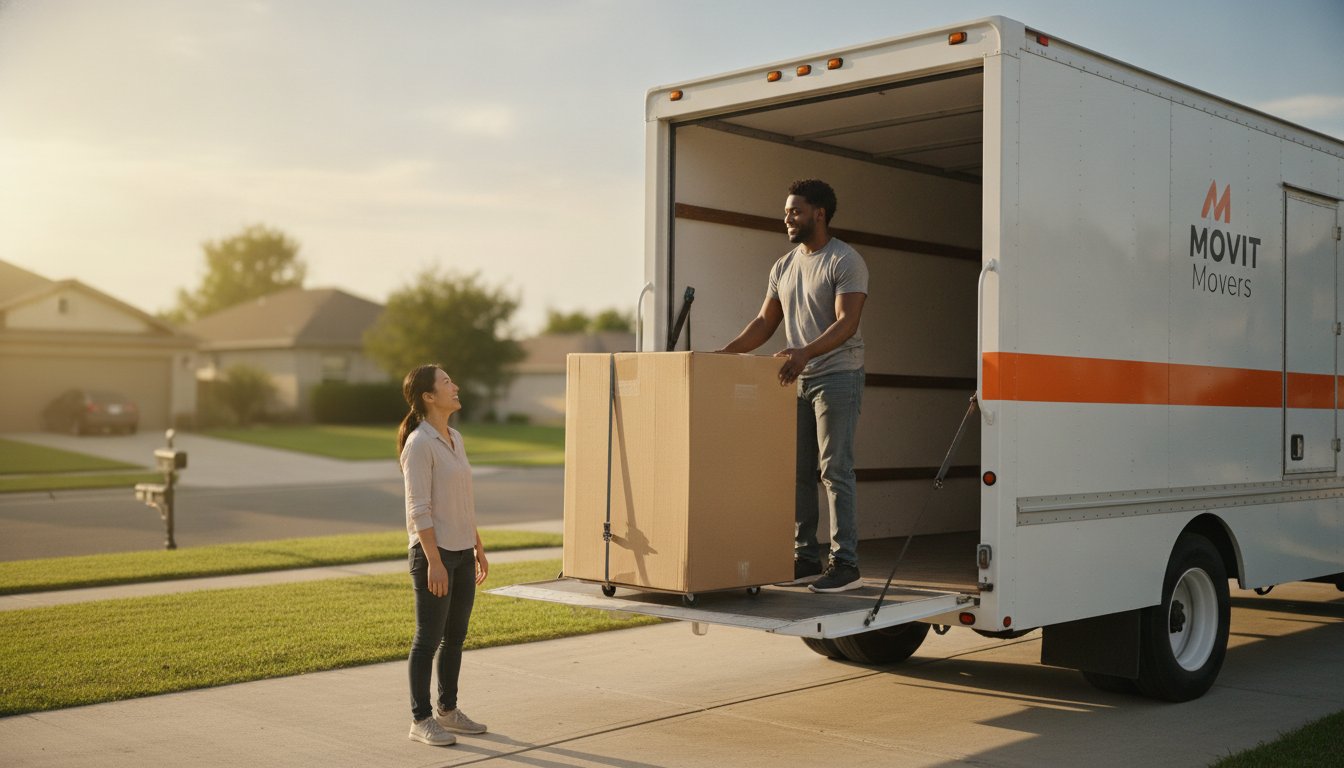
    A moving truck rental with liftgate is the ultimate shortcut for heavy logistics. It is a hydraulic platform that moves items from the pavement to the truck bed at the touch of a button. If you are curious about the technical history or global terminology of these systems, you can read more about what a tail lift is on Wikipedia. This mechanical assist replaces the traditional loading ramp, which often feels like a high-wire act when you are pushing a loaded dolly. By choosing a truck with this equipment, you eliminate the incline entirely.

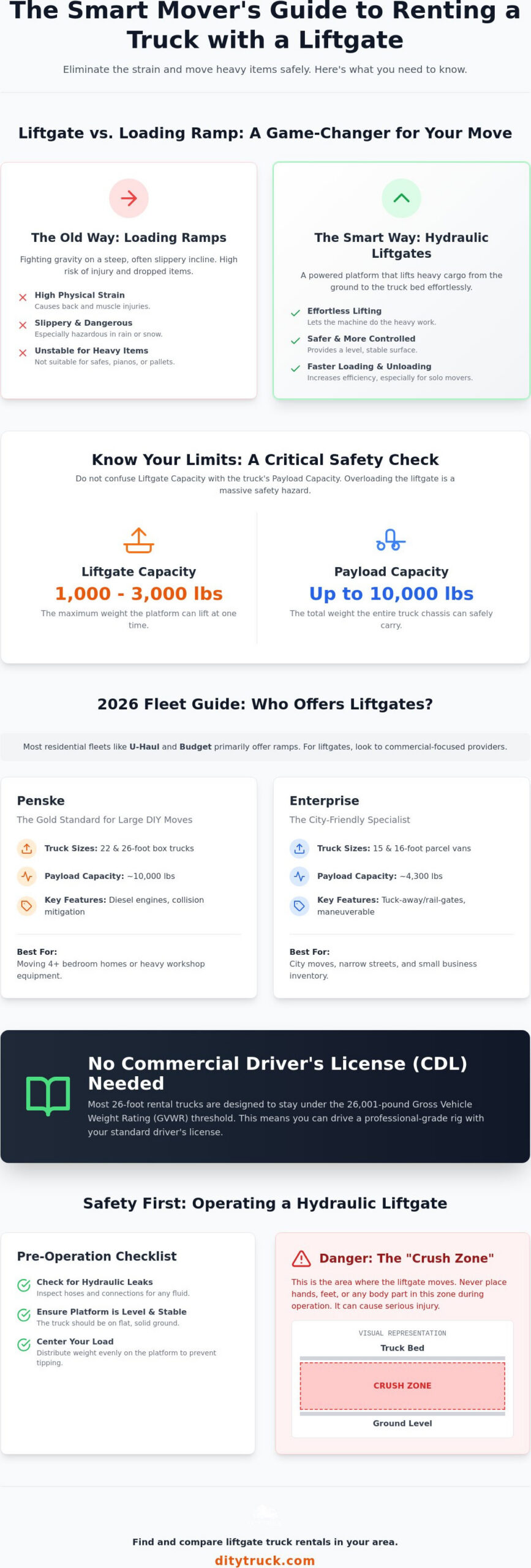
    Ramps are dangerous. They are steep. They get slippery in the rain. A liftgate removes these variables. You roll your heaviest items onto the platform, press a lever, and watch the cargo rise level with the deck. It is about control. You aren’t fighting gravity; you’re letting physics work for you. This efficiency speeds up your loading time significantly, especially when you have a high volume of heavy boxes or equipment.

    Certain items aren’t just heavy; they’re impossible to move safely on a ramp. Think about gun safes, industrial-grade appliances, or palletized furniture. These objects require a level surface during the entire loading process. The “Back-Saving ROI” is simple math. A truck with a liftgate might cost a few extra dollars per day. Compare that to the thousands you’ll spend on physical therapy or lost wages if you strain a disc. It is the cheapest insurance policy you can buy for your body during a move.

    Who Needs a Liftgate Truck?

    • Residential Movers: If you have “impossible” items like a grand piano, a cast-iron clawfoot tub, or a massive tool chest, a ramp is a liability.
    • Small Businesses: Companies moving warehouse inventory without a dedicated loading dock can turn any parking lot into a functional shipping bay.
    • Solo Movers: If you are working alone or with limited physical help, the hydraulic system acts as your extra set of hands. It makes heavy lifting a one-person job.

    Liftgate Capacity vs. Payload Capacity

    Don’t confuse these two numbers. A liftgate usually handles between 1,000 and 3,000 pounds. Payload capacity is the total weight the truck’s chassis can safely carry. If you try to lift a 4,000-pound machine on a 2,000-pound gate, you risk immediate mechanical failure. This isn’t just a repair bill. It is a massive safety hazard that could void your insurance and cause serious injury. Always check the specific gate rating before you start loading your moving truck rental with liftgate to ensure your cargo stays within safe limits.

    Comparing National Fleets: Who Offers Liftgates?

    If you are searching for a moving truck rental with liftgate, you’ll quickly realize that not all fleets are created equal. Most DIY movers start their search with U-Haul or Budget because of their visibility. However, these brands focus on ramps for their residential fleets. If you need a mechanical lift, you’ll likely need to look at commercial-focused providers. Penske and Enterprise dominate this specialized space by offering professional-grade equipment to residential customers.

    You don’t need a Commercial Driver’s License (CDL) to operate most 26-foot trucks. These vehicles are designed to stay under the 26,001-pound Gross Vehicle Weight Rating (GVWR) threshold. This allows you to drive a massive truck with professional-grade equipment using a standard driver’s license. It is a huge win for those moving a four-bedroom house or heavy workshop equipment. You get the power of a professional rig without the regulatory hurdles.

    Penske’s Medium-Duty Options

    Penske is the gold standard for large DIY moves. Their 22 and 26-foot box trucks are frequently equipped with hydraulic gates. These trucks offer roughly 1,700 cubic feet of space and a 10,000-pound payload capacity. Many models feature diesel engines for better fuel efficiency and collision mitigation technology for added safety. Some even feature walk-ramps alongside the moving truck rental with liftgate, giving you two ways to load depending on the item’s weight. To see which specific locations have these units available, you can compare real-time inventory and rates across the national network.

    Enterprise Commercial Straight Trucks

    Enterprise takes a different approach by excelling in the 15 to 16-foot “parcel van” category. These are perfect for city moves where a 26-foot truck is too bulky for narrow streets. Despite their smaller size, these trucks often boast a 4,300-pound payload capacity. You’ll encounter two main gate styles: “tuck-away” gates that fold under the chassis and “rail-gates” that remain vertical against the rear. Understanding these differences is key to Liftgate Safety for Carriers and residential users alike. Enterprise is often the best choice for dense, heavy commercial loads that don’t require the massive volume of a box truck.

    Budget and U-Haul rarely offer liftgates on their standard consumer trucks. You might find them in their commercial divisions, but availability for a one-way residential move is limited. If your move requires a mechanical lift, Penske or Enterprise are your most reliable bets. Always confirm the equipment at the time of booking to avoid a ramp-only surprise on moving day.
    Moving Truck Rental with Liftgate: The 2026 Comparison Guide

    Liftgate vs. Loading Ramp: Which is Right for Your Move?

    Choosing between a ramp and a hydraulic platform is a decision about physical risk and logistical speed. Most standard rentals come with a pull-out aluminum ramp. This is fine for a few boxes. It is not fine for a 500 pound lathe or a solid oak armoire. The “Steepness Factor” is the most overlooked safety risk in DIY moving. A ramp creates a 20 to 30 degree incline. Pushing a heavy dolly up that slope requires immense core strength. If the ramp is wet from a morning drizzle, your traction disappears. A moving truck rental with liftgate eliminates the incline entirely. You stay on level ground.

    Cost is the secondary factor. A truck with a mechanical lift usually carries a higher daily base rate. You are paying for the maintenance and complexity of the hydraulic system. You must weigh this against the cost of hiring extra helpers. If the liftgate allows you to move heavy items solo or with one friend, the equipment pays for itself in labor savings. It is a trade-off between equipment fees and human effort.

    Consider your parking environment. Ramps require about 10 to 12 feet of clearance behind the truck to reach a safe angle. Liftgates are more compact in their footprint but still require a flat “landing zone” to operate. If you are parking on a steep hill, a liftgate might not be able to level out properly. Space and slope dictate your equipment choice as much as the weight of your furniture does.

    When a Ramp is Sufficient

    A ramp is often the faster choice for a house full of medium sized boxes. It allows for a continuous flow of people moving in and out of the truck. If your inventory consists of standard plastic bins, light mattresses, and disassembled furniture, the ramp is sufficient. It is also the better option for tight urban parking where you don’t have the luxury of extra clearance for the platform to drop. If you have three or more able-bodied helpers, the physical load is distributed enough that a ramp is manageable.

    When a Liftgate is Mandatory

    Some items make a moving truck rental with liftgate a non-negotiable requirement. Any single object over 400 pounds is a candidate for a mechanical lift. This includes gun safes, commercial refrigerators, and cast-iron machinery. If you are loading from a street with no curb access, the liftgate bridges the gap between the asphalt and the truck bed effortlessly. It is also the only way to utilize a pallet jack. You cannot roll a pallet jack up a standard moving ramp. If your move involves palletized goods, the liftgate is your only viable path forward.

    Safety and Operation: How to Use a Hydraulic Liftgate

    Operating a hydraulic system is straightforward, but it demands your full attention. These are powerful mechanical tools. They don’t have sensors to detect a stray hand or foot. Before you touch the controls, ensure the truck is parked on level ground. This is non-negotiable for safety. If the truck is at an angle, the hydraulic fluid may not distribute evenly. This causes the platform to jerk or tilt. Always set the emergency brake before beginning your loading process. Level ground is mandatory. Set the brake. Don’t skip these steps.

    Respect the “Crush Zone.” This is the area where the heavy steel platform meets the truck frame or the pavement. A common injury occurs when a user stands too close and the gate catches the toe of their boot. Keep your feet well back from the edge. Never reach under the platform while it is in motion to adjust a load. If something shifts, stop the gate completely before intervening. Safety is about maintaining a perimeter between your body and the moving parts. They don’t have sensors. You are the safety mechanism.

    Weight distribution is the key to mechanical longevity. Always center your cargo on the platform. If you place a heavy item on one corner, the hydraulic pistons experience uneven pressure. This can lead to a permanent tilt or a blown seal. During rain or ice, treat the metal surface like a skating rink. Steel becomes incredibly slick when wet. Use sand or grip mats if necessary. Always wear boots with high-traction rubber soles to prevent slips while you’re positioning cargo on your moving truck rental with liftgate.

    Step-by-Step Operation Guide

    • Step 1: Deploy. For a tuck-away gate, unlatch the safety hook and carefully unfold the platform. For a rail gate, ensure the vertical tracks are clear before lowering it from the travel position.
    • Step 2: Toggle. Use the up/down switch while standing to the side of the vehicle. Maintain a clear line of sight to the platform at all times.
    • Step 3: Secure. Once the item is on the gate, use wheel chocks for dollies or straps for upright items. Never assume the cargo will stay still during the rise to the deck.
    • Step 4: Stow. After loading, fold the gate back into its housing. Ensure the locking pins are fully engaged. A loose gate is a major road hazard.

    Common Pitfalls to Avoid

    Never ride the liftgate. It is designed for cargo, not people. Using it as a personnel elevator is a leading cause of rental-related accidents. Avoid “dead-heading” the motor. This happens when you continue to hold the “up” button after the gate has already reached the truck bed. You’ll hear the motor strain; release the switch immediately to prevent the pump from burning out. Finally, check your dashboard. Most modern rentals have a warning light that stays on if the gate isn’t properly stowed. Don’t put the truck in gear until that light is off.

    Knowing how to use the equipment keeps your move on track and your body safe. If you haven’t secured your vehicle yet, you can compare rates and equipment availability to find a truck that fits your needs.

    How to Find the Best Rates on Liftgate Truck Rentals

    Finding a moving truck rental with liftgate at a fair price requires a different strategy than booking a standard cargo van. Most major rental websites prioritize their residential ramp-only inventory. Specialized trucks with hydraulic lifts are often tucked away in commercial divisions. If you only search the consumer-facing portals, you’ll see “unavailable” or “no trucks found.” This doesn’t mean the equipment isn’t there. It just means it’s hidden behind a commercial paywall that most DIY movers don’t know how to access.

    You want to avoid the trap of calling ten different lots to check availability. Inventory for specialized equipment changes by the hour. A truck that was available in a commercial fleet this morning might be booked by a local contractor by noon. To get the best rate, you need a bird’s-eye view of every fleet in your area simultaneously. This transparency allows you to spot price gaps between brands that aren’t obvious when looking at individual sites.

    Using DityTruck for Comparison

    Efficiency is everything when you’re planning a move. Instead of opening twenty tabs, you can use DityTruck to aggregate specialized equipment rates in one place. This tool acts as your smart assistant. It filters out the noise and shows you which brands actually have liftgate inventory in your zip code. For a broader look at the market, check out our moving truck rental comparison guide. Focus your search on trucks 15 feet and larger. Smaller units rarely come with hydraulic platforms. Using a comparison engine ensures you don’t overpay for a feature that should be saving you money, not draining it.

    Booking Tips for 2026

    Timing is your best leverage for lower rates. Rental prices fluctuate based on demand. Mid-week and mid-month dates are significantly cheaper than weekends or the first of the month. Because liftgate trucks are in lower supply than standard box trucks, you should book at least three weeks in advance. Don’t assume you aren’t eligible for commercial rates. Many providers offer business pricing to anyone moving heavy equipment, even for personal use. You can review box truck rental prices to see how base costs compare across different sizes before you commit to a specific model.

    Verification is the final, critical step. Once you’ve found a competitive rate for a moving truck rental with liftgate, call the local pickup lot. Confirm that the specific unit assigned to your reservation has the hydraulic gate. Mistakes happen in national booking systems. A five-minute phone call prevents a massive headache on moving morning. Ask the local agent if the gate is a tuck-away or rail-style so you can plan your parking clearance accordingly. This extra layer of transparency ensures your move starts without friction.

    Take the Strain Out of Your 2026 Move

    Your move doesn’t have to be a test of physical endurance. Securing a moving truck rental with liftgate turns a dangerous loading ramp into a simple, hydraulic process. You’ve seen how the right equipment protects your body and your most valuable items. By looking beyond standard residential fleets and into commercial-grade options, you gain access to the power and safety your project deserves. The 2026 market offers more transparency than ever before. You just need the right tool to find it.

    Don’t waste hours calling local lots or navigating confusing booking portals. You can access national commercial and residential fleets with real-time price transparency. We’ve stripped away the complexity so you can see exactly what is available in your area. There are no hidden booking fees; just straightforward data to help you make a smart decision. Compare Liftgate Truck Rental Rates Now and take the first step toward a friction-free moving day. You’ve got the plan. Now get the truck that does the heavy lifting for you. You’ve worked hard to organize this transition, and you deserve a logistics partner that respects your time and your budget.

    Frequently Asked Questions

    Do I need a CDL to rent a 26-foot truck with a liftgate?

    No. You don’t need a Commercial Driver’s License for most 26-foot rentals. These trucks are specifically rated under the 26,001-pound threshold. This allows residential movers to operate heavy equipment with a standard driver’s license. Always verify the Gross Vehicle Weight Rating on your specific rental agreement. It ensures you stay within legal limits for non-commercial use.

    Which moving truck companies have liftgates on their trucks?

    Penske and Enterprise are the primary national providers for this equipment. Penske offers hydraulic lifts on their 22-foot and 26-foot medium-duty trucks. Enterprise provides them on 15-foot parcel vans and larger straight trucks. Most other brands focus on ramps for their residential fleets. If you need a moving truck rental with liftgate, start your search with these two providers.

    How much extra does it cost to rent a truck with a liftgate?

    Expect a higher daily base rate compared to trucks with standard ramps. The added cost reflects the maintenance and complexity of the hydraulic system. Prices fluctuate based on your location and the time of year. While the equipment fee is higher, it often offsets the cost of hiring professional movers for heavy items. It’s a trade-off between equipment cost and manual labor.

    Can I use a pallet jack on a rental truck liftgate?

    Yes. A pallet jack is compatible with most liftgates, provided the total weight stays within the platform’s capacity. This is the only way to move palletized cargo into a truck without a loading dock. Ensure the platform is level with the ground before rolling the jack on. Use the gate’s safety chocks to prevent the pallet from rolling during the lifting process.

    What is the weight limit for a standard rental truck liftgate?

    Most rental liftgates handle between 1,000 and 3,000 pounds. You can find the exact limit printed on a safety decal near the operating switch. Never guess the weight of your cargo. Exceeding this limit can cause the hydraulic seals to fail instantly. This creates a dangerous situation for both the operator and the cargo. Always stay well under the maximum rating for safety.

    Are liftgates available on small 10-foot or 12-foot rental trucks?

    Rarely. Most companies reserve hydraulic lifts for trucks 15 feet and larger. Small 10-foot trucks usually feature a low deck height for easier step-in loading. If you need a smaller vehicle with a mechanical lift, look at Enterprise’s 15-foot parcel vans. They offer a compact footprint with the power of a professional gate. Most standard DIY fleets won’t have this option for small trucks.

    What should I do if the hydraulic liftgate gets stuck?

    Stop the motor immediately. Check the rails and the area under the platform for physical obstructions or debris. If the gate moves slowly, the truck’s battery might be low; try running the engine while operating the lift. If it remains stuck, don’t attempt a DIY repair. Call the rental provider’s 24/7 roadside assistance. They’ll send a technician to handle the high-pressure hydraulic system safely.

    Does U-Haul rent trucks with liftgates for residential moves?

    Generally, no. U-Haul prioritizes “Low Decks” and pull-out ramps to make loading easier for the average customer. Their standard residential fleet does not include liftgates. You might find them in their commercial division, but availability for a one-way move is extremely limited. For a moving truck rental with liftgate, you’ll have better success checking Penske or Enterprise inventory through a comparison tool.
  • Appliance Dolly Rental for Moving: The 2026 Guide to Rates and Safety

    Appliance Dolly Rental for Moving: The 2026 Guide to Rates and Safety

    What if the difference between a successful move and a week of bed rest was just twelve dollars? You’ve likely spent hours worrying about scratching your hardwood floors or, worse, permanent back strain while wrestling a 500 pound refrigerator. It’s a high stakes task that feels overwhelming when you’re staring at a narrow staircase. This guide simplifies the process of securing an appliance dolly rental for moving so you can protect your health and your budget.

    We believe logistics should be simple. You shouldn’t have to guess which tool is right or overpay for equipment you only need for an afternoon. Whether you’re comparing the $12 daily rate at 360 Rents against other national providers or looking for the safest way to navigate steep steps, we have the data. We’ll show you how to identify the right dolly type, find the lowest 2026 rental rates, and master the loading techniques used by professionals. Let’s get your heaviest items moved without the unnecessary stress or hidden costs.

    Key Takeaways

    • Protect your back and your security deposit. Use mechanical leverage for any item over 400 pounds.
    • Understand why integrated ratchet straps are vital. They secure top-heavy loads better than standard hand trucks.
    • Compare 2026 rates at top providers. Find the best appliance dolly rental for moving your gear without overspending.
    • Master the “Tilt and Slide” technique. Navigate tight doorways and protect delicate flooring with professional ease.
    • Simplify your logistics. Bundle your equipment needs with your truck rental booking to save time and effort.

    Why an Appliance Dolly is Non-Negotiable for DIY Moves

    Brute force won’t help you when a 450 pound freezer starts to tilt toward a staircase. Many DIY movers assume they can handle the weight with a few friends and a lot of grit. This is a mistake. Human strength has physical limits, especially when navigating tight corners or uneven thresholds. An appliance dolly rental for moving transforms a dangerous, high stakes task into a controlled and predictable process. It’s not just a convenience. It’s a safety requirement for any move involving major machinery.

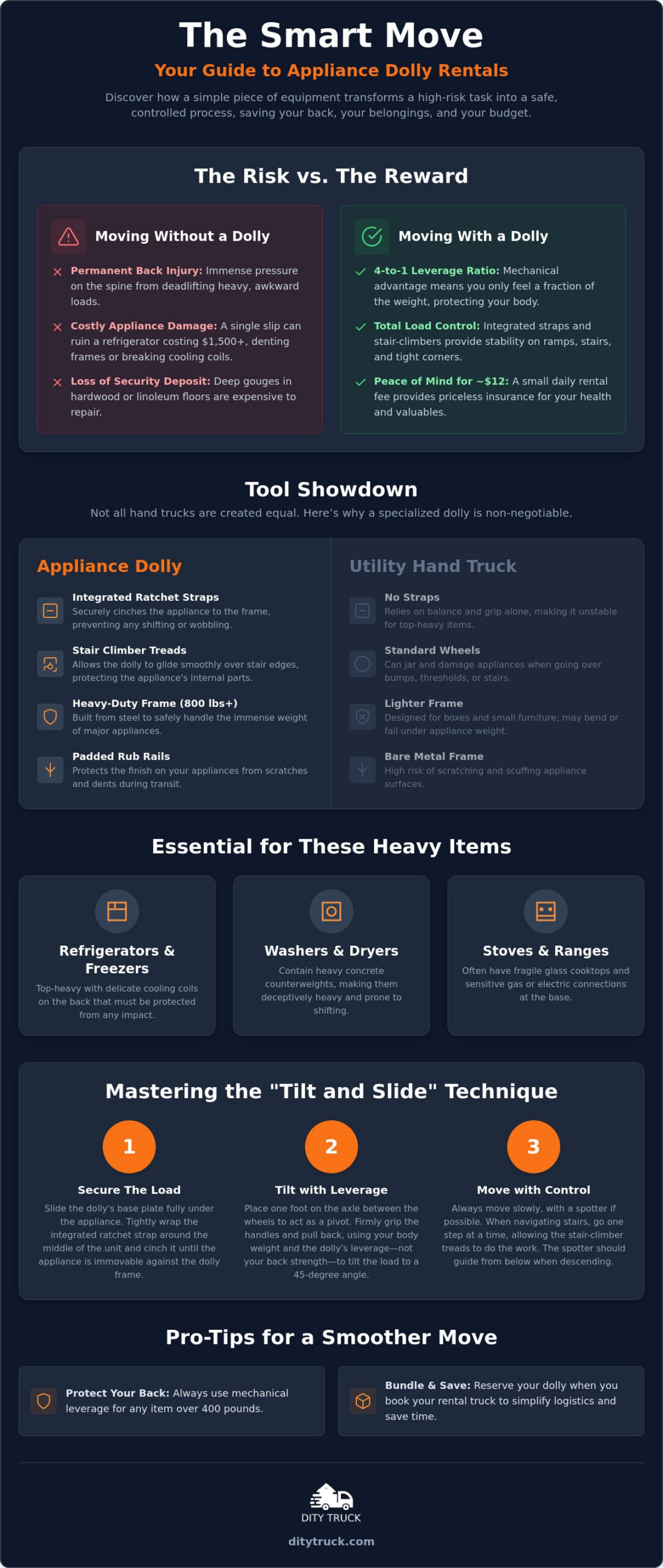
    Consider the financial stakes of your move. A modern refrigerator can easily cost $1,500 or more. A single slip during transit can ruin the cooling coils, dent the stainless steel finish, or shatter a glass shelving unit. Compare that risk to a rental fee that often starts as low as $12 per day at providers like 360 Rents. You’re paying a small fee for significant insurance. You’re also protecting your home from structural damage. Dragging heavy items across hardwood or linoleum leaves permanent gouges. These marks can cost you your entire security deposit or require expensive floor refinishing before you even settle into your new place.

    The Risks of “Powering Through” Without Equipment

    Back injuries are the most common mishap during a DIY move. Lifting a heavy load from a dead stop puts immense pressure on your lower spine and musculoskeletal system. A specialized Hand truck designed for appliances uses a long, reinforced frame to shift the center of gravity toward the wheels. This prevents the load from pulling you forward or pinning you against a wall if the weight shifts. A standard 700lb capacity dolly typically offers a 4 to 1 leverage ratio, meaning you only feel a fraction of the actual weight. Using this mechanical advantage ensures you don’t end your moving day in an urgent care clinic.

    Identifying “Heavy” Items in Your Inventory

    Not every item in your home requires heavy machinery, but certain appliances are non-negotiable. Investing in an appliance dolly rental for moving ensures you can handle these specific challenges safely:

    • Refrigerators and Freezers: These are often the heaviest items in a home. They are top-heavy and contain delicate cooling coils on the back that must remain protected from impact.
    • Washers and Dryers: Modern washing machines contain concrete counterweights to keep them stable during spin cycles. This makes them deceptively heavy and prone to shifting weight as you tilt them.
    • Stoves and Ranges: These units often have glass cooktops that are susceptible to cracking under pressure. They also require careful handling to avoid damaging gas lines or electrical connectors at the base.

    By using the right equipment, you replace physical strain with mechanical precision. This simple choice protects your body, your appliances, and your budget all at once.

    Appliance Dolly vs. Utility Hand Truck: Key Differences

    Selecting the wrong tool can turn a simple move into a physical struggle. A standard utility hand truck is a staple for moving stacked boxes or small furniture. However, it often fails when faced with the weight and dimensions of a refrigerator or washing machine. These lighter carts lack the specialized features required to secure top-heavy items. Using the wrong equipment increases the risk of the load tipping. This is a primary factor in preventing work-related musculoskeletal disorders, as a sudden shift in weight can cause immediate strain on your back and shoulders.

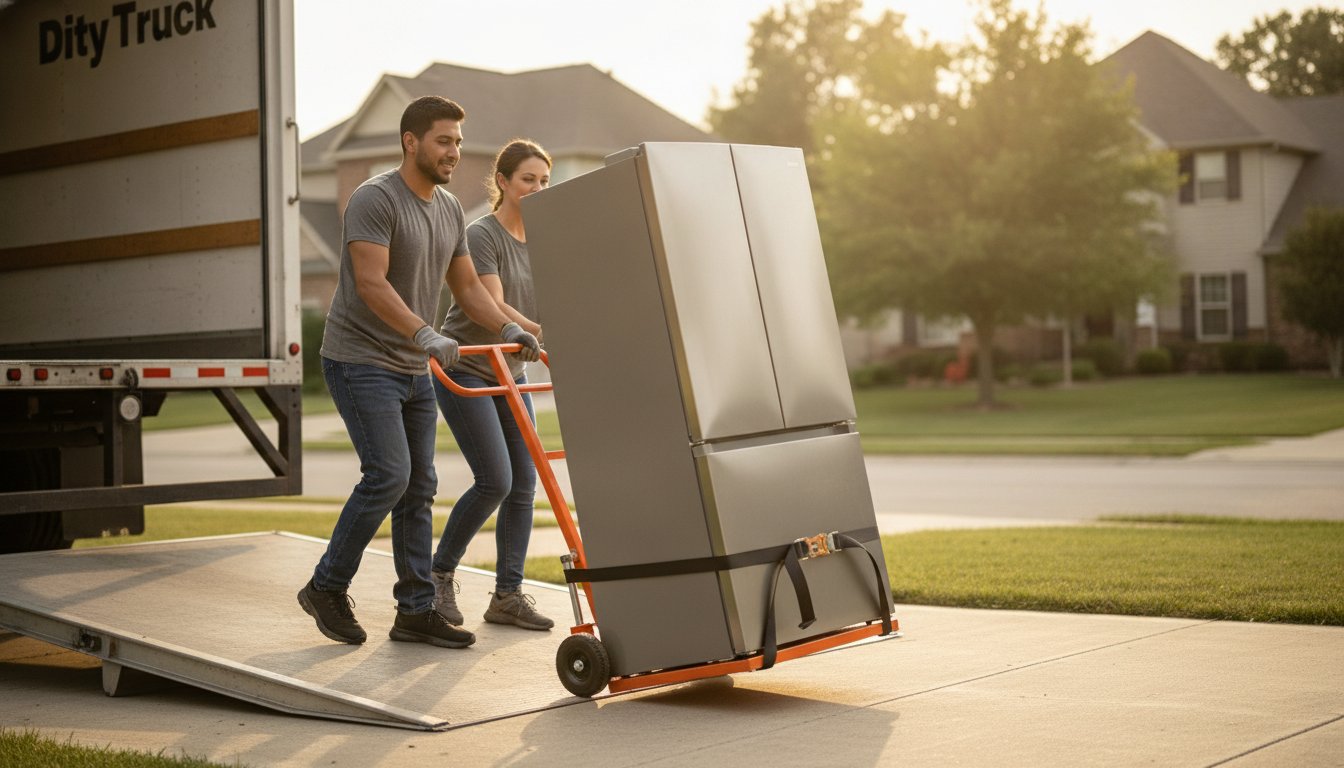
    The most critical difference is the integrated nylon ratchet strap. This strap is built directly into the frame of an appliance dolly. It allows you to cinch the appliance tightly against the metal rails. This creates a single, stable unit that won’t slide or wobble during transit. Standard hand trucks rely on gravity and your own grip to keep the load in place. On a ramp or a staircase, that simply isn’t enough security. An appliance dolly rental for moving provides the peace of mind that your expensive range won’t tumble backward as you tilt the frame.

    Professional dollies also feature stair-climber tracks and rub rails. Stair-climber tracks are rubberized belts or skids located behind the wheels. They act like tank treads, allowing the dolly to glide over the edge of a step rather than dropping with a jarring thud. This protects the delicate internal components of your appliances. Rub rails are padded strips along the frame that prevent metal-on-metal contact. They ensure you don’t leave deep scratches on the finish of your stainless steel appliances.

    Anatomy of a Professional Appliance Dolly

    Professional models prioritize durability over weight. They typically feature heavy-duty steel frames that can support up to 800 pounds. The wheels are made of non-marring rubber. This is a vital feature for protecting hardwood and tile floors from black streaks. Dual-handle designs are also common. These allow a second person to assist from the front or side, providing better control when navigating steep truck ramps or narrow hallways. Before you book your gear, you can view truck rental comparisons to see which providers offer these high-quality dollies as part of their rental packages.

    When to Use Each Tool

    Efficiency starts with using the right tool for the job. Use a utility hand truck for boxes, nightstands, and small electronics. Reserve a professional appliance dolly rental for moving any item that weighs over 250 pounds or stands more than three feet tall. While a four-wheeled furniture dolly is excellent for rolling heavy items across a flat garage floor, it offers zero control on stairs. For any move involving changes in elevation, the upright appliance dolly remains the industry standard for safety and speed.

    Appliance Dolly Rental for Moving: The 2026 Guide to Rates and Safety

    Where to Find an Appliance Dolly Rental: Comparing Providers

    Finding the right source for your equipment depends entirely on your route and timeline. Truck rental companies offer the most streamlined experience for most DIY movers. You can book your truck and your appliance dolly rental for moving in a single transaction. This eliminates the need for multiple stops and separate contracts. Home improvement stores like The Home Depot are excellent for quick, local tasks. They often provide 4-hour rental blocks for short-duration moves. However, these stores usually require you to return the equipment to the exact same location where you picked it up.

    Independent tool rental yards are another option. These local businesses often carry industrial-grade gear that can handle specialized tasks. The “DityTruck Strategy” involves comparing these providers side-by-side. Instead of just looking for the cheapest truck, you should evaluate the total cost of the truck and the necessary equipment add-ons simultaneously. Some providers might offer a lower base rate for the vehicle but charge significantly more for accessories. Seeing the full financial picture ensures you don’t encounter unexpected costs on moving day.

    In-Town vs. One-Way Rental Logistics

    If you’re moving across state lines, your equipment must stay with the truck. National providers allow for one-way equipment rentals, meaning you pick up the dolly in one city and drop it off in another. Hardware stores and local yards typically lack this network. Most major companies don’t allow you to rent a dolly for a one-way trip unless you’re also renting one of their trucks. Following Safe lifting practices is only possible if you have the right gear available at both your origin and your destination. Always confirm that your specific pickup location has dollies in stock before you arrive.

    Hidden Costs and Deposit Requirements

    Daily rates vary based on the provider and the duration of the rental. As of 2026, 360 Rents offers a daily rate of $12.00, while The Home Depot charges $30.00 per day. While 4-hour blocks might seem cheaper at first glance, late fees can be aggressive. Most companies require a deposit ranging from $25.00 to $300.00. You’ll need a valid credit card and a photo ID for the transaction. For a complete look at how these fees impact your total moving budget, see our guide on Box Truck Rental Prices. This context helps you decide if bundling equipment with your vehicle is the smartest financial move.

    How to Use an Appliance Dolly Safely: A Step-by-Step Guide

    You have secured your appliance dolly rental for moving. Now you need a precise plan. Preparation prevents injury and property damage. Start by clearing every obstacle from your path. Remove rugs, toys, and loose cables. Measure the appliance and every doorway on your route. A half-inch discrepancy can halt your progress and lead to a dangerous, tipped load. Confirm your path is wide enough for both the machine and the dolly frame before you lift a finger. Follow these preparation steps:

    • Clear the path of all debris and loose flooring.
    • Measure doorways and the appliance width to ensure clearance.
    • Identify the “breakover” point before starting the move.
    • Confirm the ratchet strap is fully functional and free of frays.

    Position the dolly at the back or side of the unit. Use the “Tilt and Slide” method to get the base plate in place. Have a partner gently tip the appliance just enough for you to slide the metal plate underneath. Do not shove the plate directly against the floor. This prevents deep scratches on hardwood or tile. Once the base is seated, secure the integrated nylon strap. Wrap it around the center of the unit and feed it into the ratchet. Tighten it until the appliance and dolly move as a single, fused piece. If the load wiggles, it is not safe to move.

    The “Breakover” is the transition from a standing position to a rolling one. Place one foot firmly on the dolly axle. Pull the handles toward your chest while pushing the base forward with your foot. This shifts the weight onto the wheels and off your spine. Your legs should provide the power. If you feel the weight in your lower back, you haven’t tilted the frame far enough. You can book your truck and equipment through our platform to ensure you have a professional-grade dolly ready for this task.

    Navigating Stairs and Ramps

    Moving heavy items on an incline requires a strategic two-person team. The operator at the top handles the steering and the primary pull. The person at the bottom acts as a stabilizer and spotter. Use the rubberized stair-climber tracks on the back of the frame. These tracks bridge the gap between steps. They prevent the jarring thud that can damage internal appliance components. Never stand directly below the load on a steep ramp. If a strap fails or the operator slips, the weight will move downward instantly and cause severe injury.

    Unloading and Positioning

    Reversing the breakover requires a slow, controlled release. Do not let the appliance slam onto the floor. Use your foot on the axle to steady the base as you bring the handles to a vertical position. Watch your fingers and toes during this final transition. Small manual adjustments are often needed to fit a unit into a tight kitchen alcove. For any incline greater than 10 degrees, a two-person team is mandatory to maintain control. Always have your partner steady the top of the machine while you slide the dolly out from underneath.

    Booking Your Rental Truck and Equipment Together

    Efficiency is the goal of any DIY move. Bundling your appliance dolly rental for moving with your truck booking is the smartest way to achieve it. This approach centralizes your logistics. You deal with one contract, one pickup location, and one point of contact for support. If you rent gear from a separate tool yard, you add hours of driving and extra paperwork to an already busy day. Combining these needs ensures that your equipment is sized correctly for the loading ramp of your specific truck.

    Don’t assume every rental lot has every tool in stock at all times. Inventory levels fluctuate daily. Even if you see an option online, it’s wise to call the local branch to confirm they have a heavy duty appliance dolly reserved for your specific time slot. This prevents a last minute scramble when you’re already behind schedule. A quick confirmation call provides the peace of mind you need before the heavy lifting begins.

    The Advantage of Comparison

    Smart movers look at the total package. A low truck rate might be offset by high equipment fees or aggressive mileage costs. Using our Moving Truck Rental Guide helps you plan these logistics with precision. We focus on transparent pricing so you can see the full cost of your move upfront. This prevents the sticker shock that often happens when adding accessories at the rental counter. Comparison tools allow you to find the shortest, most logical path to a successful move without hidden hurdles.

    Final Preparation for Moving Day

    Before you drive your rental truck off the lot, perform a quick equipment inspection. Your appliance dolly is a mechanical tool. It needs to be in top condition to protect your expensive electronics and your physical health. Don’t take the first dolly the attendant hands you without checking its functionality. Follow this final checklist before you leave the lot:

    • Inspect the tires for proper inflation and ensure they are free of flat spots or deep gouges.
    • Test the ratchet strap mechanism to ensure it locks and releases smoothly without binding.
    • Check the metal frame for any visible bends or cracks in the structural welds.
    • Verify that the rubberized stair climber tracks are securely attached and provide enough grip.

    A few minutes of verification at the lot saves hours of frustration at your home. If the strap is frayed or the wheels are wobbly, ask for a replacement immediately. Once you’re confident in your gear, you’re ready to tackle the heavy lifting with professional results. You can compare moving truck and equipment rates on DityTruck today to start your journey with confidence and clarity.

    Take Control of Your Move Today

    You now have the blueprint for a safer, more affordable DIY move. By choosing a professional-grade dolly over a standard hand truck, you protect your body and your expensive appliances from permanent damage. We’ve covered why the integrated ratchet strap is vital and how the “breakover” technique keeps the weight off your spine. Planning your logistics in advance ensures you don’t face equipment shortages or hidden fees when you arrive at the rental lot. Finding a reliable appliance dolly rental for moving is the final piece of your moving puzzle.

    Our comparison tool removes the guesswork from your logistics. You can Compare Real-Time Truck and Equipment Rates Now to see options from top national providers in seconds. We prioritize transparent pricing so you can book with confidence, joining the thousands of DIY movers who trust us annually. You have the knowledge and the right techniques to handle the heavy lifting. Your next move is officially under control.

    Frequently Asked Questions

    Can I rent an appliance dolly without renting a truck?

    Yes, you can rent a dolly without a truck at many local hardware stores like The Home Depot. National truck providers sometimes limit equipment only rentals during peak moving weekends to save gear for their truck customers. Call the location directly to confirm their policy before you make the trip. Securing your gear early helps you avoid last minute shortages that could stall your entire moving day.

    How much weight can a standard appliance dolly hold?

    A standard professional model typically holds between 600 and 800 pounds of static weight. This limit applies specifically to flat and level surfaces. Moving on inclines or steep stairs reduces your control and the effective safe capacity of the tool. Always verify the weight of your specific appliance against the load rating stamped on the dolly frame to ensure you aren’t exceeding the manufacturer’s safety limits.

    What is the difference between a hand truck and an appliance dolly?

    The main differences are the integrated nylon ratchet strap and the rubberized stair climbing tracks. Appliance dollies are built specifically for heavy and top heavy loads like refrigerators. Utility hand trucks are better for light boxes and small furniture items. Use the specialized dolly for anything that requires a secure strap to prevent dangerous tipping or shifting during transit over thresholds and ramps.

    How do I use the stair-climbing feature on a rental dolly?

    Lean the dolly back so the rubberized tracks on the rear of the frame make contact with the step edge. These tracks bridge the gap between stairs to prevent jarring drops that could damage internal components. They allow the load to slide smoothly upward or downward with minimal physical impact. A second person should always assist from the bottom to guide the base and provide extra stability.

    Is it cheaper to buy or rent an appliance dolly for a one-time move?

    Renting is the smarter financial choice for a single move. Buying a professional model often costs over $200. An appliance dolly rental for moving allows you to access high quality gear for as little as $12 to $30 per day. You get professional grade results without the high purchase price or the ongoing storage burden of a bulky tool you may never use again.

    Will an appliance dolly fit in a standard SUV or car?

    These dollies are usually five feet tall and two feet wide. They fit comfortably in most SUVs and pickup trucks when the seats are folded down. They are typically too large for the trunk of a standard sedan. Check your vehicle’s interior dimensions before pickup to ensure you can transport the equipment safely. If you’re already renting a truck, the dolly fits easily in the cargo area.

    What should I do if the rental dolly strap is frayed or broken?

    Stop immediately and request a replacement from the rental provider. A damaged or frayed strap is a major safety hazard that cannot reliably hold the weight of a heavy refrigerator. Inspect the nylon webbing for tears and the ratchet for rust before you leave the rental lot. Using faulty equipment puts your body and your property at risk. Most reputable providers will swap the unit for free.

    Do I need moving blankets if I am already using an appliance dolly?

    Use moving blankets to provide total protection for your appliance. While the dolly rub rails protect the back of the unit, blankets prevent side scratches from narrow doorways or other cargo in the truck. Wrap the unit securely before you tighten the ratchet strap. This simple extra step ensures your appliance arrives at your new home in perfect condition without any cosmetic damage or surface gouges.