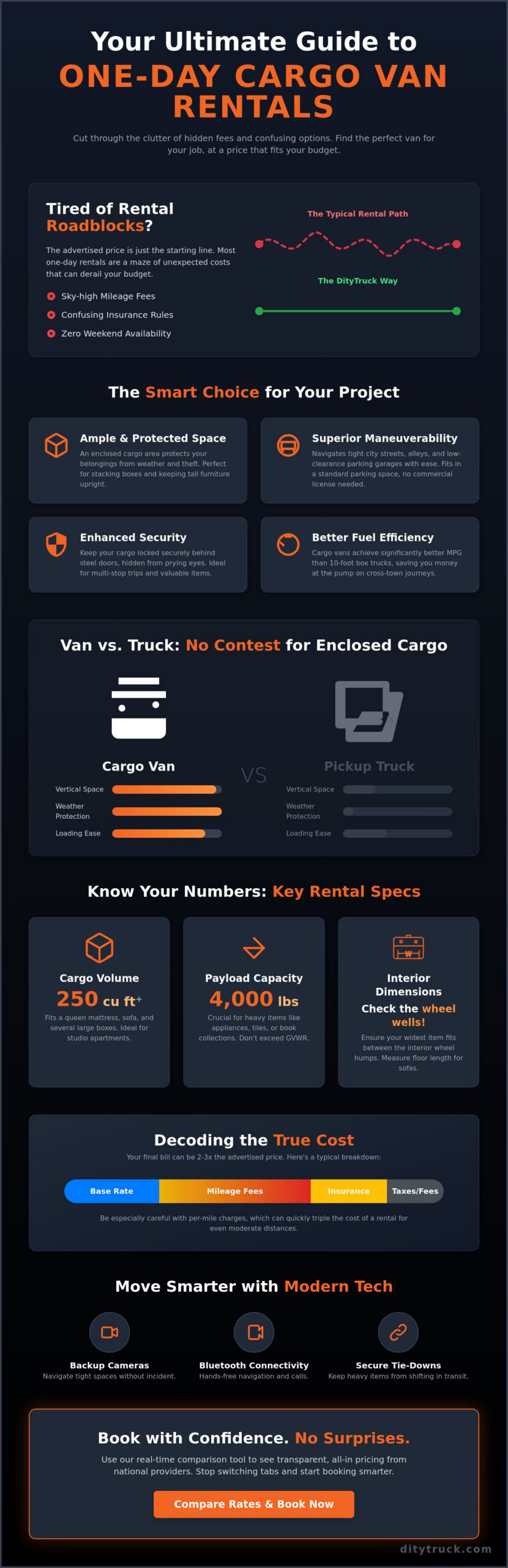
The biggest truck isn’t always the fastest way to finish your move. Most people assume more space equals less stress, but the wrong vehicle can actually double your workload. When comparing a cargo van vs box truck, the decision usually comes down to a trade-off between driving comfort and loading efficiency. You want to avoid the nightmare of navigating a massive vehicle through tight city streets. At the same time, you don’t want to spend your entire day making three or four extra trips because your furniture didn’t fit. It’s about finding that sweet spot where you feel confident behind the wheel and your belongings fit in one go.
It’s normal to feel stuck between playing it safe and going big. We’ll help you settle that debate right now. This guide breaks down the critical differences in capacity, maneuverability, and total costs so you can choose the perfect rental for your project. We’ll look at exactly how much each vehicle holds, how they handle on the road, and which option keeps your budget intact. You’ll get the facts on fuel efficiency and hidden fees to ensure there are no surprises at the checkout counter. By the end, you’ll have a clear plan for a stress-free, one-trip move.
Key Takeaways
- Match your inventory to the correct cubic footage. Avoid the cost of oversized rentals—and the headache of multiple trips.
- Compare the maneuverability of a cargo van vs box truck. Find the right balance between easy driving and maximum storage.
- Evaluate loading heights and ramp availability. Choose the configuration that minimizes heavy lifting—and protects your back.
- Access real-time rates from major rental brands instantly. Compare options in seconds—securing the best deal for your move.
What is the Difference Between a Cargo Van and a Box Truck?
The choice between a cargo van vs box truck starts with how the vehicle is built. A cargo van is a unibody vehicle. This means the cab and the cargo area are one single piece of metal. It drives and feels like a large SUV. A box truck is different. It uses a cab-chassis design. The driving area is a separate unit from the cargo box. This creates a clear physical divide between the driver and the load. It’s a simple distinction that changes everything about how you pack and drive.
In the 2026 rental market, these two vehicles serve specific roles. Light-duty trucks and vans currently dominate the industry because they are cost-effective and easy to manage. Cargo vans are the go-to for quick urban deliveries or moving a single room. One major perk is the walk-through capability. You can move from the driver’s seat directly into the cargo area without stepping outside. This is a huge time-saver during a busy day. Box trucks are the heavy hitters of the moving world. The isolated cab keeps the noise and heat of the cargo area away from you. It’s a more professional setup for long-distance hauls or large household moves.
While these options are ideal for one-time residential moves, businesses looking for long-term commercial vehicle solutions can visit Alliance Fleet Solutions to explore professional B2B fleet management and leasing services.
Key Features of a Cargo Van
Cargo vans prioritize accessibility and speed. They feature a low step-in height. This makes loading small items or medium-sized boxes easy on your knees. You aren’t constantly climbing up a ladder or a high step. The interior is utilitarian but familiar. If you’ve driven a standard passenger car, you’ll feel at home with the dashboard controls and mirrors. Parking is also a breeze. These vans fit into most standard parking lots. You won’t have to worry about height clearance in most parking garages or at the drive-thru. It’s the ultimate “get-in-and-go” rental.
Key Features of a Box Truck
A box truck is a purpose-built hauling machine. According to this Box truck definition, these vehicles feature a separate, box-like cargo area sitting on a sturdy frame. The walls are perfectly vertical. This is a massive advantage for efficiency. You can stack boxes all the way to the ceiling without wasting an inch of space. Most models come with wide rear roll-up doors. These doors allow you to slide in large furniture or even pallets with ease. They also handle much heavier loads. If you’re moving heavy appliances or dense furniture, the higher weight capacity of a box truck is essential. It’s built to carry the weight without compromising the suspension.
Capacity and Dimensions: Is a Small Box Truck Necessary?
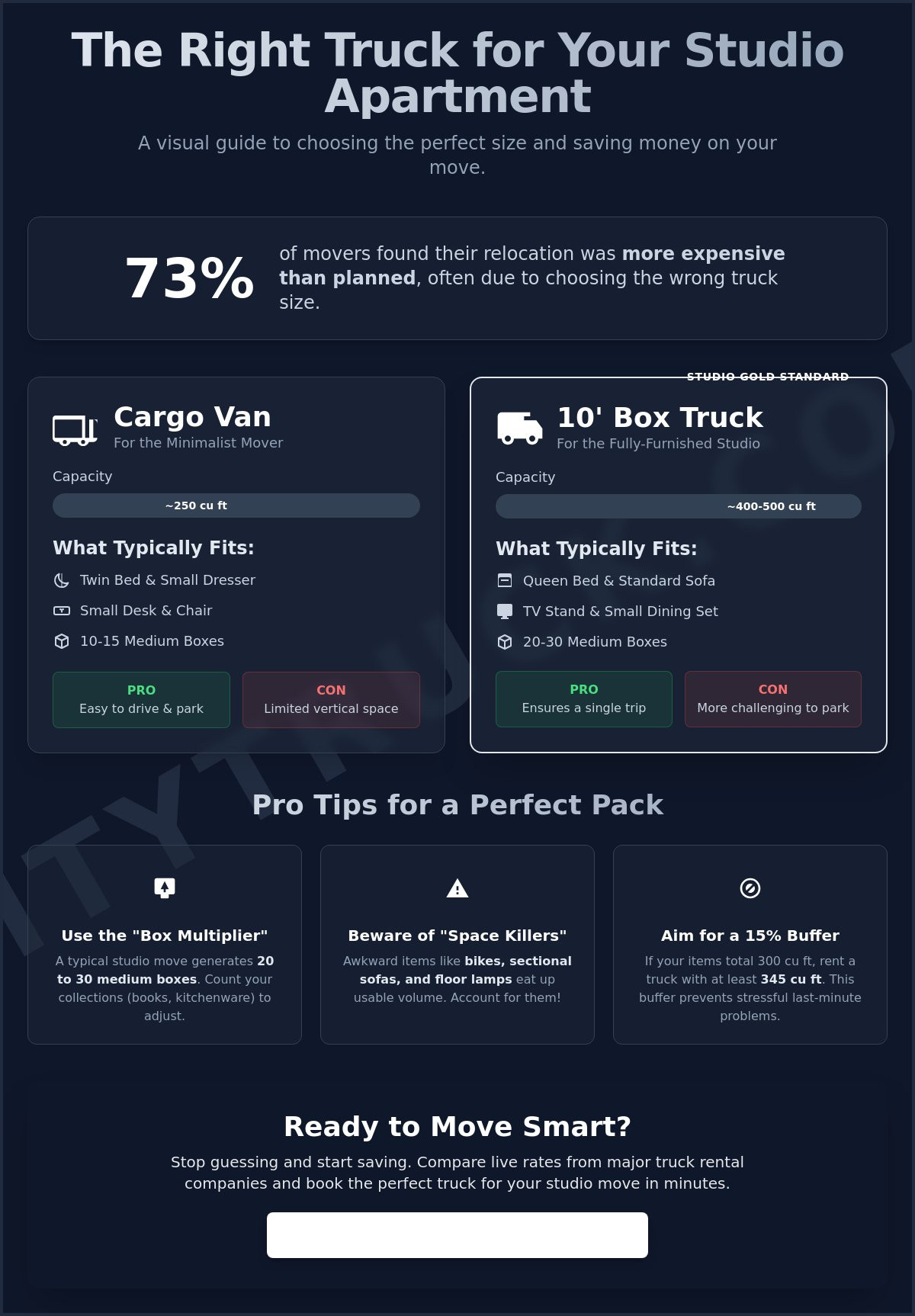
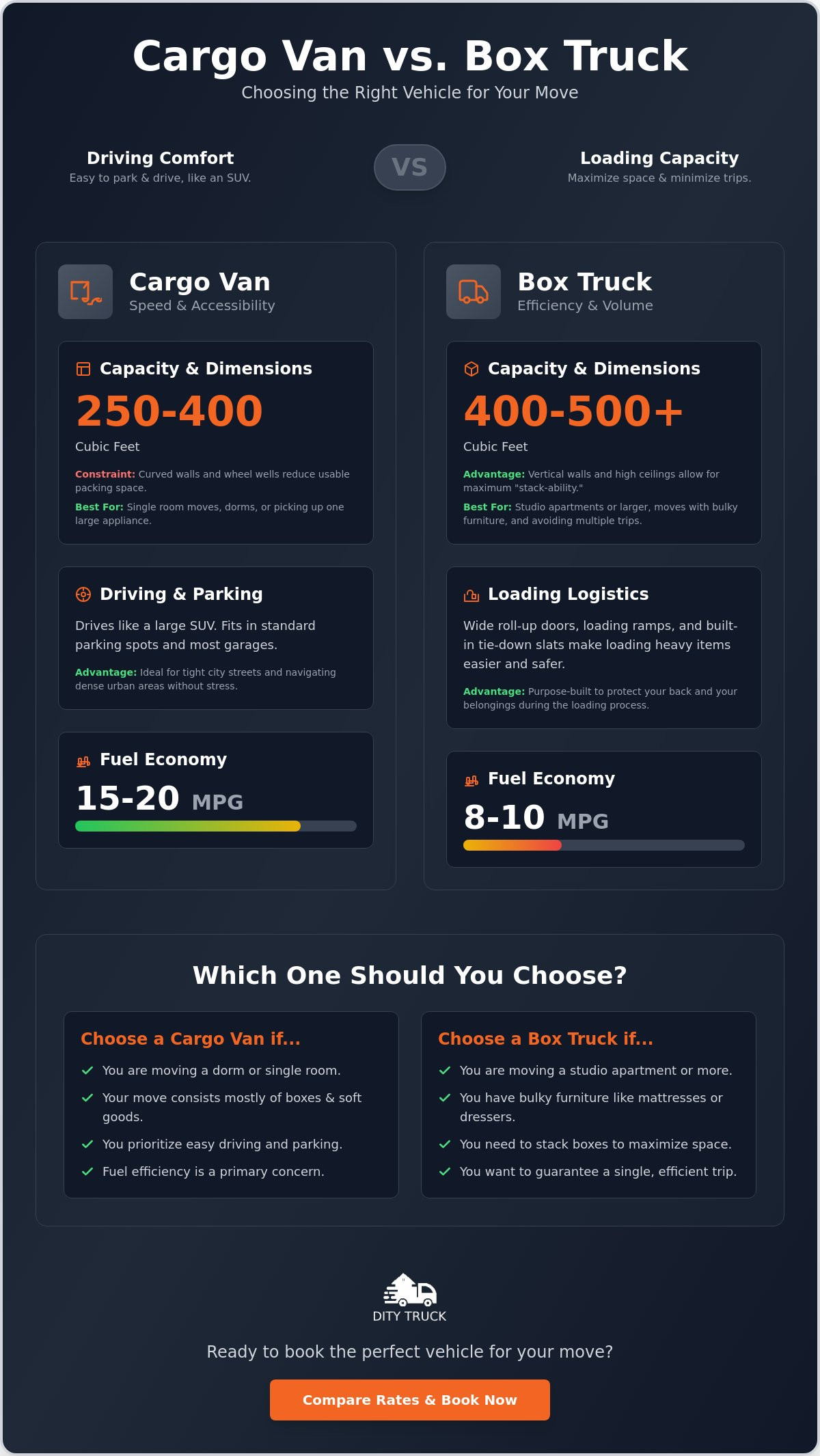
Cubic footage tells only half the story. A standard cargo van offers roughly 250 to 400 cubic feet of space. This sounds like a lot until you try to fit a queen-sized mattress and a dresser. Because vans have curved walls and wheel wells that protrude into the floor space, you lose significant usable area. This is where the debate of cargo van vs box truck gets practical. If you have bulky furniture, you hit a tipping point quickly. Once you’re moving more than a studio apartment’s worth of goods, the van becomes a liability. You end up playing a frustrating game of Tetris that wastes hours of your day.
The “stack-ability” factor is what usually settles the argument. In a van, you are limited by the roof’s curve and the narrow rear opening. You can’t safely stack heavy boxes on top of fragile furniture because the floor isn’t perfectly level. When your inventory includes more than ten large boxes and two pieces of furniture, the efficiency of a van drops. You’ll likely face the “multiple trip” trap. Making three trips in a van often costs more in fuel and time than one trip in a larger vehicle. It’s about choosing the right tool for the volume of your life.
The Small Box Truck Advantage
Stepping up to a small box truck provides 400 to 500 cubic feet of volume. This is the most popular choice for studio moves for a reason. The square shape is the hero here. Vertical walls allow you to stack boxes safely to the ceiling. Most small box trucks offer over 6 feet of interior height. This means you can stand upright while loading, which saves your back from constant crouching. You also get built-in tie-down slats. These rails allow you to strap furniture directly to the walls. This prevents expensive damage during sharp turns and sudden stops.
When a Cargo Van Wins
Vans aren’t obsolete; they’re specialized. They are perfect for dorm room transitions or picking up a single large appliance like a fridge. If your items are mostly soft goods or loose boxes, the van’s interior protects them from shifting too much. Fuel economy is another win for the van. Most 2026 cargo van models average 15 to 20 miles per gallon, while box trucks often drop to 8 to 10 miles per gallon. If you’re doing a local run with just a few items, the van is the smarter financial move. You can compare rental options in your area to see which vehicle fits your specific inventory and budget best.
Maneuverability and Driving: Overcoming the Fear of the Big Truck
Driving a vehicle larger than a standard SUV can be intimidating. The number one objection for many renters is the fear of handling a big truck. If you feel this way, you aren’t alone. The learning curve is shorter than you think. When comparing a cargo van vs box truck, the difference in maneuverability is significant but manageable. A cargo van handles like a heavy duty passenger vehicle. It has a tight turning radius. This allows you to navigate U-turns and tight corners without much thought. A box truck requires more planning. You need to take wider turns. You must also account for the extra length of the rear chassis behind the wheels.
Visibility is the biggest adjustment. In a cargo van, you usually have a rear-view mirror and windows. You can see what is directly behind you. In a box truck, that center mirror is useless. You must rely entirely on your side-view mirrors. These mirrors are oversized for a reason. They provide a wide-angle view of the lanes beside you. Before you pull off the rental lot, take five minutes to adjust them perfectly. It makes a world of difference. Proper mirror placement strips away the mystery of what’s happening in your blind spots.
Height clearance is another critical factor. Most cargo vans are under 8 feet tall. They clear most drive-thrus and residential trees. Box trucks are much taller, often reaching 10 to 12 feet. You cannot take them through standard car washes or low-clearance gas station awnings. Always keep an eye on yellow clearance signs. Striking an overhead obstacle is a common and expensive mistake for new drivers.
Parking and Residential Navigation
Vans are the kings of residential parking. They fit into standard driveways. They take up just one street spot. Box trucks are a different story. They often require two or three car lengths of space. If you’re moving into a narrow city street, check local parking regulations first. You might need to permit a loading zone. When it’s time to reverse, always use a spotter. Having a friend stand outside the vehicle to guide you prevents most rental accidents. It’s the simplest way to keep your deposit safe.
Fuel Economy and Long-Distance Costs
Physics dictates your fuel budget. A cargo van has an aerodynamic profile that cuts through the air. A box truck is essentially a giant brick on wheels. Wind resistance becomes a major factor at highway speeds. This is especially true for one way truck rentals for moving where you might be driving for hundreds of miles. Expect to pay more at the pump for the box truck. Some providers offer diesel engines. These provide better torque and slightly better mileage for heavy loads. Always ask about fuel types before you book. If you’re planning a long-distance relocation and prefer the maneuverability of a van, reviewing a detailed one way cargo van rental comparison guide can help you understand drop-off fees and mileage costs before you commit.
Loading Logistics: Ramps, Doors, and Ease of Use
Physical effort is the hidden cost of any move. The way you load your vehicle determines how tired you feel by noon. When evaluating a cargo van vs box truck, the loading height is the first thing you’ll notice. Cargo vans sit low to the ground. You can step into the back with a single natural motion. This makes them ideal for loading dozens of small boxes or light bags. Box trucks sit much higher, usually at dock height. This elevation is necessary for professional loading docks but requires a different approach for residential moves.
Floor materials also vary between these vehicles. Most cargo vans feature rubber or plastic floor liners. These are grippy and easy to wipe down if you’re moving garden equipment or messy items. Box trucks typically use heavy-duty wood or metal floors. These surfaces are designed for durability. They allow you to slide heavy furniture or appliances into place without tearing the material. If you’re moving a heavy washing machine, the smooth floor of a box truck is a major advantage.
Using a Loading Ramp Safely
A loading ramp is a standard feature on most box trucks, but it’s rare on a cargo van. This tool is a total back-saver. To use it, simply pull the handle at the rear of the truck and slide the ramp out until it locks. Lower the end to the ground. You can now use a dolly to wheel heavy items directly into the hold. Always ensure the ramp is fully secured before stepping on it. Safety is paramount. Never use a ramp in wet or icy conditions without applying extra traction. A slip on a metal ramp can lead to serious injury or damaged belongings.
Door Access and Tight Spaces
Door configuration dictates where you can park. Cargo vans usually have side-sliding doors and rear-swing doors. This setup is perfect for curbside loading. You can access your gear from the sidewalk without blocking traffic. Box trucks use rear roll-up doors. These require vertical clearance to open fully. If you’re in a crowded apartment complex with low-hanging wires or trees, the roll-up door can be a challenge. However, the wide opening of a roll-up door allows two people to load side-by-side. This speeds up the process significantly. To find the best configuration for your specific location, compare truck rental features before you commit to a booking.
Compare Rates and Book Your Rental with DityTruck
Rental pricing is a moving target. Rates shift based on local demand, holiday schedules, and current inventory levels. The cargo van vs box truck cost gap can shrink or grow in a single afternoon. DityTruck eliminates the guesswork. Our tool aggregates live data from Penske, Budget, and U-Haul in seconds. You get a transparent, side-by-side view of every available option. Comparing a budget cargo van rental price directly against box truck rates allows you to make a data-driven decision. Sometimes the extra space of a truck costs only a few dollars more than a van.
Run through a final checklist before you finalize your reservation. Double-check the pickup time to ensure it aligns with your helpers’ schedule. Verify the mileage rates for your specific route. Look for included features like loading ramps or side doors. DityTruck presents these facts upfront. We want your experience to be simple and predictable. You pick the best fit. We handle the technical details.
Finding the Best Value for 2026
Peak moving weekends are notorious for high prices and low stock. June and July are particularly competitive in the 2026 market. DityTruck helps you uncover availability that isn’t always obvious on individual brand sites. We focus on total cost transparency. Your search results include the base rate, estimated mileage fees, and insurance. No hidden hurdles. No surprise fees. Booking your vehicle several weeks in advance is the best way to secure a low rate. It guarantees your choice and provides peace of mind.
Final Decision: Van or Truck?
The choice is about the volume of your belongings. Choose a cargo van for one or two large items or a simple dorm room move. It’s the king of urban maneuverability. Step up to a small box truck for a full room or a studio apartment. The square interior and loading ramp are worth the investment for larger loads. DityTruck performs the market research so you can focus on the logistics of your move. It’s the most logical path to a successful rental. Compare 2026 rental rates for vans and box trucks now to find your perfect match.
Secure the Right Vehicle for Your Move
Choosing between a cargo van vs box truck doesn’t have to be a guessing game. You now know that vans offer car-like comfort for small pickups, while box trucks provide the vertical space and ramps needed for larger inventory. The right choice prevents multiple trips and saves your back from unnecessary strain. It’s about matching the vehicle to your specific list of belongings. Once you identify your volume, the next step is finding the best price without the hassle of visiting multiple websites.
DityTruck simplifies the booking process by aggregating data from the industry leaders you trust. You can compare top providers like Penske and Budget instantly through our platform. We offer national coverage across the United States with total transparency. You’ll see the full cost upfront with no hidden booking fees to worry about. Taking control of your logistics has never been faster or more reliable.
Compare real-time rental rates for vans and box trucks across the US today. Your stress-free moving day starts with the right rental at the right price. Get started now and cross one more task off your list.
Frequently Asked Questions
Do I need a special license to drive a small box truck?
No special license is required for most consumer rentals. You only need a standard, valid driver’s license to rent and operate a small box truck. These vehicles fall under the weight limit for commercial requirements. Always verify the specific weight rating on your rental agreement to be certain. It is a simple process that keeps your move moving forward without extra paperwork.
Is a cargo van or a box truck better for fuel economy?
Cargo vans offer significantly better fuel economy. They are more aerodynamic and lighter than their boxy counterparts. Most 2026 models average 15 to 20 miles per gallon. Box trucks usually drop to 8 to 10 miles per gallon due to wind resistance and weight. If you’re traveling a long distance with a light load, the van is the clear winner for your budget.
Can I fit a king-size mattress in a cargo van?
A king-size mattress typically won’t fit in a standard cargo van. The wheel wells and interior width are usually too narrow to lay the mattress flat. You’ll likely need to bend or force it, which can damage the springs. You should step up to a box truck to transport a king mattress safely. The square walls provide the necessary clearance for large furniture.
Does a 10-foot box truck have a loading ramp?
Most 10-foot box trucks do not include a loading ramp. This feature usually starts with 12-foot or 15-foot models depending on the rental brand. If you have heavy appliances or heavy furniture, check the specific vehicle details before you book. Relying on a 10-foot truck without a ramp means you’ll be lifting everything by hand to the dock-height floor.
Which is easier to park in a city: a van or a box truck?
A cargo van is much easier to park in urban environments. It fits in standard street spots and most residential parking garages. Box trucks require significantly more clearance and often need two full car lengths of space. If you’re moving into a crowded downtown area, the van’s smaller footprint saves you from circling the block for hours.
What happens if I rent a truck that is too small?
Renting a vehicle that is too small leads to multiple trips and higher total costs. You’ll pay more in mileage fees and double your fuel consumption. It also adds hours of labor to your day. When you’re debating a cargo van vs box truck, it’s usually safer to choose the larger option. One efficient trip is always better than two stressful ones.
Are insurance rates different for vans vs. box trucks?
Insurance rates are generally comparable for both vehicle types through the rental provider. Most companies offer similar damage waiver packages regardless of the size. However, you should check your personal auto policy first. Many standard car insurance policies exclude “box” style trucks but will cover a cargo van. Knowing this ahead of time prevents expensive surprises at the counter.
How much more does a box truck cost to rent than a van?
Box trucks typically carry a higher base rate and higher mileage fees. While a van might start at a lower daily price, the truck’s added capacity often saves you money by eliminating the need for extra trips. The price gap fluctuates based on local demand and availability. Use a comparison tool to see the total cost including mileage for your specific route before deciding. If you’re specifically planning a one-way move with a van, our one way cargo van rental guide for 2026 breaks down exactly what drop-off fees and mileage overages to expect from major providers.