The low sticker price on the side of a rental van is almost never what you actually pay at checkout. The “cheapest” rental often becomes the most expensive once you factor in mileage, fuel, and insurance. Finding the right moving truck companies for your 2026 move requires looking past the bold print on the bumper. You need a straightforward price and a vehicle that actually fits your belongings in one trip.
We understand the frustration of hidden environmental fees and the fear of picking a truck that’s two sizes too small. It’s a high-stakes task that deserves a friction-free solution. This guide simplifies your search by comparing the industry’s leading providers side-by-side. You’ll find the best rates for your specific distance and learn how to secure a confirmed reservation without the typical logistics headache. We break down the 2026 pricing, truck sizes, and terms for Penske, Budget, and U-Haul to ensure your next move is fast, transparent, and affordable.
Key Takeaways
- Compare the industry leaders side-by-side to find the best balance of reliability and service for your route.
- Match your home size to the right vehicle. Choose between compact cargo vans and massive 26-foot box trucks.
- Identify and avoid the hidden mileage and environmental fees that often inflate the base rates of most moving truck companies.
- Secure a confirmed reservation at the lowest price by comparing live rates through a centralized comparison engine.
Navigating the Moving Truck Company Landscape in 2026
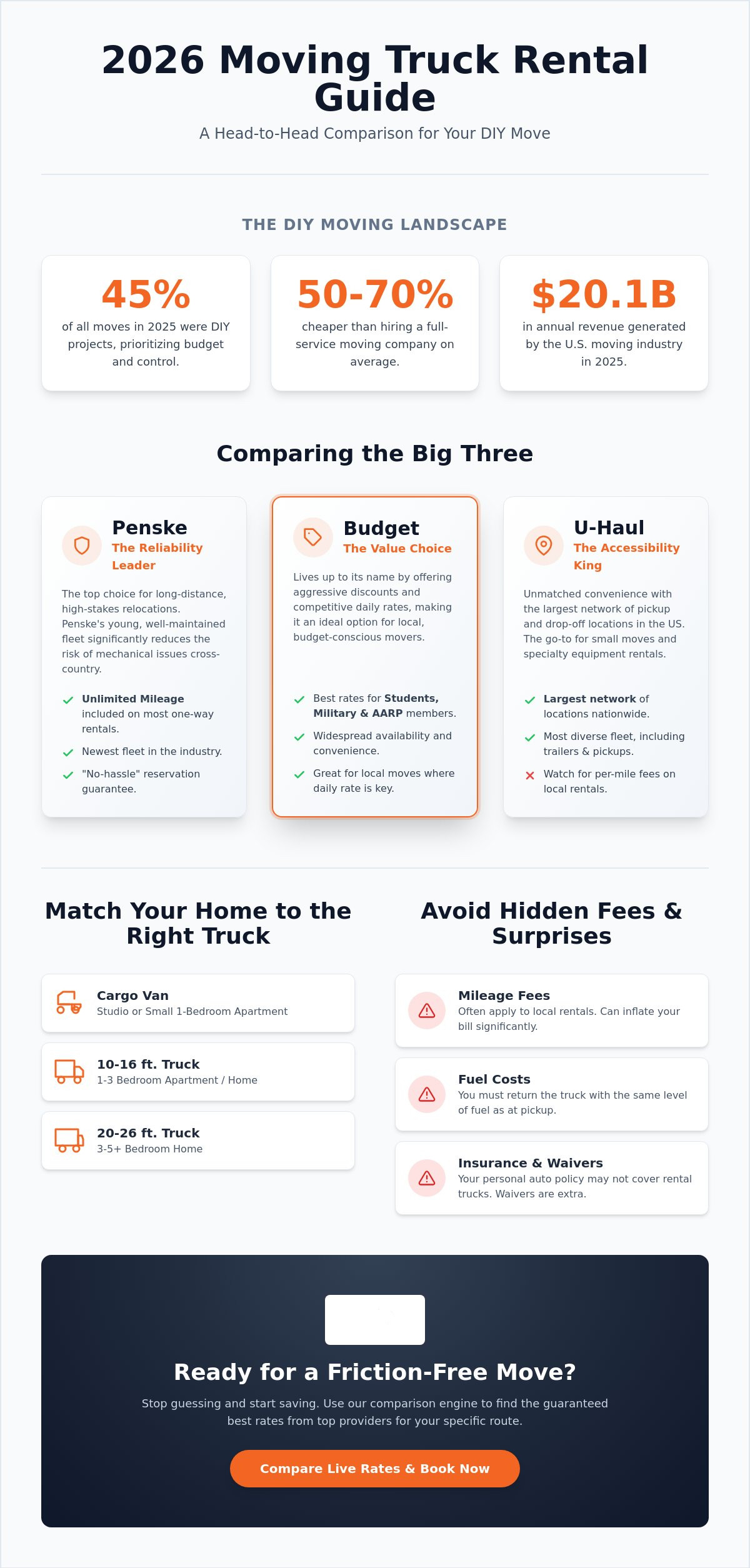
The DIY moving truck industry is built on a simple premise. You rent the vehicle. You drive the route. You save the money. It’s a self-service model designed for both residential and commercial relocations. In 2025, approximately 45% of all moves were do-it-yourself projects. This trend remains strong in 2026. Savvy consumers prioritize budget and personal control over outsourced convenience. Major national players like U-Haul, Penske, and Budget dominate the list of moving truck companies in the US market. They provide the essential infrastructure for millions of relocations each year. These providers offer everything from small cargo vans to massive 26-foot box trucks.
DIY vs. Full-Service: Why Renting a Truck Wins
Choosing between a rental and a full-service moving company usually comes down to the bottom line. DIY rentals are often 50% to 70% cheaper than hiring a professional crew. You aren’t paying for professional labor. You aren’t paying for a company’s massive insurance overhead. You also gain total control. You manage the packing. You handle the fragile heirlooms. There’s no risk of a stranger misplacing a high-value box. The timeline is yours. If you want to leave at 4:00 AM to beat city traffic, you can. You aren’t waiting for a crew to show up at a pre-scheduled window. It’s a flexible way to move on your own terms.
The State of the Rental Market in 2026
Efficiency defines the 2026 market. Contactless pick-up is now the standard across the industry. You book online. You unlock the truck with a smartphone app. It’s fast. It’s friction-free. Leading moving truck companies have also shifted toward newer, fuel-efficient fleets. This helps offset the impact of fuel costs on your total budget. However, availability fluctuates based on national migration trends. We see continued movement toward the South and West. States like Oregon and the Carolinas are seeing significant inbound relocations. If everyone is moving to the same destination, one-way rentals become scarce and more expensive. Seasonal demand also plays a massive role. Summer months and the last weekend of any month see the highest volume. Rates spike. Inventory drops. Planning ahead is the only way to guarantee a vehicle is waiting at the lot. The US moving industry generated $20.1 billion in annual revenue in 2025. This scale ensures that while demand is high, the options are plentiful if you know where to look.
Comparing the Big Three: Penske, Budget, and U-Haul
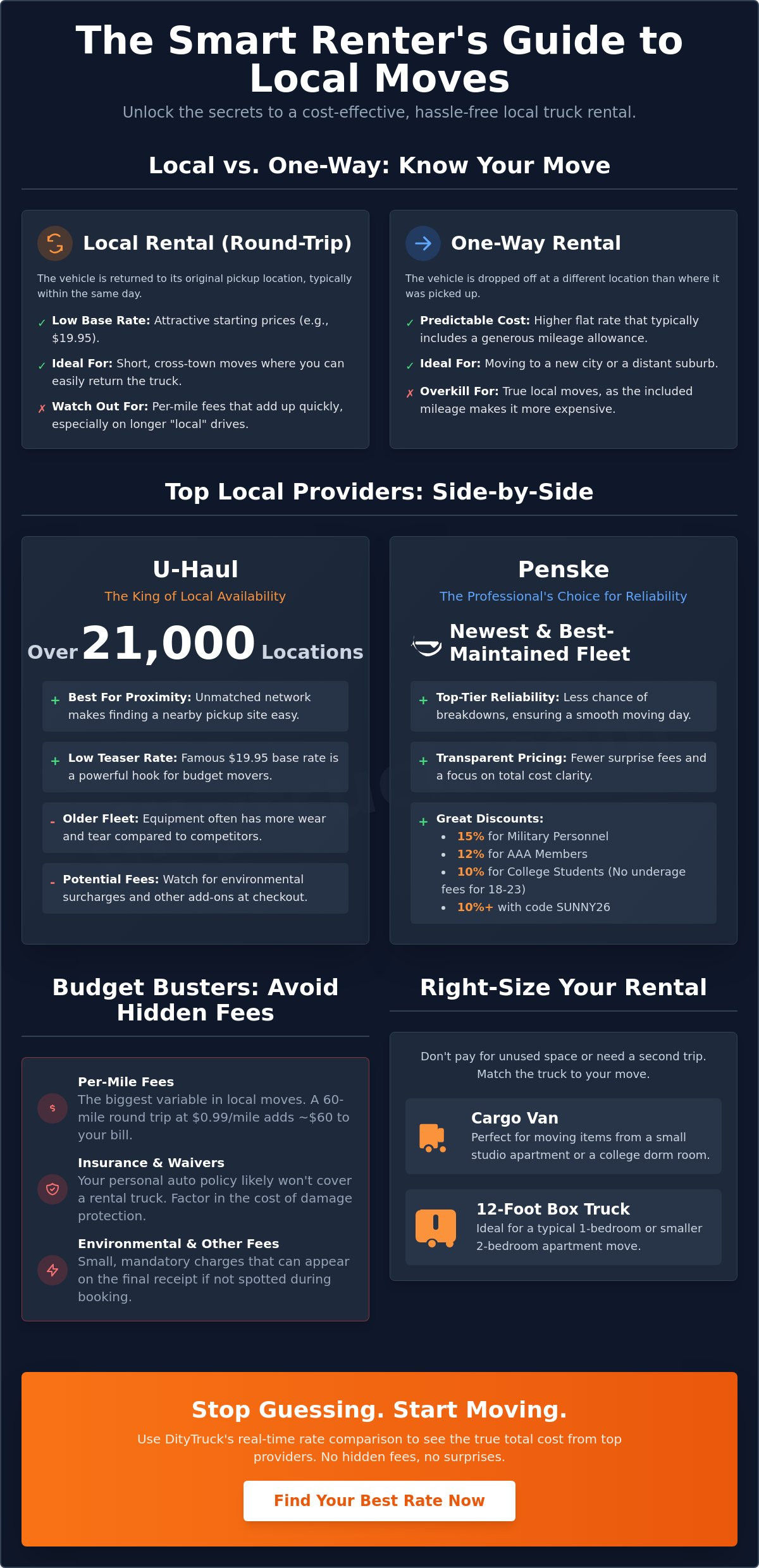
Choosing between the major moving truck companies isn’t just about the lowest price on a billboard. It’s about finding the right balance of reliability, location density, and transparent pricing. Penske, Budget, and U-Haul each serve a different type of mover. Industry analysis of the best moving truck rental companies shows that your choice should depend on your total mileage and equipment needs. Some prioritize flat-rate simplicity. Others focus on accessibility. Understanding these differences before you book saves you both time and money.
Penske Truck Rental: The Reliability Leader
Penske is the preferred choice for long-distance relocations. They maintain the youngest fleet in the industry. This focus on newer vehicles significantly reduces the risk of mechanical failure during a cross-country trip. Their pricing model is exceptionally transparent for one-way moves. Most long-distance quotes include unlimited mileage. This eliminates the stress of calculating every turn. For 2026, Penske offers a “no-hassle” reservation guarantee that ensures your vehicle is ready at the exact time and location you requested. This reliability makes them a top contender for high-stakes moves.
Budget Truck Rental: The Value Choice
Budget lives up to its name by offering aggressive discounts for specific groups. Students, military personnel, and AARP members often secure the best rates here. It’s an ideal option for local moves where the daily base rate is the most important factor. While their fleet might be slightly older than Penske’s, their widespread availability makes them a convenient second choice. If you’re deciding between the two most common value brands, check out our U-Haul vs. Budget Truck Rental: The Definitive 2026 Comparison Guide. You can also compare real-time pricing to see which provider fits your specific budget today.
U-Haul: The Accessibility King
U-Haul is the standard for local, small-scale DIY moves. They own the largest network of pick-up and drop-off locations in the United States. You can find a U-Haul dealer in nearly every neighborhood. Their fleet is the most diverse. It features specialized trailers, towing equipment, and pickup trucks. This variety allows you to rent exactly what you need without paying for unused space. While their base rates start low, remember that local rentals usually include a per-mile fee. This makes them perfect for short trips but requires careful planning for longer routes. Their sheer volume of locations ensures you’ll never have to drive far to return your equipment.
Choosing Your Vehicle: From Cargo Vans to 26-Foot Box Trucks
Selecting the right size is the most critical decision in the rental process. Most moving truck companies offer a standard range of vehicles from small vans to massive box trucks. If you pick a truck that is too small, you’re stuck making multiple trips. This doubles your fuel costs and wastes hours of time. If it’s too large, you pay for empty space and risk furniture shifting during transit. You must also consider payload capacity. This is the maximum weight of the cargo you can safely carry. Heavy items like pianos or solid oak dressers add up quickly. Overloading a vehicle leads to safety risks and potential fines. For a full understanding of your rights and safety standards, consult the FMCSA’s Protect Your Move guide before finalizing your choice.
Small Moves: Cargo Vans and Pickups
Cargo vans and pickups are the best fit for studio apartments, college dorms, or single-item deliveries. They are much easier to maneuver in narrow city streets and tight apartment parking lots. You’ll also enjoy significantly better fuel economy than a box truck. While they offer high availability at most locations, their cubic footage is limited. They don’t typically come with loading ramps. You’ll be lifting items directly into the back. This makes them ideal for boxes but difficult for heavy appliances.
Medium Moves: 10-foot to 16-foot Box Trucks
The 10-foot to 16-foot range is the “sweet spot” for one to two-bedroom apartments. These trucks often feature low-loading decks and wide pull-out ramps. This makes walking heavy furniture into the box much simpler. Sixteen-foot trucks are the most popular choice for small families because they balance capacity with drivability. They provide enough room for a queen-sized bed, a sofa, and several dozen boxes without feeling like a commercial semi-truck. They are the standard for most local residential moves.
Large Moves: 22-foot and 26-foot Giants
Large 22-foot and 26-foot trucks are designed for three to five-bedroom homes and long-distance hauls. They maximize cubic footage for large appliances, sectional sofas, and heavy dining sets. Most personal rentals under 26,000 pounds do not require a commercial driver’s license. However, always verify specific weight regulations with your provider. These vehicles are tall. You must be mindful of low-hanging branches and bridge clearances. If you’re planning a massive relocation, check out our Cost to Rent a 26 Foot Moving Truck: 2026 Pricing & Comparison Guide to see how these giants compare in price. These trucks are essential for keeping your entire life in one single trip.
Avoiding Hidden Fees: What the Major Companies Don’t Tell You
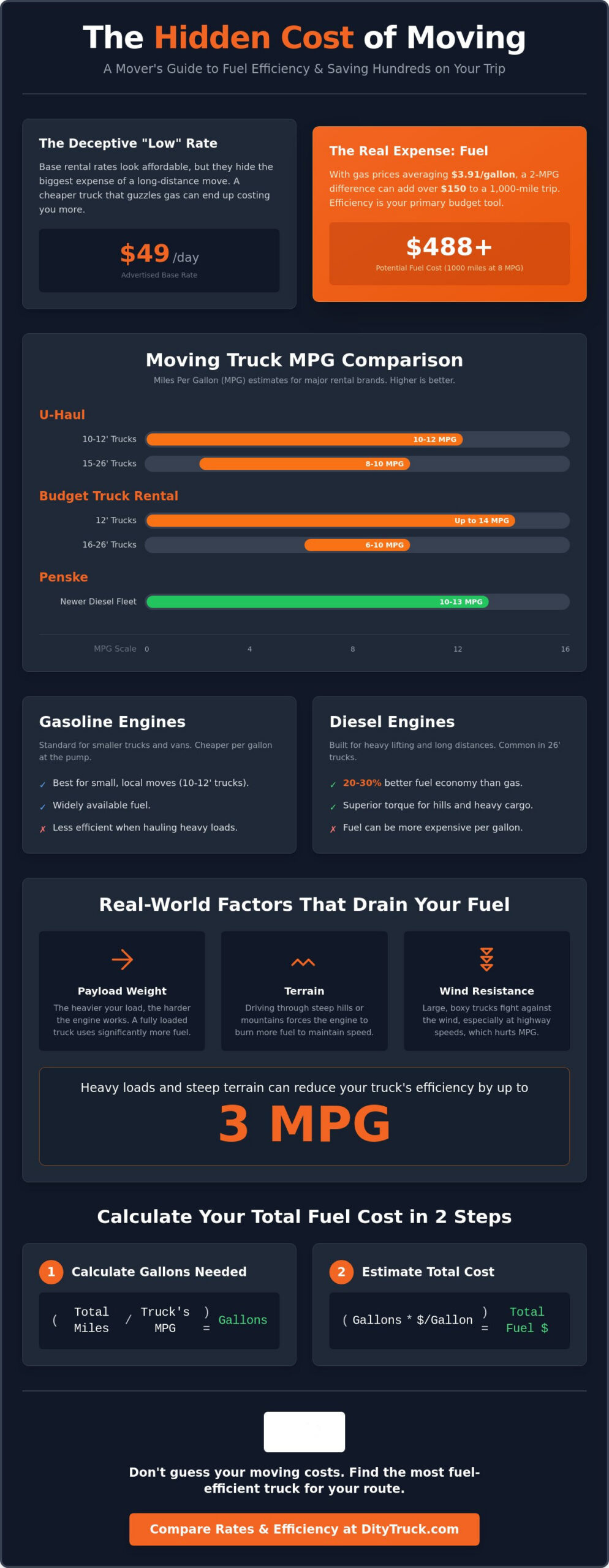
The advertised daily rate is just the starting point. It rarely represents the final bill. Most moving truck companies use a tiered pricing structure that includes several mandatory add-ons. You need to calculate the total cost for the duration of your rental. This means looking past the $19.95 stickers on the bumper. A “cheap” rental quickly becomes expensive once you add mileage and insurance fees. Finding a transparent provider is the only way to protect your budget. You want clarity, not a surprise bill at the drop-off lot.
Mileage and Environmental Fees
Local rentals usually feature a low daily rate plus a per-mile charge. These mileage fees often range from $0.59 to $1.99 per mile. If you’re making multiple trips across town, this cost can easily double your initial estimate. Long-distance quotes are typically flat-rate packages. They include a set number of miles and days based on your route. Most companies also tack on an “environmental fee” of $5 to $15. This covers the cost of hazardous waste disposal and emissions compliance. Map your route exactly before you book. Overestimating your distance by even 20 miles can lead to unnecessary overages. Accuracy saves money.
Insurance and Liability Coverage
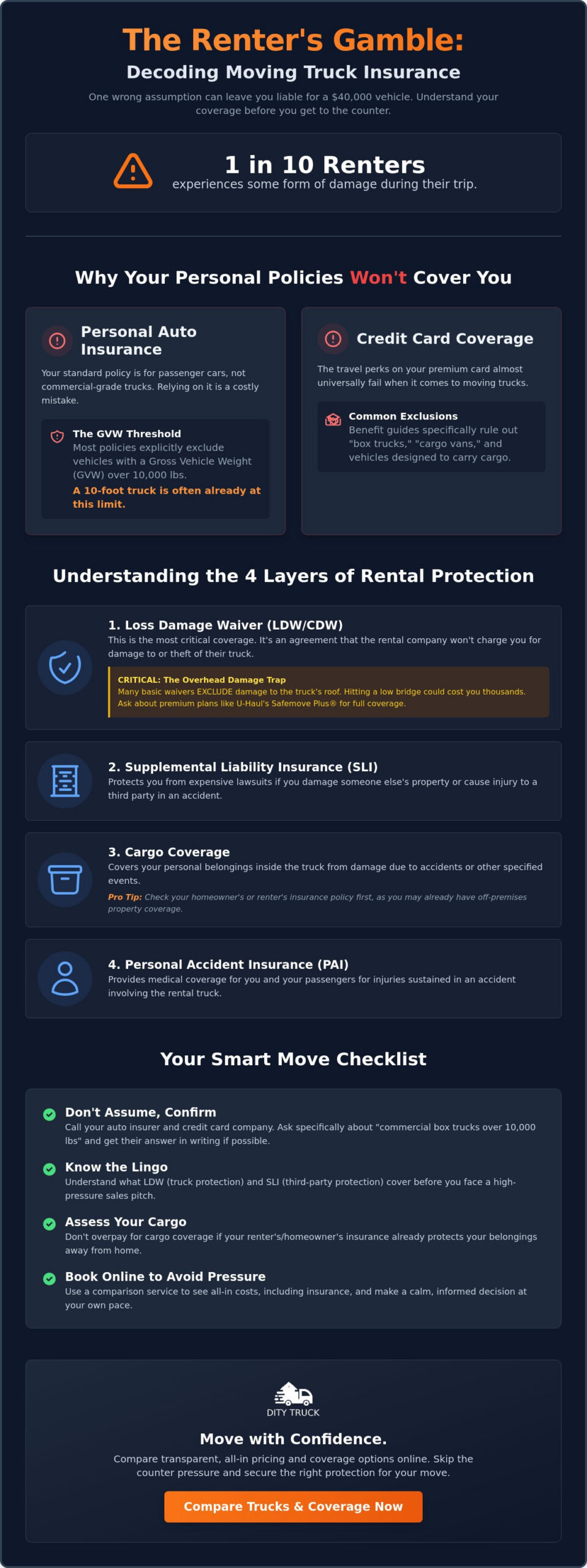
Don’t assume your personal auto policy or credit card covers a box truck. Most standard policies exclude commercial vehicles over a certain weight. You likely need supplemental coverage from the moving truck companies you choose. Damage waiver protection usually costs between $15 and $40 per day. It’s an optional fee, but it provides massive relief if an accident occurs. Without it, you are personally liable for the full value of the truck. Supplemental liability and cargo protection are also available for an extra cost. Buy the coverage if you want total peace of mind during a high-stakes move. It’s a small price for financial safety.
Equipment and Add-on Costs
Accessories aren’t free. Furniture dollies and appliance hand trucks cost between $10 and $15 per day. Furniture pads are rented by the dozen. These small costs add up fast. Late return penalties are even more aggressive. Expect to pay $20 to $50 per hour if you miss your drop-off window. Always communicate early if you’re running behind. Finally, check the cleaning policy. A simple 10-minute sweep of the truck bed prevents a $25 cleaning fee. To see the total price before you book, compare all-in rates instantly. This ensures your reservation stays within your actual budget.
How to Compare and Book Your Moving Truck Rental Instantly
The days of jumping between browser tabs are over. DityTruck serves as your centralized comparison engine for 2026. It brings the leading moving truck companies together in one place. You see Penske, Budget, and other top providers on a single screen. This eliminates the confusion of separate quotes. It strips away the complexity of logistics. You get the shortest path to a confirmed reservation. Checking individual sites is slow. It leads to errors. We provide a friction-free solution for your next relocation. For more details on the industry as a whole, check out our Moving Truck Rental: The Complete 2026 Comparison & Booking Guide. This resource helps you understand the broader market before you dive into specific rates.
Real-Time Rate Comparison
DityTruck aggregates data to show current 2026 market rates. This is not static information. It is live. You see the total estimated cost instead of just the daily base rate. We include the mileage and environmental fees that other sites hide until the final checkout screen. This addresses the common fear of hidden insurance or mileage costs. You can filter results by truck size. You can filter by pick-up location. This ensures maximum efficiency. You find the exact vehicle you need at the price you expect. It is financial honesty in action. You gain clarity. You gain relief. The tool does the heavy lifting so you don’t have to. It acts as a savvy consumer advocate for your budget.
Securing Your Reservation
The 3-step process is built for speed. First, you enter your move details. Second, you compare live rates side-by-side. Third, you reserve. It is that simple. Booking through a comparison platform ensures you get the best available rate across the entire market. You don’t have to wonder if a better deal exists elsewhere. You see every option on one page. The reservation process is streamlined and digital-first. It provides the reassurance you need for a high-stakes task. It is an organized way to handle a move. Moving shouldn’t be a gamble. Using a centralized engine provides a sense of confident simplicity. You are no longer guessing about which moving truck companies offer the best value for your specific distance. Action leads to results. Compare today. Save on your move tomorrow.
Find your perfect moving truck rental today.
Secure Your Move with Confidence
You now have the tools to navigate the 2026 rental market. Remember that the lowest advertised rate is rarely the final price. Factor in mileage and insurance to find the true winner among moving truck companies. Matching your vehicle size to your home inventory is equally vital. It ensures you complete the job in one trip without paying for wasted space. Efficiency is the goal. Transparency is the requirement.
DityTruck simplifies this entire process. We provide aggregated rates from Penske, Budget, and other market leaders on a single screen. You get real-time 2026 availability and a no-nonsense booking process. No more jumping between tabs. No more hidden surprises at the counter. It’s a friction-free solution for a high-stakes task. Stop guessing and start saving.
Compare Real-Time Rates from Top Moving Truck Companies
Take control of your logistics today. A stress-free move is just a few clicks away. You’ve got this.
Frequently Asked Questions
Which moving truck company is the cheapest for local moves?
U-Haul typically offers the lowest advertised base rates for local trips. These rates often start between $19.95 and $39.95 per day. However, your final cost depends on the per-mile fee, which usually ranges from $0.99 to $1.29. Budget is a strong alternative if you can apply one of their frequent promotional discounts for local rentals.
What is the best moving truck company for long-distance, one-way rentals?
Penske is the industry leader for long-distance, one-way moves. They provide unlimited mileage on one-way rentals, which eliminates the stress of overage charges. Their fleet is also the youngest in the market. This reliability is crucial when you are driving 1,000 miles or more across state lines.
Do I need a special license to drive a 26-foot moving truck?
No, you don’t need a Commercial Driver’s License (CDL) for a standard 26-foot rental. A government-issued driver’s license is sufficient for vehicles weighing up to 26,000 pounds. Most moving truck companies design their largest consumer trucks to stay exactly at or below this weight limit for easy accessibility.
What are the most common hidden fees with moving truck companies?
The most frequent “surprise” costs include environmental fees, mileage charges, and fuel surcharges. Environmental fees usually cost between $5 and $15 per rental. You should also expect to pay for insurance coverage and equipment like furniture pads or dollies. These items are almost never included in the base daily rate.
Is Penske better than U-Haul for reliability?
Penske generally scores higher for mechanical reliability because they maintain a newer fleet. They retire trucks more frequently than other moving truck companies. U-Haul focuses on accessibility and has the most locations. If you want the lowest risk of a breakdown on a long trip, Penske is the more reassuring choice.
How far in advance should I book my moving truck for a 2026 move?
You should book your truck at least two to four weeks in advance. If you’re moving during the summer peak or on the last weekend of the month, aim for two months. Early booking ensures you get the specific truck size you need and locks in a lower rate before inventory drops.
Can I tow my car behind a rental moving truck?
Yes, you can tow your vehicle using a tow dolly or a car carrier. Most major providers offer these as add-on rentals at the time of booking. Always confirm that your specific truck has the necessary towing capacity and hitch for your car’s weight before you head out.
Does Budget Truck Rental offer discounts for students or AAA members?
Yes, Budget is well-known for offering discounts to students, AAA members, and military personnel. These promotions can significantly lower your base rate. You must present a valid membership card or student ID at the time of pick-up to verify your eligibility and secure the lower price.