The lowest advertised daily rate for a large vehicle is often the most expensive way to move your home. While a cheap base price looks good on a billboard, your total 26 foot moving truck rental cost often hinges on mileage, fuel, and environmental fees that don’t appear until the final checkout. You need a truck that fits your entire four bedroom house in one trip without draining your budget on hidden surcharges. It’s frustrating to realize mid-move that the “deal” you found doesn’t include the ramp or towing capacity you actually required for the job.
We know the stress of staring at a mountain of boxes and wondering if they’ll all fit. You want a clear, honest price and a vehicle that won’t break down halfway across the state. This guide helps you master the logistics of renting the industry’s largest moving truck and compares real-time rates from top providers in seconds. We’ll walk through exactly how to verify space requirements, avoid common fee traps, and secure a reliable reservation for your 2026 move. You’ll get the clarity you need to drive away with confidence and keep your moving day on schedule.
Key Takeaways
- Confirm if a 26-foot truck is the right size for your 3-5 bedroom home to avoid running out of space mid-move.
- Identify the lowest total 26 foot moving truck rental cost by comparing base rates, mileage fees, and fuel requirements across top providers.
- Operate these large vehicles confidently with the knowledge that a commercial driver’s license is not required for standard rentals.
- Avoid availability issues and high prices by booking your reservation four weeks in advance and choosing a mid-week move date.
What is a 26-Foot Moving Truck and Who Needs One?
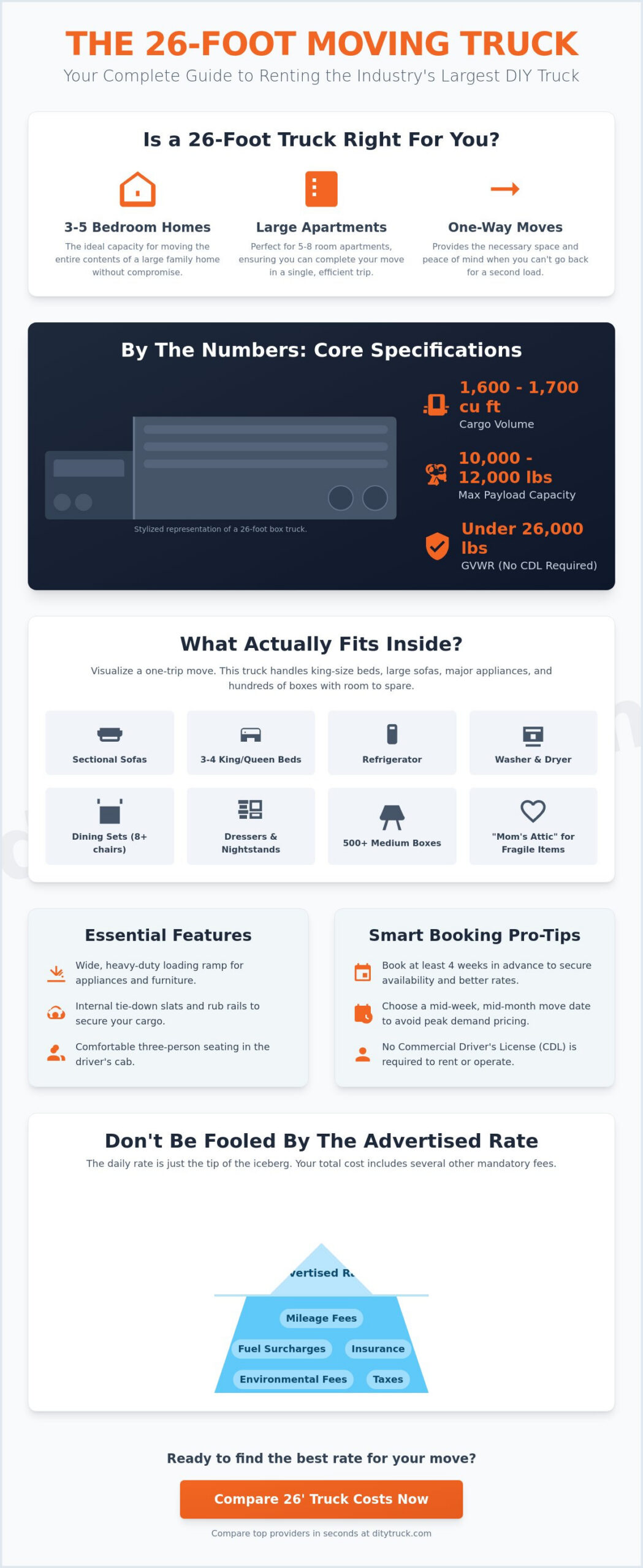
The 26-foot truck is the heavy hitter of the DIY rental fleet. It’s the largest vehicle available for individuals who want to manage their own relocation without hiring a full-service crew. This type of box truck is designed to hold the contents of a three to five bedroom home with ease. If you’re moving a large apartment with five to eight rooms, this is likely the only size that will prevent you from making multiple trips. It features a massive cargo box that stays completely separate from the driver cab. This design maximizes every inch of storage volume while keeping the driving experience manageable. Understanding the 26 foot moving truck rental cost starts with knowing that you are paying for the highest capacity available in the consumer market.
Most of these trucks come equipped with heavy-duty loading ramps and professional-grade towing hitches. This allows you to transport your family vehicle behind the truck, which saves on fuel and driver stress. It’s a logistical powerhouse built for efficiency. Choosing this size means you don’t have to leave furniture behind or play a high-stakes game of Tetris with your boxes. It provides the peace of mind that comes with extra space.
Core Dimensions and Weight Capacity
Space is the primary reason to choose this model. Cargo volume typically ranges from 1,600 to 1,700 cubic feet depending on the specific rental brand. This is enough room for roughly 500 medium-sized boxes or a mix of heavy appliances and oversized furniture. These trucks handle massive loads. You can expect a payload capacity between 10,000 and 12,000 lbs. The Gross Vehicle Weight Rating (GVWR) is the maximum legal weight of the vehicle including its own weight plus fuel, passengers, and cargo. For this class, the GVWR is usually capped at 26,000 lbs to ensure it remains accessible to standard license holders. Calculating your 26 foot moving truck rental cost requires a clear look at these specific capabilities to ensure you aren’t overpaying for more weight than you need.
Standard Features for Large-Scale Relocations
These vehicles aren’t just big; they’re functional. They feature wide loading ramps, usually two to three feet wide, that are specifically designed to handle heavy appliances and hand trucks. Inside the box, you’ll find tie-down slats and rub rails along the walls. These are essential for securing heavy furniture during transit and preventing damage on long hauls. The cab is built for comfort during long drives. It usually offers three-person seating. This makes it easy to bring along moving help or family members without needing a separate chase car. The combination of high-volume storage and practical loading tools makes the 26-foot truck the gold standard for large residential moves.
Capacity Guide: What Actually Fits in a 26-Foot Box?
Visualizing 1,700 cubic feet isn’t easy. Think of a large master bedroom filled floor-to-ceiling with your belongings. That’s the volume you get with this vehicle. It’s the ultimate solution for “one-trip” local moves. Making multiple trips with a smaller truck doubles your fuel expenses and wastes your time. When calculating your 26 foot moving truck rental cost, remember that a single haul is almost always the most efficient path. This size provides a critical safety net for one way truck rentals for moving where you can’t go back for a second load. You can comfortably fit 15+ large boxes, 30+ medium boxes, and every major appliance you own. It takes the guesswork out of packing.
Room-by-Room Inventory Breakdown
This truck handles the heaviest contents of a 3-5 bedroom home. In the kitchen, you’ll have space for a full-size refrigerator, stove, and dishwasher, plus a large dining room set with eight chairs. The living room section easily accommodates a massive sectional sofa, a full entertainment center, and multiple coffee tables. For the sleeping quarters, expect to fit three to four king or queen mattress sets along with several heavy dressers and nightstands. It’s built for volume. You can compare rental options to see which provider offers the specific dimensions that match your furniture list. Most renters find they have space left over for garage tools and outdoor patio sets.
Managing Oversized and Fragile Items
Standard household goods aren’t the only things that fit. This vehicle provides safe transport for specialty items like pianos, pool tables, or large workshop equipment. You should use vertical stacking strategies to maximize the 8-foot ceiling height effectively. Place heavy appliances at the bottom. Stack lighter boxes on top. Most of these trucks include “Mom’s Attic.” This is the overhead compartment located above the driver’s cab. Use it for fragile items or light linens to keep them away from heavier furniture. Use the built-in tie-down slats to secure these items. This prevents shifting during turns. Despite the massive size, these vehicles do not require a special license for personal use. It’s a professional-grade tool that anyone can drive. Factoring these features into your total 26 foot moving truck rental cost ensures you get the best value for every cubic foot of space.
26-Foot Truck Comparison: Penske vs. Budget vs. U-Haul
Choosing the right provider is about more than just the sticker price. Your total 26 foot moving truck rental cost is influenced by fuel efficiency, equipment reliability, and physical labor requirements. Some rental companies stand out for long-distance hauls, often maintaining newer fleets and offering diesel engine options. Diesel provides the torque needed to climb hills when the truck is fully loaded with 10,000 lbs of furniture. Other providers are frequently the value leaders for local 26-foot rentals, offering consistent discount codes for students, military members, and AAA users that can drop the price significantly. Another type of rental service takes a different approach, with trucks featuring the lowest deck height in the industry. This makes walking up the ramp with a heavy dresser much easier for DIY movers. Comparison is vital because availability for this specific size fluctuates wildly by region. You don’t want to settle for a smaller truck just because you didn’t check every provider in your area.
Loading Technology and Deck Height
The physical toll of moving a five-bedroom house is immense. Some providers offer proprietary ramp designs that sit much closer to the ground than others. Traditional pull-out ramps used by many rental companies are often steeper. A high deck height increases the incline of the ramp. This adds significant strain to your knees and back during a 10-hour loading process. You want the shallowest angle possible to save your energy for the drive. While hydraulic lift-gates are common in commercial fleets, they are extremely rare in consumer rentals. You will almost certainly be using muscle power and a ramp. Choosing a truck with a lower deck height is a smart way to reduce the risk of injury and exhaustion. It turns a grueling day into a manageable task.
Towing and Accessory Compatibility
Most 26-foot trucks are built on heavy-duty chassis rated for towing. This allows you to attach a car carrier or a tow dolly to the back. You can transport your personal vehicle behind the truck safely without needing a second driver. Many rental companies offer robust towing packages that integrate directly with their largest vehicles. Car carriers keep all four wheels off the ground. This is the safest way to move a car over long distances. Tow dollies are a more affordable option for shorter trips. Before you book, verify that the specific truck you are renting is compatible with your vehicle’s weight. For a full list of necessary gear and safety checklists, see our guide on moving truck rental to ensure you have everything you need. Securing these accessories early is essential because they often sell out during peak moving seasons.
The Logistics of Driving and Operating a 26-Foot Rental
Driving the largest truck in the fleet is a significant responsibility, but it shouldn’t be a source of anxiety. You do not need a Commercial Driver’s License (CDL) to operate these vehicles. Federal regulations allow individuals to drive trucks with a Gross Vehicle Weight Rating under 26,001 lbs using a standard driver’s license. While the truck looks like a professional semi, the controls are designed for consumer ease. Most models feature automatic transmissions and power steering to make the experience feel similar to driving a large SUV. Understanding these operational basics is just as important as knowing your total 26 foot moving truck rental cost.
You must remain constantly aware of your vertical footprint. These trucks stand between 12 and 13 feet tall. Standard passenger cars never have to worry about low-hanging tree limbs, apartment complex carports, or historic bridges. You do. Always look for clearance signs at gas stations and hotel entrances. Striking an overhead object is a leading cause of rental damage and is often excluded from basic insurance policies. Keep a mental note of your height to avoid costly repairs and delays.
Navigating residential streets requires a patient strategy. You need to take wide turns to clear curbs, fire hydrants, and parked cars. This vehicle does not “pivot” like a car; the rear wheels follow a much tighter path than the front. Always use a dedicated spotter when backing into a driveway or parking spot. Your side mirrors are excellent, but they have blind spots that a second set of eyes can cover. Clear communication with your helper prevents minor scrapes and keeps the move moving forward. Before you hit the road, compare rental rates and truck specs to find a model that fits your comfort level and local terrain.
Fuel Economy and Long-Distance Costs
Fuel is a major variable in your 26 foot moving truck rental cost. These massive vehicles typically get between 7 and 10 miles per gallon. This range depends heavily on how much weight you’ve packed and whether you are driving through flat plains or steep mountains. To estimate your fuel costs for a 500-mile move, divide the total distance by 8 MPG and multiply that number by the average price of fuel along your route. Diesel engines are a superior choice for long hauls through mountain passes because they provide more torque. Gasoline models are more common for local moves and are easier to refuel at standard neighborhood stations.
Safety Requirements and Insurance
Most rental companies require the primary driver to be at least 18 years old. Some providers may increase this limit to 21 or 25 for their largest 26-foot models. Insurance is essential for a vehicle of this scale. Supplemental Liability Insurance (SLI) protects you from third-party claims if an accident occurs. A Collision Damage Waiver (CDW) is vital because it relieves you of financial responsibility for damage to the truck itself. Personal Accident Insurance (PAI) provides medical coverage for you and your passengers. Weigh stations usually don’t require consumer rentals to stop. However, states like California or Kansas may require all trucks to pull in regardless of use. Always watch the roadside signs and follow the instructions for “All Trucks” to avoid unnecessary fines.
Finding the Best 26-Foot Moving Truck Rental Cost
Securing a low 26 foot moving truck rental cost requires a proactive strategy. These massive vehicles are the first to sell out during peak moving seasons. You should book your reservation at least two to four weeks in advance to guarantee availability. Waiting until the last minute often leads to surge pricing or being forced into a smaller truck that requires multiple trips. Timing your move correctly also saves money. Mid-week rentals are significantly cheaper than weekend bookings because demand drops when people are at work. You can often find “Pay Now” discounts that shave 10 to 15 percent off the base rate just by handling the transaction upfront. These small shifts in planning lead to major savings at checkout.
Comparison is your strongest tool against hidden fees. Every provider calculates their total price differently. Some might offer a low daily rate but charge more for insurance or equipment. Others might have a higher base price that includes unlimited mileage. By looking at the total cost rather than just the daily fee, you avoid the sticker shock that often happens on return day. It’s about finding the most efficient path for your specific route and load size.
One-Way vs. Local Pricing Models
Pricing models shift depending on your destination. Local moves often feature low daily rates but come with higher per-mile fees. This works well for short distances. If you are moving under 100 miles, this is usually your financial sweet spot. For interstate or cross-country hauls, you’ll encounter one-way pricing. This includes “drop-off” fees that cover the cost of returning the vehicle to a high-demand area. While the upfront quote looks higher, these packages often include a set number of miles and days. This provides more predictable total costs for long-distance relocations and eliminates the worry of per-mile surcharges.
Using DityTruck to Compare Rates Fast
Comparing rates doesn’t have to be a manual chore. DityTruck allows you to skip individual site searches by presenting side-by-side data from Penske, Budget, and other top providers. You can filter results specifically for 26-foot inventory. This ensures you only see the vehicles capable of handling your 5-bedroom home. Seeing every local option in one dashboard lets you spot the lowest 26 foot moving truck rental cost in seconds. Once you find the right price, you can lock in the rate immediately to avoid seasonal price hikes. It’s the fastest path to a stress-free booking. You get the transparency you need to make a confident decision without the typical logistical headaches.
Secure Your High-Volume Move Today
Managing a large-scale relocation requires the right equipment and a clear budget. You now know that a 26-foot truck offers the maximum capacity needed for a 3-5 bedroom home. This size ensures you avoid the physical and financial drain of multiple trips. By booking mid-week and verifying clearance heights, you’ve already bypassed the most common hurdles of DIY moving. Finding a competitive 26 foot moving truck rental cost is the final step in taking control of your logistics.
Don’t let hidden fees or limited availability derail your schedule. You can access real-time pricing from top national brands and the largest selection of 26-foot inventory nationwide in one place. We provide total transparency with no hidden reservation fees to keep your move simple and honest. Compare 26-foot truck rental rates and book your move today at DityTruck. You have the tools and the knowledge to make this your most efficient move yet. Get started now and drive away with peace of mind.
Frequently Asked Questions
Do I need a special license to drive a 26-foot rental truck?
No, you do not need a Commercial Driver’s License (CDL) to drive a 26-foot rental truck for personal use. Most rental companies keep their Gross Vehicle Weight Rating (GVWR) at or below 26,000 lbs to comply with federal regulations for standard license holders. One exception is Quebec, Canada, where a Class 3 license is required for this specific size. Always check local regulations if you are moving across international borders.
How much gas does a 26-foot moving truck use per mile?
You can expect a 26-foot moving truck to get between 7 and 10 miles per gallon. This efficiency depends on your total cargo weight and the terrain of your route. Heavy-duty diesel engines often perform better than gasoline models when climbing mountain passes with a full load. Factoring this consumption into your 26 foot moving truck rental cost is essential for an accurate moving budget.
Can I tow my car behind a 26-foot rental truck?
Yes, you can tow your personal car behind most 26-foot rental trucks using a car carrier or a tow dolly. These trucks are built on heavy-duty chassis specifically designed to handle the extra weight of a vehicle. Ensure your rental includes a compatible hitch and that you’ve practiced backing up with a trailer before hitting the road. This setup is a common way to save the expense of a second driver.
How many rooms will a 26-foot truck actually hold?
A 26-foot truck is designed to hold the contents of a 3-5 bedroom home or a large apartment with 5-8 rooms. With approximately 1,600 to 1,700 cubic feet of space, it can accommodate over 45 boxes and all major household appliances. It is the best choice for one-trip local moves where you want to avoid the time and expense of multiple hauls between properties.
Is a 26-foot truck too big for a first-time driver?
While the size is intimidating, these trucks are manageable for first-time drivers who remain patient and focused. They feature automatic transmissions and power steering to simplify the driving experience. The biggest challenges are the wide turning radius and the increased braking distance required for a heavy load. Use a spotter for all backing maneuvers to prevent accidents in tight residential areas or parking lots.
What is the height clearance of a 26-foot box truck?
The standard height clearance for a 26-foot box truck is between 12 and 13 feet. You must watch for low-hanging tree limbs, apartment carports, and historic bridges that are not designed for commercial-sized vehicles. Striking an overhead object is a frequent cause of damage and can significantly increase your 26 foot moving truck rental cost due to expensive repair fees and insurance claims.
Does a 26-foot truck have a loading ramp or a lift gate?
Most consumer 26-foot rental trucks are equipped with a pull-out or EZ-load ramp rather than a hydraulic lift gate. These ramps are usually two to three feet wide and are designed to handle heavy appliances and hand trucks. Hydraulic lift gates are common in commercial freight but are rarely found in the standard DIY rental fleet. Check your specific provider to confirm which loading technology they offer before booking.
Are there hidden fees when renting the largest moving truck?
The most common additional costs include mileage surcharges, environmental fees, and refueling penalties. Your final bill will also include state taxes and any optional insurance coverage you select at the counter. To avoid surprises, always return the truck with the same fuel level as when you picked it up. Comparing total quotes instead of just daily base rates is the best way to see the true price of your rental.
Leave a Reply