What if the difference between a one-trip move and a midnight return to your old house wasn’t the size of the truck, but the way you stacked your boxes? Learning how to pack a moving truck to maximize space is the best way to avoid the mid-move panic of running out of room. With DIY moves making up 45% of all relocations, many people struggle with the same fear of damaging expensive furniture or facing the physical exhaustion of a second trip. You deserve a process that is simple, efficient, and cost-effective.
This guide reveals the high-density loading secrets that professional movers use to create structural stability. You’ll learn how to build “cells” of cargo that utilize every vertical inch. This strategy allows you to rent a smaller truck and slash your total costs without leaving anything behind. We’ve stripped away the complexity to give you a clear, action-oriented plan. You’ll discover exactly how to secure your heaviest items and protect your valuables for a damage-free, single-trip move.
Key Takeaways
- Identify bulky appliances first. Group boxes by size to create uniform “bricks” for a solid foundation.
- Master how to pack a moving truck to maximize space by building vertical “walls.” Work from the cab toward the back door to prevent shifting.
- Eliminate dead space. Nest small items inside furniture drawers and use the cab-over compartment for fragile goods.
- Distribute weight evenly. Use ratcheting straps every few feet to lock your progress and protect your belongings.
- Compare truck features like low-loading decks. The right tools make high-density loading faster and much safer.
Strategy First: The Blueprint for a High-Density Load
Planning is the foundation of a successful move. It’s not about brute strength; it’s about smart geometry. If you want to know how to pack a moving truck to maximize space, you must start with a blueprint. This isn’t a suggestion. It’s a requirement for a single-trip move. A disorganized truck is a dangerous truck. Proper planning prevents damage and saves you from the exhaustion of reloading halfway through the day.
First, inventory your “space-eaters.” These are the large, heavy items like appliances, mattresses, and sofas. They are the fixed points in your truck. You cannot change their shape, so you must plan the rest of the load around them. Think of them as the pillars of a building. They provide the stability needed for everything else to rest against safely.
Boxes are your building blocks. Don’t just throw them in. Group them by size before you start loading. This allows you to create uniform “bricks” for your cargo walls. When boxes match in size, they distribute weight evenly. This prevents the bottom layers from collapsing under pressure. It also eliminates the small gaps that lead to load shifting during transit.
Don’t forget your filler items. Soft goods like rugs, pillows, and bags of clothing shouldn’t be boxed. They are your secret gap-fillers. Use them to plug holes between furniture legs or on top of uneven stacks. This eliminates dead air and stops items from rattling. Every cubic inch counts when you’re trying to fit a whole life into one vehicle.
Finally, get the right supplies. High-quality moving blankets and professional-grade stretch wrap are essential. Wrap your furniture to prevent scratches and dings. Use the wrap to bundle loose items like bed rails or curtain rods. This keeps your inventory organized and easy to stack. Without these tools, you’ll find yourself leaving gaps to avoid friction damage.
The Home Inventory Audit
Precision matters. Measure your widest and tallest items now. Knowing if a sofa needs to stand on end or lay flat changes your entire strategy. Label every box by its weight. This helps the loader place heavy items at the base and lighter ones on top. Always keep an “essentials” box. This should be the last thing loaded and the first thing out. It contains the items you’ll need the moment you arrive.
Choosing the Correct Truck Capacity
Picking the right size is a financial and safety decision. Many people choose a truck that is too large. This is a mistake. Empty space allows cargo to shift, which leads to broken glass and dented wood. Look for the actual usable cubic feet rather than just the nominal length. Use a moving truck rental comparison tool to see specific dimensions. This ensures you get a tight, secure fit for your belongings.
The Loading Order: Building a Structural Foundation
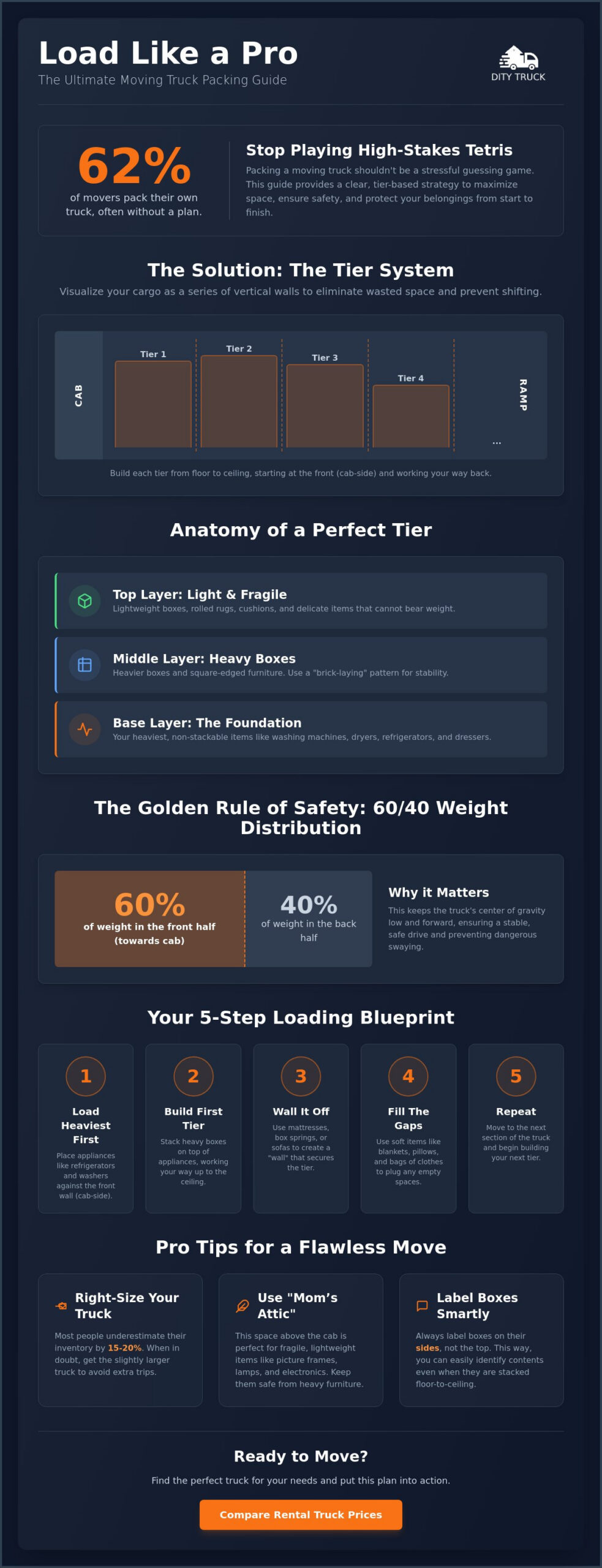
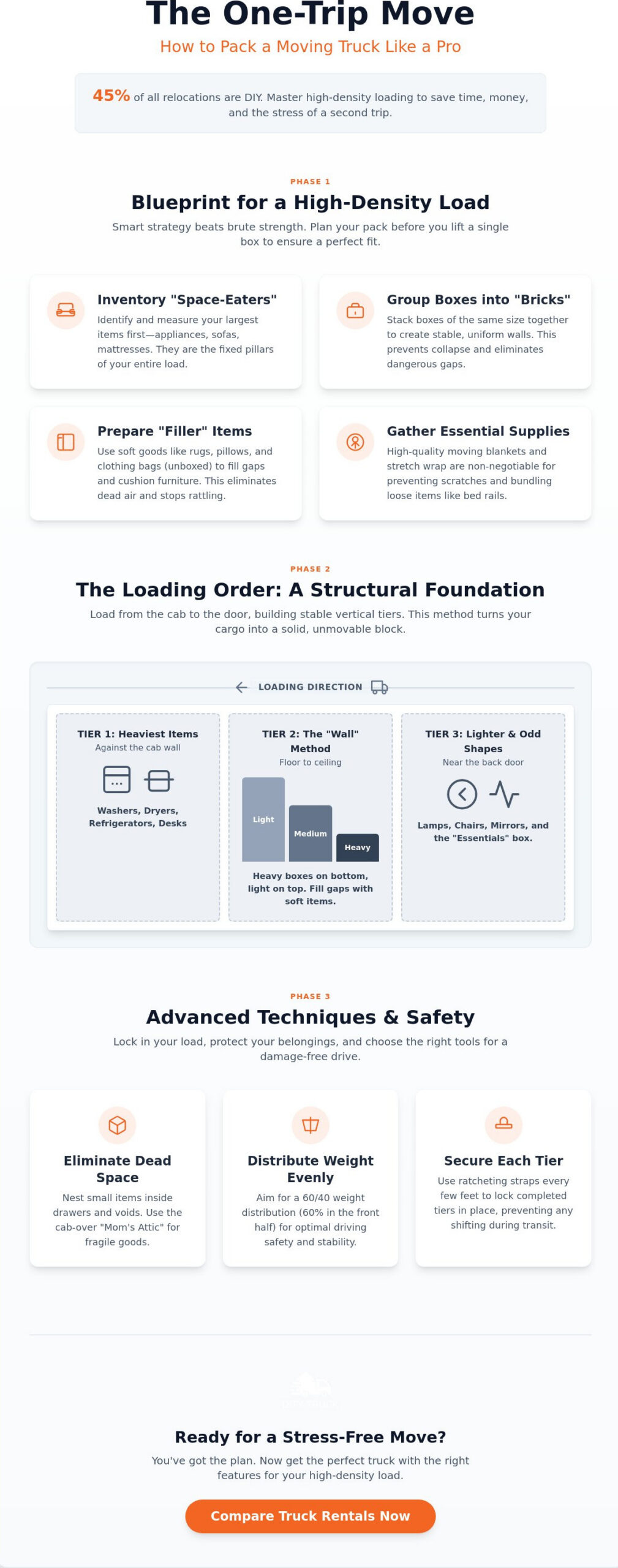
Loading a truck is like building a house. You need a solid foundation before you can add the roof. The most effective way to master how to pack a moving truck to maximize space is to treat the cargo area as a series of vertical zones. You don’t just toss things in. You build from the front wall, near the driver’s cab, and work your way to the back door. This front-to-back approach ensures that the center of gravity stays low and forward. It’s safer for driving and much better for your belongings.
Place your heaviest appliances against the front wall. Washers, dryers, and refrigerators should be the first items loaded. This centralizes the weight over the truck’s axles. It prevents the back of the truck from sagging or swaying. When you follow official moving safety guidelines, you realize that weight distribution is about more than just space. It’s about road safety. A balanced truck is easier to handle on the highway and less likely to tip during sharp turns.
Once the heavy items are in place, start building your walls. Think of each section of the truck as a vertical “tier.” You want to finish one wall from floor to ceiling before moving backward toward the door. This method is the secret to high-density loading. It turns your cargo into a solid block that resists movement. If you aren’t sure which vehicle has the best dimensions for this strategy, you can compare truck rentals to find a model with a high ceiling and plenty of floor space.
The “Wall” Method Explained
Think of this as a game of high-stakes Tetris. Stack heavy, sturdy boxes at the bottom to create a level base. These boxes act as the foundation for the entire tier. Place lighter, more fragile boxes on top to prevent crushing. If there’s a gap at the ceiling, use soft items like bags of bedding or pillows to “lock” the wall in place. This prevents the stack from toppling during a sudden stop. It also ensures you are using every cubic inch of available height.
Handling Large Furniture and Appliances
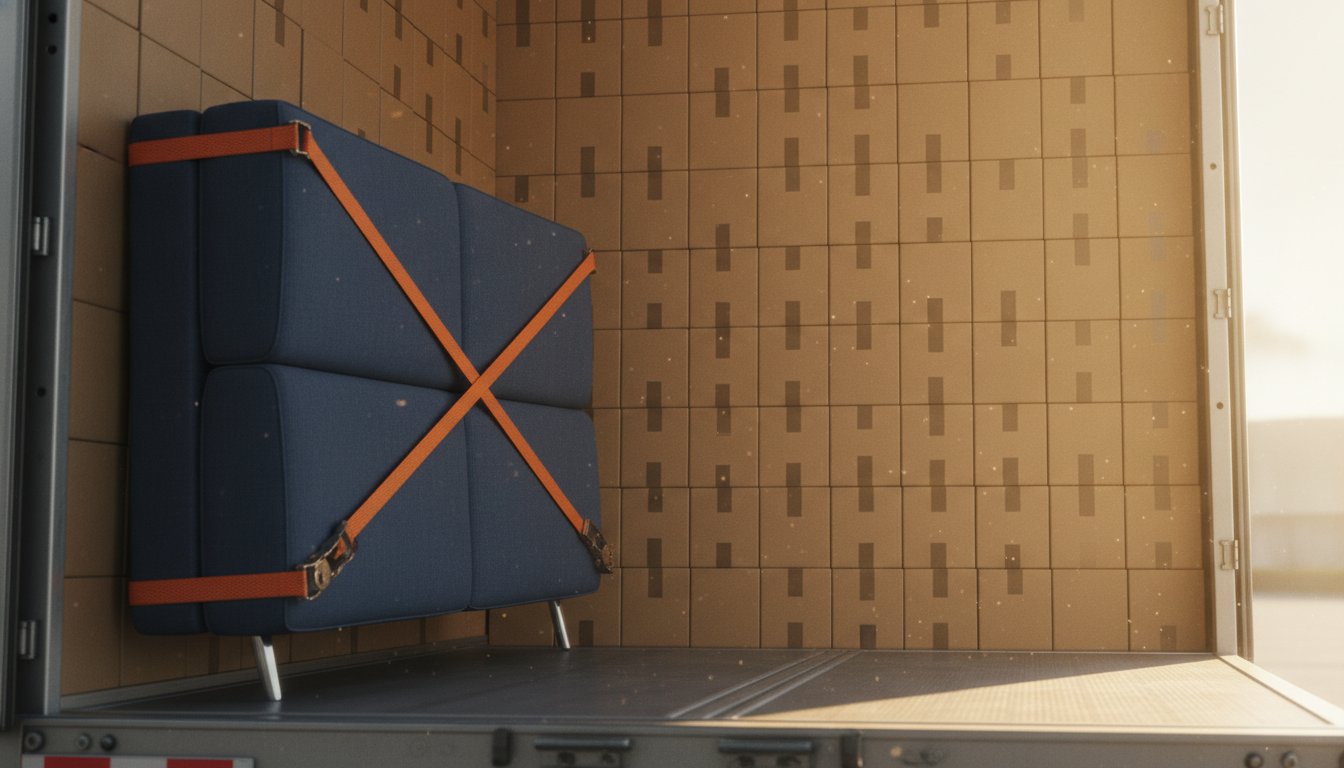
Always keep appliances upright. Never lay a refrigerator or washer on its side. Doing so can cause permanent damage to the mechanical components. Use furniture pads between every finished surface. Friction is your enemy during a long drive. Load long items like mattresses and sofas vertically along the side walls. This saves floor space for more boxes. Secure each tier with ratcheting straps as you go. This keeps the load tight and prevents the “domino effect” if one item shifts.
Advanced Tetris Techniques to Eliminate Dead Space
Mastering how to pack a moving truck to maximize space requires looking beyond the obvious floor area. Professional loaders view the truck as a series of “loading cells.” These are small, self-contained units of cargo that lock together to prevent movement. To achieve high-density loading, you must eliminate every pocket of air. This process turns your belongings into a single, cohesive unit that won’t budge on the road.
Start with the “Mom’s Attic.” This is the small compartment located directly over the truck’s cab. It’s the ideal spot for fragile items, electronics, or oddly shaped goods that don’t fit into standard box walls. By keeping these items separate from the main load, you protect them from being crushed by heavier furniture. It also frees up valuable floor space for your largest “space-eater” items discussed earlier.
Nesting is your best tool for internal efficiency. Don’t move empty furniture. Place small, sturdy boxes inside wardrobes or dresser drawers. This utilizes volume that is already being transported. Similarly, you should disassemble whatever you can. Remove the legs from dining tables and desks. This transforms bulky, awkward furniture into flat panels. You can then slide these panels vertically against the side walls or between mattresses to save massive amounts of horizontal room.
Area rugs are perfect gap-fillers. Roll them tightly and secure them with stretch wrap. These long, narrow cylinders fit perfectly into the “dead space” between the tops of sofas and the truck walls. Dead space is the primary cause of load shifting. If an item has room to move, it will. Filling these gaps ensures everything stays exactly where you put it. This attention to detail is the secret to a damage-free move.
Utilizing Vertical Voids
Look for “holes” throughout your load. There is often usable space under chair legs, inside trash cans, or within large decorative pots. Stuff these voids with soft goods. Linens, towels, and plush toys packed in garbage bags work best. This adds a layer of padding while simultaneously increasing your cargo density. It’s a simple way to fit more items into a smaller rental truck without needing a second trip.
High-Density Stacking Rules
Stability comes from consistency. Always stack “like with like.” Square boxes of the same size create the most stable columns. This prevents leaning and potential collapses. For delicate items like heavy mirrors or large paintings, place them vertically between mattresses or box springs. This provides a soft, pressurized environment that keeps them upright. Finally, never leave more than a 2-inch gap between the top of your load and the ceiling. A tight fit at the top locks the entire tier in place.
Safety and Stability: Protecting Your Cargo and Your Drive
Safety is the silent partner of efficiency. When you master how to pack a moving truck to maximize space, you aren’t just saving money. You’re protecting your life and your property. A high-density load only works if it stays put. If your “walls” crumble during a highway lane change, you’ve failed. Use ratcheting tie-down straps every 3 to 5 feet of progress. Bungee cords are insufficient for heavy furniture because they stretch under pressure. Straps lock the load to the truck’s internal rails. This ensures that a bump in the road doesn’t turn your boxes into projectiles. Every strap creates a checkpoint that prevents a small shift from becoming a total collapse.
Balance is critical for more than just the cargo. Distribute weight evenly from side to side. An off-center load makes the truck lean during turns. This increases the risk of tipping and puts uneven wear on the tires. Keep the center of gravity low. Place your densest items, like book boxes, tool chests, and appliances, directly on the floor. Lighter items belong on top. This prevents the truck from feeling “top-heavy” at high speeds. Before you pull out of the driveway, double-check the clearance height of your rental truck. Most trucks have the height printed on the dashboard or near the side mirror. Knowing this number prevents catastrophic collisions with low bridges or gas station awnings.
Weight Distribution and Axle Safety
Aim for 60% of the total weight in the front half of the truck. This puts the burden on the steering axle and improves overall handling. Improperly balanced loads cause “trailer sway.” This is a dangerous fishtailing motion that can lead to a total loss of steering control. Check your rear tires before you leave. If they are squatting significantly more than the front tires, you need to redistribute the weight forward. A balanced truck is a predictable truck. It responds better to braking and stays stable in windy conditions.
Securing the Final Tier
The back of the truck is the most vulnerable area during transit. Use a cargo net or an X-pattern of heavy-duty straps for the very last wall of items. This prevents cargo from falling against the roll-up door. If items lean on the door, it can jam or even burst open when you arrive at your destination. Verify that nothing can slide forward toward the cab during sudden braking. This is why the structural integrity of your tiers is so important. Once your load is secure, you can book a moving truck with confidence, knowing you have a plan for a safe arrival.
Streamlining the Move with the Right Rental Tools
Your packing strategy is only as good as the vehicle you use. Choosing a truck with the right features makes the physical labor easier and the packing more efficient. When you understand how to pack a moving truck to maximize space, you realize that small details like deck height matter. A low-deck design reduces the angle of the ramp. This saves your legs when carrying heavy appliances and prevents items from tipping during the loading process. Wide ramps provide a more stable platform for dollies, allowing you to move larger stacks of boxes at once.
Look for internal tie-down rails. These are essential for the “Wall” method we discussed earlier. Without these rails, you cannot properly secure your vertical tiers with ratcheting straps. You should also evaluate the cost-to-space ratio. A cargo van might seem cheaper, but if it forces you to make three trips, a box truck is the smarter financial choice. A single-trip move reduces fuel costs and saves hours of your time. Book your rental early. This ensures the specific size you planned for is actually available on moving day.
Comparing Rental Features
Check if the provider offers a loading ramp or a liftgate. A liftgate is a mechanical platform that does the heavy lifting for you. It’s perfect for heavy refrigerators or gun safes. You should also consider one way truck rentals for moving to avoid the stress of a return trip. This is especially helpful for long-distance relocations where mileage fees can add up quickly. Use DityTruck to filter for companies that include basic moving equipment like dollies and blankets in their base price.
The Final Walkthrough
Before you lock the door, do a final sweep. Check the “Mom’s Attic” one last time for forgotten small items or tools. Ensure all cabinet doors and dresser drawers are taped or wrapped shut to prevent them from swinging open. Double-check your ratcheting straps to make sure nothing loosened during the final packing stages. Secure the latch, lock the door, and drive with confidence. You’ve mastered how to pack a moving truck to maximize space, and your belongings are ready for the journey.
Take Command of Your Moving Day
Smart logistics build a successful move. You’ve mastered the wall method. You’ve centralized weight over the axles. These actions prevent cargo damage and keep your drive safe. Disassembling furniture and nesting boxes eliminates dead air. Mastering how to pack a moving truck to maximize space ensures a single-trip arrival with lower rental costs. You’ve replaced move-day stress with a professional blueprint. Every cubic inch now works for you.
Your plan needs the right vehicle at an honest price. Skip the hidden fees and the endless phone calls. Compare real-time rates and book your moving truck on DityTruck today. Our platform provides transparent pricing from top national providers for both local and long-distance moves. It’s the fastest, most logical path to your new destination. Streamlined booking means you spend less time on logistics and more time on your new beginning.
Move with confidence and clarity. You have the guide, the techniques, and the tools to make this your most efficient relocation yet. Your new space is waiting. You’ve got this.
Frequently Asked Questions
How do I calculate what size moving truck I actually need?
You should base your truck size on the number of rooms you’re moving. A 10-foot truck typically handles a studio apartment, while a 26-foot truck is needed for a four-bedroom home. Don’t just look at the length. Compare the usable cubic feet to ensure your largest items fit. Choosing a slightly larger truck is often safer than trying to force a high-density load into a vehicle that’s too small.
What is the most common mistake when packing a rental truck?
The most frequent error is leaving air gaps between boxes and furniture. These empty pockets allow your belongings to rattle and shift during the drive. This movement is the primary cause of broken glassware and scratched wood. You must fill every void with “filler” items like pillows or rolled rugs to create a solid, immovable block of cargo. This is a critical step in the moving process.
Is it better to stack boxes vertically or spread them across the floor?
Vertical stacking is the only way to go. Spreading items across the floor wastes valuable height and leaves your cargo vulnerable to tipping. When you learn how to pack a moving truck to maximize space, you focus on building floor-to-ceiling tiers. This strategy uses the weight of the boxes to lock the lower layers in place, which increases overall stability and protects your fragile items.
How do I protect my mattress and sofa from dirt and damage during the move?
Use heavy-duty plastic mattress bags and professional furniture pads. Slide the mattress into the bag before it leaves the bedroom to prevent stains. For sofas, wrap the entire piece in moving blankets and secure them with stretch wrap. This creates a protective shell that resists friction damage and keeps dust out during the transition to your new home. Never skip this step for finished surfaces.
Can I pack items inside my dresser drawers to save space?
You can pack lightweight items like linens or clothing inside dresser drawers. This is a great way to use “nested” space that would otherwise be empty. However, don’t fill them with books or heavy electronics. Excessive weight can warp the drawer tracks or make the furniture dangerous to carry up the loading ramp. Keep the weight manageable to ensure the safety of the loaders.
What should I do if I have leftover space at the end of the truck?
Use ratcheting straps to create a “false wall” at the end of your load. Even if the truck isn’t full, your cargo must be tightly secured. If you leave items loose, they will slide toward the back door during acceleration. This can jam the roll-up door or cause items to fall out the moment you open the truck at your destination. A secure load is a safe load.
How do I secure a load if the truck doesn’t have built-in tie-down rails?
Check for floor-mounted D-rings if the walls lack rails. You can use these points to anchor heavy-duty rope or cargo nets over your tiers. If no anchors exist, build a “bulkhead” using your heaviest, most stable furniture. Pack everything else tightly against this bulkhead to minimize the room for movement. A tight, high-density load often stays in place through friction and smart geometry alone.
What is the “60/40 rule” in moving truck weight distribution?
The 60/40 rule dictates that 60% of the cargo weight should be in the front half of the truck, near the cab. Proper weight distribution is essential for highway safety. It prevents the back of the truck from fishtailing and ensures your front tires maintain enough grip for reliable steering. Following this rule is the best way to maintain control of the vehicle during your move.