
Tag: Rental Guide

  • Cargo Van Rental for One Day: The 2026 Comparison & Booking Guide

    Cargo Van Rental for One Day: The 2026 Comparison & Booking Guide

    The advertised price on a rental sign is rarely the number you see on your final receipt. When you need a cargo van rental for one day, the process should be fast and the costs should be clear. Instead, most drivers face a maze of hidden mileage fees and confusing insurance requirements that can double the expected price. You need a vehicle that fits your load and a total cost that fits your wallet. It’s frustrating to find the perfect van only to realize the weekend availability is zero or the per-mile charge ruins your budget.

    We understand that your time is valuable and your budget isn’t just a suggestion. This 2026 guide cuts through the logistics clutter to compare national providers side-by-side. You will learn how to spot the best all-in rates, identify which companies offer unlimited mileage, and navigate the latest 2026 discounts from major players. We’ve analyzed the data from high-demand hubs like Los Angeles to high-value markets like Seattle to ensure you get a confirmed reservation at the lowest possible price. We will show you exactly how to avoid the hidden fee trap so you can focus on the job at hand.

    Key Takeaways

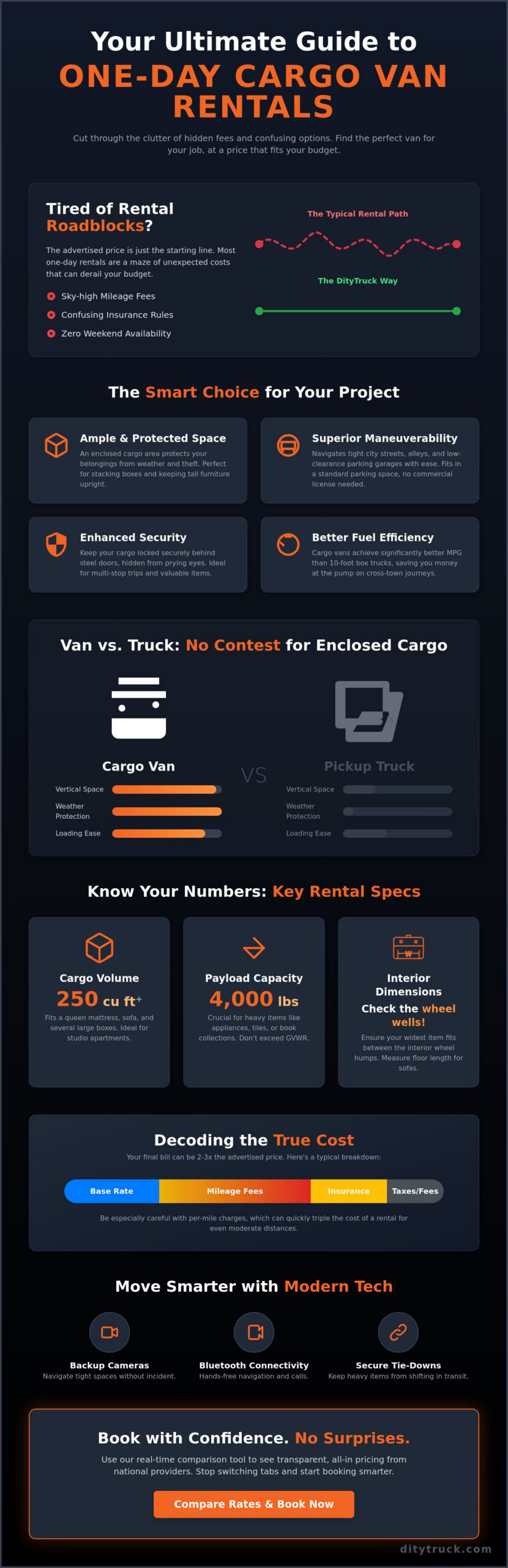
    • Discover why a cargo van’s low profile and superior maneuverability make it the smartest choice for navigating tight residential streets and parking garages.
    • Learn how to accurately compare cargo volume and payload capacity to ensure your heaviest appliances and largest furniture fit in a single trip.
    • Decode the true cost of a cargo van rental for one day. Identify how mileage fees can triple your bill if you aren’t careful.
    • Master your 24-hour window. Use strategic pickup timing and route planning to keep your final bill as low as possible.
    • Use real-time comparison tools to aggregate national rates. View transparent pricing instantly and stop switching between dozens of browser tabs.

    Why a Cargo Van is the Smart Choice for One-Day Projects

    A cargo van is a specialized tool. It features an enclosed cargo area built for utility and protection. If you are researching what is a cargo van, you will find it serves as the bridge between a standard SUV and a heavy-duty truck. This makes a cargo van rental for one day a high-efficiency choice for quick tasks. It offers the space you need without the bulk of a massive box truck.

    Maneuverability is a primary advantage. These vehicles fit into standard parking spaces. They navigate narrow alleyways and low-clearance parking garages with ease. You don’t need a commercial license to handle one confidently. The driving experience feels similar to a large SUV. This reduces stress during a busy moving day.

    Security is another major factor. Your items stay locked behind steel doors. This is vital if you need to make multiple stops. Unlike open truck beds, an enclosed van keeps your belongings dry during rain. It also keeps your cargo hidden from prying eyes.

    Fuel costs often surprise renters. Cargo vans achieve significantly better MPG than 10-foot box trucks. If your project involves driving across town multiple times, the savings at the pump add up. It is a cost-effective solution for short-term logistics.

    Cargo Van vs. Pickup Truck: Which is Better?

    Vans win on vertical space. You can stack boxes higher and keep tall furniture upright. The loading floor is also closer to the ground. This lower height makes it easier to slide heavy appliances inside. You won’t strain your back as much compared to lifting items into a high pickup bed. Everything stays protected from the wind and road debris.

    Ideal One-Day Use Cases

    A cargo van rental for one day is perfect for studio apartments. It typically holds the contents of a small one-bedroom home. It is also the go-to choice for picking up a new refrigerator or a sectional sofa. Small business owners use them for event setups or transferring inventory between locations. It provides professional utility for a fraction of the cost of a full-service moving crew.

    Key Factors to Compare Before Your One-Day Rental

    Choosing a cargo van rental for one day involves more than just checking the price tag. You must ensure the vehicle is capable of completing your specific task without extra trips. A van that is too small wastes time. One with insufficient payload capacity creates safety risks. Focus on the specifications that directly impact your project’s success.

    Start with cargo volume. This represents the total interior space measured in cubic feet. Most modern cargo vans offer at least 250 cubic feet of space. This is the industry standard for a reason. It provides enough room for a queen-sized mattress, several large boxes, and small furniture items. Always compare the cubic footage across different models to maximize your 24-hour window.

    Understanding Cargo Volume and Payload

    Payload capacity is the actual weight your van can carry. It is different from volume. You might have plenty of physical room left but still exceed the weight limit. This is critical when hauling dense items like kitchen tiles, heavy appliances, or stacks of books. Most rental vans have a payload range between 1,500 and 4,000 lbs depending on the specific model.

    To stay safe, you must respect the Gross Vehicle Weight Rating (GVWR). This is the maximum allowable total weight of the vehicle, including passengers, fuel, and cargo. Exceeding this limit affects braking distances and high-speed handling. While personal rentals often fall outside the strictest federal safety regulations, understanding these weight limits ensures a much safer drive for you and others on the road.

    Interior dimensions also require a close look. Floor length matters most for long items like sofas or construction materials. Check the width between the wheel wells specifically. If your widest item won’t fit between those interior humps, you’ll lose significant floor space and might have to leave items behind. Confirm the fuel type before leaving the rental lot. Putting diesel in a standard unleaded engine causes immediate, expensive damage.

    Tech and Driver Comfort Features

    Modern rentals come with features that simplify the job. Backup cameras and parking sensors are essential for drivers used to smaller cars. They help you navigate tight driveways without incident. Bluetooth connectivity allows you to keep your hands on the wheel while following GPS directions through the van’s speakers.

    Check for interior utility before you sign the contract. Tie-down points are necessary for securing heavy items with straps. Floor liners protect the van from scratches and prevent your furniture from sliding during turns. If you want to see these specs side-by-side, you can compare national providers to find the exact van model that fits your requirements.
    Cargo Van Rental for One Day: The 2026 Comparison & Booking Guide

    Decoding the Total Cost: Base Rates vs. Real-World Expenses

    The sticker price on a rental website is rarely the amount that leaves your bank account. When you secure a cargo van rental for one day, the base rate is merely the starting line. This flat fee covers the vehicle’s presence in your driveway for 24 hours. It does not account for the distance you travel or the specific protections you choose. You must look past the headline number to find the true cost of your project.

    Mileage fees are the most significant variable in your final bill. Most national providers charge between $0.69 and $0.99 per mile. A seemingly short 50-mile round trip can add nearly $50 to your total. If your move requires multiple trips across a large metro area, these costs can easily triple your initial daily rate. Always estimate your total distance before booking to avoid a shock at the return counter.

    Environmental and licensing fees are small, mandatory charges that appear at checkout. These cover state-mandated recycling costs and fleet registration expenses. While they usually only add a few dollars, they are non-negotiable. Fuel policy is another area where you can save or lose money. Refilling the tank yourself at a local station is almost always the smart move. Pre-paying for a full tank or letting the rental company refill it results in much higher per-gallon prices.

    Insurance and Damage Waivers

    A Collision Damage Waiver (CDW) is the most common add-on offered at the desk. You should check your personal auto insurance policy before you arrive. Many personal policies cover standard rental cars but exclude “cargo vehicles” or “commercial trucks.” Your credit card might offer secondary coverage, but this often excludes vans with large cargo volumes. Supplemental Liability Insurance is an extra layer of protection for third-party damages. It is not always necessary for a simple local move, but it provides relief if you are driving an unfamiliar, larger vehicle in heavy traffic.

    Avoiding Hidden One-Day Penalties

    Timing is everything in a 24-hour window. A one-hour delay in returning the vehicle often triggers a full second-day charge. Rental companies operate on strict schedules, so plan to arrive at least 30 minutes early. Cleaning fees are another common trap. If you are hauling messy items like garden supplies or dusty construction materials, sweep out the back before drop-off. A five-minute cleanup can save you a heavy detailing fee. The Total Cost of Rental is the cumulative sum of the base daily rate, total mileage charges, government taxes, and any selected insurance or equipment fees.

    Maximizing Your 24-Hour Window: Efficiency and Logistics

    A 24-hour rental is a sprint. You aren’t just paying for the vehicle. You are paying for the time. To get the most from a cargo van rental for one day, you must treat the clock as your primary constraint. Efficiency starts before you even arrive at the lot. Every minute the van sits idle is a minute you’ve paid for without benefit.

    Book your pickup for early morning. Most rental locations are busiest between 10:00 AM and 2:00 PM. Arriving at opening time ensures you beat the rush. It also gives you the best chance of getting the exact vehicle you reserved. If the previous renter was late, an early arrival gives the staff more time to find a suitable replacement. This prevents your entire schedule from sliding into the evening hours.

    Plan your route in advance. Since mileage fees often make up the bulk of your final bill, as discussed in our cost breakdown, every mile matters. Use navigation apps to find the shortest path. Avoid peak traffic hours to save fuel and reduce the risk of accidents. Pre-packing your items is equally vital. The van should only be on the clock while it is actually moving. Have your boxes staged and ready at the door before you pick up the keys.

    The Pre-Rental Inspection Checklist

    Protection starts with documentation. Take clear photos of all four sides of the van. Don’t forget the roof. Low-clearance damage is a common and expensive repair. Check the tire tread depth and fluid levels if you plan a longer one-day trip. Verify that the fuel gauge matches the rental agreement exactly. A small discrepancy here can lead to a large refueling charge later. Check the interior for existing stains or odors. Documenting these details now prevents disputes when you return the keys.

    Loading Tips for Maximum Volume

    Stability is the goal. Place your heaviest items first. Position this weight between the axles to maintain proper vehicle handling. Use moving blankets and ratchet straps to secure everything. This prevents damage during sudden stops. Use the space under tables or inside drawers for smaller, soft items. A “last-in, first-out” strategy saves time at your destination. Pack the items you need immediately near the rear doors. This creates a logical flow and speeds up the unloading process significantly.

    To ensure you get the best vehicle for your schedule, book your rental online and secure your 24-hour window today.

    Booking Smarter with DityTruck’s National Comparison Tool

    Finding a cargo van rental for one day shouldn’t involve a dozen browser tabs. Most users struggle to manually track base rates and mileage fees across different websites. This process is slow. It’s often inaccurate. DityTruck simplifies the search by centralizing all your options in one dashboard. We act as your smart assistant. We perform the heavy lifting so you don’t have to.

    Our real-time rate aggregation pulls live data from top national providers instantly. You see the inventory currently available in your specific zip code. This prevents the frustration of finding a deal only to realize the vehicle is unavailable. We prioritize transparent pricing. You see the total estimated cost before you commit. There are no hidden booking fees. It’s about clarity and relief for a high-stakes task.

    Why Compare with DityTruck?

    We provide access to the industry’s most reliable national brands in one place. You can filter by vehicle size and price to match your project’s specific requirements. This ensures you only pay for the volume you actually need. It keeps your variable costs under control. If your project requires more space than a van provides, check out our Moving Truck Rental: The Complete 2026 Comparison Guide for larger moves.

    Ready to Rent? Start Here

    Entering your dates and location gives you instant access to live inventory. You can also compare the best one way truck rentals for moving if you don’t plan on returning to the same location. This is a logical solution for long-distance deliveries or one-way relocations. It helps you avoid the stress of unnecessary return trips.

    Lock in your rate today. Demand for a cargo van rental for one day is highest on weekends. Availability drops fast as moving dates approach. Reserving early ensures you get the vehicle you need at a price that fits your budget. Start your search now to secure your 24-hour window.

    Secure Your Van and Start Moving Today

    Your 24-hour project deserves a logistics plan that works as hard as you do. Success depends on looking beyond the base rate to account for mileage and timing. By mastering your route and documenting the vehicle’s condition, you eliminate the risk of unexpected fees. Securing a cargo van rental for one day doesn’t have to be a gamble. It’s about having the right information at the right time to keep your budget on track.

    Skip the stress of manual research. Use a tool built for speed and transparency. Access real-time rates from the nation’s top providers instantly. See your total estimated cost without any hidden booking fees. Compare One-Day Cargo Van Rates Now and take control of your move. Your destination is within reach. Take the shortest path and get your project finished today.

    Frequently Asked Questions

    How much does it typically cost to rent a cargo van for one day?

    Rental costs depend on the specific provider and your total distance. In major markets like Los Angeles, average daily rates typically range between $80 and $150. This total doesn’t include mileage fees, which often range from $0.69 to $0.99 per mile. Some local providers offer lower base rates for short trips, but 24-hour rentals usually involve a combination of a base fee, taxes, and insurance.

    Do I need a special license to drive a rental cargo van?

    You don’t need a commercial driver’s license to operate a standard cargo van. A valid, state-issued driver’s license is sufficient for most models found in national rental fleets. These vehicles are designed for ease of use and handle similarly to a large SUV or pickup truck. Always ensure your license is current and has not expired before you arrive at the rental counter.

    Is there a mileage limit on one-day cargo van rentals?

    Mileage policies vary significantly between national brands. Some companies include a specific number of miles in the daily rate, while others charge for every mile driven from the moment you leave the lot. A cargo van rental for one day might include 50 to 100 free miles depending on the current promotion. Always verify the specific mileage allowance in your rental agreement to avoid unexpected surcharges at drop-off.

    Can I rent a cargo van for one day for a one-way trip?

    One-way rentals are available from most major providers, but they often carry higher fees. This is a practical solution for relocations where returning the vehicle to the original pickup spot is impossible. Availability for one-way trips can be limited during high-demand periods like weekends. Use a comparison tool to check which locations support drop-offs at a different branch before you finalize your reservation.

    What is the minimum age to rent a cargo van in the US?

    The standard minimum age for renting a cargo van is 21 years old. Some providers allow drivers as young as 18, but these rentals often come with a young renter surcharge. Drivers under 25 may also face higher insurance premiums or limited vehicle choices. Check the specific age requirements and fee structures for your chosen provider before booking to ensure you meet their criteria.

    Does my personal car insurance cover a rental cargo van?

    Personal auto insurance policies often exclude vehicles used for moving or commercial purposes. You must contact your insurance agent to verify if a cargo van is covered under your existing plan. Many credit cards offer rental protection, but this coverage frequently excludes vans with large cargo volumes or specific weight classes. If your personal plan falls short, consider purchasing a supplemental damage waiver at the desk.

    What happens if I return the cargo van late?

    Late returns typically trigger a full second-day rental charge. Most companies operate on a strict 24-hour clock that begins the moment you sign the contract. Returning the van even one hour past the deadline can result in significant extra costs. Plan to arrive at the drop-off location at least 30 minutes early to complete the final inspection and avoid these unnecessary penalties.

    Can I book a cargo van rental on the same day?

    Same-day bookings are possible if the local branch has inventory on the lot. However, relying on last-minute availability is risky during peak moving seasons or on weekends. Booking your cargo van rental for one day at least 48 hours in advance ensures a wider selection of vehicles. It also locks in lower rates before demand drives prices up in high-traffic urban areas.

  • Tips for DityTruck Success: Master Your Moving Rental in 2026

    Tips for DityTruck Success: Master Your Moving Rental in 2026

    The lowest base rate on a moving truck is rarely the total price you’ll pay at checkout. Most DIY movers lose hours jumping between browser tabs only to get hit with mileage surcharges or unexpected fees later. It’s frustrating to guess if a 16-foot truck will fit your entire life or if you’re overpaying for a quick local haul. These Tips for DityTruck success transform the platform from a simple search bar into your strategic command center. You’ll learn how to leverage comparison tools to secure the best rates and the perfect vehicle size for a stress-free move.

    We’ll break down the hidden costs, clarify sizing confusion, and show you how to lock in a confirmed low-cost rental with total confidence. Our guide explores how to filter for the best value and avoid the common mistakes that inflate moving budgets. You’ll gain a clear understanding of total costs before you ever enter your credit card information. By the end of this article, you’ll stop searching and start booking with absolute clarity.

    Key Takeaways

    • Learn how to use real-time comparison filters to find the best balance between low rates and provider reliability.
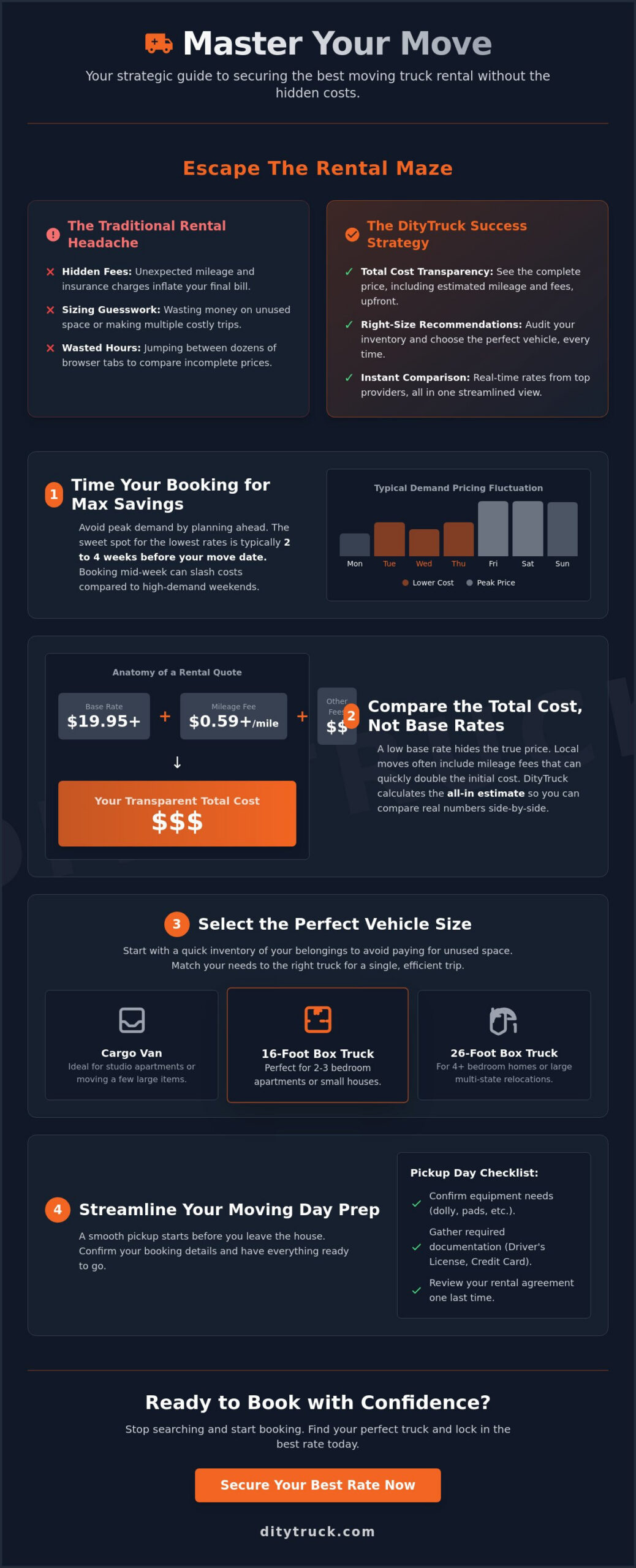
    • Cut costs by booking your rental two to four weeks early and scheduling mid-week pickups to avoid peak demand pricing.
    • Choose the right vehicle size by auditing your inventory to avoid paying for unused space or making multiple trips.
    • Master these Tips for DityTruck success to strip away the complexity of rental contracts and secure a confirmed booking without hidden fees.
    • Streamline your moving day by confirming equipment needs and gathering required documentation well before you arrive at the lot.

    Defining DityTruck Success for Your 2026 Move

    Success in the 2026 moving market isn’t just about finding a vehicle; it’s about finding the right vehicle at a price that doesn’t balloon at the last second. When you look for Tips for DityTruck success, you’re looking for a way to balance cost with reliability. A bargain truck that breaks down on the highway isn’t a deal. It’s a disaster. We define success as securing the lowest market rate while ensuring the provider is reputable and the equipment is ready for the road. It’s about total confidence in your choice before you ever pick up the keys.

    Efficiency is the core of this experience. You shouldn’t have to spend hours checking individual websites or calling local lots to compare availability. Every moment spent on logistics is a moment stolen from your actual move. DityTruck minimizes the time between your initial search and your final reservation. We act as a savvy consumer advocate in a crowded moving industry. The platform does the heavy lifting by pulling data together; you simply make the informed decision that fits your budget and timeline.

    Transparency is our standard. Most movers fear the “hidden fee” trap where a low base rate turns into a massive bill due to mileage, insurance, or equipment add-ons. Success means knowing your total cost before you enter your payment information. Our platform prioritizes financial honesty, showing you the numbers clearly so there’s no guesswork involved. You get a friction-free solution for a high-stakes task. It’s about relief and clarity instead of the typical rental headache.

    The Friction-Free Moving Philosophy

    We want to strip away the complexity that usually defines truck rentals. Logistics shouldn’t be stressful. Our philosophy is built on confident simplicity. We replace the chaos of traditional rentals with an organized, logical flow. DityTruck serves as the shortest, most reliable path to move-day readiness. You don’t need to be a logistics expert to get professional results; you just need the right tool to guide you through the process. It’s about making a difficult task feel manageable.

    What to Expect from the Platform

    The platform is built for speed and immediate comprehension. You’ll access real-time rate aggregation from major national providers in seconds. The booking interface is streamlined for rapid decision-making, avoiding the fluff that slows you down. Whether you need a small van for a quick cross-town trip or a large box truck for a multi-state relocation, the options are all there. It’s a practical, no-nonsense engine designed to get you on the road faster. Tips for DityTruck success often come down to using these built-in tools to your full advantage.

    Master the Art of Moving Truck Rental Comparison

    Start by entering your move-out dates and locations into the search bar. This simple action triggers our real-time engine to pull data from major national providers instantly. You shouldn’t settle for the first price that appears on your screen. Most aggregators only show a base sticker price, but these Tips for DityTruck success rely on looking much deeper. You need to compare total estimates. A low base rate often hides high mileage fees that can wreck your budget. Our platform presents an action-result progression for every deal. You select a provider and see the immediate benefit to your bottom line without the typical guesswork.

    Comparing trucks is as much about logistics as it is about dollars. You need to know how to rent a moving truck without falling into the common traps of the industry. For local moves under 100 miles, daily rates typically range from $19.95 to $49.99. However, adding mileage fees between $0.59 and $1.00 per mile can double that cost in an afternoon. Use our comparison tools to calculate these variables automatically. It’s the fastest way to see which company offers the best value for your specific route.

    Transparency is the only way to move with confidence. We strip away the complexity by showing you the total cost upfront. You can see how different providers handle insurance, equipment rentals, and fuel policies side-by-side. This level of clarity is rare in the moving market. When you have all the data in one place, you make better decisions. You’ll find that Tips for DityTruck success are built on using these comparison tools to outsmart traditional pricing models.

    Using Filters for Precision

    Precision matters when you’re packing your entire life into a vehicle. Use our filters to narrow results by vehicle type. You can quickly switch between agile cargo vans for studio apartments and massive box trucks for four-bedroom homes. Don’t just sort by the lowest price. Filter by provider reputation to ensure you’re getting a well-maintained fleet from reputable national companies. You want a truck that is reliable enough for a long haul. Sorting by “best value” helps you identify the smartest balance of price and service quality.

    Interpreting Real-Time Data

    Rates in the moving industry fluctuate based on national demand and seasonal trends. If everyone in your city is moving on the same weekend, prices will climb. Our search results highlight limited-time offers and specific availability for your chosen dates. If a truck is available, you’ll see it instantly. There’s no “pending” status or ghost inventory to worry about. You can start your comparison search now to see current market trends for your area. This real-time data ensures you don’t miss out on a low rate just because you waited an hour too long.

    Tips for DityTruck Success: Master Your Moving Rental in 2026

    Timing Your Reservation for Maximum Savings

    Timing is the ultimate lever for your moving budget. Most renters wait until the final week to book. This is a common mistake that leads to higher costs and limited choices. Booking at least 2 to 4 weeks in advance is critical for peak season moves. It secures the right vehicle and locks in a lower rate before local inventory vanishes. These Tips for DityTruck success help you stay ahead of the crowd. You get the best selection by acting early. It’s about securing peace of mind before the moving day rush begins.

    The moving market operates on supply and demand. When availability drops, prices climb. By reserving your truck early, you bypass the price hikes that hit last-minute shoppers. You also ensure that the specific size you need is actually sitting on the lot. Don’t leave your logistics to chance. A few weeks of lead time can save you hundreds on a long-distance trek. It’s the smartest move you can make before you even pack a single box.

    Avoiding the Weekend Surge

    Friday and Saturday are the most expensive days to rent. Everyone wants to move on their day off. This creates a massive demand spike that providers exploit with higher rates. If you can schedule a Tuesday or Wednesday pickup, do it. The savings are often substantial enough to pay for your packing supplies. DityTruck highlights these price gaps instantly during your search. You can see the difference by toggling your dates on the calendar. It is a simple, effective way to reduce your bill without sacrificing truck space or reliability.

    Long-Distance vs. Local Timing

    One-way rentals for moving across state lines have unique market dynamics. Inventory levels at your drop-off point often dictate the price you pay at pickup. If a provider needs more trucks in your destination city, they might lower the rate to encourage you to take the vehicle there. Check nearby pickup locations as well. A suburban lot 15 miles away might have significantly better rates than a busy downtown hub. When renting a moving truck for a long-distance haul, these small geographic adjustments add up to big savings. It pays to be thorough.

    Use the platform to monitor price drops if your move date isn’t set in stone. Off-peak months like January or February are prime for long-distance discounts. Demand is lower. Providers are more willing to deal. Tips for DityTruck success are about using real-time data to outsmart the calendar. Stay flexible with your schedule. Act fast when you see a price dip. You are in control of the timing and the total cost.

    Selecting the Perfect Vehicle Size and Type

    Choosing the wrong size is the fastest way to waste money. Rent a truck that is too small and you’re making two trips. Rent one that is too large and you’re paying to transport air. A 2025 survey showed that 77% of movers only needed one truck, but 20% required two. Accuracy matters. These Tips for DityTruck success start with a realistic inventory check. Count your boxes. Measure your largest furniture. This data helps you pick the right category without the stress of second-guessing. Using these Tips for DityTruck success ensures you don’t pay for empty space or end up stranded with half your belongings on the curb.

    Our platform simplifies this choice. We categorize vehicles by their capacity so you don’t have to guess. You can see the difference between a nimble van and a massive 26-foot hauler in seconds. It is about finding the shortest path to a successful move. You get the space you need. You avoid the fees you don’t. We act as your smart assistant, performing the heavy lifting of logistics so you can focus on the packing.

    The Cargo Van Advantage

    Cargo vans are the best choice for studio apartments or dorm rooms. They offer the best fuel economy in the rental market. They are also much easier to drive. You can navigate tight residential streets and park in standard spots without a problem. If you’re only moving a mattress and a few dozen boxes, a van is your smartest tool. It strips away the complexity of handling a larger vehicle while keeping your costs low. It is a friction-free solution for small-scale DIY moves.

    Box Truck Breakdown

    Most DIY moves fall into three industry standards. The 10-foot truck is perfect for one-bedroom apartments. The 16-foot model is the workhorse of the industry. It is often the right choice for two-bedroom homes. For large three-bedroom family residences, the 26-foot truck is essential. You can use the Moving Truck Rental: The Complete 2026 Comparison & Booking Guide to finalize your size choice based on your specific inventory.

    Safety is a priority. Remember that larger trucks have strict weight limits and overhead clearance requirements. You need to watch for low bridges and tree branches. Always check the height sticker inside the cab before you start driving. Understanding these limits keeps your move safe and avoids costly damage fees. You can compare available truck sizes now to find the best fit for your inventory and budget.

    Completing Your Reservation and Moving Day Prep

    You have compared the rates and selected the perfect vehicle size. Now you must cross the finish line with a final audit of your reservation details. Don’t assume every piece of equipment is automatically included. Many DIY movers forget to add furniture dollies or protective blankets until they are standing at the rental counter. These small omissions cause delays and added stress. These Tips for DityTruck success rely on checking your equipment list before you leave the house. It ensures you have the tools required to protect your furniture and your physical health during the load-in.

    The pickup window is your most critical deadline. Arrive on time. Most rental providers operate on tight schedules; they may cancel your reservation if you are more than an hour late during peak moving periods. This leaves you stranded without a vehicle when you need it most. Confirm your arrival time with the local lot if you anticipate any delays. This simple communication protects your booking and keeps your moving day on track. Finalizing your reservation through DityTruck creates a transparent paper trail that you can access instantly on your phone.

    Pre-Move Documentation Checklist

    Gather your documentation the night before your move. You will need a valid driver’s license and the credit card used for the booking. Most standard moving trucks do not require a commercial license, but you should verify this for the largest 26-foot models. Insurance is another vital component. Research shows a Damage Waiver (DW) typically costs between $10 and $30 per day. It covers most damage to the rental vehicle. Personal Accident Insurance (PAI) usually costs $5 to $15 per day; it covers medical expenses for you and your passengers. Check if your personal auto policy or credit card provides coverage to avoid paying for redundant protection.

    Finalizing the Deal

    Review the total estimated cost one last time before you sign the digital contract. You want to see a clear breakdown of the base rate, mileage estimates, and any equipment rentals. Understanding the provider’s fuel and cleaning policies is equally important. Most companies require you to return the truck with a full tank or the same level of fuel it had at pickup. Returning a dirty truck or an empty tank leads to high service fees that inflate your final bill. Take the final action and secure your booking. Following these Tips for DityTruck success ensures you move with absolute clarity and confidence.

    Take Control of Your 2026 Move

    Master the logistics of your next move by turning comparison into a strategy. You now have the tools to avoid hidden fees and secure the right vehicle size for your specific inventory. By timing your reservation for off-peak days and booking early, you lock in the lowest possible rates without the stress of last-minute searching. These Tips for DityTruck success ensure you spend less time on logistics and more time on your transition. You’ve moved from confusion to absolute clarity.

    Our platform provides real-time rates from top national providers through a streamlined booking interface designed specifically for DIY movers. You get transparent pricing with no hidden surprises. This gives you the clarity needed for a high-stakes task. It is the most logical path to a friction-free moving day. You’re ready to hit the road without the typical rental headaches.

    Compare Moving Truck Rates and Book Your Move Today

    Your successful move starts with a single search. Take the first step today and move with total confidence.

    Frequently Asked Questions

    How do I find the cheapest moving truck rental on DityTruck?

    You find the most affordable option by comparing total estimates side-by-side on our platform. Don’t look at the base rate alone. Our engine calculates the total impact of mileage and fees so you see the final price instantly. These Tips for DityTruck success help you identify the best value rather than just the lowest sticker price. This clarity prevents the sticker shock that often happens at the rental counter.

    Can I book a one-way truck rental for moving across the country?

    Yes; you can easily reserve one-way rentals for cross-country moves through our interface. Simply input your pickup city and your destination to see available inventory from national providers. One-way moves often include set mileage allowances and specific drop-off locations. We show you these details upfront so you can plan your route without worrying about overage charges. This makes long-distance logistics feel simple and manageable.

    What is the best time of the month to rent a moving truck?

    The best time to rent is during the middle of the week, specifically on a Tuesday or Wednesday. Demand spikes on weekends and at the end of the month when most residential leases expire. Moving during these off-peak windows often results in lower rates and better vehicle availability. It is a simple way to keep your budget under control while ensuring you get the exact truck size you need for your move.

    Does DityTruck charge a fee for comparing rental rates?

    No; DityTruck does not charge users a fee for comparing rental rates or booking through the platform. We act as a free consumer advocate to help you find the best deal. You get the benefit of real-time market data without any added costs or hidden service charges. Our goal is to provide a friction-free path to your next move by stripping away the typical search complexity.

    What documents do I need to pick up my rental truck?

    You need a valid driver’s license and the credit card used to secure your reservation. Some providers may also ask for a secondary form of identification or proof of insurance coverage. Having these documents ready ensures a quick pickup process. It prevents unnecessary delays at the rental counter on a busy moving morning. Always double-check your digital confirmation for any specific requirements from your chosen provider.

    How do I know what size moving truck I actually need?

    Assess your inventory based on the number of rooms in your home. A cargo van works for a dorm; a 26-foot truck is necessary for a large family house. We categorize vehicles by capacity to take the guesswork out of your selection process. Choosing the right size is one of the most important Tips for DityTruck success because it prevents the cost of multiple trips or wasted space.

    Are the rates on DityTruck updated in real-time?

    Yes; all rates and availability data are updated in real-time directly from our partner providers. When you see a price on the screen, it reflects the current market demand for your specific dates. This allows you to make rapid decisions with confidence. You don’t have to worry about ghost inventory or outdated pricing. Our system ensures you are always looking at the most current information available in the market.

    Can I cancel or change my reservation after booking?

    Cancellation and modification policies vary by the specific rental provider you choose. You should review the terms and conditions presented during the booking process for your selected truck. Most national companies allow changes if made within a specific timeframe before your scheduled pickup. Managing your reservation through our platform keeps your digital paper trail organized. This makes it easy to find your confirmation details if you need to adjust your plans.