
The cheapest quote on a rental website is almost never the final price you pay at the drop-off location. It’s a frustrating reality for anyone trying to secure cross country moving truck rental deals while managing a tight budget. You’ve likely spent hours toggling between tabs, only to find that mileage fees and environmental surcharges change the math every time you refresh. We know that finding a reliable truck shouldn’t feel like a gamble.
We agree that transparency is the only way to move. You deserve a locked-in rate and a vehicle that won’t leave you stranded on the side of the interstate. This 2026 comparison guide promises to find you the absolute lowest rates by analyzing real-time deals across every major provider in one place. We’ll preview how to navigate one-way versus round-trip value, highlight specific 2026 promotional codes like Penske’s SUNNY26, and expose the surprise fees that usually hide in the fine print. It’s time to get your move started with total clarity and confidence.
Key Takeaways
- Understand why standard daily rates don’t apply to state-to-state moves. Learn to calculate the base, mileage, and fee structure to avoid sticker shock at the counter.
- Decode the “unlimited mileage” myth. We break down how different providers structure their long-distance fees so you can choose the most cost-effective option for your specific route.
- Find the absolute lowest cross country moving truck rental deals by comparing real-time inventory in one place. Use live data to secure a locked-in rate before you hit the road.
- Identify the “Golden Window” for booking your truck. Strategic timing helps you avoid seasonal price hikes and surge pricing that often doubles the cost of summer moves.
- Simplify the booking process with a transparent comparison of major providers. Focus on total value and vehicle reliability rather than just the initial sticker price.
The Reality of Cross Country Moving Truck Rental Deals in 2026
Moving across state lines in 2026 requires more than a map and a driver’s license. It requires a strategy to navigate the complex world of cross country moving truck rental deals. For rental providers, “cross-country” refers specifically to one-way agreements. You pick up a truck in one city and drop it off in another. This is a fundamentally different product than the local rental you use for a quick furniture pickup across town.
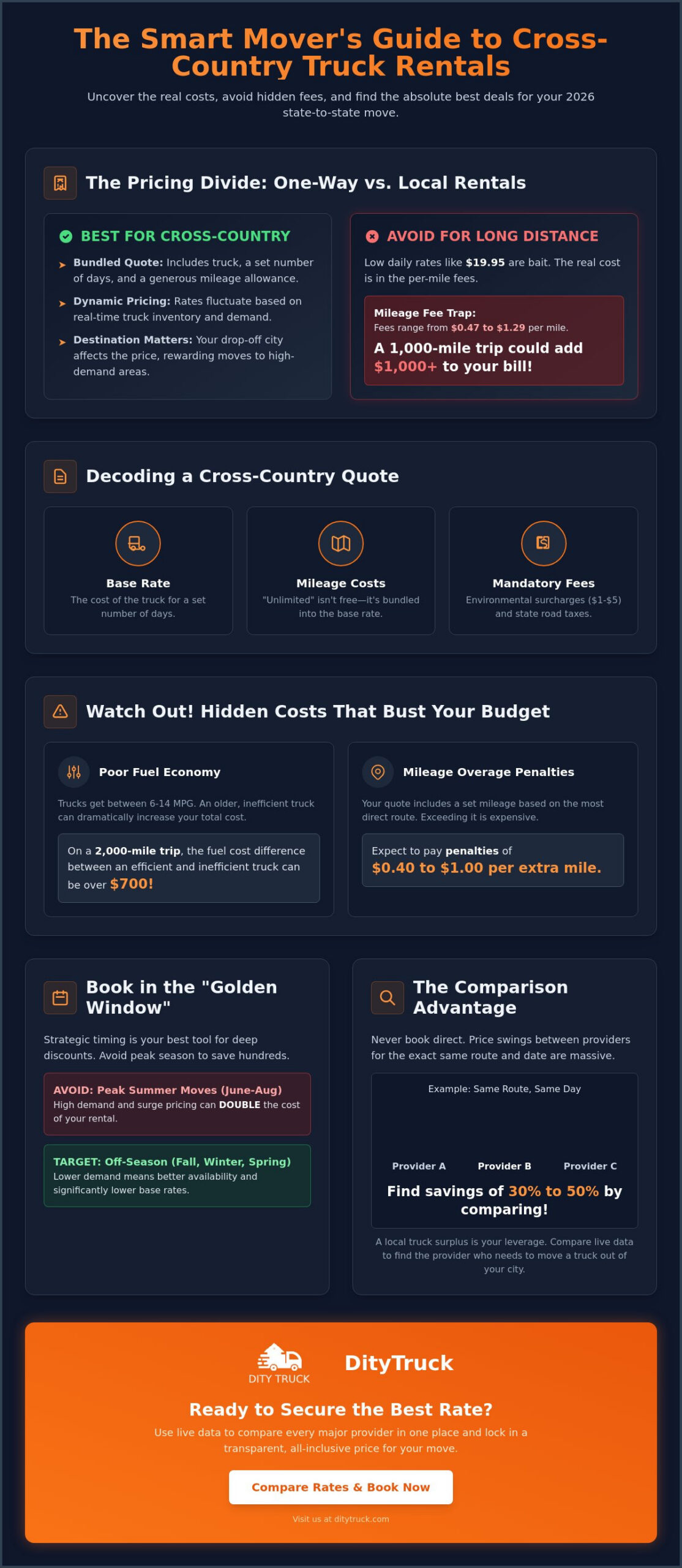
Standard daily rates do not apply to these long-distance trips. For local moves, you might see a low base rate like $19.95. For state-to-state moves, companies bundle the truck, a specific number of days, and a mileage allowance into one flat quote. In 2026, these quotes are governed by aggressive dynamic pricing models. These models track truck inventory in real-time. If a city has too many trucks, prices drop to encourage rentals. If trucks are scarce, prices spike instantly.
You also need to understand “deadhead” miles. This term describes the cost of moving empty trucks back to high-demand areas. If you are moving to a popular destination, the rental company knows that truck will be easy to rent again. If you are moving to a remote area, they may increase your rate to cover the cost of relocating that vehicle later. Your quote reflects the company’s need to balance its fleet across the country.
One-Way vs. Local: The Pricing Divide
Choosing a one-way rental is the only logical path for long distances. These contracts include set mileage and day limits based on your specific route. Your drop-off location is the primary factor in the initial deal you receive. Returning a truck to a high-demand hub often results in a lower overall cost. Finding the best cross country moving truck rental deals starts with acknowledging that your destination city matters as much as your pickup city. Avoid the temptation to use a local truck for a long trip. Local mileage fees range from $0.47 to $1.29 per mile. On a 1,000-mile move, those fees alone could exceed $1,000.
Why Comparison is Non-Negotiable for Long-Distance
Price swings between major brands are common. You might see a 30% to 50% difference for the exact same route on the same day. This happens because inventory is localized. A surplus in your origin city is your biggest leverage point. One brand might be desperate to move inventory out of your neighborhood while another is already sold out. This moving industry overview highlights that while DIY moving saves money, success depends on timing. The Comparison Advantage for 2026 movers is the tactical use of real-time inventory data to secure a lower rate when a provider has a surplus of trucks in your pickup city.
Decoding Long-Distance Rates: Miles, Days, and Hidden Costs
A cross-country quote consists of three main pillars: the base rate, mileage costs, and mandatory fees. These elements combine to create the final price you see at checkout. Understanding your consumer rights and responsibilities is the first step toward avoiding overpayment. Many providers advertise “unlimited mileage” for one-way moves. This isn’t exactly a gift. The cost of those miles is usually bundled into a higher base rate. You pay for the flexibility whether you use it or not. Companies also adjust these fees based on “Drop-off Demand.” If you leave a truck in a city where inventory is already high, expect a surplus fee to appear in the breakdown.
Fuel economy is the largest variable in your total budget. Rental trucks typically get between 6 and 14 miles per gallon. On a 2,000-mile trip, the difference between a fuel-efficient late-model truck and an older gas-guzzler can cost you hundreds of dollars. Beyond gas, look for small surcharges that add up. Most companies charge an environmental fee between $1 and $5. State road taxes also apply based on your route. Finding the best cross country moving truck rental deals requires looking past the sticker price to see these operational costs.
The Mileage Trap: When “Free” Isn’t Free
Companies calculate “allowed” mileage by mapping the most direct route between your zip codes. They usually add a small buffer for detours or fuel stops. If you exceed this limit, expect per-mile penalties. These charges can range from $0.40 to nearly $1.00 per extra mile. Some brands offer capped mileage with a lower base rate. This works well if your route is straightforward. If you plan on taking scenic detours, the unlimited option provides better peace of mind. You can compare these mileage structures side-by-side to see which fits your specific itinerary.
Insurance and Protection Plans
Standard auto insurance rarely covers large commercial rental trucks. Credit card protection plans often exclude them too. Long-distance moves involve higher risks like highway fatigue and unfamiliar terrain. This makes a Collision Damage Waiver (CDW) or a similar protection plan essential. Some deals include basic liability in the quote. Others wait until the final booking screen to add it. Check the fine print early. Knowing exactly what is protected helps you avoid high-pressure sales tactics at the rental counter. Securing the right level of coverage ensures your cross country moving truck rental deals don’t turn into financial liabilities if an accident occurs.
Top Providers for Cross-Country Moves: Who Offers the Best Value?
Finding the best cross country moving truck rental deals requires looking past the first number you see on a brand’s homepage. Most websites only show their own inventory. They want you to believe their rate is the market standard. In reality, the “best” provider changes based on your specific route and the time of year. Total value isn’t just a low sticker price. It’s the combination of fuel efficiency, truck reliability, and location convenience. A cheap truck that breaks down in a remote area will cost you thousands in lost time and emergency labor.
Evaluating the major players involves comparing Penske, Budget, and U-Haul against your specific needs. Each brand has a different strategy for interstate moves. Some focus on fleet reliability. Others prioritize having a drop-off location in every small town. You can find a deeper dive into these logistics in our One Way Truck Rentals for Moving: 2026 Comparison Guide. For 2026, the gap between the highest and lowest quotes for a 1,000-mile move remains significant. Comparison is the only way to force these brands to compete for your business.
Penske: The Reliability Leader?
Penske is often the top choice for long-haul reliability. Their fleet is generally newer than the competition. This leads to better fuel economy, averaging 12 to 13 miles per gallon. High-mileage maintenance standards mean fewer mechanical failures on the road. If you are renting a 26-foot truck for a large home, Penske frequently offers the most competitive total value. Use the promotional code SUNNY26 through June 2026 to secure 10% or more off your one-way rental. They also offer consistent discounts for AAA members and military personnel, which can drop the final price further than a standard coupon.
Budget and U-Haul: The Price-Aggressive Options
Budget and U-Haul use different tactics to attract movers. Budget relies on aggressive percentage-based coupons. You can often find deals for 20% off if you book between Sunday and Thursday. This makes them a strong contender for mid-week moves. However, their fuel efficiency varies widely from 6 to 14 miles per gallon depending on truck age. U-Haul wins on pure convenience. With over 21,000 locations, they have the most extensive network in the country. Their base rates for local moves start low, but for cross-country trips, the total cost often climbs due to equipment age and varying maintenance quality. Always check the truck’s odometer and tire tread before leaving the lot to ensure your cross country moving truck rental deals don’t come with hidden mechanical risks.
Strategic Timing: How to Unlock the Deepest Rental Discounts
Timing determines your final price. In the moving industry, demand peaks when residential leases end. This creates a predictable cycle of price hikes at the end of every month. To find the best cross country moving truck rental deals, you must move mid-month. The 48-hour window around the 15th often yields the lowest rates because truck availability is at its peak. Seasonal shifts are equally dramatic. Summer moves can cost twice as much as winter rentals. Moving in January or February allows you to capitalize on low demand and high inventory. You should also consider “Reverse Migration” patterns. Moving toward a city where trucks are currently leaving can slash your quote by 30% or more. Providers want their equipment moved back to high-demand hubs and will discount your trip to make it happen.
The 14-Day Rule for Long-Distance Booking
Booking 14 days in advance is the sweet spot for long-distance logistics. At this two-week mark, rental companies have a clear view of their upcoming inventory. They’re often willing to lower rates to ensure trucks aren’t sitting idle on the lot. Last-minute reservations are dangerous for cross-country trips. You risk high surge pricing or, worse, no truck availability in your size. This scarcity forces you into a larger, more expensive vehicle you don’t actually need. Most major providers allow you to reserve a vehicle online without an immediate deposit. This lets you lock in a baseline rate while you continue to monitor the market for better cross country moving truck rental deals. If a lower rate appears elsewhere, you can simply cancel and re-book.
Mid-Week Savings and Holiday Surges
Pick your pickup day carefully to maximize savings. A Tuesday pickup is significantly cheaper than a Friday start. Budget, for example, offers up to 20% off for rentals between Sunday and Thursday. This mid-week strategy avoids the weekend rush when local and long-distance demand collide. Holiday weekends like Memorial Day or Labor Day are the most expensive times to move. Availability drops to near zero, and prices skyrocket to reflect the scarcity. You should aim to move at least three days before or after a major holiday. You can compare real-time rates across a 7-day period to identify the exact moment prices dip. This data-driven approach removes the guesswork from your moving budget and keeps your costs transparent.
Securing Your Deal: Why Comparison Booking Wins
Securing the best cross country moving truck rental deals is the final step in your DIY journey. You’ve already learned about dynamic pricing, fleet reliability, and the importance of timing. Now, you need a smart assistant to execute the plan. Comparison booking works because it forces brands to compete for your specific route in real-time. Instead of visiting three different websites and losing track of your quotes, you see every available truck in one view. This centralized approach simplifies tracking. If you need to change your pickup date or add a trailer, you manage it from one organized dashboard.
For a deeper look at the logistics of your trip, read our Moving Truck Rental: The Complete 2026 Comparison & Booking Guide. This resource helps you master every detail of the process. In 2026, transparency is your best tool. You shouldn’t have to hunt for environmental fees or mileage caps. A reliable comparison tool strips away the complexity. It presents the total cost upfront. This clarity allows you to book with confidence and focus on the road ahead. You can move forward knowing you haven’t left money on the table.
Final Checklist Before You Click Book
Accuracy is the key to avoiding surprise charges. Verify your drop-off location before finalizing. U-Haul, for example, may charge a “wrong destination” fee if you return the truck to a different lot than specified in your contract. This fee can be significant. Confirm that your equipment add-ons are included in the quote. If you need furniture pads or a utility dolly, add them now. Prices for these items are often higher if you wait until the morning of your move. Finally, double-check driver age requirements. Most companies allow 18-year-olds to drive smaller trucks, but larger 26-foot vehicles sometimes require the driver to be at least 24 years old. Verifying these details now prevents friction later.
Take the Stress Out of Long-Distance Logistics
Transparency transforms a high-stakes task into a manageable process. A successful move depends on honest pricing and reliable equipment. DityTruck simplifies the 2026 rental market by doing the heavy lifting for you. We aggregate data from the industry’s top providers to ensure you never miss a discount. You get a direct path to the most cost-effective solution without the usual friction. No hidden obstacles. No surprise fees at the drop-off lot. Just a straightforward booking that respects your time and your budget. You can compare cross country moving truck rental deals now and lock in your rate today.
Take Control of Your Long-Distance Move
You now have a complete blueprint for a smarter, more affordable relocation. Success starts with looking past the initial sticker price. True value comes from weighing fuel efficiency against base rates and understanding how inventory affects your specific route. Remember to leverage the 14-day booking window and target mid-month dates to bypass the most aggressive surge pricing. These strategies transform a complex logistical puzzle into a series of simple, manageable decisions.
Finding the absolute lowest cross country moving truck rental deals shouldn’t be a source of stress. We offer real-time rate comparisons from the industry’s top providers. You get transparent pricing with no hidden surprises and dedicated support designed specifically for DIY movers. This friction-free approach ensures you spend less time on spreadsheets and more time preparing for your new home. It’s time to simplify your logistics and secure a rate you can trust.
Find and Book the Best Cross Country Moving Truck Deals
Your cross-country journey is a significant milestone. With a reliable truck and a locked-in rate, you can focus on the road ahead and the excitement of your new destination. Safe travels on the interstate.
Frequently Asked Questions
How much does it typically cost to rent a moving truck cross country?
The cost typically ranges from $1,200 to $3,000 depending on the distance and truck size. For example, a 1,000-mile move for a medium-sized home often averages around $1,800. These rates generally include the vehicle rental for a set number of days and a specific mileage allowance. Your final price will fluctuate based on seasonal demand and fuel costs.
Is it cheaper to rent a truck one-way or return it to the same location?
One-way rentals are the most cost-effective choice for long-distance moves. While the base rate might appear higher than a local rental, you save hundreds on fuel and avoid the time required for a return trip. Driving an empty truck back across the country is rarely a logical or affordable strategy. One-way agreements are designed specifically for these interstate routes.
Do cross country truck rentals include unlimited mileage?
Unlimited mileage is a standard feature for some providers, like Penske, on one-way contracts. Other companies provide a capped mileage limit based on the most direct route between your zip codes. If you go over this limit, you’ll face per-mile penalties. Comparing cross country moving truck rental deals helps you identify which brands offer the most flexibility for your specific itinerary.
What is the best company for long distance moving truck rentals?
The best company depends on whether you prioritize price, reliability, or convenience. Penske is often recognized for fleet reliability and newer trucks. Budget frequently wins on price for mid-week moves due to aggressive couponing. U-Haul offers the most locations, making it the most convenient option for picking up or dropping off in smaller towns or remote areas.
Can I get a discount on a moving truck for a military or student move?
Most major rental brands provide dedicated discounts for military members and students. Penske and Budget offer some of the most consistent programs for active-duty personnel and veterans. You’ll need to show a valid ID during pickup to verify your status. These savings often stack with existing promotional codes to reduce your total out-of-pocket expenses significantly.
How far in advance should I book a cross country moving truck?
You should book your truck at least 14 days before your move. This two-week window gives providers enough time to manage their inventory and lock in your rate. Booking at the last minute for a long-distance trip often leads to limited truck availability and higher surge pricing. Early reservations provide the most transparency and peace of mind for your budget.
Are there hidden fees in “cheap” cross country moving truck quotes?
Cheap quotes often omit essential costs like environmental fees, state road taxes, and mandatory protection plans. You might also encounter surcharges for late returns or dropping the truck off at the wrong location. Reviewing the full breakdown of your cross country moving truck rental deals ensures you won’t face unexpected charges when you reach your final destination.
What happens if the rental truck breaks down during a cross country trip?
Major rental companies provide 24/7 roadside assistance for all long-distance rentals. If a mechanical failure occurs, the provider will coordinate repairs or send a replacement vehicle to your location. Some companies also offer reimbursement for lodging if the repair requires an overnight stay. Always keep your rental agreement and the roadside assistance contact number easily accessible in the truck cab.