You can legally pilot a massive 26-foot vehicle without a commercial license, but only if you know the exact number printed on the doorframe. It’s a common fear for DIY movers. You see that towering cargo space and wonder: do you need a CDL to drive a 26ft box truck just to get your furniture across town? The size is intimidating. Handling a vehicle that’s three times longer than a standard SUV naturally causes anxiety about legal compliance and roadside stops.
We know you want a move that’s free of legal hurdles and hidden complications. This 2026 guide provides the clear, definitive answer you need to book your rental with total peace of mind. You’ll learn exactly how the 26,000-pound weight threshold works and why the manufacturer’s rating matters more than your actual cargo. We also provide a fast way to compare rental options once you’ve cleared the licensing hurdle. You get the facts quickly so you can focus on the heavy lifting.
Key Takeaways
- Most 26ft box trucks are built to stay under the 26,001 lb GVWR limit. You usually won’t need a special license for a personal move.
- Your legal status depends on the Gross Vehicle Weight Rating (GVWR) found on the doorframe. It’s about the truck’s capacity, not just the weight of your cargo.
- Identify specific triggers that mandate a commercial license. You’ll need to know if you do need a CDL to drive a 26ft box truck when towing trailers or moving for profit.
- Protect your rental by mastering height clearances and wide turns. These are the most common causes of damage for drivers transitioning from standard SUVs.
- Compare rental brands to find the best non-CDL options. Prices fluctuate between providers; checking multiple rates ensures the best value for your logistics plan.
The Short Answer: Do You Need a CDL for a 26ft Box Truck?
The short answer is no. You typically don’t need a special license for a personal move. If you’ve been asking yourself, do you need a CDL to drive a 26ft box truck, the most common answer is a firm no. Federal law focuses on weight ratings rather than the physical length of the cargo area. Most people can legally pilot these large vehicles using the same Class C license they use for a sedan or an SUV. It’s a massive relief for anyone facing a big relocation.
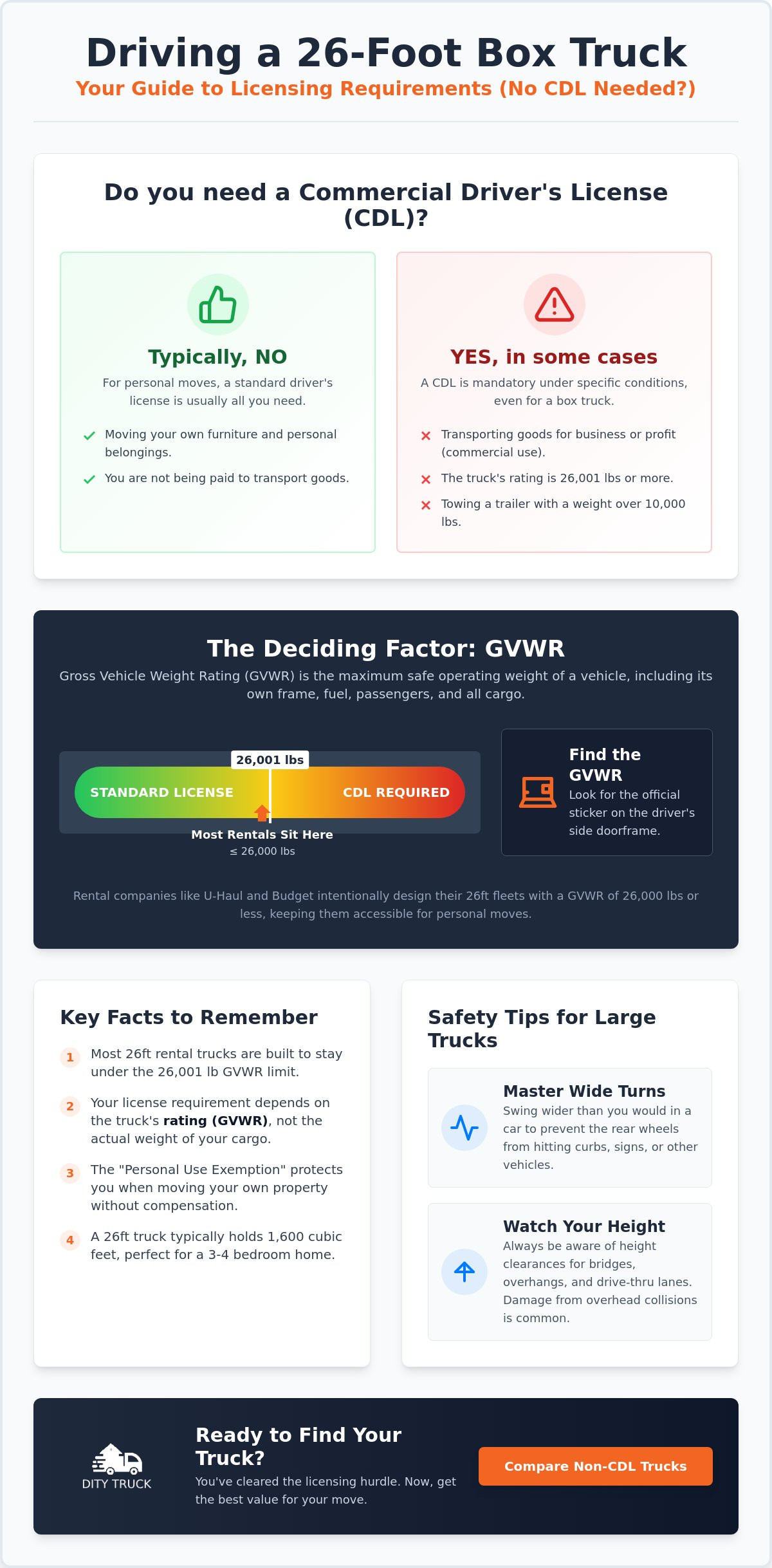
Everything hinges on the Gross Vehicle Weight Rating (GVWR). This number represents the maximum weight a truck can safely carry, including its own frame, fuel, and cargo. The legal pivot point is 26,001 pounds. If a truck’s rating is 26,000 pounds or less, a commercial license isn’t required. Rental companies like U-Haul and Budget understand this legal boundary perfectly. They specifically design their 26ft fleets to stay at exactly 26,000 pounds. This engineering choice removes the licensing hurdle for you. You get the maximum space without the professional paperwork.
Defining the 26ft Box Truck
These vehicles are the giants of the consumer rental world. A 26ft box truck usually offers about 1,600 cubic feet of storage space. It’s the gold standard for moving a three to four bedroom home in a single trip. While they look intimidating on the road, they are classified as medium-duty vehicles. Their physical dimensions are large, but their mechanical systems are designed for accessibility. You get a massive payload capacity that stays just under the federal weight threshold for commercial regulation.
The Personal Use Exemption
Moving your own furniture is legally different from hauling freight for profit. The Federal Motor Carrier Safety Administration (FMCSA) provides a specific carve-out for individuals. If you aren’t being paid to transport goods and the cargo is your own property, you fall under the personal use exemption. Federal guidelines define the personal use exemption as the operation of a vehicle for personal purposes where no compensation is involved. This means you don’t need a Commercial Driver’s License (CDL) to move your family to a new state.
Knowing whether or not do you need a CDL to drive a 26ft box truck allows you to plan your logistics without legal anxiety. You can focus on packing and route planning instead of license upgrades. Check your license class; in most states, a standard Class C is all you need. You get the professional capacity of a big rig with the simplicity of a personal rental. It’s the most efficient way to handle a high-stakes move without unnecessary complexity.
Understanding the 26,000 lb. GVWR Threshold
GVWR stands for Gross Vehicle Weight Rating. It’s the most important number on your rental agreement. This isn’t just a suggestion; it’s a legal limit set by the manufacturer. It represents the maximum weight the vehicle can safely handle. This includes the truck’s own frame, all fluids, every passenger, and your entire household inventory. Understanding this number is the key to answering the question: do you need a CDL to drive a 26ft box truck?
The magic number is 26,001. According to federal regulations found in 49 CFR Part 383, a Commercial Driver’s License becomes mandatory the moment a vehicle’s rating hits this threshold. If your truck is rated at exactly 26,000 pounds, you’re legally in the clear with a standard license. Most rental companies intentionally cap their 26ft models at this limit to keep them accessible to the general public. It’s a deliberate design choice that simplifies your move.
You can find this rating easily. Open the driver’s side door and look at the frame or the door jamb. You’ll see a VIN plate or a high-durability sticker. This label lists the GVWR. Always verify this number before you drive away. Knowing the difference between “Gross Weight” and “GVWR” is also vital. Gross weight is what the truck weighs on a scale at any given moment. GVWR is the maximum rating. Licensing laws focus on the rating; road safety laws focus on the actual weight.
Rating vs. Reality: Why the Label Matters
Law enforcement officers look at the sticker first. If you’re pulled over, the officer checks the doorframe rating to determine your licensing requirements. It doesn’t matter if the truck is currently empty. If the sticker says 26,001 pounds, you must have a CDL. Rental companies are very careful about this. They often spec their 26ft trucks at exactly 25,999 pounds. This creates a safety buffer that protects you from accidental violations. You can compare rental options now to see which providers offer the best non-CDL configurations.
The Impact of Payload on Licensing
A 26ft truck is a heavy piece of machinery. The vehicle itself might weigh 16,000 pounds when empty. This leaves you with a payload capacity of roughly 10,000 pounds. If you pack extremely heavy items like gym equipment or large toolsets, you might approach that 26,000-pound limit quickly. Exceeding the payload doesn’t change your license class, but it can lead to fines at weigh stations. Many drivers visit a CAT scale at a truck stop. It provides a printed receipt of your actual weight. This gives you total peace of mind during long-distance hauls.
When a CDL Becomes Mandatory (Even for a Box Truck)
While most residential rentals fall under the personal use exemption, certain scenarios override that status. You might start your journey with a standard license, but adding a trailer or changing your cargo can trigger federal requirements. If you are asking do you need a CDL to drive a 26ft box truck, you must consider what you are hauling and what’s hitched to the back. These specific triggers turn a simple DIY move into a commercial operation in the eyes of the Department of Transportation.
Towing is the most common trap for unsuspecting drivers. The law looks at the Gross Combination Weight Rating (GCWR). If you hitch a heavy trailer to your 26ft truck and the total combined rating exceeds 26,001 pounds, you may need a Class A CDL. This specifically applies if the trailer itself has a GVWR of more than 10,000 pounds. Most small car dollies won’t push you over this limit, but heavy equipment trailers certainly will. Always check the weight rating of both the truck and the trailer before you leave the lot.
Cargo type and passenger count also matter. Hauling hazardous materials in quantities that require a placard always demands a CDL, regardless of the truck’s size. This includes large amounts of certain chemicals, explosives, or flammable liquids. Similarly, if you’ve modified a box truck to carry 16 or more people including the driver, a commercial license with a passenger endorsement becomes mandatory. These rules ensure that high-risk loads are handled by professionals with specialized training.
The Air Brake Myth Debunked
Many drivers believe that any vehicle equipped with air brakes requires a CDL. This is a persistent myth. Federal law does not mandate a commercial license based solely on the braking system. If the truck’s GVWR is 26,000 pounds or less, you can legally drive it with a standard license even if it uses air brakes. Most rental companies choose hydraulic brakes for their 26ft fleets anyway. This choice simplifies the driving experience and avoids unnecessary confusion at weigh stations.
Commercial vs. Non-Commercial Use
The “for-hire” distinction is the final legal hurdle. If you are using the truck to move your own household goods, you are generally exempt. However, if you are being paid to move someone else’s property, the vehicle is considered a commercial motor vehicle. This commercial activity often requires a CDL and a DOT medical card. Some states have stricter rules for interstate commerce, so double-check the local DOT regulations for every state on your route. Do you need a CDL to drive a 26ft box truck? Not for your own move, but the rules change the moment you turn it into a business.
To stay legally compliant, remember these three primary CDL triggers:
- Operating a vehicle with a GVWR of 26,001 pounds or more.
- Towing a trailer over 10,000 pounds when the total weight exceeds 26,001 pounds.
- Transporting hazardous materials that require safety placards.
Driver Safety and Rental Logistics for Large Trucks
Confirming the answer to do you need a CDL to drive a 26ft box truck is only your first step. Once you’ve cleared the legal hurdle, you must face the reality of operating a vehicle that is three times longer than a standard SUV. Driving these giants requires a shift in mindset. You are now the captain of a medium-duty machine that demands constant attention to surroundings. Handling the physical size of the truck is often more challenging than the paperwork itself.
Height clearance is the leading cause of rental truck damage. Most 26ft trucks stand approximately 13 feet tall. This makes low-hanging tree branches, apartment complex awnings, and bank drive-thrus major hazards. You cannot rely on muscle memory from your personal car. Always look for clearance signs before entering any parking lot or underpass. It’s also vital to master the turning radius. With a long wheelbase, you must swing wide on every corner. If you turn too early, the rear wheels will clip curbs, signs, or parked vehicles. Use your mirrors to track the back of the truck through every maneuver.
Insurance is another critical logistics piece. Don’t assume your personal auto policy covers a 26ft rental. Most standard policies and credit card protections exclude vehicles with a GVWR over 10,000 pounds. Since these trucks weigh significantly more, you are likely unprotected. Purchasing the rental company’s supplemental damage waiver is the most efficient way to avoid financial disaster. It strips away the complexity of claims and ensures you aren’t liable for expensive repairs. You can book your truck rental now to see which providers offer the best protection packages.
Pre-Trip Inspection Checklist
Perform a thorough walk-around before leaving the rental lot. Check the tire pressure and look for any visible fluid leaks under the chassis. Testing the lights and signals is essential. Large blind spots make clear communication with other drivers a safety requirement. Document every existing scratch or dent with photos. This simple task prevents hidden fees when you return the vehicle at the end of your move.
Navigating Weigh Stations
State laws regarding weigh stations vary significantly. Watch for highway signs that mention “Rental Trucks” specifically. In many states, personal moves are exempt from scales, but some jurisdictions require all commercial-sized vehicles to pull in. If you’re unsure, it’s safer to enter the station and follow the officer’s signals. For detailed budget planning, see our Cost to Rent a 26 Foot Moving Truck guide. It provides a full 2026 pricing comparison to help you manage the financial side of your relocation. Knowing the logistics helps you answer the question do you need a CDL to drive a 26ft box truck with total confidence.
Finding the Right 26ft Truck with DityTruck
Confirming that you don’t need a professional license is a massive relief. Now, the challenge is securing the right vehicle at the right price. Pricing for large rentals isn’t uniform across the industry. Major brands use complex algorithms to determine their daily rates. This means the quote you get from one provider might be hundreds of dollars higher than another for the exact same 26ft model. Once you’ve settled the question, do you need a CDL to drive a 26ft box truck, your next move should be a smart comparison.
DityTruck acts as your savvy logistics assistant. We strip away the complexity of visiting multiple websites by bringing every major rental option into a single, transparent view. You see real-time availability and honest pricing without the traditional hurdles. These large trucks are often the first to sell out during peak moving seasons. Using a centralized search tool ensures you grab the 1,600 cubic feet of space you need before it disappears from the local inventory. It’s the shortest path between identifying your need and resolving your logistics problem.
Transparent booking is our priority. We want you to avoid the high-pressure environment of the rental counter. By comparing and booking ahead of time, you walk into the rental office with a confirmed reservation and a clear understanding of your costs. There are no hidden obstacles or last-minute surprises. You get the peace of mind that comes with a solid plan, allowing you to focus on the physical act of moving your home.
Compare and Save on Your Next Move
Our platform allows you to see Penske, Budget, and U-Haul side-by-side. You can easily filter for the specific 26ft size to ensure the vehicle matches your household volume. This level of clarity is essential for a successful DIY move. For a deeper look at how different providers stack up in 2026, check out our Moving Truck Rental Guide. It provides a full comparison to help you choose the best brand for your specific route and budget.
Ready to Book Your 26ft Truck?
The process is fast and methodical. You enter your details, compare the results, and secure your truck. It’s a simple action-result progression that saves you hours of manual research. You can confirm your reservation in minutes, leaving the complex logistics to us. Don’t let the size of the task overwhelm you. We provide the tools to make your relocation efficient and stress-free. Find and Compare 26ft Box Truck Rentals Now to get your move started with confidence. You’ve already answered the question, do you need a CDL to drive a 26ft box truck. Now, it’s time to get behind the wheel and get moving.
Get Moving with Confidence
The path to your new home is now clear. You’ve learned that for most personal relocations, the answer to do you need a CDL to drive a 26ft box truck is a definitive no. As long as the vehicle’s GVWR stays at or below 26,000 pounds and you aren’t towing a heavy trailer for profit, your standard license is all you need. You can focus on mastering those wide turns and checking your height clearances instead of worrying about professional certifications.
Logistics shouldn’t be the hardest part of your move. We provide real-time rate comparisons across major brands to ensure you get the best value without the stress. You can check nationwide availability for your 2026 move and book with total transparency. There are no hidden booking fees to surprise you at the counter. It’s the most efficient way to secure the space you need for a successful transition.
Compare 26ft Box Truck Rates and Book Your Move Today
Take control of your move today. You have the facts and the right tools to make this relocation your most organized one yet. Safe travels on the road ahead.
Frequently Asked Questions
Is a 26ft box truck hard to drive for a beginner?
Driving a 26ft truck is manageable for most beginners but requires immediate adjustments to your driving style. You must account for a much wider turning radius and significantly longer braking distances. Visibility is limited to your side mirrors since there is no rearview mirror. Most drivers find they feel comfortable after the first thirty minutes of highway travel. Just remember to take corners slowly and avoid tight residential streets when possible.
What is the maximum weight I can carry in a 26ft rental truck?
The typical payload capacity for a 26ft rental truck is between 9,000 and 10,000 pounds. This limit exists because the vehicle itself weighs approximately 16,000 pounds. Adding more than five tons of cargo would push the truck over its 26,000-pound Gross Vehicle Weight Rating. Exceeding this limit can strain the engine, compromise the braking system, and lead to heavy fines at state weigh stations.
Do I need to stop at weigh stations in a rental truck?
Requirements for weigh stations vary by state and the purpose of your trip. Many states exempt rental trucks used for personal household moves from stopping at scales. However, states like California or Pennsylvania may require all vehicles over a certain weight to pull in regardless of use. Always watch the highway signage as you approach a station. If a sign specifically mentions rental trucks, you must follow the direction to exit.
What happens if I drive a truck that requires a CDL without a license?
Operating a vehicle that requires a commercial license without the proper credentials leads to severe legal consequences. You face heavy individual fines, potential vehicle impoundment, and a permanent mark on your driving record. Your insurance coverage is also likely voided in the event of an accident. This is why confirming the answer to do you need a CDL to drive a 26ft box truck is a vital step before you sign your rental agreement.
Does a 26ft truck have air brakes?
Most consumer-grade 26ft rental trucks utilize hydraulic brakes rather than air brakes. Rental companies choose hydraulic systems because they feel more familiar to standard car drivers and require less specialized training. While some heavy-duty commercial versions of these trucks do feature air brakes, they are rarely found in fleets intended for DIY movers. This choice helps keep the vehicle accessible to anyone with a standard Class C driver’s license.
Can I tow my car behind a 26ft box truck without a CDL?
You can generally tow a personal vehicle behind a 26ft truck without a commercial license. Most car dollies and trailers weigh less than 10,000 pounds, which keeps you under the federal threshold for a Class A license. However, you must ensure the total weight of the truck and the trailer doesn’t create a safety hazard. If you are still wondering do you need a CDL to drive a 26ft box truck while towing, the answer remains no for most standard car-towing setups.
How much gas does a 26ft box truck use?
Expect a 26ft box truck to achieve between 8 and 13 miles per gallon. This fuel economy depends heavily on the total weight of your cargo and whether you are driving through mountainous terrain. Wind resistance also plays a major role due to the truck’s boxy shape. Most modern fleets offer a mix of gasoline and diesel engines. Diesel models often provide slightly better mileage and more torque for hauling heavy household loads over long distances.
What is the height of a standard 26ft box truck?
A standard 26ft box truck typically stands about 13 feet tall. This height is significantly greater than any passenger vehicle and requires constant vigilance. You must watch for low-hanging branches, apartment awnings, and bridge clearances. Most rental companies print the exact height of the vehicle on a sticker inside the cab. Always check this number before you start your trip to avoid expensive overhead damage that insurance rarely covers.